
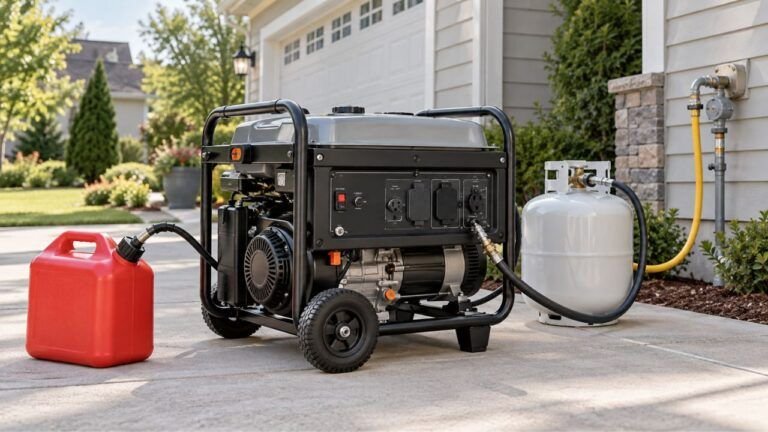
A tri fuel generator uses one engine that runs on gasoline, propane, or natural gas. A fuel selector directs the chosen fuel through the proper delivery system. The engine then burns that fuel, spins...
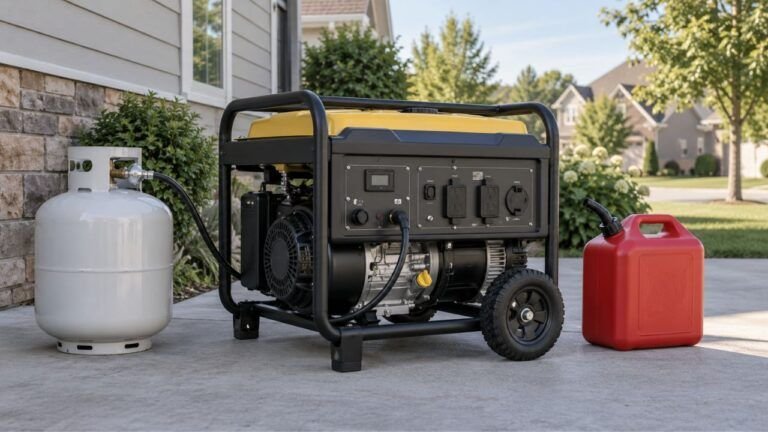
A dual fuel generator uses one engine that can run on two approved fuels, usually gasoline or propane. A fuel selector controls which fuel reaches the engine. The engine burns that fuel, spins an...
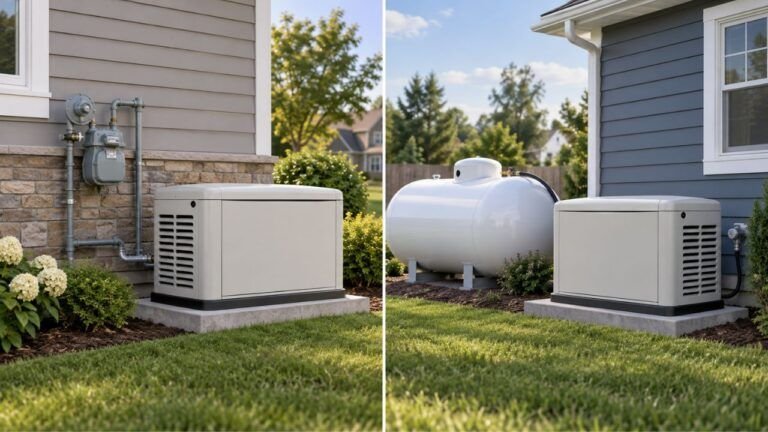
Natural gas is usually better when your home already has reliable gas service. Propane makes more sense when you want fuel stored independently on-site. Natural gas avoids refilling, while propane can...
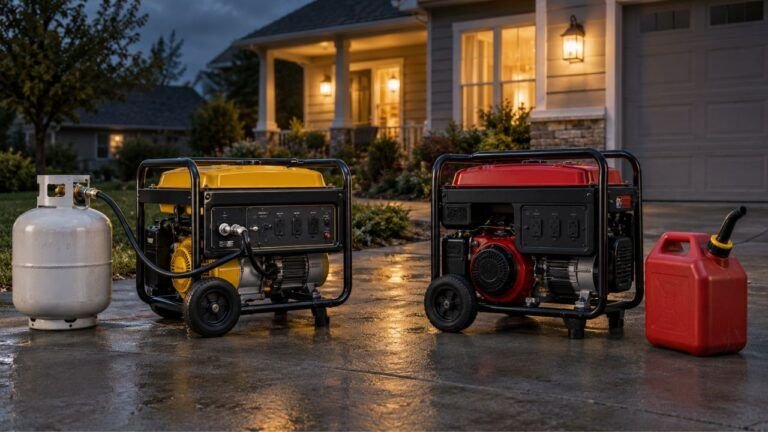
Propane vs gasoline generator for home backup comes down to priorities. Gasoline usually provides higher running and starting wattage. Propane is easier to store long-term and avoids stale-fuel...
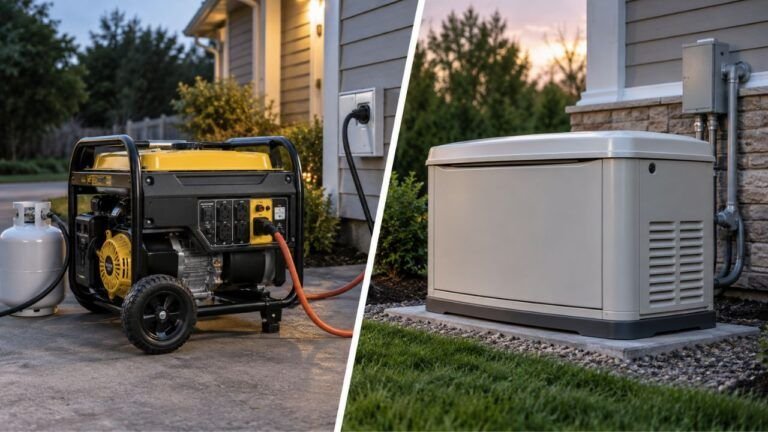
A standby generator is usually better for automatic whole-home backup, while a tri-fuel generator offers lower cost and greater fuel flexibility. If you are comfortable manually starting and managing...
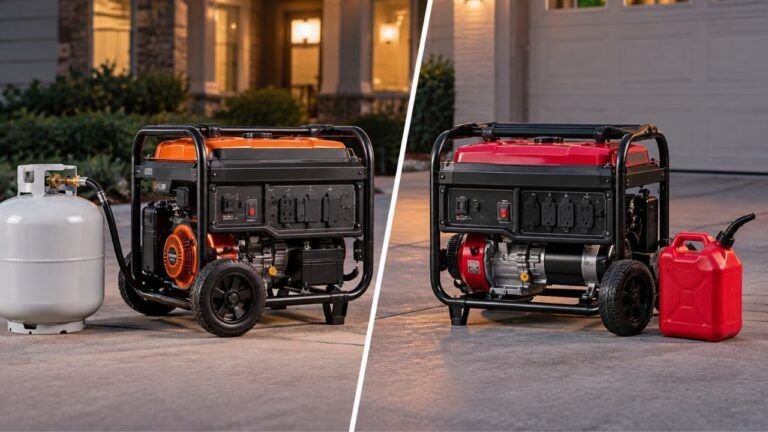
A dual fuel generator is usually better than a gas generator for home backup when you want more fuel flexibility during an outage. It can run on gasoline or propane, while a gas generator depends...
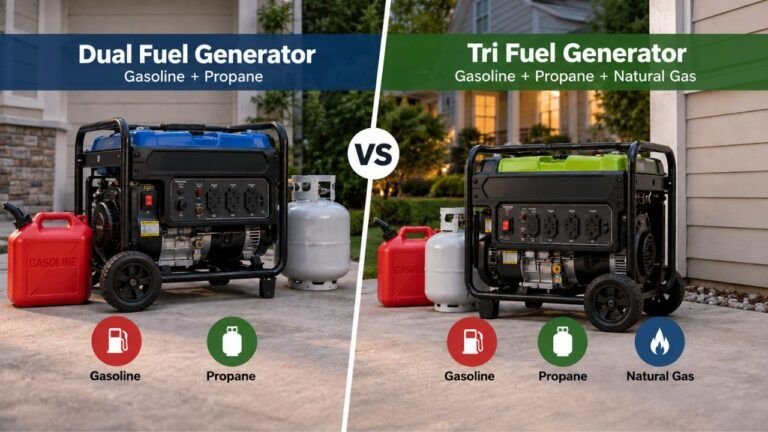
A dual fuel generator uses gasoline and propane, while a tri fuel generator adds natural gas. For home backup, tri fuel usually makes more sense when you already have natural gas service and expect...

A 22kW generator can run most of a typical home’s electrical needs, including central air conditioning, refrigerators, freezers, lights, furnace equipment, pumps, kitchen appliances...

Yes, a 15,000-watt generator can run many whole houses during an outage. It can usually handle essential appliances, pumps, lighting, electronics, and even central air. However, an all-electric house...