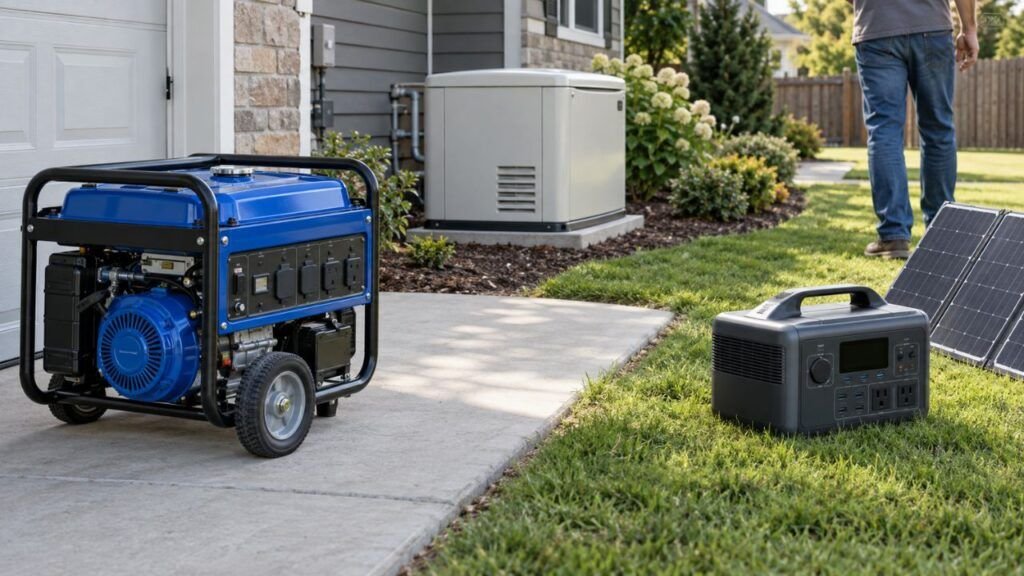
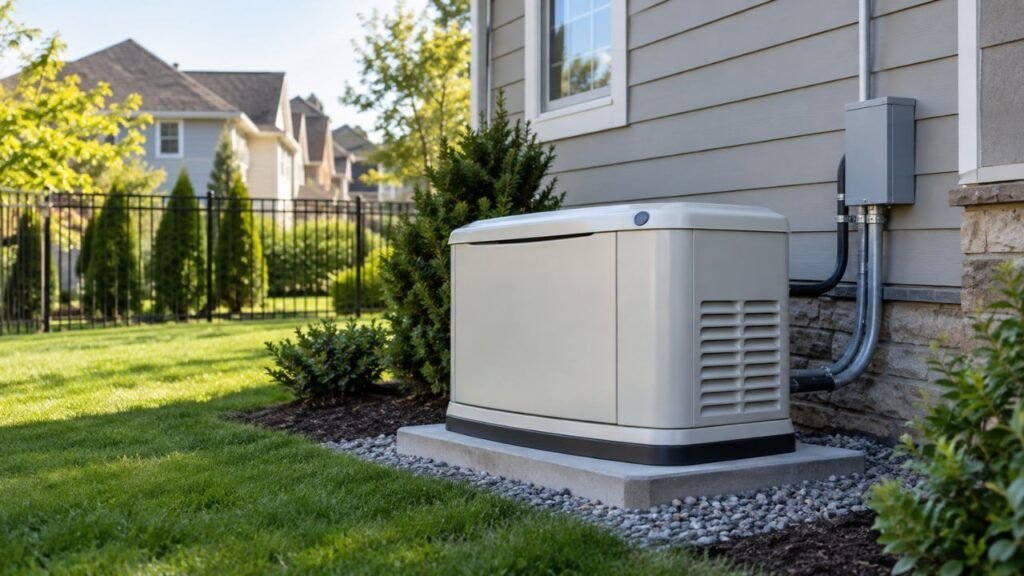
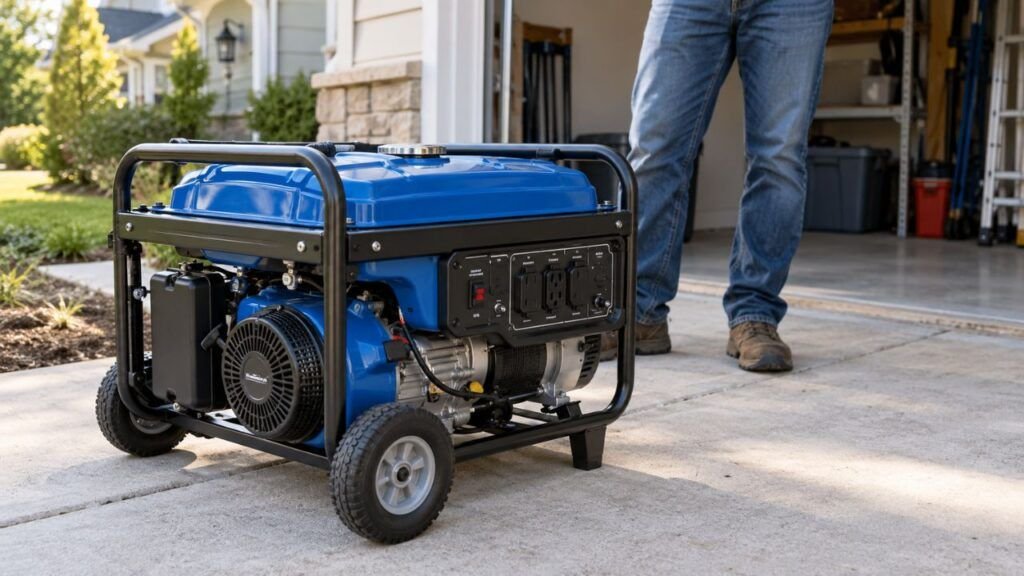
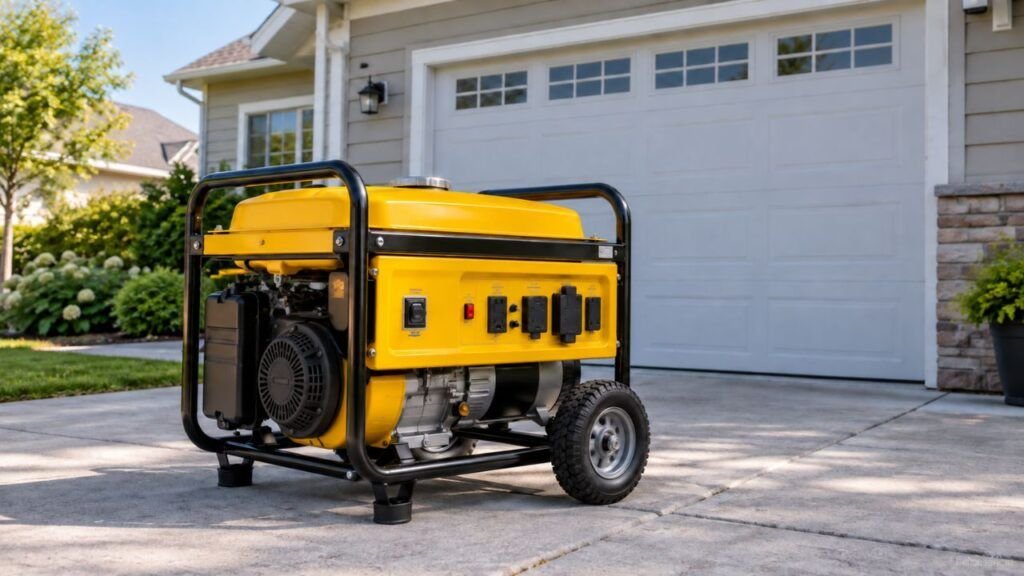
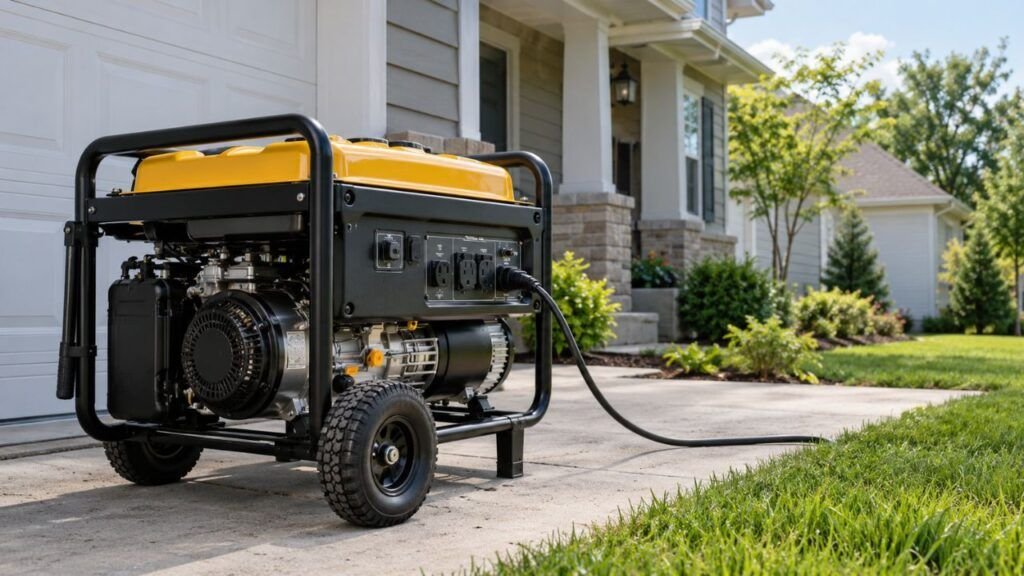
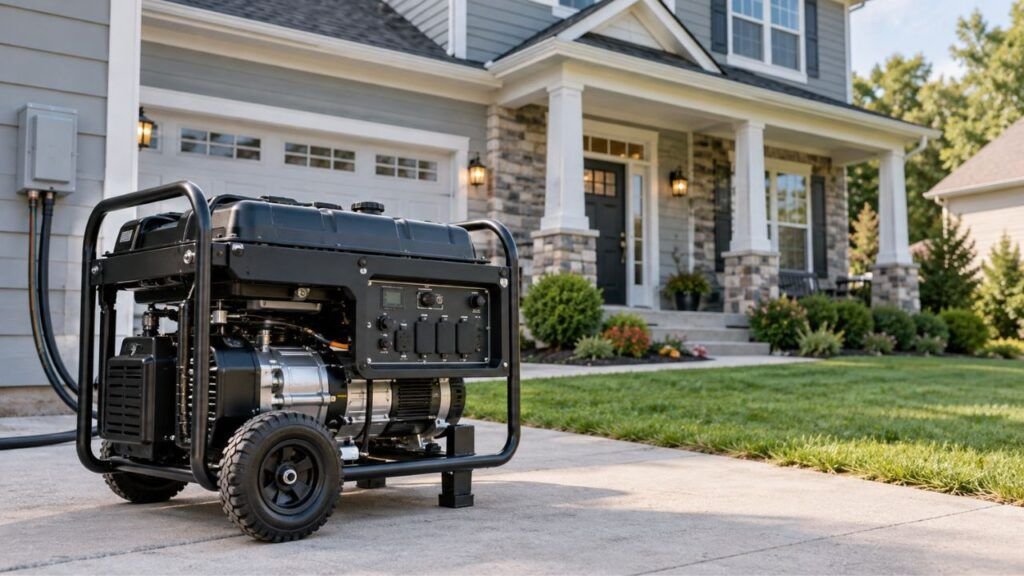
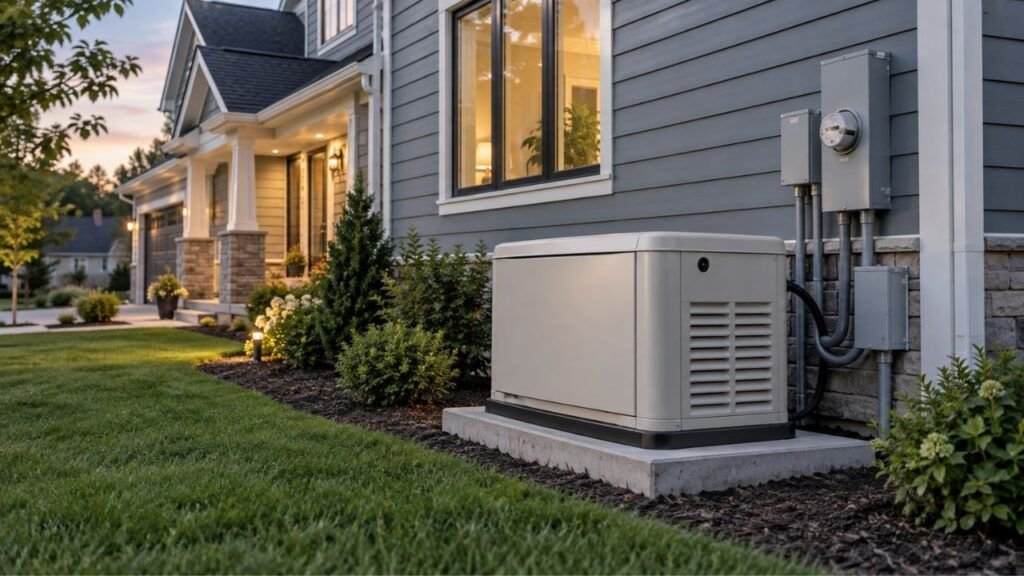
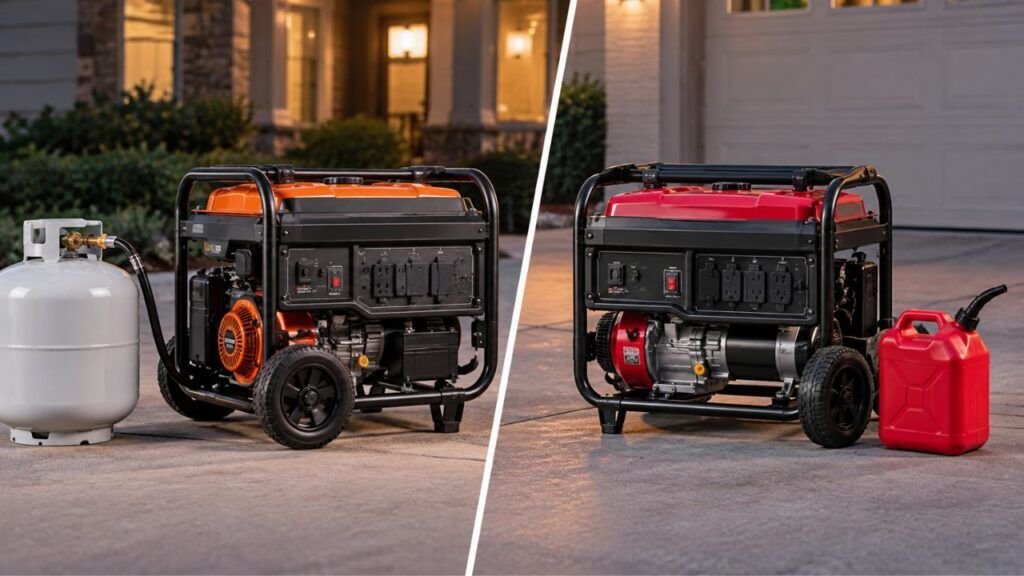
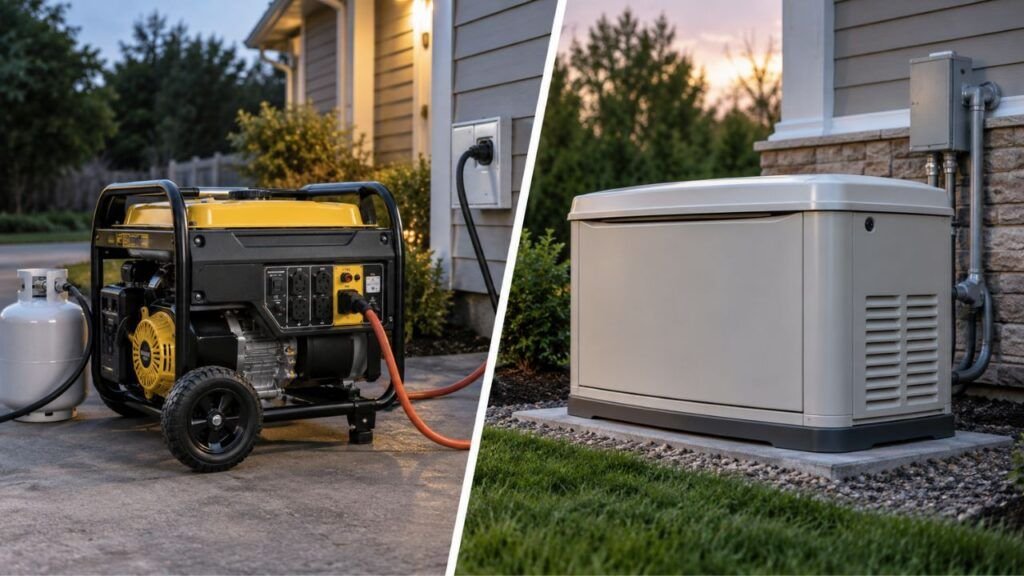
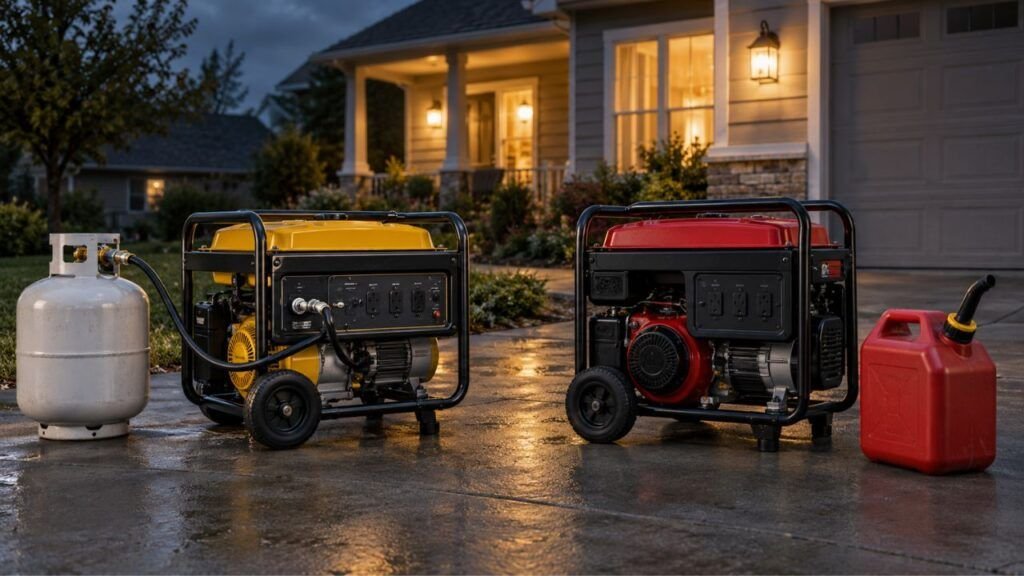
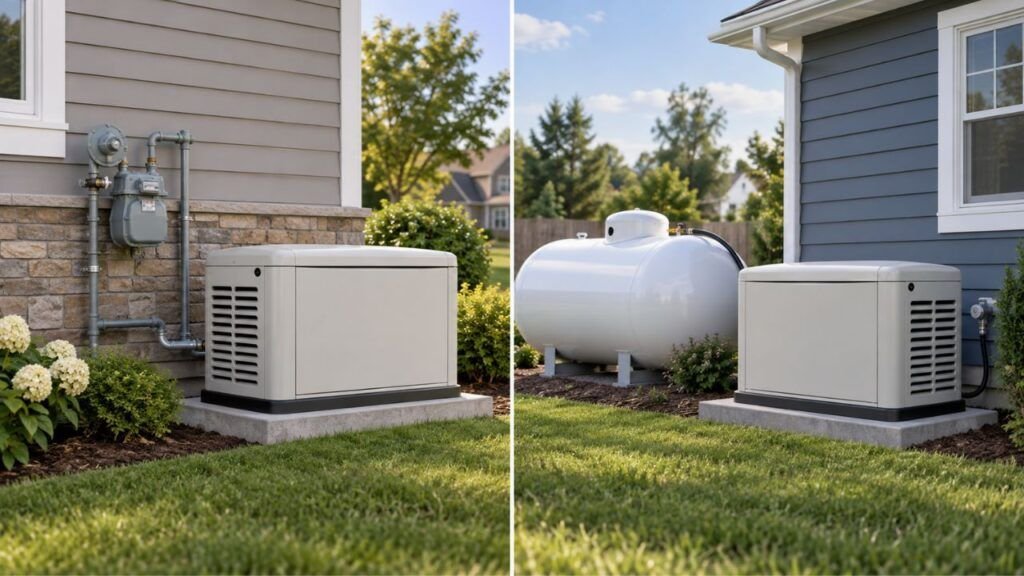
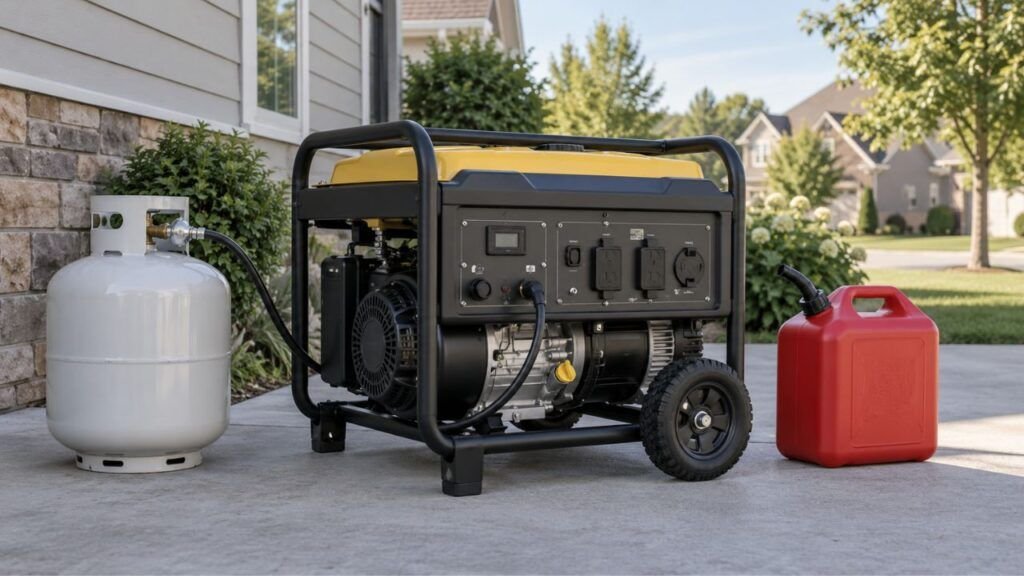
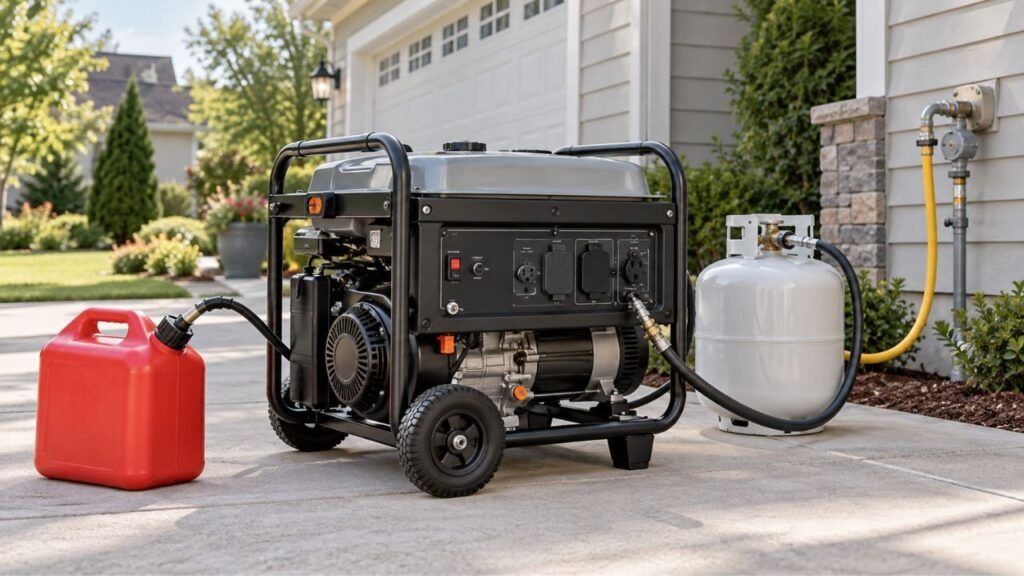
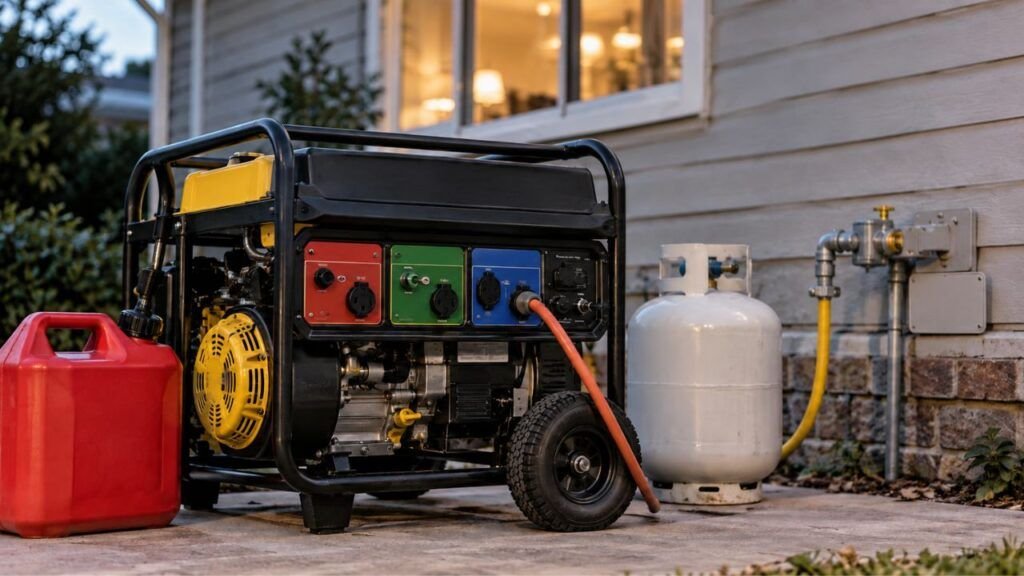
If you are looking for the best dual fuel generators for home backup, you need reliable power, flexible fuel options, and enough wattage for essential appliances. A good gasoline and propane generator can make unexpected outages much easier to manage.
The Westinghouse 12500 Watt offers balanced home backup power, while the DuroMax XP13000HX handles heavier demands. The Champion 11,000-Watt Electric Start Dual Fuel provides inverter technology, the Generac 8,250 Starting Watt Dual Fuel suits essential circuits, and the BILT HARD Dual Fuel Gas & Propane works well for smaller backup needs.
After comparing the top dual fuel generators for home backup, we’ve focused on power output, runtime, fuel efficiency, safety, and home compatibility. This guide will help you choose the right generator for your household and budget.
We’re reader-supported. When you buy through links on our site, we may earn an affiliate commission. As an Amazon Associate, we earn from qualifying purchases at no extra cost to you.
Best Dual Fuel Generator for Home Backup: Our Top Picks
- Best Overall: Westinghouse 12500 Watt Dual Fuel
- Best for Whole House Backup: DuroMax XP13000HX
- Best Inverter Option: Champion 11,000-Watt Electric Start Dual Fuel
- Best for Essential Home Backup: Generac 8,250 Starting Watt Dual Fuel
- Best Premium Inverter: Westinghouse 12000 Peak Watt Dual Fuel
- Best Value Option: Pulsar G12KBN
- Best Mid-Size Option: WEN 8000-Watt 120V/240V Dual Fuel
- Best Compact Inverter: BILT HARD Dual Fuel Gas & Propane
- Best Heavy-Duty Value: DuroStar DS13000MX
- Best ATS-Ready Option: GENMAX Portable Generator
- Best Lightweight Option: ERAYAK 4500W Dual-Fuel
- Best for Long Runtime: AIVOLT 11250W Dual Fuel Inverter Generator
1. Best Overall: Westinghouse 12500 Watt Dual Fuel
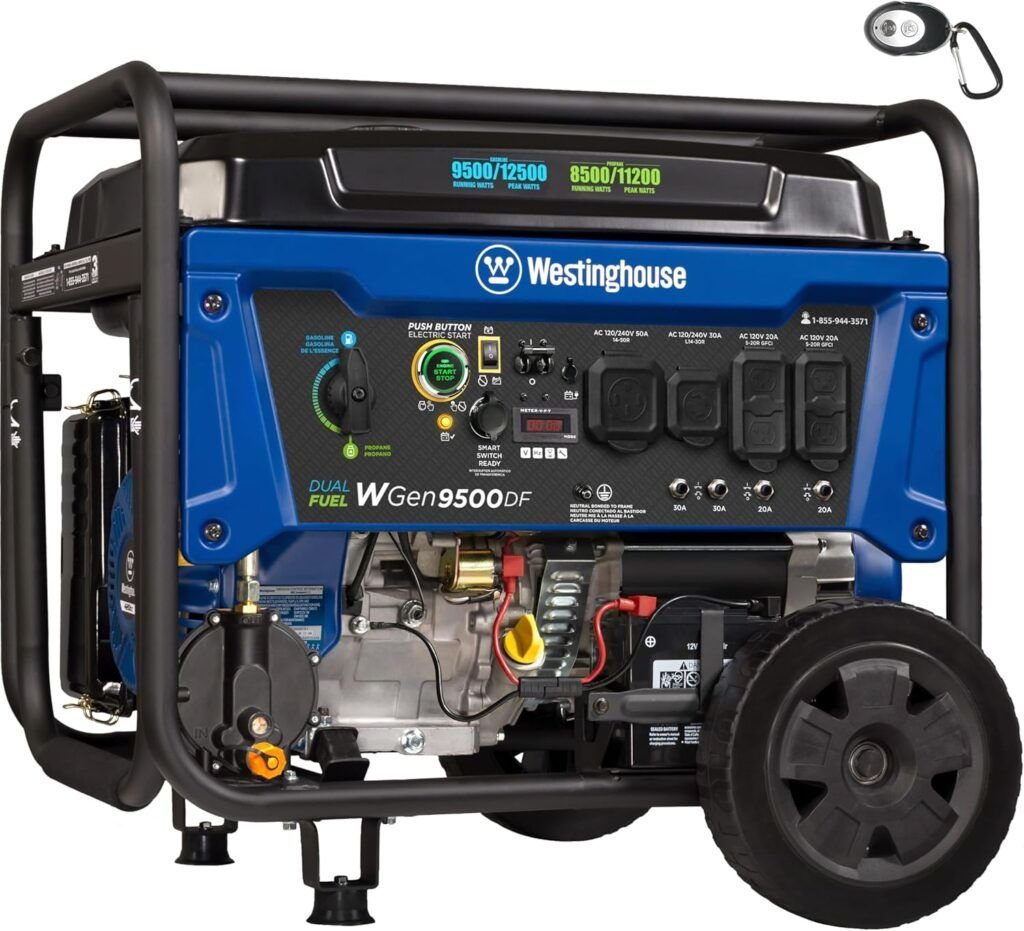
Key Details:
- Gasoline Output: 12,500 peak watts / 9,500 running watts
- Propane Output: 11,200 peak watts / 8,500 running watts
- Runtime: Up to 12 hours at 25% load on gasoline
- Outlets: 120/240V 30A and 50A receptacles
- Starting & Weight: Remote, electric, recoil start; 211 pounds dry
The Westinghouse WGen9500DF is a strong choice among dual fuel generators for home backup. Its 9,500 gasoline running watts can support refrigerators, sump pumps, lighting, and other essential household appliances when their combined electrical demands stay within capacity.
What makes this gas and propane generator appealing is its flexibility. Gasoline delivers maximum output, while propane provides a convenient alternative during fuel shortages. You still get 8,500 continuous watts on propane, enough for substantial emergency backup needs.
We like the remote electric start and 120/240V home backup connections. The Westinghouse WGen9500DF includes 30A and 50A receptacles for compatible transfer equipment. Its digital VFT display also shows voltage, frequency, and operating hours.
The advertised 12-hour gasoline runtime applies at 25% load, so expect less under heavier demand. At 211 pounds dry, this isn’t a lightweight machine. Still, its combination of power, convenient starting, and fuel versatility makes it a practical all-around option.
Pros
- Strong 9,500W gasoline running output
- Flexible gasoline and propane operation
- Remote start with digital monitoring
- 30A and 50A home backup receptacles
Cons
- Heavy at 211 pounds dry
- No built-in carbon monoxide shutdown sensor
2. Best for Whole House Backup: DuroMax XP13000HX
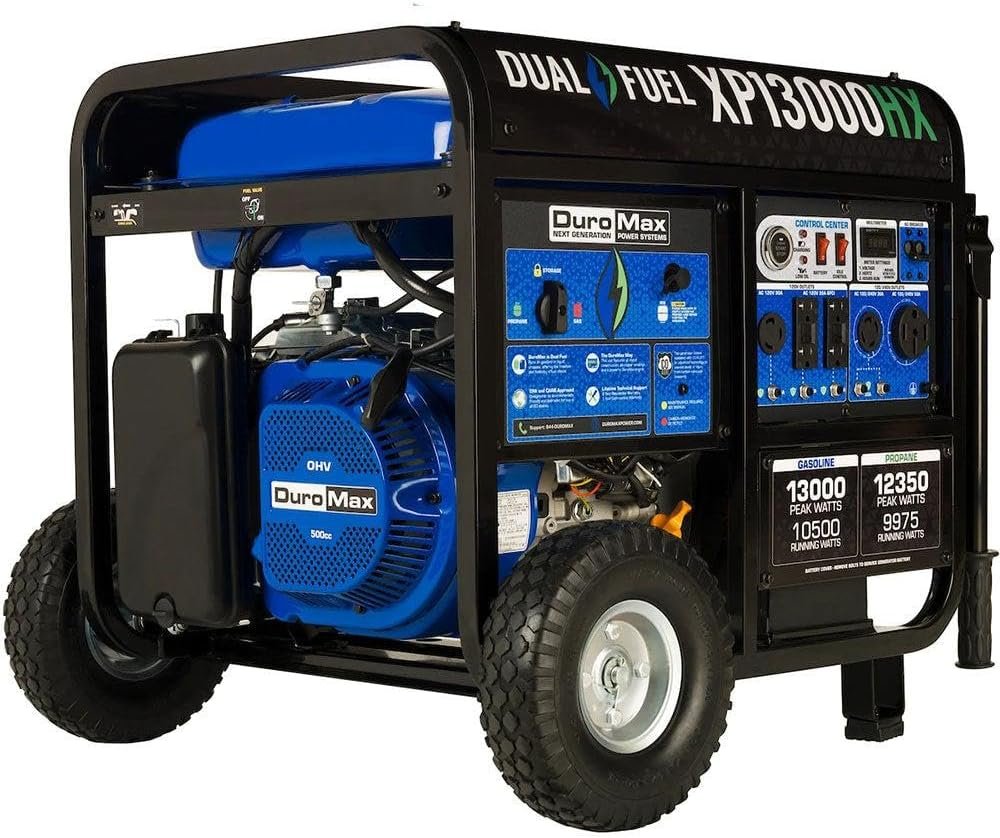
Key Details:
- Gasoline Output: 13,000 peak watts / 10,500 running watts
- Propane Output: 12,500 peak watts / 10,000 running watts
- Engine: 500cc OHV with copper windings
- Outlets: 120/240V 30A and 50A receptacles
- Starting & Safety: Push-button electric start, CO Alert
If you need substantial whole-house backup capacity, the DuroMax XP13000HX deserves consideration. Its 10,500 gasoline running watts provide considerable power for refrigerators, well pumps, heating equipment, and other household loads, depending on their electrical requirements.
One advantage is its relatively small reduction in continuous output when switching fuels. The DuroMax XP13000HX supplies 10,000 running watts on propane, offering flexibility when gasoline becomes difficult to obtain.
We like the push-button electric start and accessible fuel selector. The 120/240V 50A receptacle also supports larger home backup installations through compatible transfer equipment. Its copper windings and CO Alert shutdown are additional practical features.
For larger homes, this dual fuel portable generator offers substantial power without requiring a permanent standby installation. However, it weighs approximately 240 pounds dry, and running central air conditioning still depends on compressor starting requirements.
Pros
- Powerful 10,500W gasoline running capacity
- Strong 10,000W continuous propane output
- 50A receptacle for compatible home connections
- Copper windings and CO Alert protection
Cons
- Heavy construction limits easy transportation
- Open-frame operation produces substantial engine noise
3. Best Inverter Option: Champion 11,000-Watt Electric Start Dual Fuel
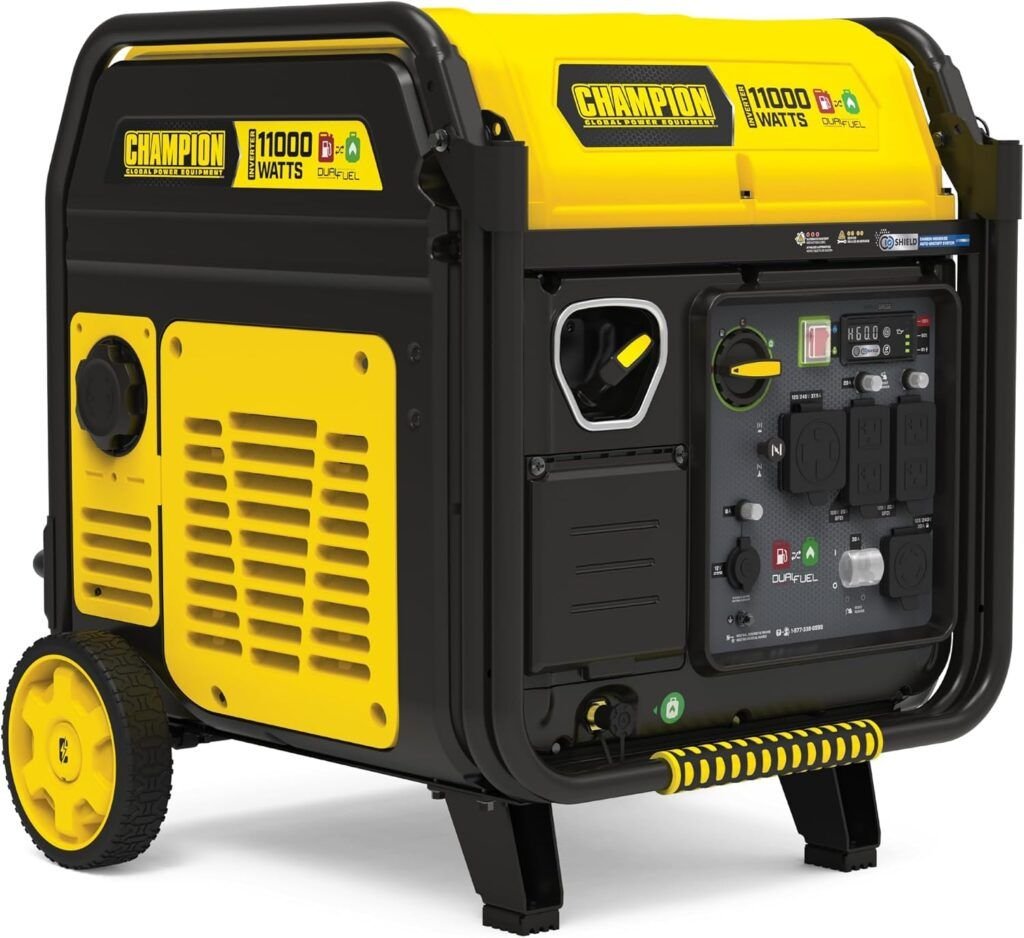
Key Details:
- Gasoline Output: 11,000 starting watts / 9,000 running watts
- Propane Output: 11,000 starting watts / 8,100 running watts
- Runtime: Up to 15 hours at 25% load on gasoline
- Noise Level: 64 dBA at 23 feet
- Outlets & Safety: 120/240V 30A and 14-50R receptacles, CO Shield
The Champion 11,000-Watt Dual Fuel Inverter Generator is an appealing option for homeowners wanting substantial backup power with inverter technology. Its 9,000 gasoline running watts can support multiple essential appliances and household circuits with proper load management.
Unlike traditional portable generators, inverter models electronically regulate their electrical output. This makes the Champion 11,000-Watt particularly attractive for households powering computers, televisions, and other sensitive electronics alongside everyday appliances.
We like its electric start, Cold Start Technology, and CO Shield protection. The generator also includes a 120/240V 14-50R receptacle, with 37.5A of available gasoline running output at 240V. That distinction matters when planning home electrical connections.
With up to 15 hours of gasoline runtime at 25% load, it’s suitable for extended emergency use. Its advertised 64 dBA noise rating is another appealing feature. However, you’ll still need to account for its substantial weight and propane’s lower continuous output.
Pros
- Inverter technology for regulated electrical output
- Strong 9,000W gasoline running capacity
- Long advertised runtime at light loads
- Electric start, Cold Start Technology, and CO Shield
Cons
- Heavy at approximately 205 pounds
- Propane reduces continuous output to 8,100W
4. Best for Essential Home Backup: Generac 8,250 Starting Watt Dual Fuel
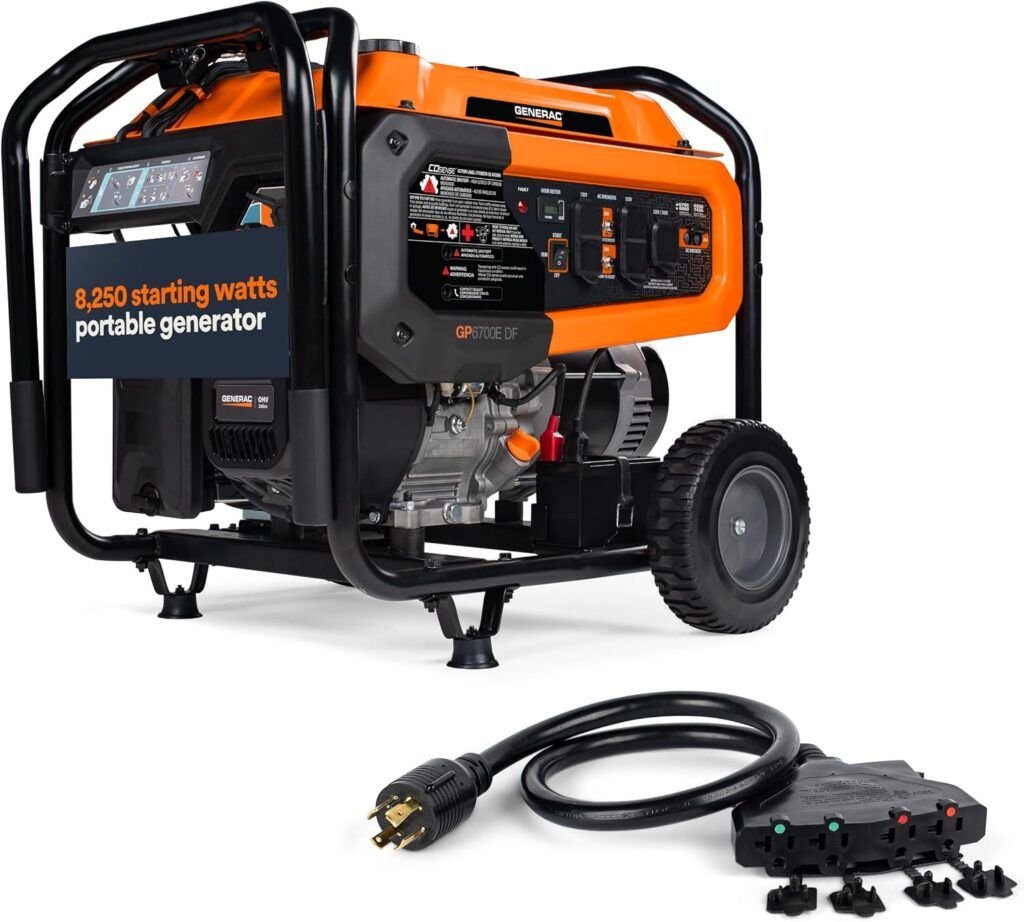
Key Details:
- Gasoline Output: 8,250 starting watts / 6,700 running watts
- Fuel Type: Gasoline and propane
- Gasoline Runtime: Up to 11 hours at 50% load
- Propane Runtime: Up to 6 hours on a 20-pound tank at 50% load
- Engine & Safety: 340cc OHV, electric start, COSENSE
Not every homeowner needs a massive backup generator. The Generac GP6700E Dual Fuel Generator offers a practical solution for powering refrigerators, lighting, internet equipment, and selected essential circuits. Its 6,700 gasoline running watts provide flexibility for moderate household loads.
What stands out is its convenient gasoline and propane fuel selector. According to Generac, switching between fuel sources doesn’t require shutting down the engine. That can be useful when managing fuel availability during longer outages.
We also like the electric start and COSENSE carbon monoxide protection. The Generac GP6700E supports compatible manual transfer switch connections, allowing homeowners to supply selected household circuits rather than relying entirely on extension cords.
Its 7.5-gallon gasoline tank provides up to 11 hours at 50% load. The wheeled steel frame helps with transportation, although it’s still a substantial machine. If you’re prioritizing essential home backup rather than every major appliance, this model makes sense.
Pros
- Practical 6,700W gasoline running output
- Convenient gasoline and propane switching
- Up to 11 hours of gasoline runtime at half load
- Electric start and COSENSE shutdown protection
Cons
- Lower capacity for demanding whole-house loads
- No dedicated 50A home backup receptacle
5. Best Premium Inverter: Westinghouse 12000 Peak Watt Dual Fuel
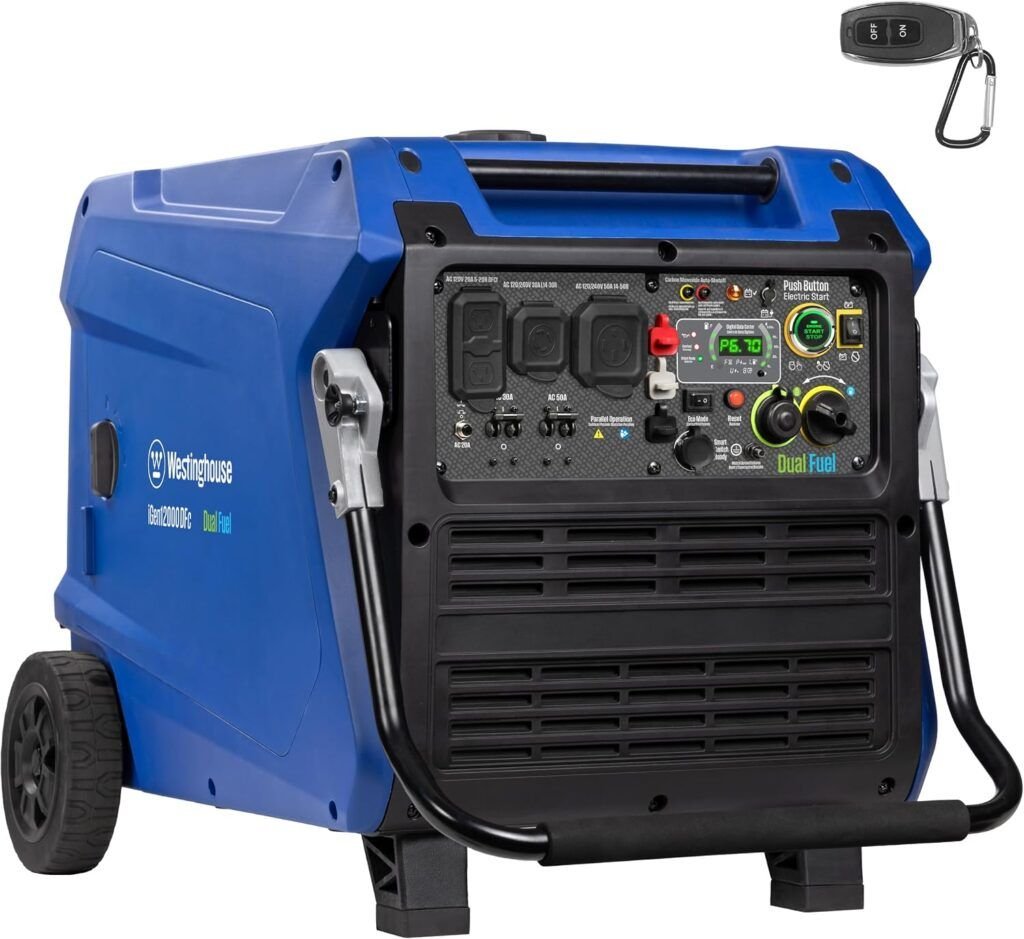
Key Details:
- Gasoline Output: 12,000 peak watts / 9,000 running watts
- Propane Output: 11,000 peak watts / 8,100 running watts
- Runtime: Up to 19 hours at 25% load on gasoline
- Power Quality: Inverter output with 3% THD or less
- Outlets & Safety: 120/240V 30A and 50A, remote start, CO sensor
The Westinghouse iGen12000DFc combines substantial home backup power with inverter technology. Its 9,000 gasoline running watts can support refrigerators, water pumps, lights, and other household appliances while providing regulated electricity for sensitive electronics.
One appealing feature is its fuel-saving Eco Mode. The engine adjusts its speed according to electrical demand, helping reduce fuel consumption during lighter loads. Its gasoline and propane compatibility also provides flexibility during extended outages.
We particularly like the remote start and digital monitoring system. The Westinghouse iGen12000DFc includes 120/240V 30A and 50A receptacles for compatible home backup connections. Its enclosed design also helps manage operating noise.
With up to 19 hours of advertised gasoline runtime at 25% load, it’s worth considering for longer outages. However, actual endurance decreases under heavier loads, and the generator remains relatively heavy despite its portable design.
Pros
- Strong 9,000W gasoline running output
- Clean inverter power with 3% THD or less
- Fuel-saving Eco Mode and long light-load runtime
- Remote start and 50A receptacle
Cons
- Heavy at approximately 187 pounds
- Lower continuous output on propane
6. Best Value Option: Pulsar G12KBN
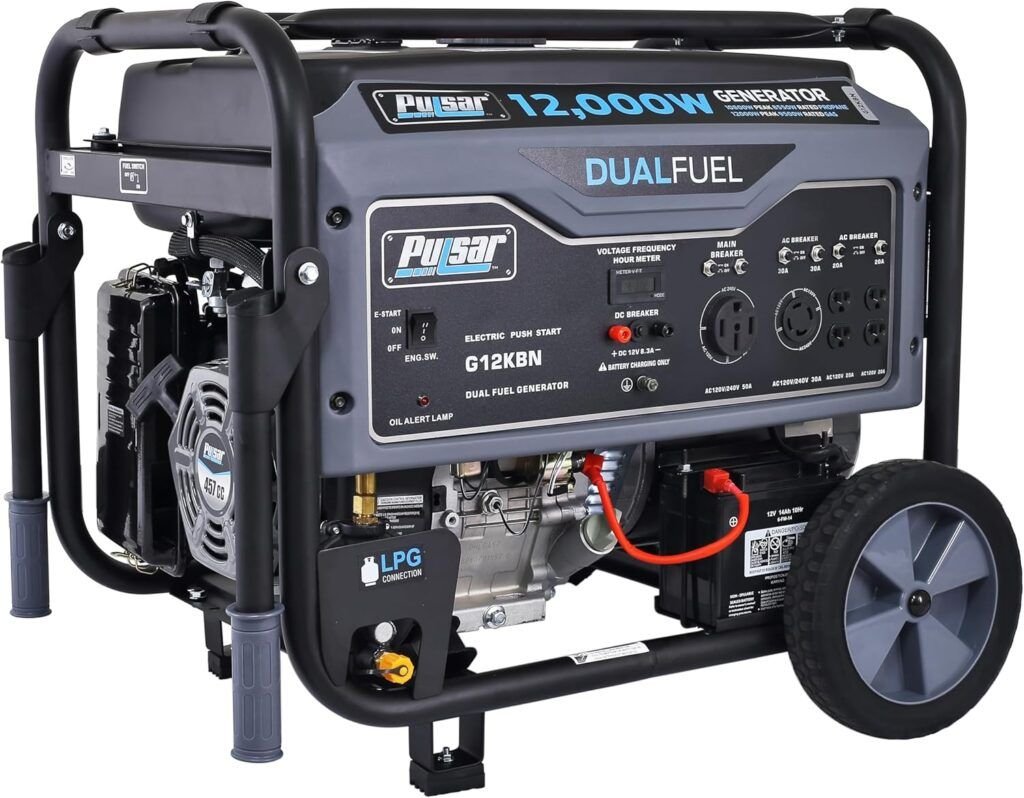
Key Details:
- Gasoline Output: 12,000 peak watts / 9,500 running watts
- Propane Output: 10,800 peak watts / 8,550 running watts
- Runtime: Up to 13 hours at 50% load on gasoline
- Engine: 457cc OHV with electric start
- Outlets & Warranty: 120/240V 30A and 50A, three-year warranty
The Pulsar G12KBN Dual Fuel Generator offers impressive power for homeowners seeking a practical alternative to more expensive backup systems. Its 9,500 gasoline running watts can support refrigerators, freezers, water pumps, and multiple essential household circuits.
What makes this gasoline and propane generator attractive is its strong output on both fuels. You get 8,550 running watts on propane, providing another useful option when gasoline supplies become limited during emergencies.
We like its electric start and versatile 120/240V receptacles. The Pulsar G12KBN includes both 30A and 50A connections, making it suitable for appropriately configured home backup systems. Automatic voltage regulation and low-oil shutdown add useful protection.
Its 8-gallon gasoline tank provides up to 13 hours at half load, according to the manufacturer. The three-year warranty is another advantage. However, its open-frame design and lack of built-in CO shutdown deserve consideration before purchasing.
Pros
- Strong 9,500W gasoline running output
- Flexible 8,550W propane running capacity
- 30A and 50A home backup receptacles
- Long half-load runtime and three-year warranty
Cons
- No built-in CO shutdown sensor
- Open-frame design produces noticeable noise
7. Best Mid-Size Option: WEN 8000-Watt 120V/240V Dual Fuel
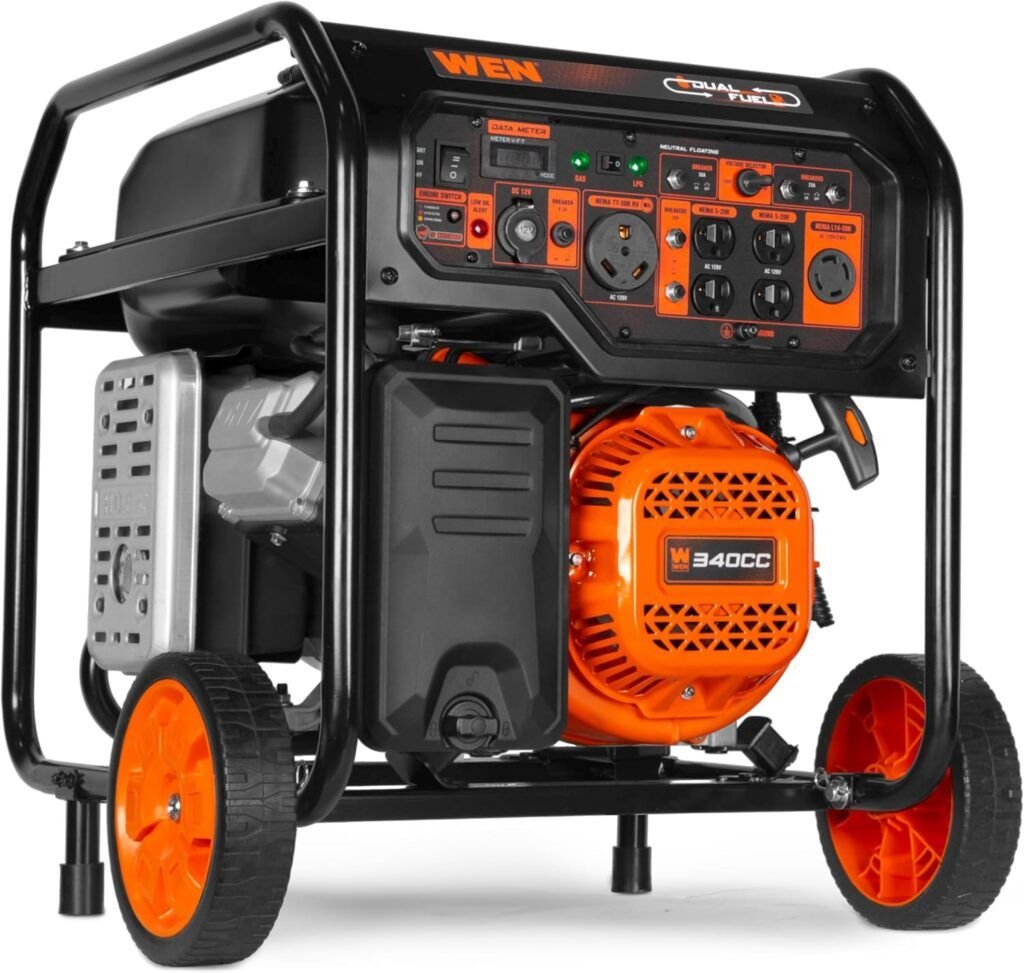
Key Details:
- Gasoline Output: 8,000 surge watts / 6,500 running watts
- Propane Output: 7,200 surge watts / 5,850 running watts
- Runtime: Up to 10.5 hours at half load on gasoline
- Engine: 340cc OHV with electric start
- Outlets & Safety: 120/240V 30A, CO Watchdog shutdown
If you’re shopping for a mid-size dual fuel generator for home backup, the WEN DF8000X offers a practical combination of power and features. Its 6,500 gasoline running watts can supply refrigerators, lighting, heating blowers, and selected essential household appliances.
The WEN DF8000X also runs on propane, providing 5,850 continuous watts. That flexibility is helpful when gasoline becomes difficult to obtain. However, running larger appliances together still requires careful load management.
We like the electric start and built-in CO Watchdog protection. Its 120/240V 30A twist-lock receptacle supports compatible transfer switch connections, while the RV-ready outlet adds versatility for recreational use.
With up to 10.5 hours of gasoline runtime at half load, it’s suitable for extended essential backup. The wheeled frame helps with transportation, and the three-year warranty adds reassurance. However, it lacks the dedicated 50A receptacle found on larger generators.
Pros
- Practical 6,500W gasoline running capacity
- Gasoline and propane fuel flexibility
- Electric start with CO Watchdog protection
- 120/240V transfer-switch-ready 30A outlet
Cons
- No dedicated 50A receptacle
- Limited capacity for multiple high-demand appliances
8. Best Compact Inverter: BILT HARD Dual Fuel Gas & Propane
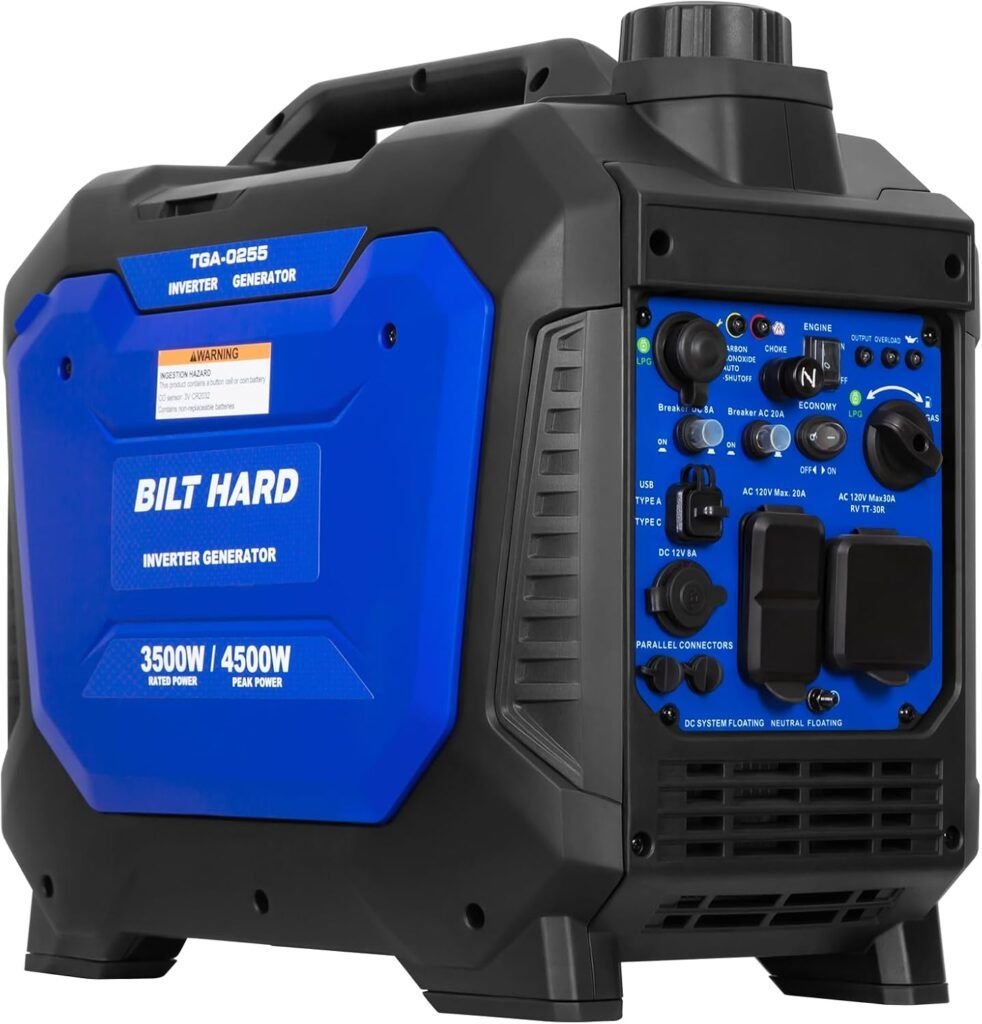
Key Details:
- Gasoline Output: 4,500 peak watts / 3,500 running watts
- Propane Output: 4,150 peak watts / 3,200 running watts
- Engine: 141cc four-stroke OHV
- Power Quality: Inverter output with less than 3% THD
- Outlets & Safety: 120V 30A RV outlet, USB, CO sensor, parallel ready
The BILT HARD 4500W Dual Fuel Inverter Generator is a compact option for smaller emergency power needs. Its 3,500 gasoline running watts can support a refrigerator, lighting, internet equipment, and other selected appliances within its capacity.
What makes this portable gas and propane generator useful is its inverter technology. With less than 3% THD, it produces regulated electricity suitable for many sensitive electronics. Eco Mode also helps reduce fuel consumption during lighter loads.
We like its compact design, built-in carrying handle, and parallel capability. The BILT HARD 4500W includes a 120V 30A RV outlet and USB charging ports. Its CO sensor provides automatic shutdown when dangerous carbon monoxide levels are detected.
For smaller homes and occasional outages, this generator offers useful backup flexibility without a large open-frame design. However, it uses recoil starting and doesn’t provide 240V output, making it unsuitable for powering larger 240V household circuits.
Pros
- Compact design for convenient storage
- Clean inverter output with less than 3% THD
- Dual fuel operation with Eco Mode
- Parallel capability and CO shutdown protection
Cons
- No 240V output for large household circuits
- Recoil start requires manual operation
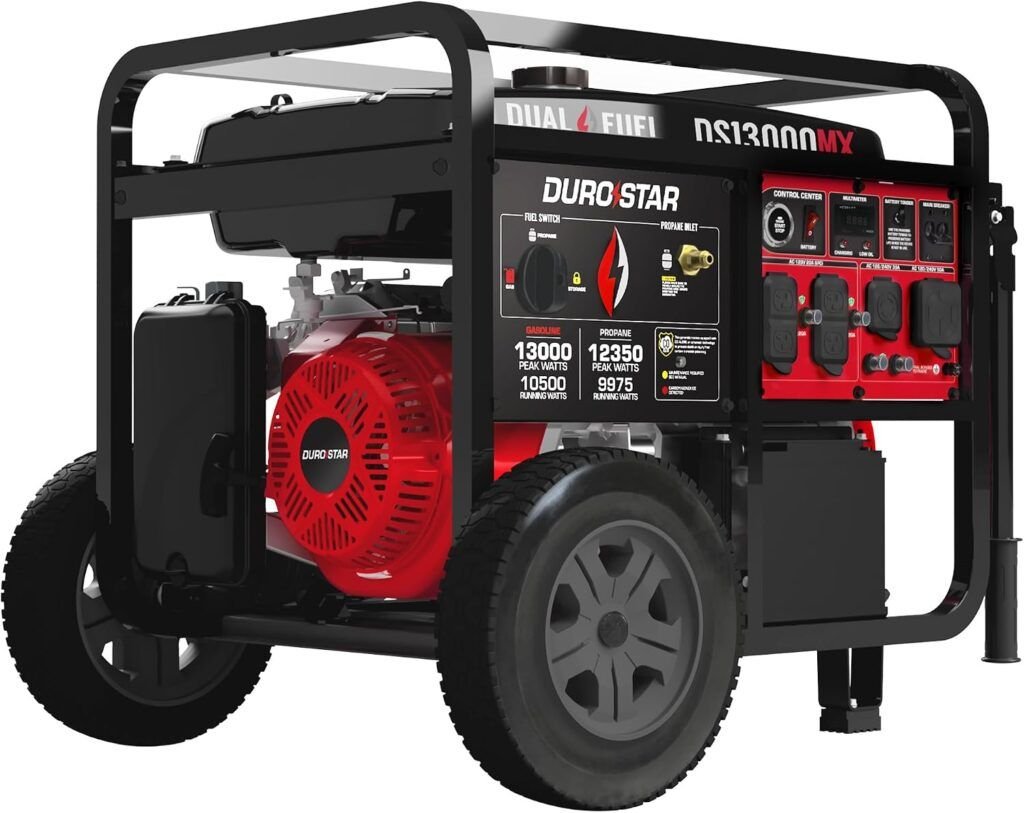
9. Best Heavy-Duty Value: DuroStar DS13000MX
Key Details:
- Gasoline Output: 13,000 peak watts / 10,500 running watts
- Propane Output: 12,350 peak watts / 9,975 running watts
- Engine: 500cc OHV with aluminum windings
- Outlets: 120/240V 30A and 50A receptacles
- Starting & Safety: Remote electric start, CO Alert, 209 pounds dry
The DuroStar DS13000MX Dual Fuel Generator is a capable option for homeowners needing substantial emergency power. Its 10,500 gasoline running watts can support refrigerators, water pumps, heating systems, and other demanding household loads with proper electrical planning.
What makes this gas and propane generator appealing is its strong output on both fuels. It delivers 9,975 running watts on propane, providing substantial backup capacity when gasoline becomes difficult to obtain.
We particularly like its remote electric start and 50A home backup receptacle. The DuroStar DS13000MX also features a convenient fuel selector, automatic CO shutdown, and a durable metal frame designed for demanding outdoor applications.
For larger homes, this portable dual fuel generator offers substantial power and versatile connections. However, its 209-pound dry weight requires planning for transportation. It also uses aluminum rather than copper windings and isn’t approved for sale in California.
Pros
- Powerful 10,500W gasoline running output
- Strong 9,975W propane running capacity
- Remote electric start and 50A receptacle
- Heavy-duty construction with CO Alert protection
Cons
- Heavy at 209 pounds dry
- Not approved for sale in California
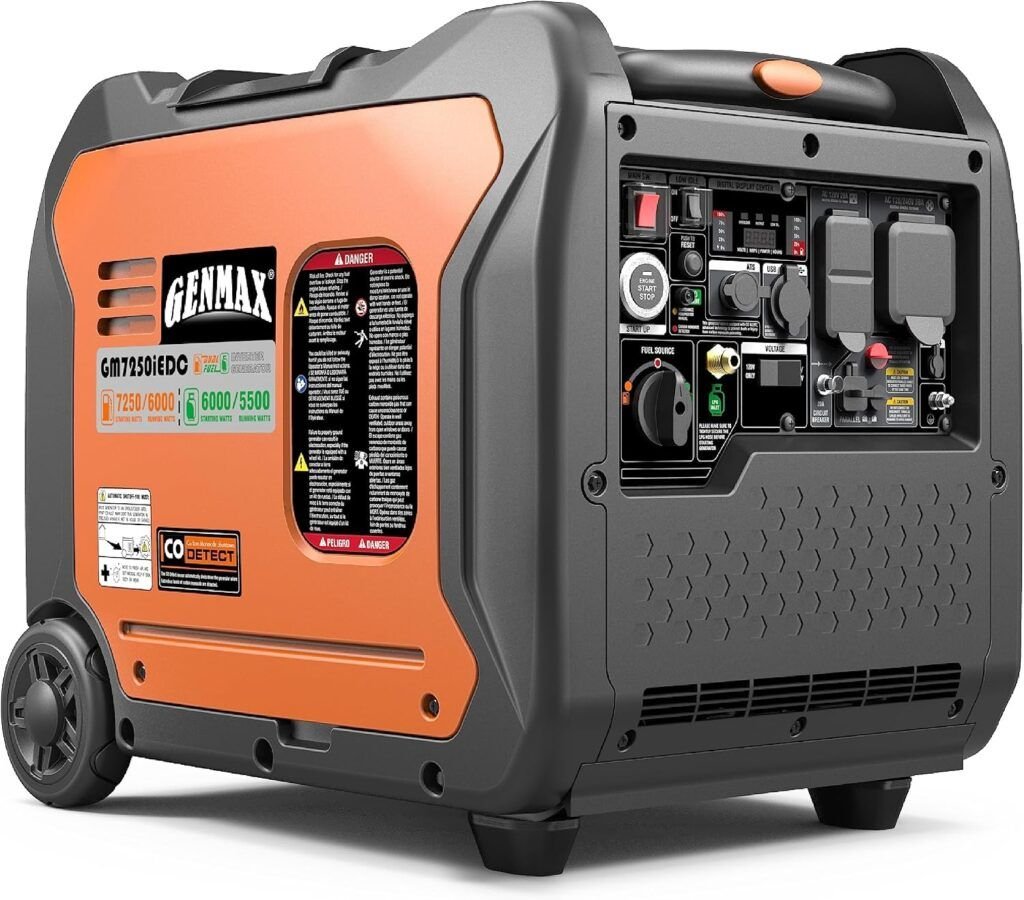
10. Best ATS-Ready Option: GENMAX Portable Generator
Key Details:
- Gasoline Output: 7,250 starting watts / 6,000 running watts
- Propane Output: 6,000 starting watts / 5,500 running watts
- Runtime: Up to 8 hours at 50% load on gasoline
- Noise Level: 63 dBA at 25% load
- Features: 120/240V output, ATS interface, parallel capability, CO detection
The GENMAX GM7250iEDC Dual Fuel Inverter Generator is worth considering for homeowners wanting backup power with flexible electrical connections. Its 6,000 gasoline running watts can handle refrigerators, lighting, internet equipment, and selected household circuits during outages.
One standout feature is its automatic transfer switch interface. The GENMAX GM7250iEDC supports integration with compatible ATS equipment, although automatic backup operation requires proper system configuration and professional installation.
We like its digital monitoring display, which shows voltage, power output, operating hours, and fuel information. Its selectable 120V and 120/240V modes provide additional flexibility, while inverter technology supports regulated electrical output.
At approximately 118 pounds, it’s more manageable than many larger home backup generators. However, the 50A receptacle doesn’t mean it delivers 50 continuous amps at 240V. Its 6,000W running capacity limits total output, so verify compatibility before purchasing.
Pros
- Inverter technology for regulated electrical output
- ATS interface for compatible backup installations
- Informative digital display and parallel capability
- Dual fuel operation with CO shutdown protection
Cons
- Limited 6,000W continuous gasoline output
- Full 50A output at 240V requires a compatible parallel setup
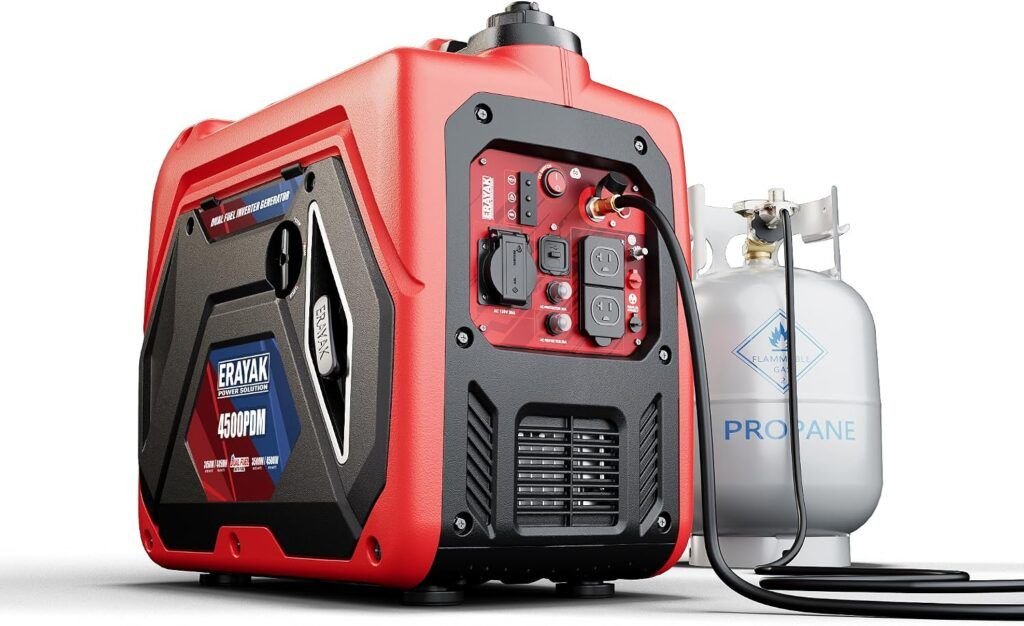
11. Best Lightweight Option: ERAYAK 4500W Dual-Fuel
Key Details:
- Gasoline Output: 4,500 peak watts / 3,500 running watts
- Propane Output: 4,050 peak watts / 3,150 running watts
- Runtime: Up to 12 hours at 25% load on gasoline
- Noise Level: Approximately 62 dBA at 25% load
- Features: 120V 30A outlet, automatic fuel switching, inverter technology
If you’re looking for a compact dual fuel generator for essential home backup, the ERAYAK 4500PD offers practical flexibility. Its 3,500 gasoline running watts can support refrigerators, lights, routers, and smaller appliances without requiring a large generator.
What makes the ERAYAK 4500PD interesting is its automatic fuel switching. When propane pressure drops, the system can transition to gasoline if fuel is available in the tank. That helps reduce interruptions during longer outages.
We like its compact design and inverter technology, especially for homes with sensitive electronics. The generator includes a 120V 30A outlet, making it useful for compatible RV equipment and selected household backup applications.
Its 2.25-gallon gasoline tank provides up to 12 hours at 25% load under specified conditions. However, this portable inverter generator isn’t designed for larger whole-house loads. The 4500PD series also has different starting-system variants, so check the exact model before buying.
Pros
- Compact design for easier transportation
- Automatic propane-to-gasoline fuel switching
- Inverter output suitable for sensitive electronics
- Good light-load runtime for emergency essentials
Cons
- No 240V output for larger household circuits
- Limited capacity for high-wattage appliances
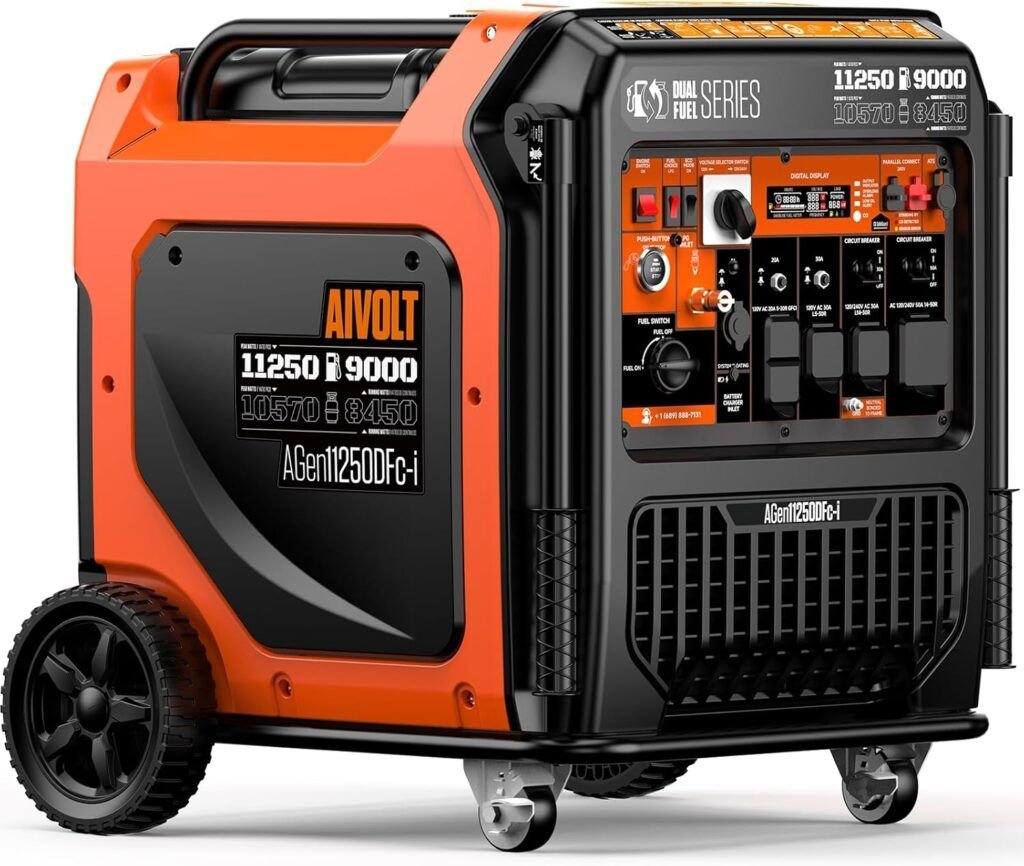
12. Best for Long Runtime: AIVOLT 11250W Dual Fuel Inverter Generator
Key Details:
- Gasoline Output: 11,250 starting watts / 9,000 running watts
- Propane Output: 10,570 starting watts / 8,450 running watts
- Runtime: Up to 19 hours at 25% load on gasoline
- Noise Level: 60 dBA at 23 feet and 25% load
- Features: 120/240V 50A receptacle, remote start, ATS interface, CO protection
The AIVOLT 11250W Dual Fuel Inverter Generator combines substantial home backup power with fuel-efficient operation. Its 9,000 gasoline running watts can support refrigerators, sump pumps, heating equipment, and other essential household loads, depending on their combined requirements.
What stands out is its long advertised gasoline runtime. The AIVOLT 11250W can operate for up to 19 hours at 25% load, while propane provides another fuel option. Its inverter technology also produces low-THD electricity for sensitive electronics.
We particularly like the remote electric start and 120/240V 50A receptacle. These features support convenient home backup operation through compatible transfer equipment. The ATS interface and CO shutdown protection add further functionality.
If you’re preparing for extended power outages, this dual fuel home backup generator deserves consideration. Its 60 dBA rating applies at 25% load, so expect more noise under heavier demand. The 221-pound weight also makes transportation less convenient.
Pros
- Strong 9,000W gasoline running output
- Up to 19 hours of advertised light-load runtime
- Remote electric start and 50A receptacle
- Inverter technology with CO shutdown protection
Cons
- Heavy at approximately 221 pounds
- Long advertised runtime applies only at light load
What Size Dual Fuel Generator Do You Need for Home Backup?
Most homes need a dual fuel generator with 5,000 to 10,000 running watts for essential backup power. Larger homes may require 12,000 to 15,000 running watts, especially when powering central air conditioning and multiple heavy-duty appliances.
| Generator Size | Appliances It Can Power | Best For |
| 3,000W | Refrigerator, lights, router, TV | Basic emergency backup |
| 5,000W | Refrigerator, sump pump, lights, selected small appliances | Small homes |
| 7,500W | Refrigerator, furnace blower, well pump, selected kitchen appliances | Medium homes |
| 10,000W | Multiple essential circuits, kitchen appliances, compatible AC | Larger homes |
| 12,000W | Central AC, refrigerators, water pumps, multiple household circuits | Extensive home backup |
| 15,000W | Multiple major appliances and high-demand household loads | Large homes |
These are approximate running-watt categories, not guaranteed appliance combinations. Actual capacity depends on starting loads, fuel type, and connection limits.
Starting watts provide the temporary surge needed to start appliances with motors. Running watts determine how much electricity the generator can continuously supply.
For example, a refrigerator may consume 700 running watts but require considerably more when its compressor starts. Add your appliances’ running watts, account for the largest overlapping starting surges, and leave some capacity for unexpected loads.
How to Choose the Best Dual Fuel Generator for Home Backup
The right dual fuel generator should match your household’s power requirements, fuel availability, and backup setup. Here’s what matters most before buying.
Starting Watts vs Running Watts
Running watts determine how many appliances you can power continuously. Starting watts handle temporary surges from refrigerators, well pumps, and air conditioners.
If you’re planning whole-house backup, prioritize continuous wattage and enough starting capacity for your largest motor-driven appliances.
Gasoline vs Propane Power Output
Gasoline typically delivers more power, while propane offers cleaner combustion and easier long-term fuel storage.
For example, the Westinghouse 12500 delivers 9,500 running watts on gasoline but 8,500 on propane. Always compare both ratings before choosing a gas and propane generator for home backup.
Fuel Efficiency and Runtime
Generator runtime depends on fuel capacity, engine efficiency, and electrical load. A generator running at 25% capacity generally lasts longer than one operating near full load.
Compare gasoline runtime at the same load percentage. For propane, check consumption and tank size. Larger tanks can reduce refueling interruptions during extended outages.
30-Amp vs 50-Amp Outlets and Transfer Switch Compatibility
A 30A, 120/240V outlet supports up to 7,200 watts through that connection, while a 50A outlet supports up to 12,000 watts at 240V, subject to equipment ratings.
If you’re powering several home circuits, a compatible 50A connection offers more flexibility. Have a qualified electrician install an appropriate transfer switch or approved interlock and inlet.
Inverter vs Conventional Generator
Dual fuel inverter generators provide electronically regulated power, often with lower noise and improved fuel efficiency under lighter loads.
Conventional generators generally offer simpler designs and substantial power for household appliances. If sensitive electronics matter, compare the manufacturer’s total harmonic distortion (THD) specifications rather than relying on generator type alone.
Noise Levels and Carbon Monoxide Safety
Generator noise varies with engine size, load, and enclosure design. Enclosed inverter models are often quieter than large open-frame generators.
Look for automatic carbon monoxide shutdown, but never rely on that feature alone. Operate fuel-powered generators outdoors, at least 20 feet from your home, with exhaust directed away from openings. Never run one inside a garage.
Portability, Warranty, and Price
A 50-pound generator is much easier to move than a 200-pound model. Consider wheels, handles, storage space, and how frequently you’ll use it.
Also compare warranty coverage, service availability, replacement parts, and operating costs. A slightly higher initial investment may make sense if it offers better support and more useful home backup features.
Dual Fuel vs Tri Fuel Generator: Which Is Better for Home Backup?
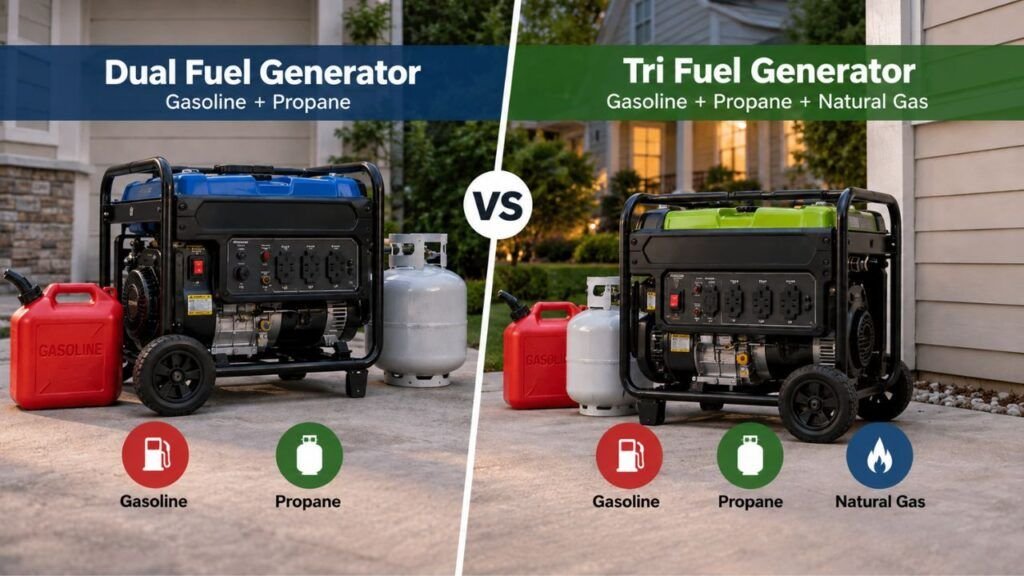
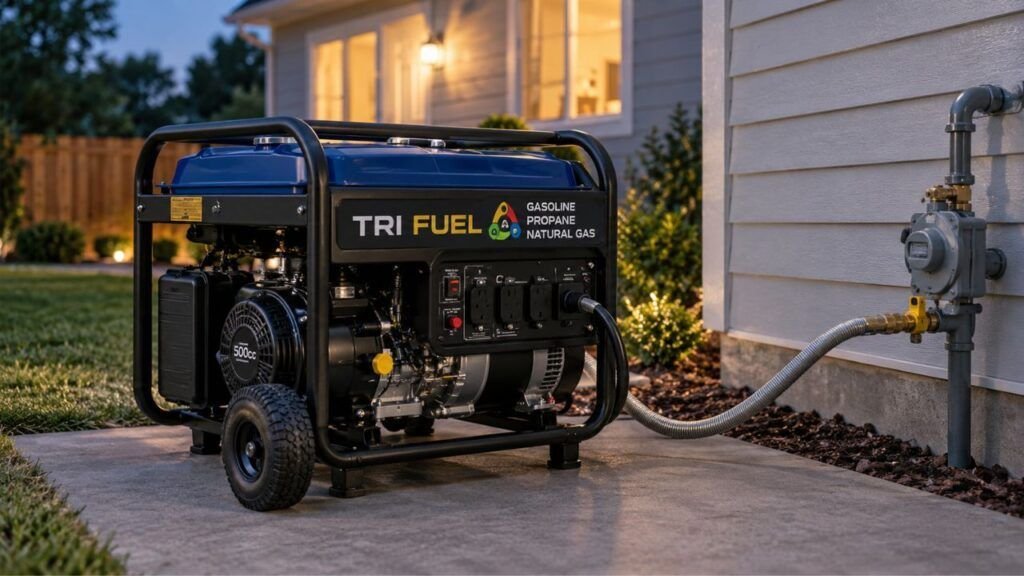
A dual fuel generator runs on gasoline and propane, while a tri fuel generator also supports natural gas. Both work well for home backup, but the right choice depends on fuel availability and outage duration.
| Feature | Dual Fuel Generator | Tri Fuel Generator |
| Fuel Options | Gasoline and propane | Gasoline, propane, natural gas |
| Power Output | Usually highest on gasoline | Usually highest on gasoline |
| Fuel Storage | Gasoline needs maintenance; propane stores well | Natural gas may eliminate stored-fuel refills |
| Operating Cost | Depends on local gas and propane prices | Natural gas may cost less where available |
| Convenience | Portable fuel supplies | Convenient with an available natural gas connection |
| Best For | Occasional and extended outages | Frequent or prolonged outages |
If you want a portable generator without installing a natural gas connection, dual fuel is generally the simpler choice.
However, a tri fuel generator makes sense when your home already has natural gas service. It may provide longer uninterrupted operation, assuming the gas supply remains available. Remember that natural gas generally reduces generator output further.
Can a Dual Fuel Generator Power an Entire House?
Yes, a sufficiently powerful dual fuel generator can run an entire house, but actual coverage depends on household electricity demand, starting watts, and electrical connections.
A generator delivering 9,000 to 12,000 running watts can support many essential household circuits and potentially central air conditioning. However, large AC compressors, electric water heaters, dryers, and cooking appliances can quickly exceed available capacity.
For larger homes, look for 120/240V output, a suitable 50A connection, and adequate starting wattage. Some central AC systems may also need an approved soft starter.
We recommend calculating your essential loads before purchasing. A properly installed transfer switch or approved interlock allows safe home connections, while load management prevents overloads.
Is a Dual Fuel Generator Worth It for Home Backup?
Yes, a dual fuel generator is worth considering if you want reliable emergency electricity without depending on one fuel source.
Gasoline provides higher power output, while propane offers long-term storage convenience and generally cleaner combustion. That flexibility becomes especially useful during storms and prolonged power outages when gasoline availability may be unpredictable.
However, fuel-powered generators still require oil changes, periodic maintenance, safe outdoor operation, and proper fuel storage. Propane also produces less electrical output, while operating costs depend on local fuel prices.
If outages are occasional, a smaller dual fuel inverter generator may be sufficient. For frequent or extended outages, a higher-output model with 120/240V capability and a transfer-switch-ready outlet is generally the more practical investment.
Final Verdict
The Westinghouse 12500 Watt Dual Fuel generator is our top overall choice for most homeowners. With 9,500 running watts, remote electric start, and 30A/50A outlets, it offers a practical balance of power, convenience, and home backup compatibility.
If you’re looking for an affordable option, the ERAYAK 4500W Dual-Fuel inverter generator is worth considering. Its lightweight design and 3,500 running watts make it suitable for refrigerators, lights, and smaller appliances during occasional power outages.
For larger homes with demanding electrical loads, the DuroMax XP13000HX dual fuel generator is a strong heavy-duty option. Its 13,000 peak watts and 50A outlet make it appealing for extensive home backup, provided its continuous output meets your household’s requirements.
Related FAQs
Can You Switch From Gasoline to Propane While a Generator Is Running?
Some dual fuel generators allow fuel switching without shutting down, but others require stopping the engine first. Always check the manufacturer’s instructions before changing fuel sources.
Does a Dual Fuel Generator Automatically Switch Fuels When One Runs Out?
Most dual fuel generators require manual fuel switching. However, certain models offer automatic fuel switching, allowing continued operation when the primary fuel supply runs out.
What Size Propane Tank Is Best for a Dual Fuel Generator?
A 20-pound propane tank works for shorter outages, while 40-pound or 100-pound tanks provide longer operation. Choose based on generator fuel consumption, expected runtime, and manufacturer compatibility.
Can You Connect Two Dual Fuel Generators Together?
Yes, some dual fuel inverter generators support parallel operation using a compatible parallel kit. This increases available power, but both generators and their connecting equipment must support the configuration.
Are Dual Fuel Generators Safe for TVs, Computers, and Electronics?
Yes, especially inverter generators producing low total harmonic distortion (THD). Look for models rated at 3% THD or less when powering sensitive electronics.
Can a Dual Fuel Generator Run a 240V Well Pump?
Yes, a dual fuel generator with 120/240V output can power a compatible well pump. Its running and starting wattage must meet the pump’s electrical requirements.
How Should You Store Gasoline and Propane for Emergency Generator Use?
Store gasoline in approved containers with proper fuel stabilization when recommended. Keep propane cylinders upright in suitable outdoor locations, away from heat and ignition sources.
Is Remote Start Worth Having on a Dual Fuel Generator?
Remote start adds convenience during power outages, especially in cold or rainy weather. However, you must still verify safe outdoor placement and proper operating conditions before starting the generator.

Brian Walker writes straightforward generator guides and reviews for homeowners and everyday users. His content focuses on solar, portable, and fuel-powered generators, with practical advice on choosing, using, and maintaining reliable backup power.