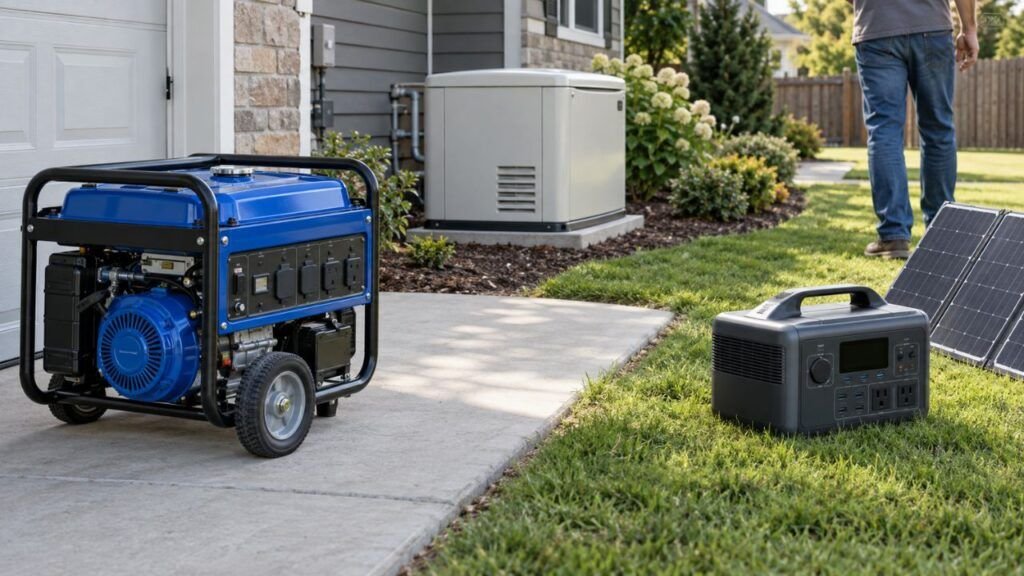
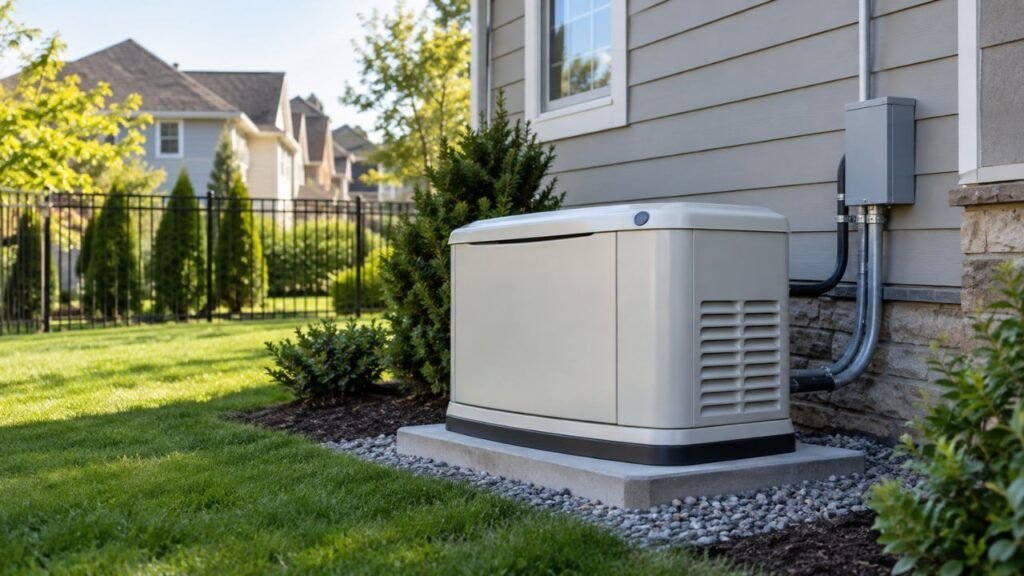
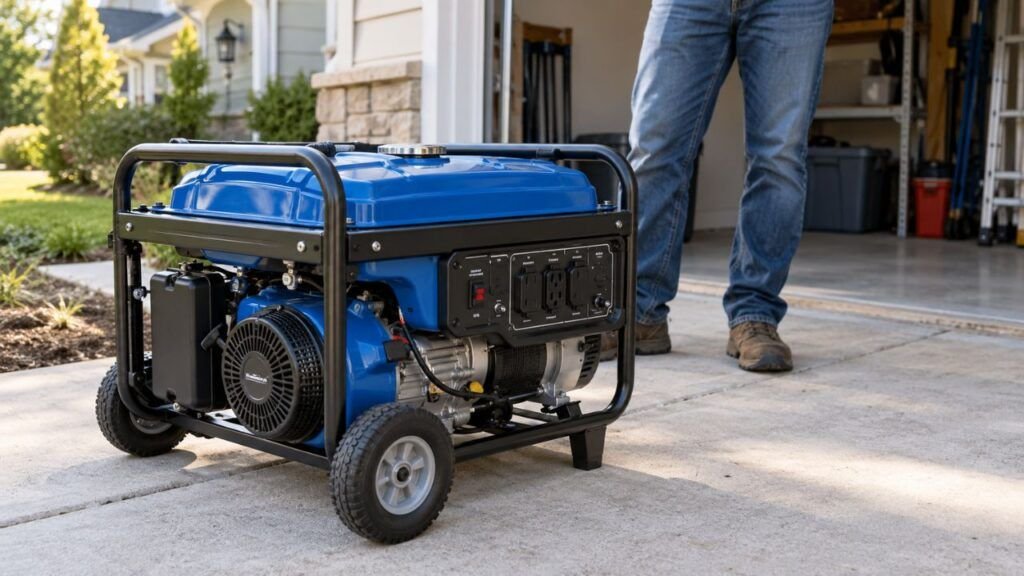
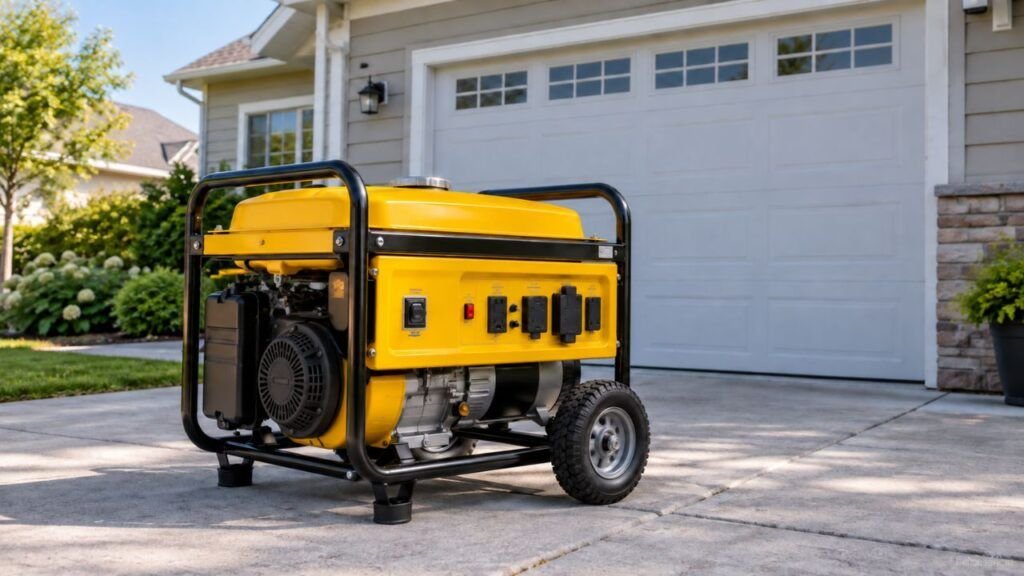
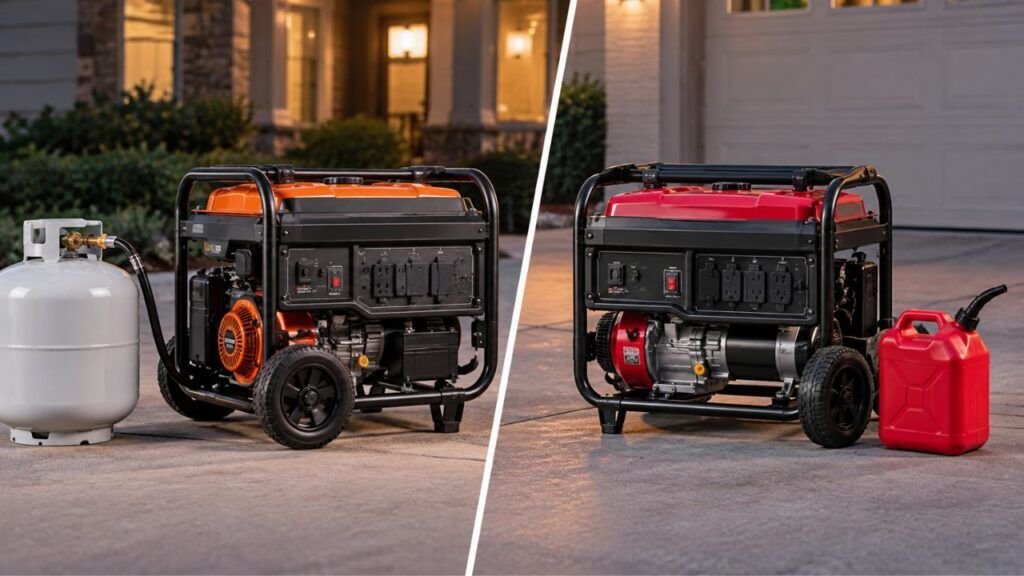
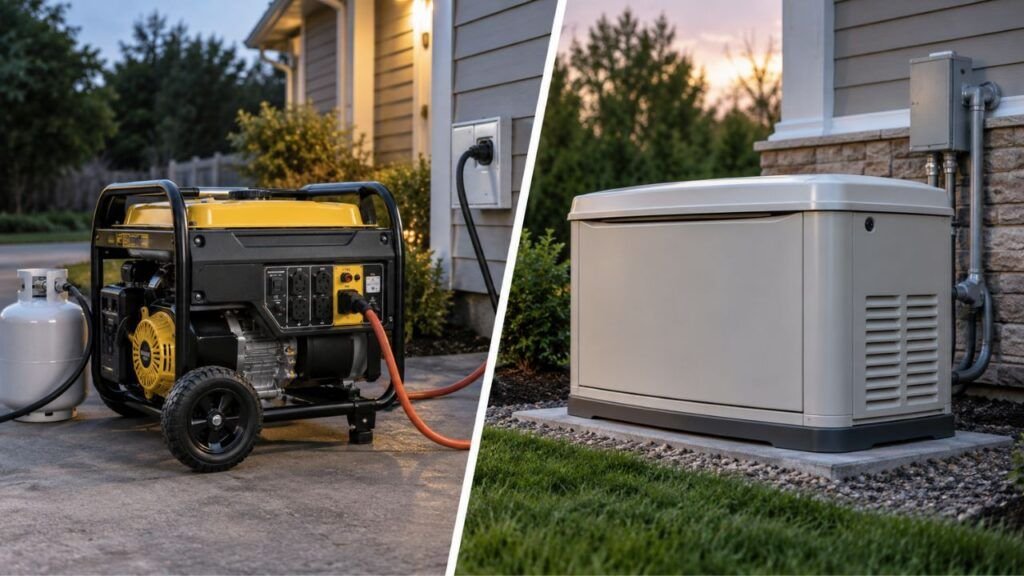
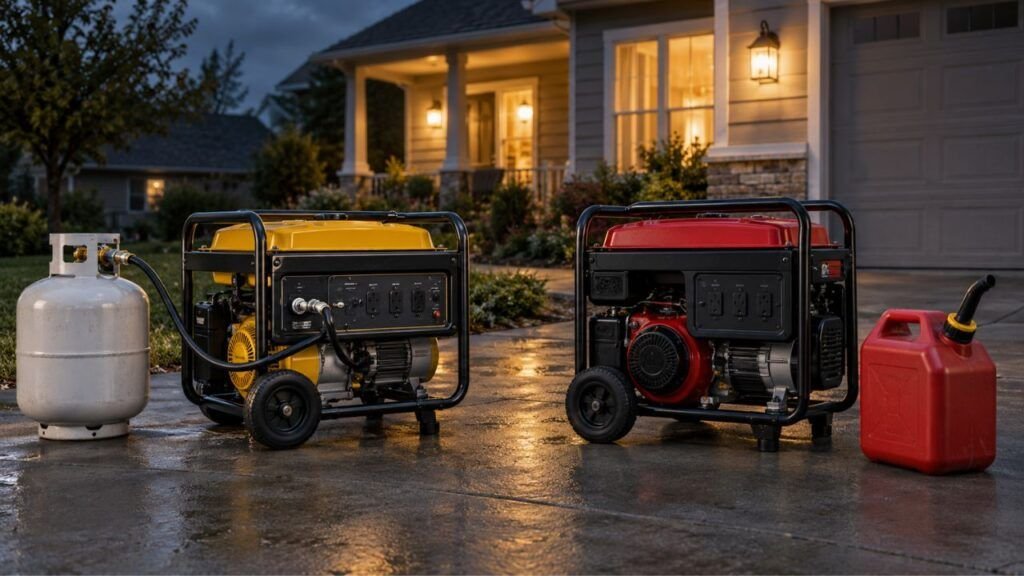
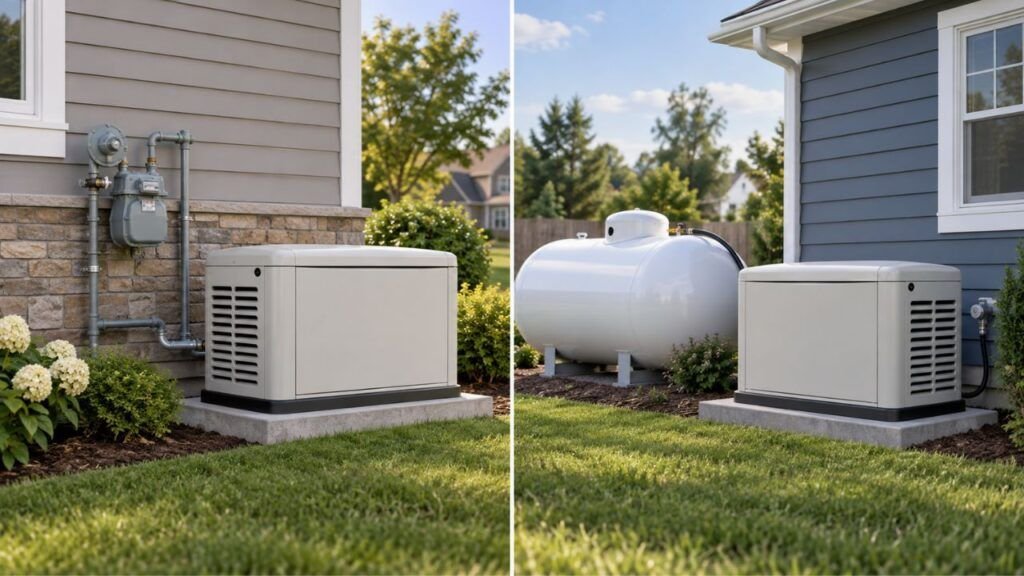
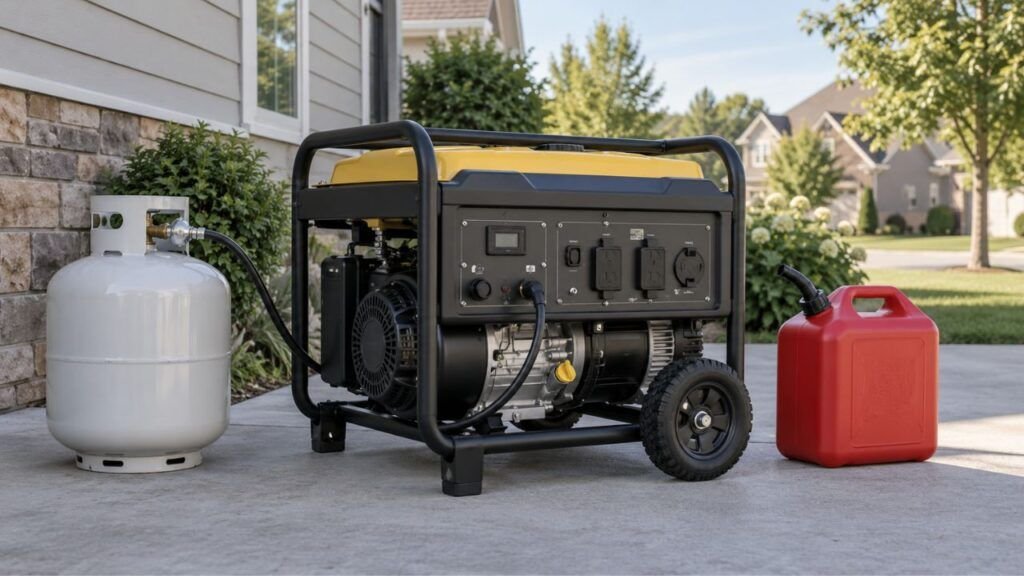
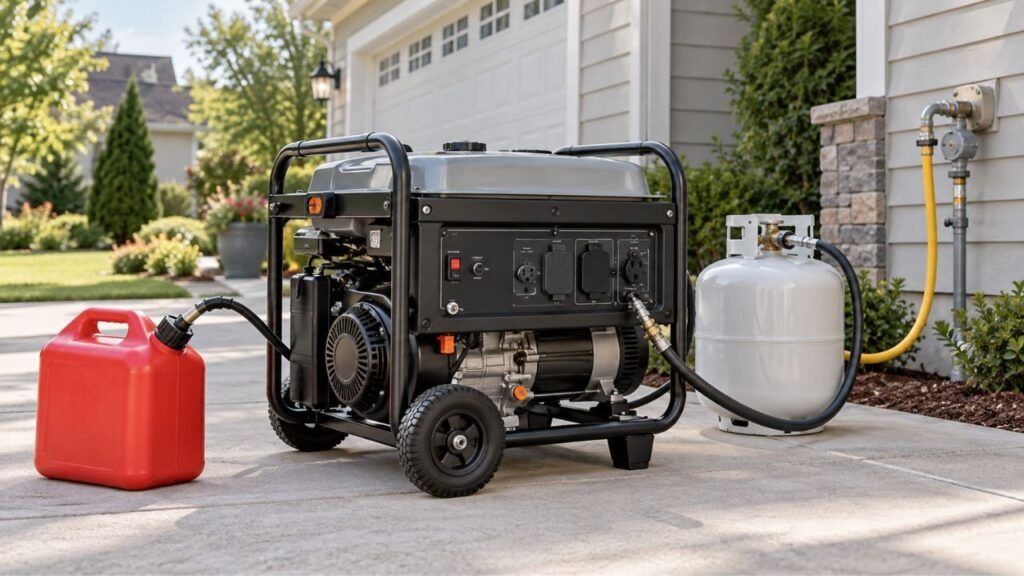
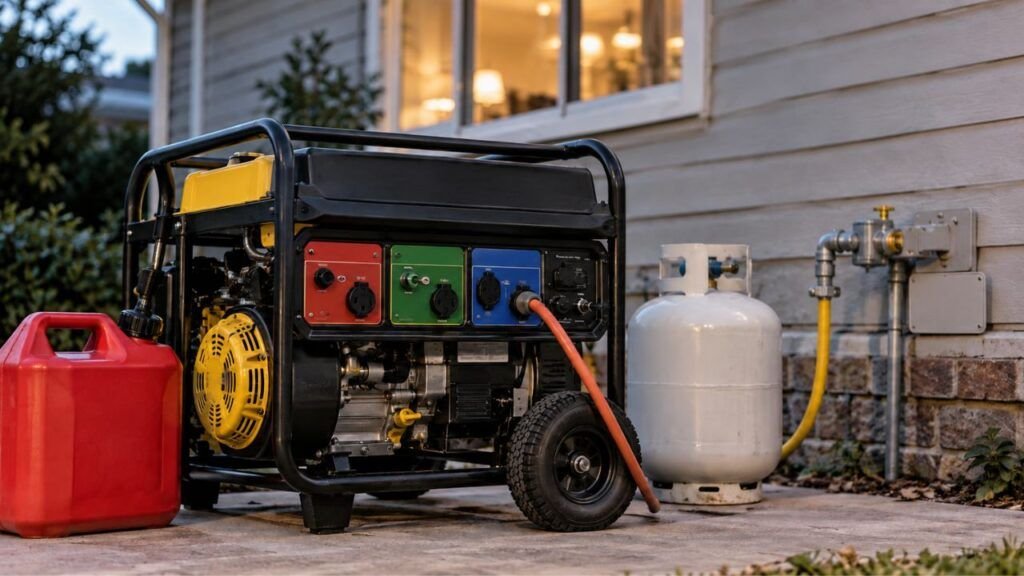
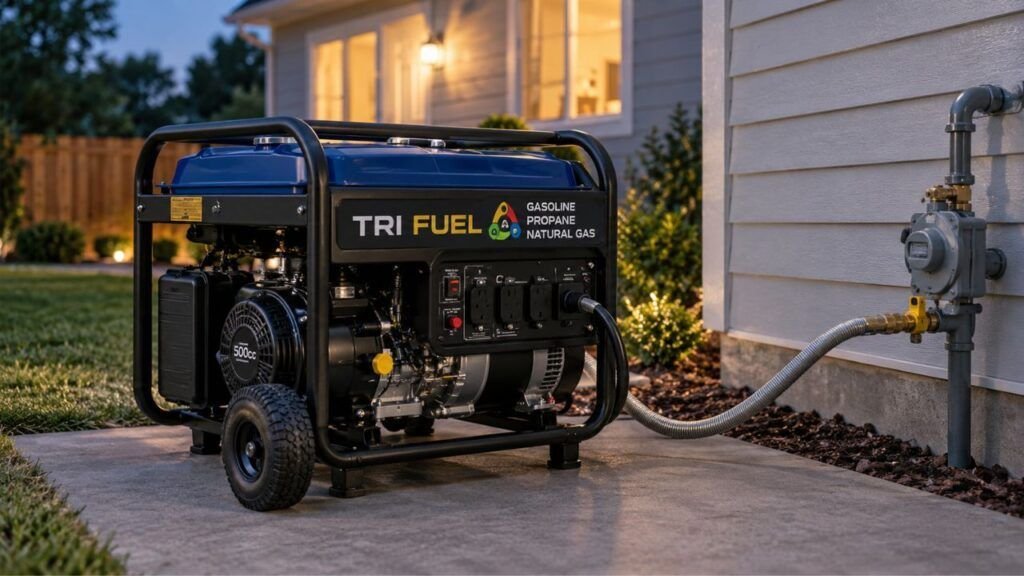
If you are looking for the best tri fuel generators for home backup, we recommend models that deliver reliable power and run on gasoline, propane, or natural gas during outages.
For large homes, we’d pick the Westinghouse 28000 Peak Watt Tri-Fuel. The Generac 12,500 Starting Watt Tri-Fuel offers great value, while the WEN 14,500-Watt 120V/240V Tri-Fuel suits natural gas backup. We’d also recommend the Westinghouse 8200 Peak Watt Tri-Fuel for sensitive electronics and the Champion 8500-Watt Remote Start Tri Fuel for quieter operation.
After testing the top tri fuel generators for home backup, we’ve selected 12 models based on power output, runtime, fuel flexibility, and performance to help you choose the right one.
We’re reader-supported. When you buy through links on our site, we may earn an affiliate commission. As an Amazon Associate, we earn from qualifying purchases at no extra cost to you.
Best Tri Fuel Generators for Home Backup: Our Top Picks
- Best Overall: Westinghouse 28000 Peak Watt Tri-Fuel
- Best for Mid-Size Homes: DuroStar DS13000MXT
- Best Value Option: Generac 12,500 Starting Watt Tri-Fuel
- Best for Quiet Operation: Champion 8500-Watt Remote Start Tri Fuel
- Best for Easy Starting: DuroMax XP13000HXT
- Best for Natural Gas Backup: WEN 14,500-Watt 120V/240V Tri-Fuel
- Best for Sensitive Electronics: Westinghouse 8200 Peak Watt Tri-Fuel
- Best for Essential Home Backup: Champion 12,500-Watt Electric Start Tri Fuel
- Best for Automatic Backup: Westinghouse 14500 Peak Watt Tri-Fuel
- Best for Smart Backup Systems: GENMAX 15000W Tri-Fuel Portable Generator
- Best High-Output Inverter: Westinghouse 12000 Peak Watt Tri-Fuel
- Best for Flexible Connections: AIVOLT 11500W Tri Fuel Inverter Generator
1. Best Overall: Westinghouse 28000 Peak Watt Tri-Fuel
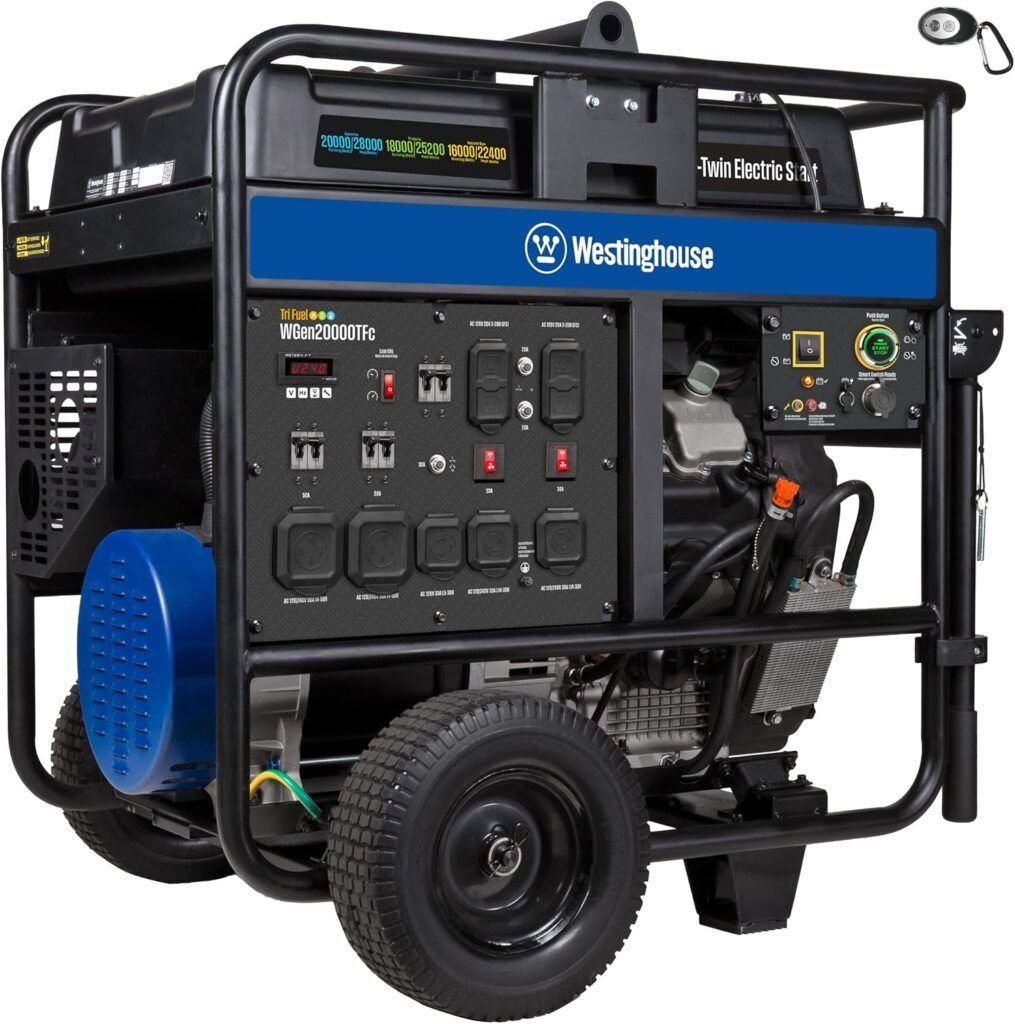
Key Details:
- Gasoline Output: 28,000 starting watts and 20,000 running watts.
- Propane Output: 25,200 starting watts and 18,000 running watts.
- Natural Gas Output: 22,400 starting watts and 16,000 running watts.
- Engine & Tank: 999cc V-Twin engine with a 17.2-gallon gasoline tank.
- Home Backup Features: 30A/50A outlets, 125A terminal connection, remote start, CO sensor, and WATS200 compatibility.
If you need serious whole-house backup power, the Westinghouse 28000 Peak Watt Tri-Fuel Generator deserves your attention. Its 20,000 running watts on gasoline provide substantial capacity for central AC, refrigerators, water pumps, and other demanding household appliances.
What makes this generator particularly appealing is its fuel flexibility. You get 18,000 running watts on propane and 16,000 watts on natural gas. We also like its 999cc V-Twin engine, full-pressure lubrication, and copper windings designed for demanding backup applications.
Another advantage of the Westinghouse 28000 is its automatic backup potential. Pairing it with the compatible WATS200 transfer switch allows automatic operation. However, delivering its full 20,000-watt output requires a suitable professionally installed connection, not just a standard 50A outlet.
At 557 pounds, this isn’t something you’ll move around casually. You’ll also need suitable outdoor space and proper electrical installation. Still, if you want a high-output portable tri-fuel generator for large-home backup, this is a strong choice.
Pros:
- Massive running wattage across all three fuel options.
- Excellent capacity for demanding whole-house backup applications.
- Compatible with automatic transfer switch systems.
- Heavy-duty engine with remote starting and CO protection.
Cons:
- Extremely heavy and challenging to transport frequently.
- Full-output home installation requires additional electrical equipment.
2. Best for Mid-Size Homes: DuroStar DS13000MXT
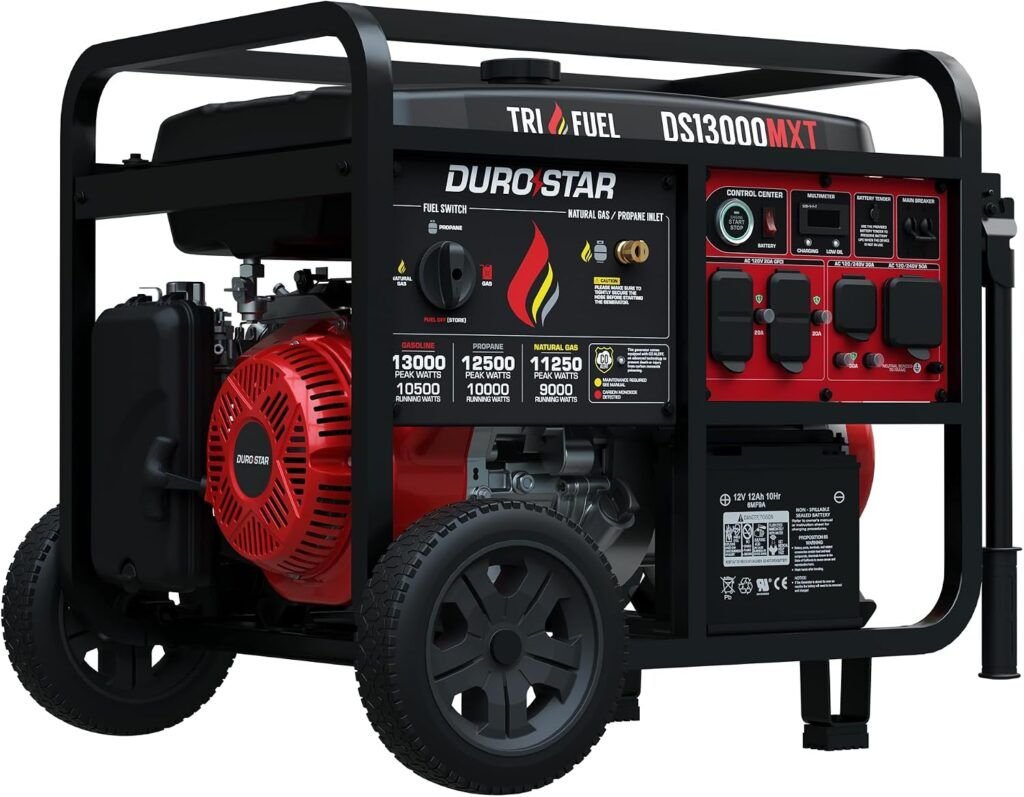
Key Details:
- Gasoline Output: 13,000 starting watts and 10,500 running watts.
- Propane Output: 12,500 starting watts and 10,000 running watts.
- Natural Gas Output: 11,250 starting watts and 9,000 running watts.
- Engine & Weight: 500cc OHV engine, approximately 211 pounds dry.
- Home Backup Features: 50A outlet, remote electric start, CO Alert, and 8.3-gallon gasoline tank.
The DuroStar DS13000MXT Tri-Fuel Generator makes sense if you want substantial home backup power without buying an oversized machine. Its 10,500 running watts on gasoline offer useful capacity for refrigerators, water pumps, lighting, and selected high-demand appliances.
One thing we like is its strong performance across all three fuels. Even on natural gas, you get 9,000 running watts, which can support many essential household circuits. The included fuel connection accessories also make preparing your backup setup easier.
When connecting the DuroStar DS13000MXT to your home’s electrical system, its transfer-switch-ready 50A outlet becomes particularly useful. Remote electric starting adds convenience, while the 8.3-gallon gasoline tank supports up to 8.5 hours at half load.
At approximately 211 pounds dry, this portable home backup generator still needs adequate moving space. You’ll also need to account for appliance starting loads and fuel-specific output. For mid-size households needing dependable emergency electricity, it offers an appealing balance of power and flexibility.
Pros:
- Strong running wattage for essential household appliances.
- Excellent power availability across three fuel types.
- Remote electric start makes operation convenient.
- Includes a 50A outlet and useful fuel accessories.
Cons:
- Heavy enough to make frequent transportation inconvenient.
- Natural gas operation delivers less power than gasoline.
3. Best Value Option: Generac 12,500 Starting Watt Tri-Fuel
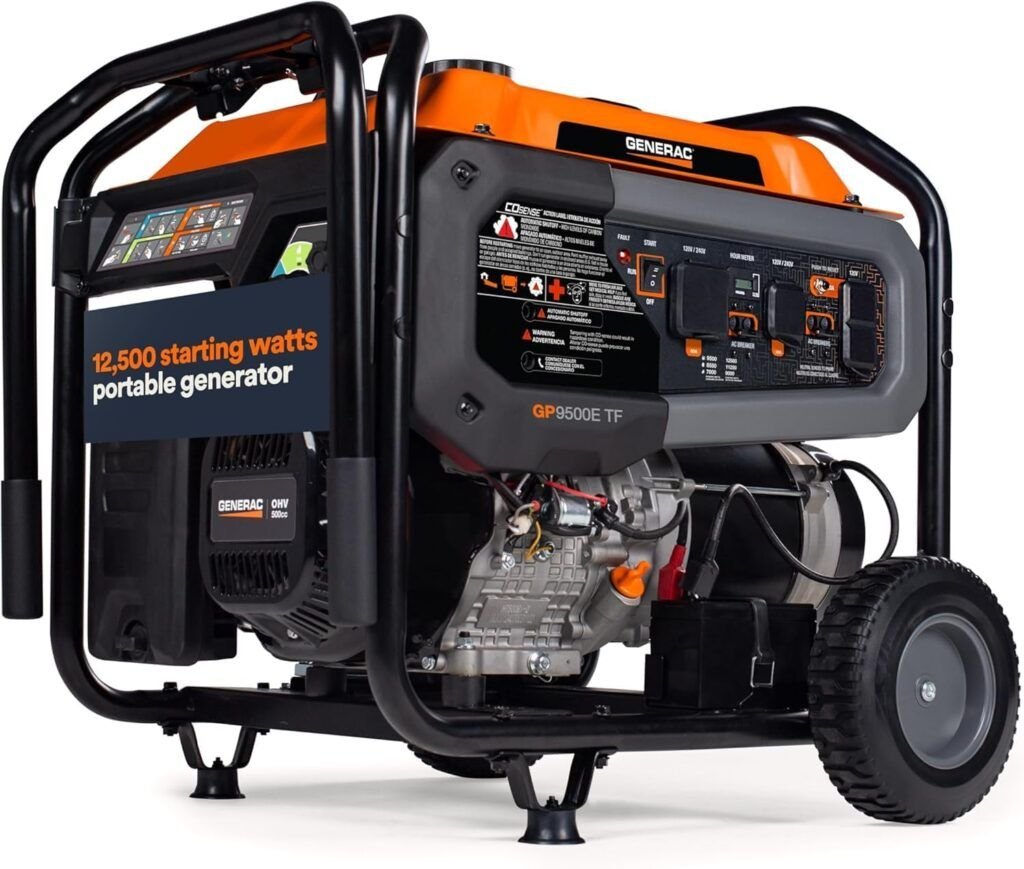
Key Details:
- Power Output: 12,500 starting watts and 9,500 running watts on gasoline.
- Fuel Options: Gasoline, propane, and natural gas.
- Engine: 500cc Generac OHV engine.
- Runtime: Up to 9.5 hours at 50% load on gasoline.
- Home Backup Features: 30A/50A outlets, electric start, COsense, and voltage regulation.
If you want a capable tri-fuel generator for home backup without going overboard on capacity, the Generac GP9500 makes plenty of sense. Its 9,500 running watts on gasoline can support multiple essential household circuits, including refrigerators, sump pumps, lights, and selected kitchen appliances.
What stands out is its 12,500-watt starting capacity. This provides useful headroom when motor-driven appliances kick on. The automatic voltage regulation is another welcome feature, helping maintain consistent output as electrical loads change.
The Generac GP9500 also offers practical fuel flexibility during prolonged outages. Its 7.5-gallon gasoline tank delivers up to 9.5 hours at half load. You can also use propane or a suitable natural gas connection when gasoline isn’t readily available.
We also like the electric start, COsense protection, and transfer-switch-compatible outlets. Just remember that running wattage decreases on propane and natural gas. For homeowners focused on essential backup circuits, this is a well-rounded portable tri-fuel generator.
Pros:
- Strong starting wattage for motor-driven household appliances.
- Three fuel options for flexible emergency power.
- Electric start and COsense add convenience and safety.
- 30A and 50A outlets support home backup connections.
Cons:
- Reduced electrical output on propane and natural gas.
- Gasoline runtime shortens considerably under heavier loads.
4. Best for Quiet Operation: Champion 8500-Watt Remote Start Tri Fuel
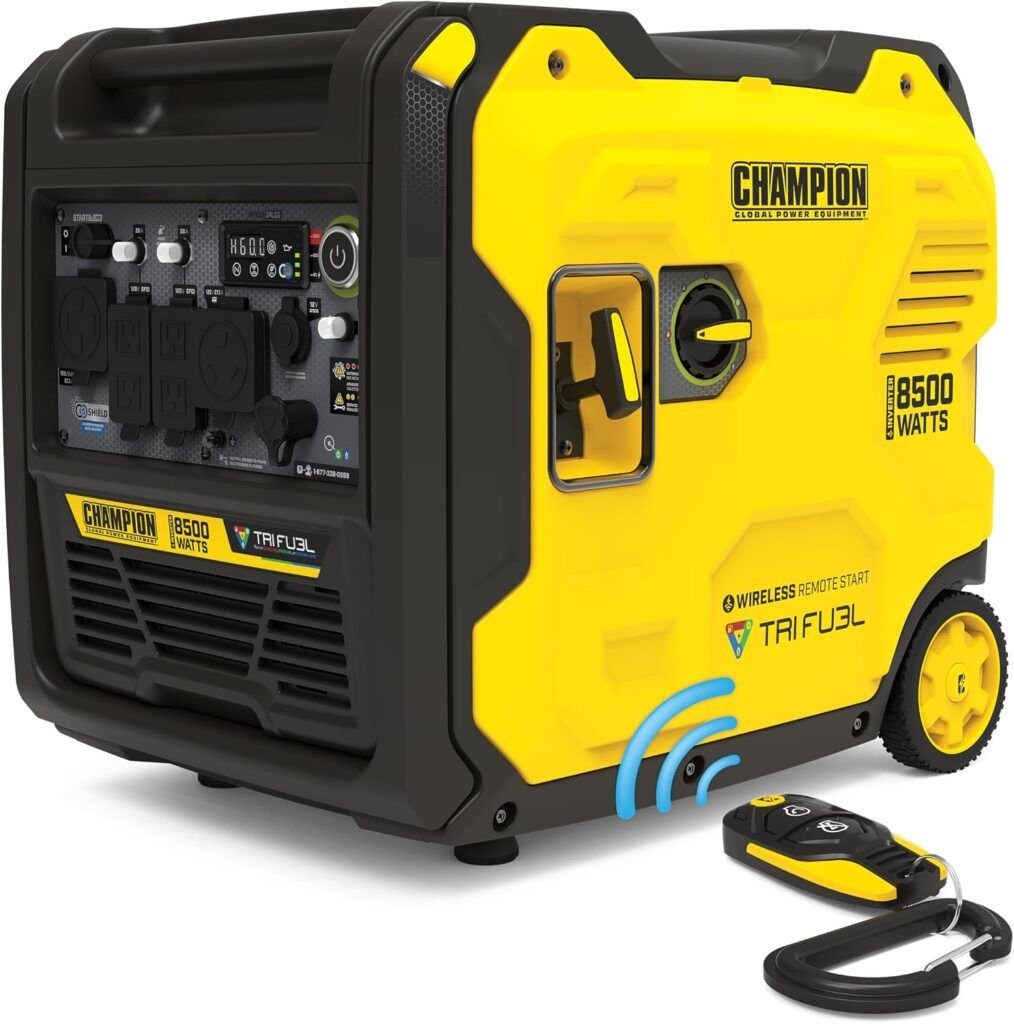
Key Details:
- Gasoline Output: 8,500 starting watts and 6,500 running watts.
- Propane Output: 8,500 starting watts and 5,850 running watts.
- Natural Gas Output: 8,500 starting watts and 5,265 running watts.
- Noise & Runtime: 64 dB(A), up to 13 hours at 25% load on gasoline.
- Home Backup Features: Wireless remote start, StartLINK, CO Shield, and 120/240V output.
Not every homeowner needs a massive generator during a blackout. The Champion 8500-Watt Tri-Fuel Inverter Generator offers a practical solution for essential home backup, especially when quieter operation, fuel flexibility, and convenience matter most.
Its enclosed inverter design is a major advantage. With a manufacturer-rated noise level of 64 dB(A), it offers quieter operation than many conventional open-frame models. You also get 6,500 running watts on gasoline, enough for many everyday backup appliances.
What we particularly like about the Champion 8500-Watt is its wireless remote start and StartLINK technology. The remote works from up to 80 feet away, while StartLINK supports compatible energy storage and automatic start/stop systems.
At approximately 132 pounds, it’s more manageable than many larger tri-fuel generators. However, its 5,265 running watts on natural gas require careful load planning. If you prioritize quieter inverter operation and convenient home backup, this model is worth considering.
Pros:
- Enclosed inverter design supports quieter operation.
- Wireless remote start adds everyday convenience.
- Three fuel options improve flexibility during outages.
- StartLINK supports compatible automatic backup integrations.
Cons:
- Limited capacity for several high-demand appliances simultaneously.
- Natural gas operation provides lower continuous power.
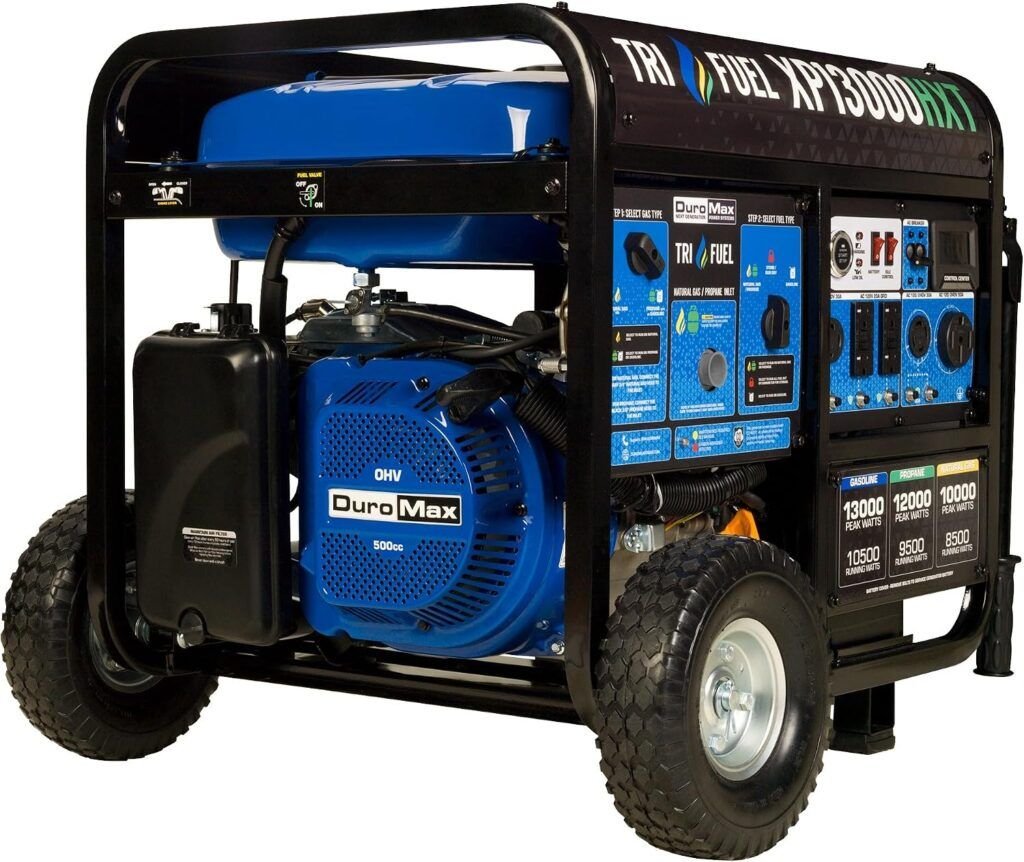
5. Best for Easy Starting: DuroMax XP13000HXT
Key Details:
- Gasoline Output: 13,000 starting watts and 10,500 running watts.
- Propane Output: 12,500 starting watts and 10,000 running watts.
- Natural Gas Output: 11,250 starting watts and 9,000 running watts.
- Engine & Tank: 500cc OHV engine with an 8.3-gallon gasoline tank.
- Home Backup Features: Remote electric start, 50A outlet, digital meter, and CO Alert.
The DuroMax XP13000HXT Tri-Fuel Generator is a solid choice if you want powerful home backup without complicated starting procedures. Its 10,500 running watts on gasoline make it suitable for refrigerators, pumps, lighting, and selected high-demand household appliances.
What we particularly like is the convenient starting system. You can start the generator remotely or use its push-button electric start. Its front-facing fuel selector also makes choosing between gasoline, propane, and natural gas straightforward.
For home backup, the DuroMax XP13000HXT offers a transfer-switch-ready 50A outlet and 120/240V output. The 500cc OHV engine provides substantial capacity, while its CO Alert system adds automatic shutdown protection when elevated carbon monoxide levels are detected.
At 240 pounds dry, this isn’t a lightweight portable generator. You’ll also need to consider its reduced wattage on alternative fuels. Still, if you value easy starting, flexible fuel options, and dependable essential-circuit capacity, it’s a practical option.
Pros:
- Strong running wattage for demanding household loads.
- Remote and push-button electric start add convenience.
- Gasoline, propane, and natural gas compatibility.
- Transfer-switch-ready 50A outlet with CO protection.
Cons:
- Heavy design makes frequent relocation challenging.
- Available running wattage decreases on alternative fuels.
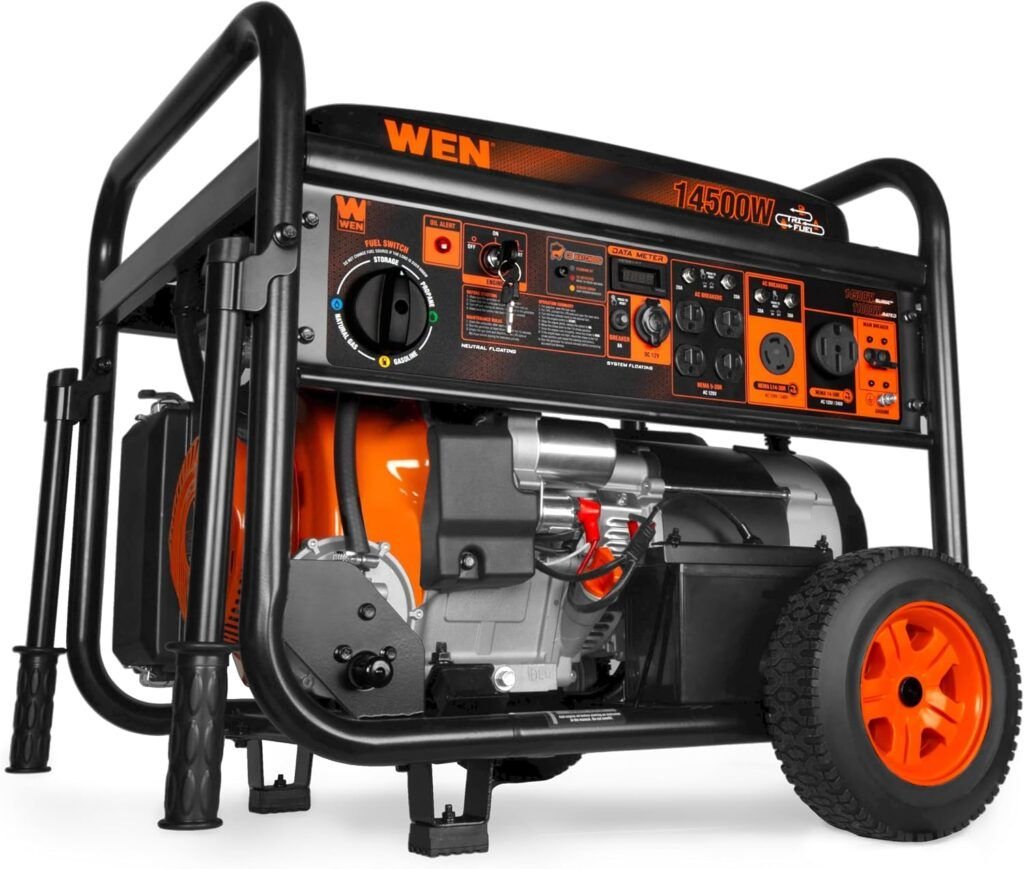
6. Best for Natural Gas Backup: WEN 14,500-Watt 120V/240V Tri-Fuel
Key Details:
- Power Output: 14,500 starting watts and 11,500 running watts on gasoline.
- Propane Output: 12,500 starting watts and 10,300 running watts.
- Natural Gas Output: 10,500 starting watts and 8,750 running watts.
- Engine & Runtime: 500cc OHV engine, up to 12 hours at half load on gasoline.
- Home Backup Features: 30A/50A outlets, electric start, CO Watchdog, and 120/240V output.
If you’re planning to use natural gas for home backup, the WEN TF-1450X Tri-Fuel Generator deserves a closer look. Its 8,750 running watts on natural gas can support many essential household circuits, while gasoline provides up to 11,500 running watts.
What stands out is its clearly specified power output across all three fuels. You can choose gasoline for maximum capacity, propane for stored fuel flexibility, or natural gas for convenient supply from a suitable home connection. The fuel-selection dial keeps operation straightforward.
We also like the WEN TF-1450X’s practical home backup connections. Its 30A and 50A outlets support compatible transfer switch installations, while the 8.2-gallon gasoline tank provides up to 12 hours of runtime at half load.
The main consideration is its 248-pound weight and lower natural gas output compared with gasoline. You’ll also need a properly sized gas supply connection. However, for homeowners wanting flexible emergency power with strong natural gas capability, this is an attractive option.
Pros:
- Strong running wattage across all three fuel options.
- Convenient fuel-selection dial simplifies switching fuels.
- 30A and 50A outlets support home backup installations.
- Electric start and CO Watchdog provide practical convenience.
Cons:
- Heavy design requires adequate storage and moving space.
- Natural gas output is lower than gasoline output.
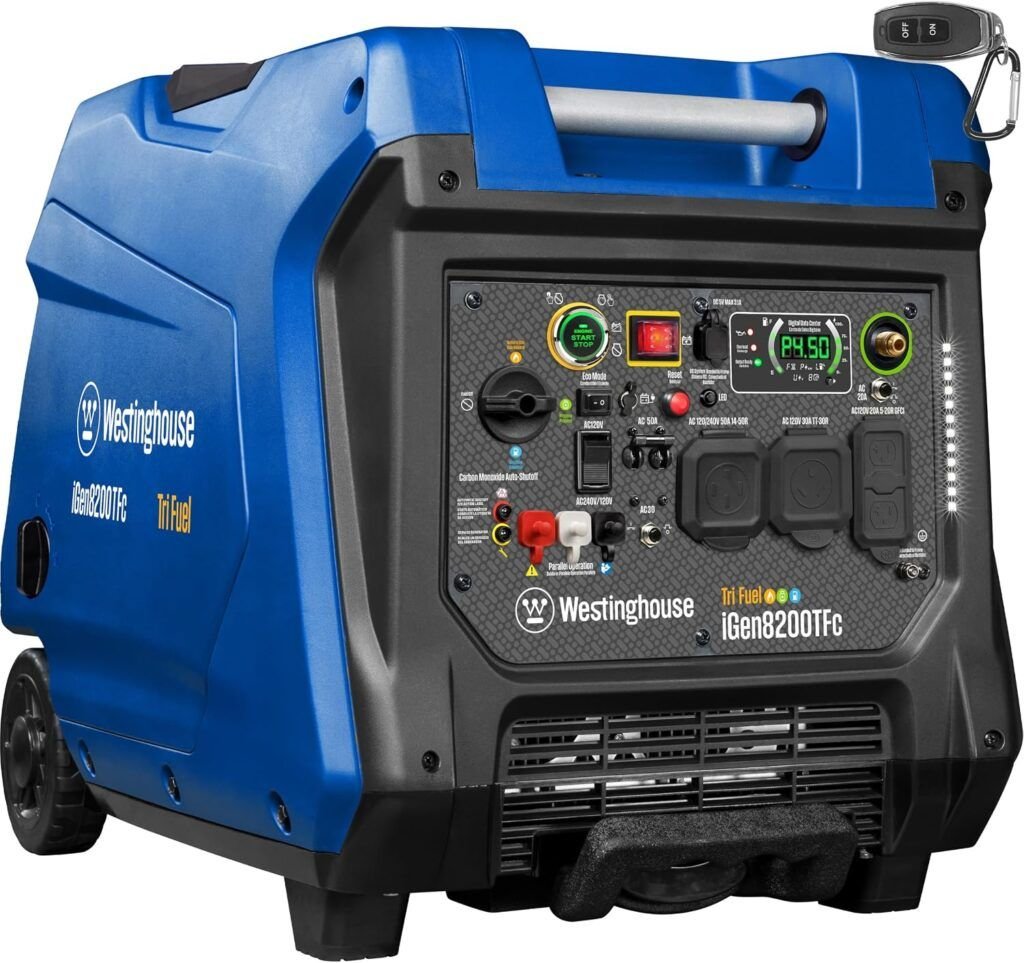
7. Best for Sensitive Electronics: Westinghouse 8200 Peak Watt Tri-Fuel
Key Details:
- Gasoline Output: 8,200 starting watts and 6,600 running watts.
- Propane Output: 7,380 starting watts and 5,940 running watts.
- Natural Gas Output: 6,560 starting watts and 5,280 running watts.
- Noise & Runtime: Around 60 dBA at 25% load, up to 17 hours on gasoline.
- Home Backup Features: 50A outlet, remote start, less than 3% THD, and CO sensor.
The Westinghouse iGen8200TFc Tri-Fuel Inverter Generator is an appealing option if your home backup priorities include quieter operation and sensitive electronics. Its 6,600 running watts on gasoline can support refrigerators, lighting, computers, internet equipment, and other essential household loads.
What makes this inverter generator stand out is its clean power output. With less than 3% total harmonic distortion, it’s particularly suitable for electronics that benefit from stable electricity. We also like its fuel-saving inverter technology and relatively quiet operation.
For residential backup, the Westinghouse iGen8200TFc includes a 120/240V 50A outlet for compatible home electrical connections. Remote electric starting adds convenience, while its 3.9-gallon gasoline tank supports up to 17 hours at 25% load.
At approximately 134.5 pounds, it’s more manageable than many high-output tri-fuel generators. However, its lower running wattage means large appliances may need careful load management. If you want cleaner power, less noise, and flexible fuel options, this model makes plenty of sense.
Pros:
- Less than 3% THD supports sensitive household electronics.
- Inverter technology helps reduce noise and fuel consumption.
- Gasoline, propane, and natural gas compatibility.
- Remote start and 50A outlet add backup convenience.
Cons:
- Limited capacity for multiple high-wattage appliances.
- Lower running wattage when operating on natural gas.
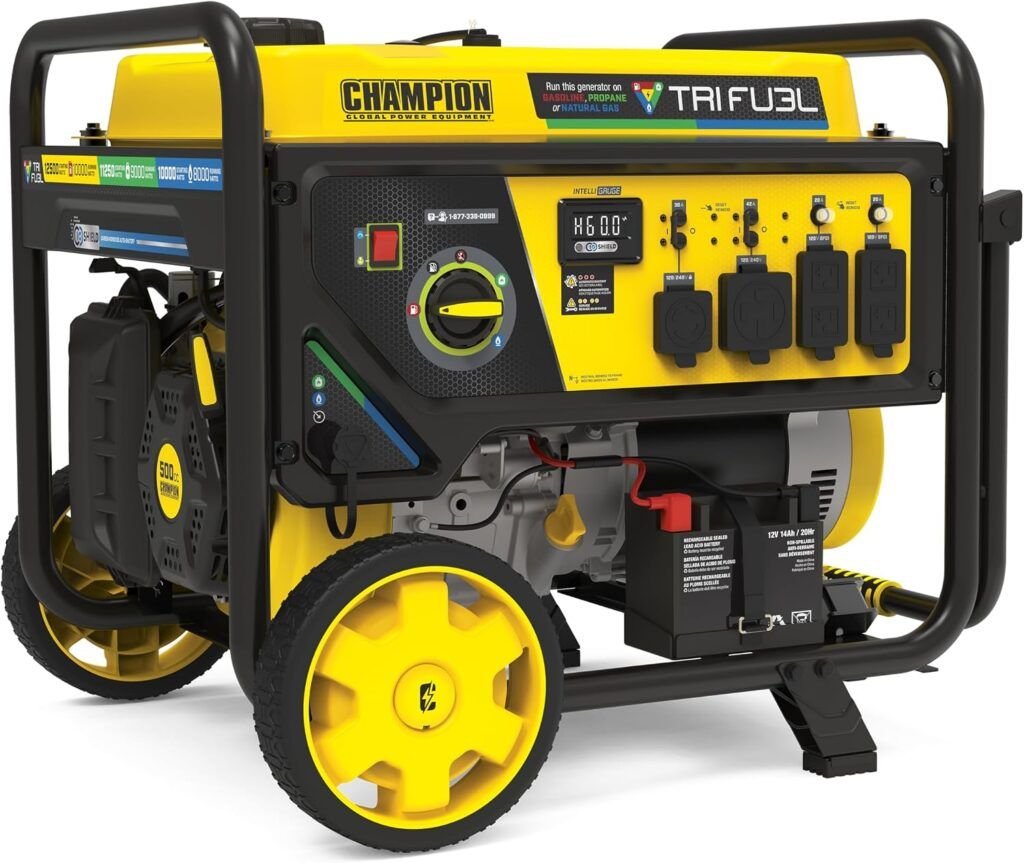
8. Best for Essential Home Backup: Champion 12,500-Watt Electric Start Tri Fuel
Key Details:
- Gasoline Output: 12,500 starting watts and 10,000 running watts.
- Propane Output: 11,250 starting watts and 9,000 running watts.
- Natural Gas Output: 10,000 starting watts and 8,000 running watts.
- Engine: 500cc Champion engine with electric start.
- Home Backup Features: CO Shield, Intelligauge, included fuel hoses, and 3-year limited warranty.
The Champion 12,500-Watt Tri-Fuel Generator is a practical choice if you want dependable power for everyday household essentials during an outage. With 10,000 running watts on gasoline, it offers useful capacity for refrigerators, freezers, sump pumps, lighting, and selected larger appliances.
One thing we like is its balanced performance across three fuel types. Even on natural gas, you still get 8,000 running watts, which can cover many essential home backup needs. The included propane and natural gas hoses also simplify fuel connection planning.
The Champion 12,500-Watt also keeps operation straightforward. Its electric start eliminates routine pull-cord starting, while the Intelligauge display tracks voltage, frequency, and operating hours. CO Shield adds automatic shutdown protection when elevated carbon monoxide levels are detected.
At approximately 231 pounds, you’ll want to plan its storage and outdoor placement carefully. It’s also important to calculate appliance starting loads before connecting your home. For households wanting strong essential-circuit backup with flexible fuel choices, this is a well-rounded option.
Pros:
- Strong running wattage for essential household backup needs.
- Useful power output on gasoline, propane, and natural gas.
- Electric start and Intelligauge simplify operation and monitoring.
- Includes fuel hoses, CO Shield, and a 3-year limited warranty.
Cons:
- Heavy enough to make frequent transportation inconvenient.
- High-demand appliances require careful load planning.
9. Best for Automatic Backup: Westinghouse 14500 Peak Watt Tri-Fuel
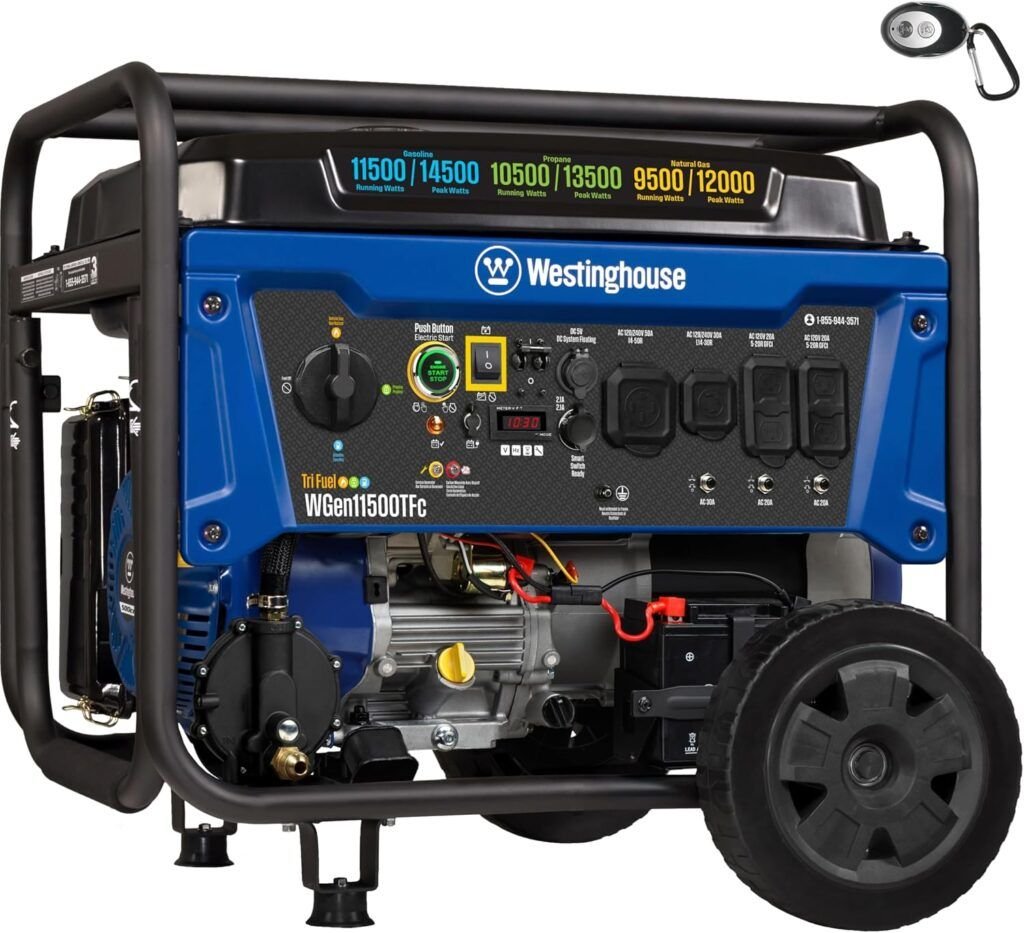
Key Details:
- Power Output: 14,500 starting watts and 11,500 running watts on gasoline.
- Fuel Options: Gasoline, propane, and natural gas.
- Engine: Heavy-duty 550cc engine with pressure lubrication.
- Runtime: Up to 19 hours at 25% load on gasoline.
- Home Backup Features: 30A/50A outlets, remote start, CO sensor, and automatic transfer switch compatibility.
If you want powerful home backup without constantly managing the generator, the Westinghouse 14500 Peak Watt Tri-Fuel Generator is worth considering. Its 11,500 running watts on gasoline provide substantial capacity for refrigerators, central AC systems, water pumps, and other essential household appliances.
What we particularly like is its automatic backup capability. When paired with the compatible WATS200 automatic transfer switch, it can provide automated backup operation. You also get remote electric start and three fuel options, making power outages easier to manage.
The Westinghouse 14500 also features a 550cc engine with pressure lubrication for improved durability. Its 9.5-gallon gasoline tank supports up to 19 hours at 25% load, while less than 5% THD makes it suitable for many household electronics.
At approximately 230 pounds, you’ll need suitable outdoor storage and placement. The automatic transfer switch also requires a separate purchase and installation. Still, if you want a tri-fuel portable generator with automatic home backup potential, this is a compelling option.
Pros:
- Strong power output for multiple household appliances.
- Compatible with an automatic home backup system.
- Remote electric start and three flexible fuel options.
- Long gasoline runtime and durable engine construction.
Cons:
- Automatic transfer switch requires an additional investment.
- Heavy design makes frequent transportation challenging.
10. Best for Smart Backup Systems: GENMAX 15000W Tri-Fuel Portable Generator
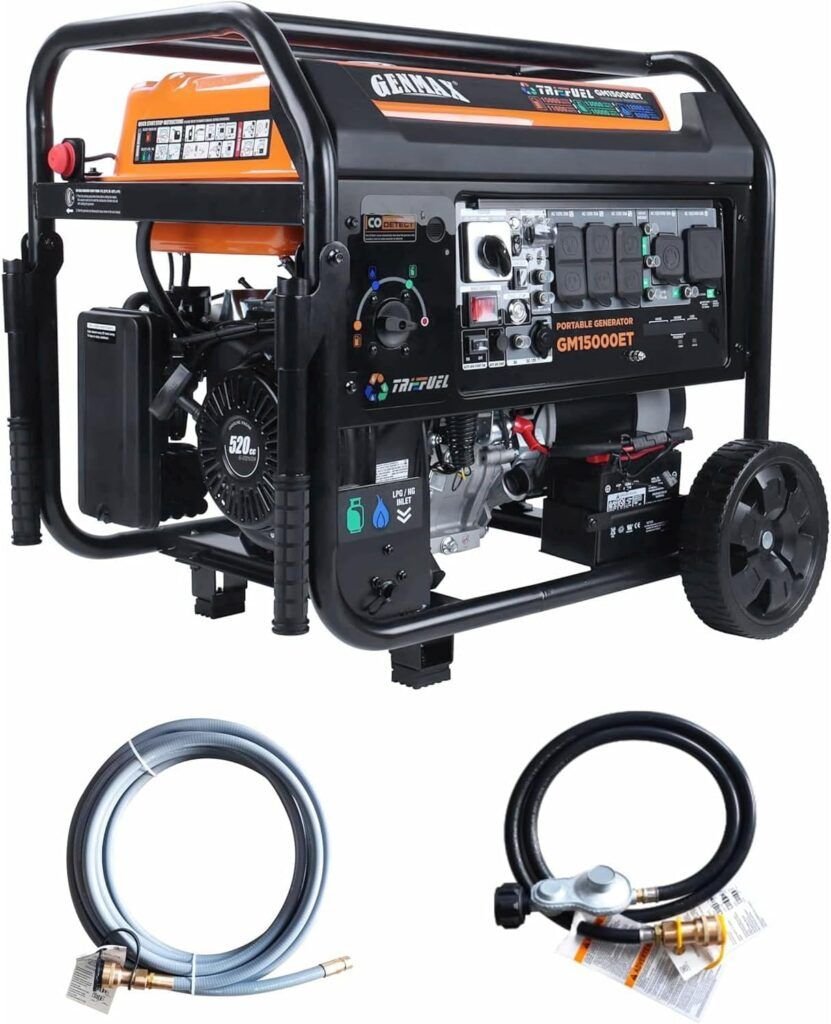
Key Details:
- Power Output: 15,000 starting watts and 11,000 running watts on gasoline.
- Fuel Options: Gasoline, propane, and natural gas.
- Fuel Tank: 10.56 gallons for extended gasoline operation.
- Weight: Approximately 243 pounds.
- Home Backup Features: 50A output, 2-wire automatic start/stop, remote start, CO sensor, and digital display.
The GENMAX GM15000ET Tri-Fuel Generator is an interesting choice if you’re planning a more advanced home backup setup. With 11,000 running watts on gasoline, it offers substantial power for refrigerators, sump pumps, kitchen appliances, and selected air conditioning systems.
What makes this model different is its 2-wire automatic start/stop capability. This allows integration with compatible energy storage equipment and control systems. We also like the remote electric start and recoil backup, which provide multiple starting options.
The GENMAX GM15000ET includes a digital monitoring panel, 50A output, and selectable 120V/240V operation. Its 10.56-gallon gasoline tank is another advantage for extended outages, while propane and natural gas compatibility provide additional fuel flexibility.
However, automatic operation requires compatible equipment and proper installation. Its 243-pound weight also makes portability less convenient. If you’re considering a tri-fuel home backup generator for a hybrid solar battery or advanced emergency power system, this model deserves attention.
Pros:
- High running wattage for demanding household loads.
- 2-wire automatic start/stop supports compatible backup systems.
- Remote, electric, and recoil starting options.
- Large fuel tank with digital monitoring and CO protection.
Cons:
- Automatic backup integration requires compatible equipment.
- Heavy design needs adequate storage and moving space.
11. Best High-Output Inverter: Westinghouse 12000 Peak Watt Tri-Fuel
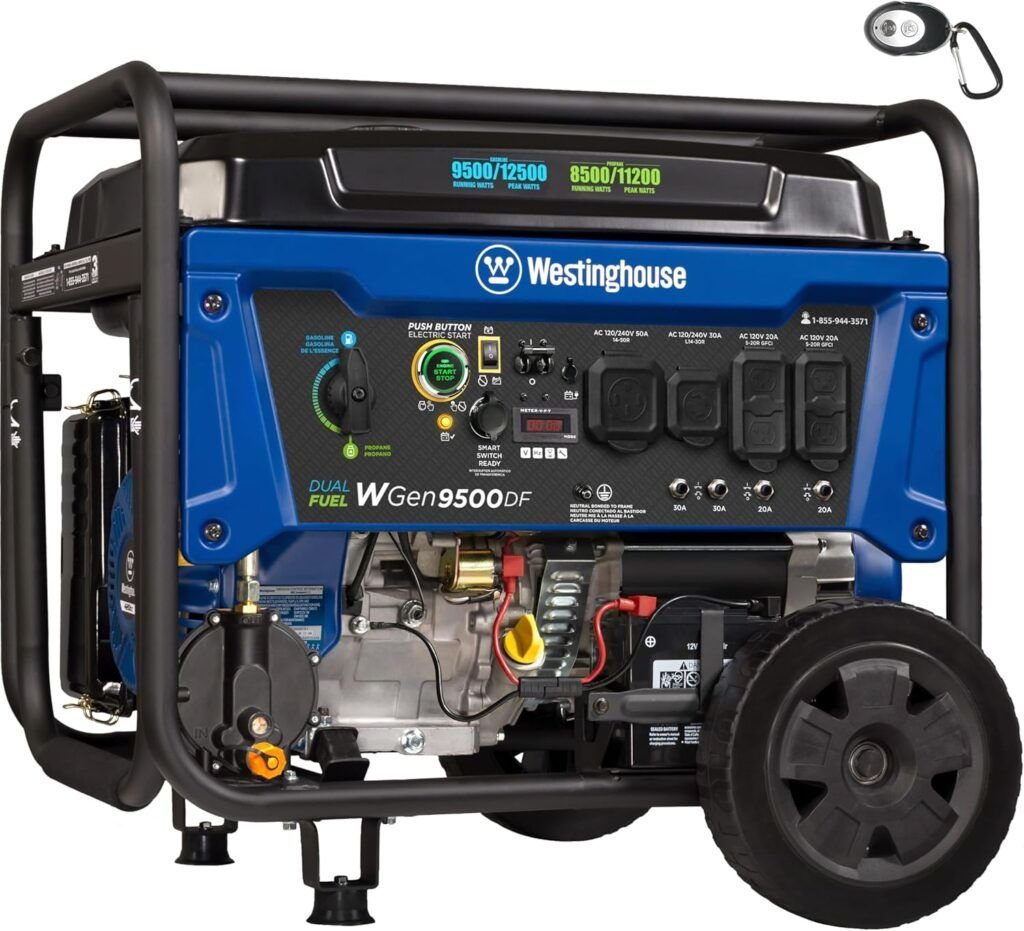
Key Details:
- Gasoline Output: 12,000 starting watts and 9,000 running watts.
- Propane Output: 11,000 starting watts and 8,100 running watts.
- Natural Gas Output: 9,800 starting watts and 7,200 running watts.
- Noise & Runtime: As low as 64 dBA, up to 19 hours at 25% load.
- Home Backup Features: 30A/50A outlets, remote start, ≤3% THD, and parallel capability.
If you want strong home backup power without the noise of a typical open-frame generator, the Westinghouse iGen12000TFc Tri-Fuel Inverter Generator is an appealing choice. Its 9,000 running watts on gasoline can support multiple essential household circuits, including refrigerators, pumps, lighting, and selected larger appliances.
One thing we particularly like is its clean power output. With 3% THD or less, it’s suitable for sensitive electronics such as computers, televisions, and networking equipment. The enclosed inverter design also helps control noise, with a reported level as low as 64 dBA.
The Westinghouse iGen12000TFc also offers excellent fuel flexibility. You can switch between gasoline, propane, and natural gas depending on availability. Its 7.9-gallon gasoline tank supports up to 19 hours at 25% load, while the digital display makes monitoring power usage convenient.
For home backup, the 30A and 50A outlets support compatible transfer switch installations. However, its natural gas output drops to 7,200 running watts, so appliance planning matters. If you want a quieter tri-fuel inverter generator with substantial backup capacity, this is a strong contender.
Pros:
- High inverter power output for essential home backup circuits.
- Clean electricity with 3% THD or less.
- Quieter enclosed design with fuel-saving Eco Mode.
- Remote start, digital display, and 30A/50A connections.
Cons:
- Natural gas operation reduces available running wattage.
- High-demand whole-house loads may exceed its capacity.
12. Best for Flexible Connections: AIVOLT 11500W Tri Fuel Inverter Generator
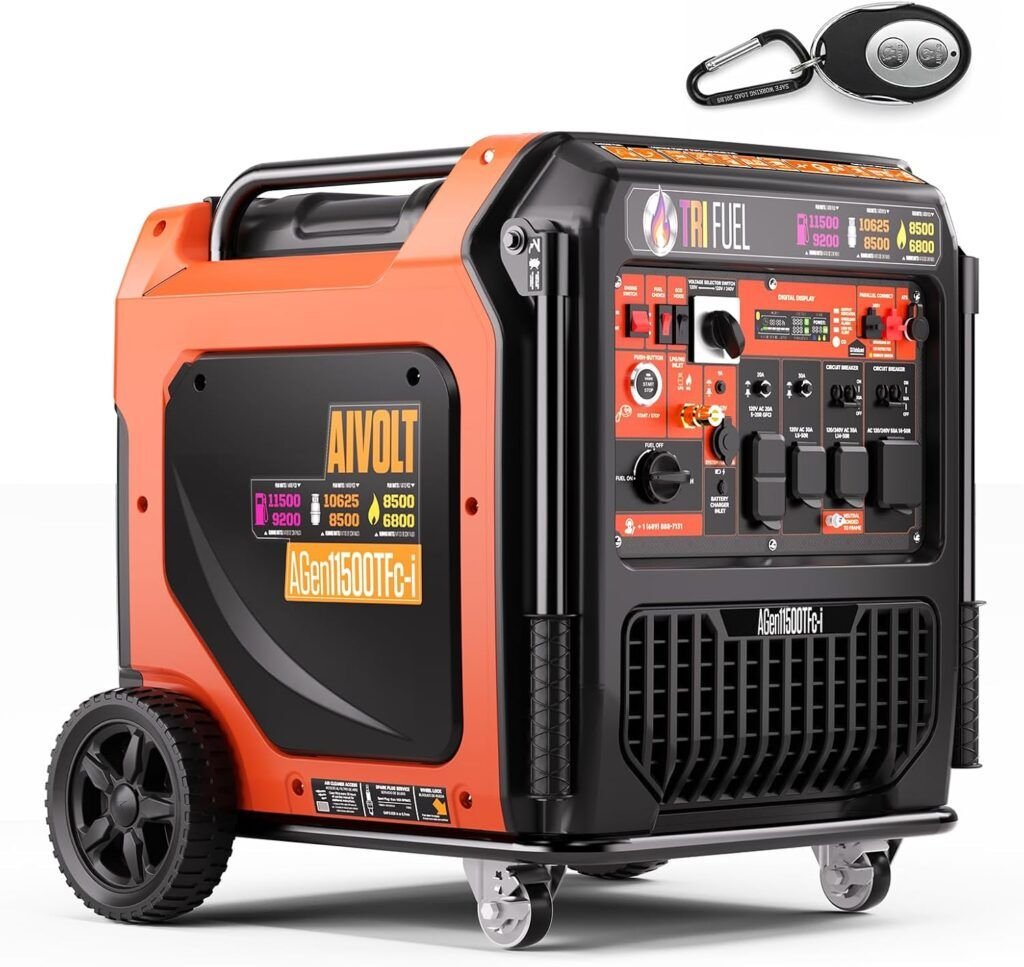
Key Details:
- Gasoline Output: 11,500 starting watts and 9,200 running watts.
- Propane Output: 10,600 starting watts and 8,500 running watts.
- Natural Gas Output: 8,500 starting watts and 6,800 running watts.
- Noise & Runtime: Approximately 64 dB(A), up to 16 hours at 25% load on gasoline.
- Home Backup Features: Dual 30A outlets, 50A outlet, remote start, CO sensor, and 120/240V output.
The AIVOLT 11500W Tri-Fuel Inverter Generator is worth considering if you want flexible electrical connections for home backup. Its advertised 9,200 running watts on gasoline offer substantial capacity for refrigerators, pumps, lighting, and selected high-demand appliances during outages.
What stands out is its versatile outlet configuration. With dual 30A connections, a 50A outlet, and 120/240V output, you have several options for connecting compatible household circuits. Its tri-fuel design also provides flexibility when gasoline, propane, or natural gas is available.
We also like the enclosed inverter design, which helps reduce operating noise compared with many conventional generators. The AIVOLT 11500W has a claimed noise level of approximately 64 dB(A), while its 7.1-gallon gasoline tank supports up to 16 hours at 25% load.
Remote electric starting and a telescoping handle add convenience. However, natural gas output drops to 6,800 running watts, so careful load planning matters. If you’re looking for a tri-fuel inverter generator with multiple home backup connections, this model deserves consideration.
Pros:
- Multiple 30A and 50A outlets provide connection flexibility.
- Strong gasoline output with three fuel choices.
- Enclosed inverter design supports quieter operation.
- Remote starting and telescoping handle improve convenience.
Cons:
- Reduced running capacity when operating on natural gas.
- High-demand whole-house loads may exceed available output.
What Is a Tri Fuel Generator and How Does It Work?
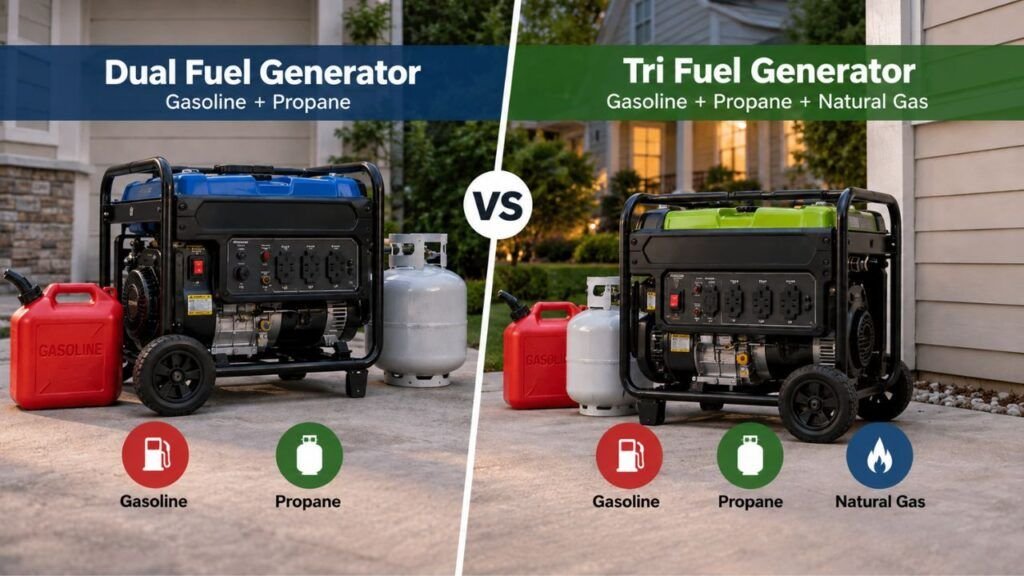
A tri-fuel generator is a backup power generator that runs on three fuel sources: gasoline, propane, and natural gas. It uses a fuel-powered engine to generate electricity for household appliances and essential circuits during power outages.
Gasoline typically delivers the highest power output, making it useful for demanding appliances. Propane offers convenient long-term fuel storage, while natural gas can provide continuous fuel from a properly sized residential gas connection.
Most tri-fuel generators feature a fuel-selection switch and dedicated connections for propane and natural gas. You can select your preferred fuel using the manufacturer’s instructions. Some models allow switching between preconnected fuels while running, but others require shutdown.
What we like about tri-fuel generators for home backup is their flexibility. If gasoline becomes unavailable during a storm, you can switch to propane or natural gas. However, power output usually decreases on alternative fuels, and you’ll still need proper outdoor placement, regular maintenance, and safe electrical connections.
What Size Tri Fuel Generator Do You Need for Home Backup?
For most homes, a tri-fuel generator with 7,500 to 12,000 running watts can cover many essential appliances. Larger homes with central AC, electric heating, or multiple high-demand appliances may need 15,000 to 20,000 watts or more.
Here’s a practical comparison to help you choose.
| Generator Size | Appliances It Can Power | Best For |
| 5,000W | Refrigerator, lights, Wi-Fi, fans, small pump | Basic Essentials |
| 7,500W | Refrigerator, freezer, sump pump, lights, window AC | Small Homes |
| 10,000W | Essential circuits, microwave, well pump, selected AC systems | Mid-Size Homes |
| 12,000W | Multiple appliances, pumps, selected central AC systems | Larger Homes |
| 15,000W | Central AC, refrigerators, kitchen appliances, several circuits | High-Demand Backup |
| 20,000W | Multiple large appliances, central AC, extensive household circuits | Whole-House Backup |
These are approximate running-watt categories, not guaranteed appliance combinations. Actual capacity depends on starting loads, fuel type, and electrical connection limits.
Starting Watts vs. Running Watts: Why Both Matter
Running watts determine how many appliances your generator can power continuously. Starting watts provide the extra electricity needed when motor-driven appliances first turn on.
For example, a refrigerator might consume 200 running watts but require considerably more power during compressor startup. We recommend checking both ratings, especially if you’re planning to run central AC, well pumps, or sump pumps.
Also, remember that gasoline ratings are usually higher than propane and natural gas ratings.
Can a Tri Fuel Generator Power an Entire House?
Yes, a powerful tri-fuel generator can run an entire house if its usable output meets the home’s electrical demand.
For example, the Westinghouse 28000 delivers 20,000 running watts on gasoline, making it suitable for substantial whole-house backup applications.
However, even a large generator may struggle with several high-demand appliances running simultaneously. We’d recommend calculating your electrical loads and having an electrician verify the generator’s connection capacity before purchasing.
How to Choose the Best Tri Fuel Generator for Home Backup
The right tri-fuel generator should match your household’s power requirements, preferred fuel supply, and budget. Here’s what we’d recommend checking before making your decision.
Power Output and Generator Size
Start by calculating the running and starting watts of your essential appliances. If you only need refrigerators, lights, and pumps, a smaller generator may be enough. For central AC and larger homes, consider models with higher running wattage.
Gasoline, Propane, and Natural Gas Performance
Check the generator’s power ratings for all three fuels. A model delivering 10,000 running watts on gasoline might produce considerably less on natural gas. We’d prioritize the rating for whichever fuel you’ll use most often.
Runtime and Fuel Efficiency
Longer runtime means fewer refueling interruptions during extended outages. Compare gasoline tank capacity, propane consumption, and natural gas requirements. Remember that manufacturer runtime figures often reflect partial loads.
Transfer Switch Compatibility and Outlets
For home backup, we’d recommend a generator with 120/240V output and compatible 30A or 50A connections. A properly installed transfer switch or approved interlock system allows selected household circuits to receive generator power safely.
Noise Levels and Power Quality
If you live in a neighborhood, consider an inverter generator with lower operating noise. Models with low total harmonic distortion (THD) are also appealing when powering computers, televisions, and sensitive electronics.
Safety Features and Starting Convenience
Look for carbon monoxide shutdown sensors, low-oil protection, overload protection, and electric start. Remote starting is especially convenient during unexpected outages, although the generator must still operate outdoors.
Warranty, Maintenance, and Total Cost
Finally, compare warranty coverage, replacement parts, maintenance requirements, and installation expenses. We’d rather recommend a dependable generator that matches your needs than an oversized model with features you’ll rarely use.
Gasoline vs. Propane vs. Natural Gas: Which Is Best for Home Backup?
Gasoline usually provides the highest generator output, propane offers convenient fuel storage, and natural gas reduces manual refueling when a suitable supply is available.
| Fuel Type | Power Output | Main Advantage | Main Limitation | Best For |
| Gasoline | Typically Highest | Maximum generator wattage | Limited storage life and frequent refueling | High-Power Backup |
| Propane | Usually Lower Than Gasoline | Long storage life and portable tanks | Lower wattage and limited tank supply | Emergency Fuel Storage |
| Natural Gas | Usually Lowest | Continuous supply while gas service remains available | Requires compatible gas connection and adequate pressure | Extended Home Backup |
If you already have a suitable natural gas connection, we’d strongly consider using it for longer outages. You won’t need to repeatedly transport gasoline or exchange propane cylinders.
However, gasoline may be preferable when maximum wattage matters. Propane is particularly useful if you want fuel stored for emergencies.
The important thing is to compare actual running watts, fuel availability, storage requirements, and operating costs rather than peak wattage alone. Natural gas service can also be interrupted, so it isn’t a guaranteed unlimited power source.
Safety Tips When Using a Tri Fuel Generator
Tri-fuel generators provide useful emergency electricity, but improper operation can cause carbon monoxide poisoning, fires, and electrical hazards. We recommend following these precautions every time.
- Operate Outdoors: Keep the generator at least 20 feet from your house, with exhaust directed away from doors, windows, and vents.
- Use Carbon Monoxide Alarms: Install working CO alarms inside your home, even if your generator has automatic CO shutdown.
- Install a Proper Transfer Switch: Have a qualified electrician install an approved transfer switch or permitted interlock system.
- Never Backfeed Your Home: Never connect a generator directly to a household wall outlet.
- Keep the Generator Dry: Use manufacturer-approved outdoor weather protection without restricting ventilation.
- Refuel Safely: Turn the generator off and let it cool completely before adding gasoline.
- Check Fuel Connections: Have a qualified professional install natural gas connections and inspect hoses for leaks.
- Avoid Overloading: Keep connected appliances within the generator’s continuous output and starting capacity.
- Follow the Maintenance Schedule: Check engine oil, filters, spark plugs, and other service items regularly.
Remember, even a generator equipped with CO protection is never safe to operate inside a garage, shed, or enclosed space.
Final Verdict
If you’re looking for the best tri fuel generator for whole-house backup, we’d recommend the Westinghouse 28000 Peak Watt Tri-Fuel. Its 20,000 running watts on gasoline, three fuel options, and automatic transfer switch compatibility make it our top choice for large homes with demanding appliances.
For most homeowners, we also like the WEN 14,500-Watt 120V/240V Tri-Fuel. It delivers 11,500 running watts on gasoline and 8,750 watts on natural gas, offering a practical balance of power and fuel flexibility. If you want a capable generator for everyday home backup without choosing an oversized model, this is worth considering.
If you’re working with a tighter budget, we’d suggest the Generac 12,500 Starting Watt Tri-Fuel. Its 9,500 running watts on gasoline, electric start, and tri-fuel operation make it a sensible choice for essential appliances. Ultimately, we’d recommend choosing based on your home’s power requirements, available fuel supply, and budget.
Related FAQs
Are Tri Fuel Generators Good for Home Backup?
Yes, tri-fuel generators are excellent for home backup because they operate on gasoline, propane, or natural gas. This flexibility helps you maintain emergency electricity when one fuel source becomes unavailable.
How Many Watts Does a Tri Fuel Generator Need to Run a House?
Most homes need approximately 7,500 to 12,000 running watts for substantial essential-circuit backup. Larger houses with central AC and multiple high-demand appliances may require 15,000 to 20,000 watts or more.
Do Tri Fuel Generators Produce Less Power on Natural Gas?
Yes, most tri-fuel generators produce less wattage on natural gas than gasoline. For example, the WEN TF-1450X delivers 11,500 running watts on gasoline but 8,750 running watts on natural gas.
Can You Run a Tri Fuel Generator on Natural Gas Continuously?
Yes, natural gas generators can operate for extended periods while an adequate fuel supply remains available. However, they still require scheduled maintenance, oil checks, and periodic shutdowns according to the manufacturer’s instructions.
How Long Can a Tri Fuel Generator Run on Propane?
Propane runtime depends on tank size, generator consumption, and electrical load. A 20-pound cylinder may provide only a few hours for a high-output generator under significant load. Larger tanks support longer operation.
Are Tri Fuel Generators Quieter Than Dual Fuel Generators?
Not necessarily. Noise levels depend more on engine design, enclosure, operating load, and inverter technology than fuel compatibility. Enclosed tri-fuel inverter generators are often quieter than conventional open-frame models.
Can a Tri Fuel Generator Run Central Air Conditioning?
Yes, a properly sized tri-fuel generator can run central air conditioning. However, you’ll need sufficient starting watts, running watts, and 240V electrical capacity. Larger AC systems may benefit from a compatible soft-start device.
Are Tri Fuel Generators Worth the Extra Money?
Yes, we’d recommend a tri-fuel generator if fuel flexibility matters during extended outages. Being able to switch between gasoline, propane, and natural gas can justify the additional expense, especially for households with natural gas access.

Brian Walker writes straightforward generator guides and reviews for homeowners and everyday users. His content focuses on solar, portable, and fuel-powered generators, with practical advice on choosing, using, and maintaining reliable backup power.