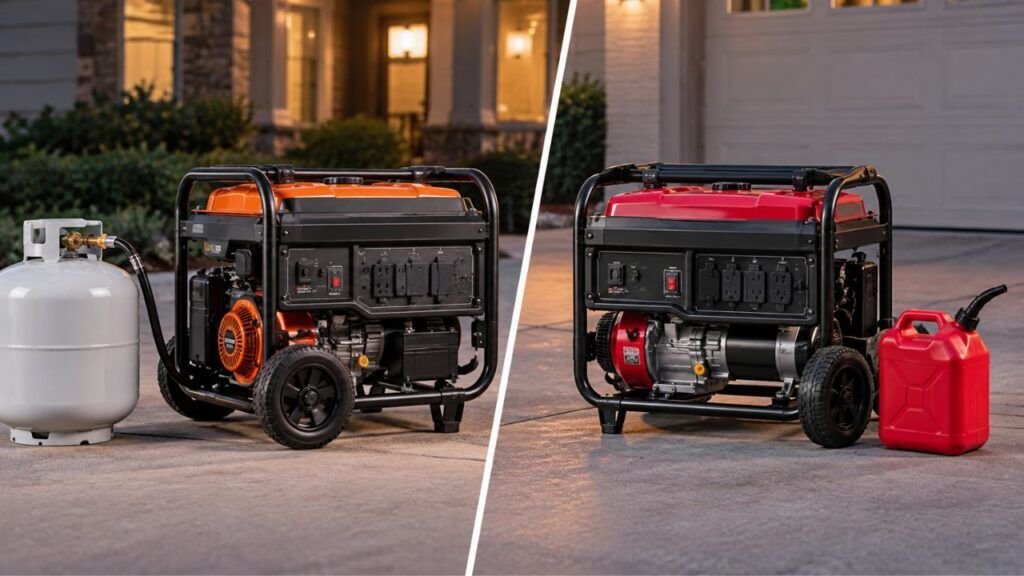
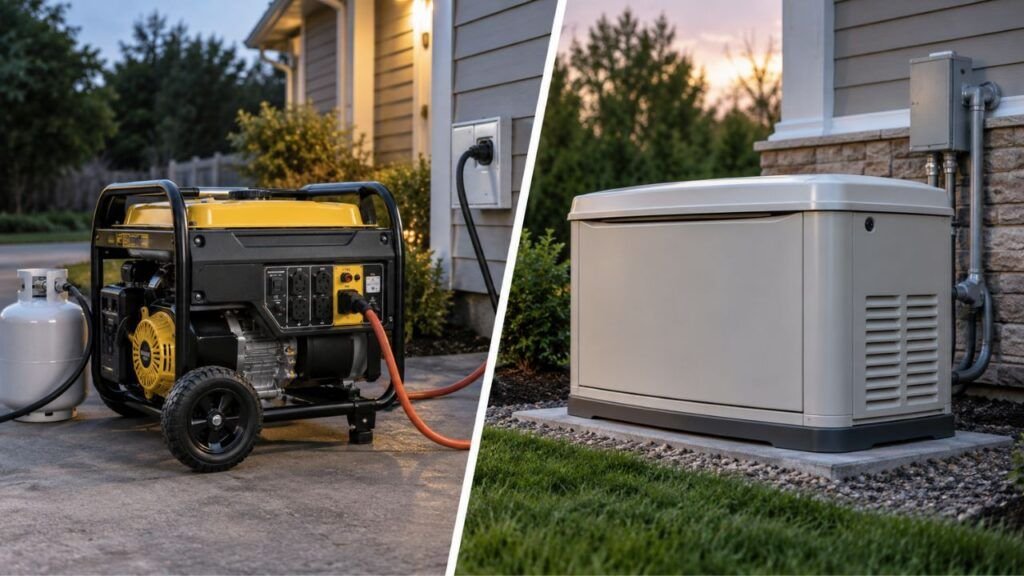
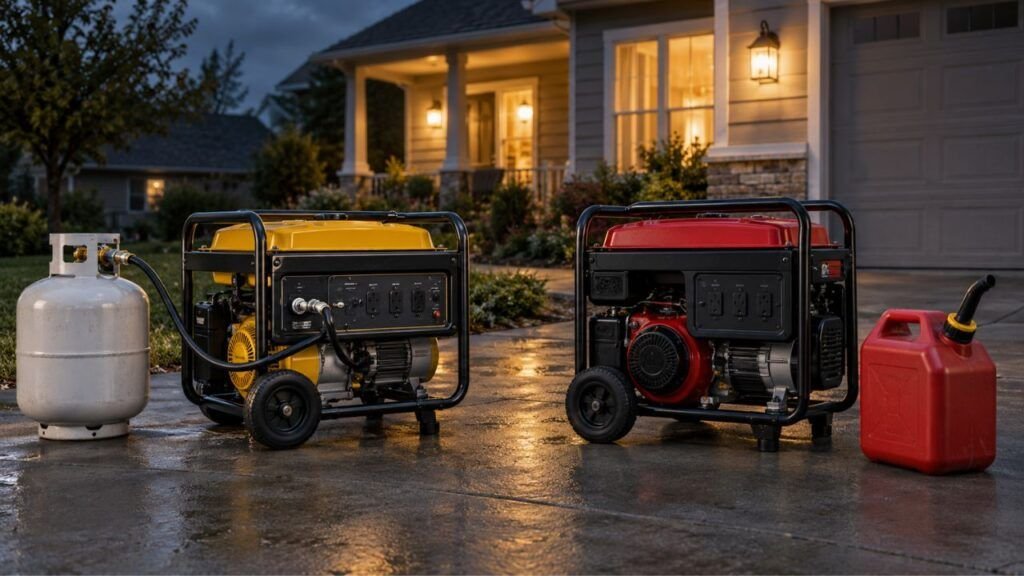
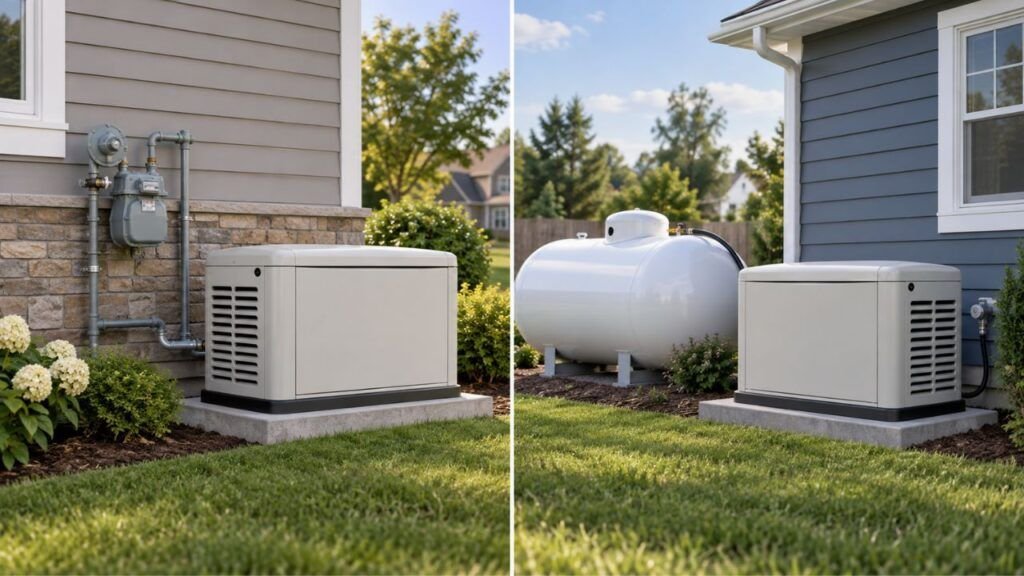
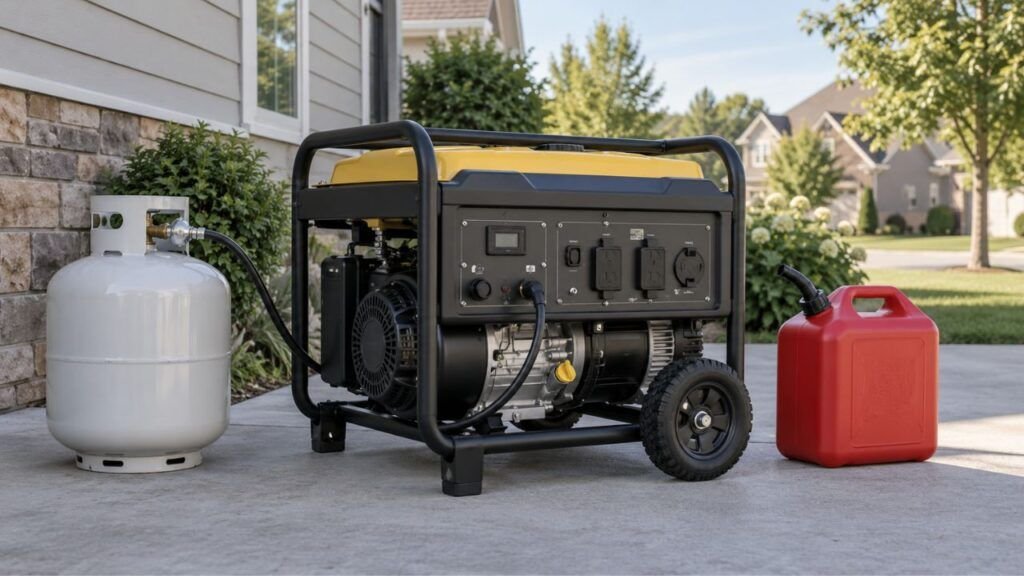
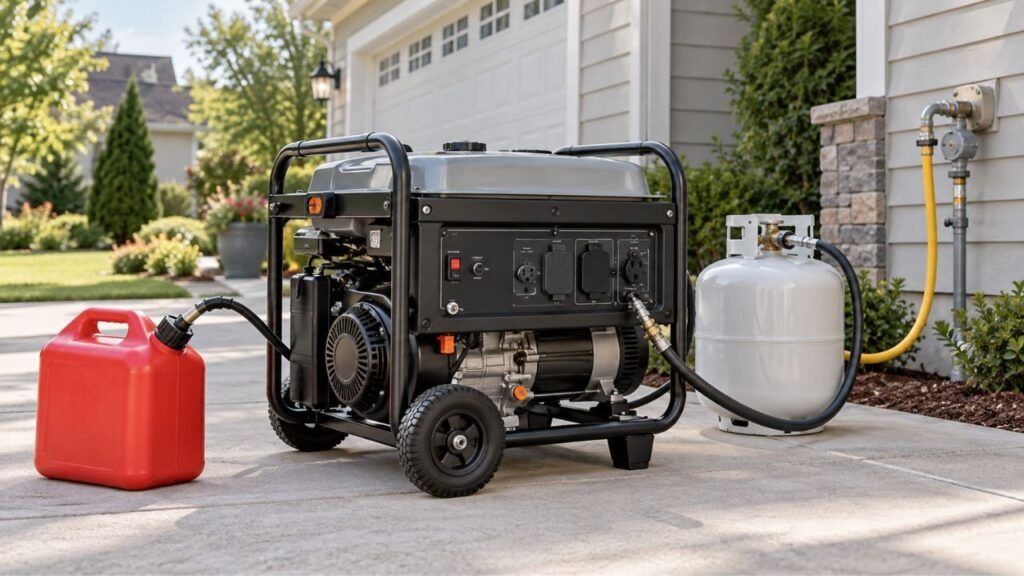
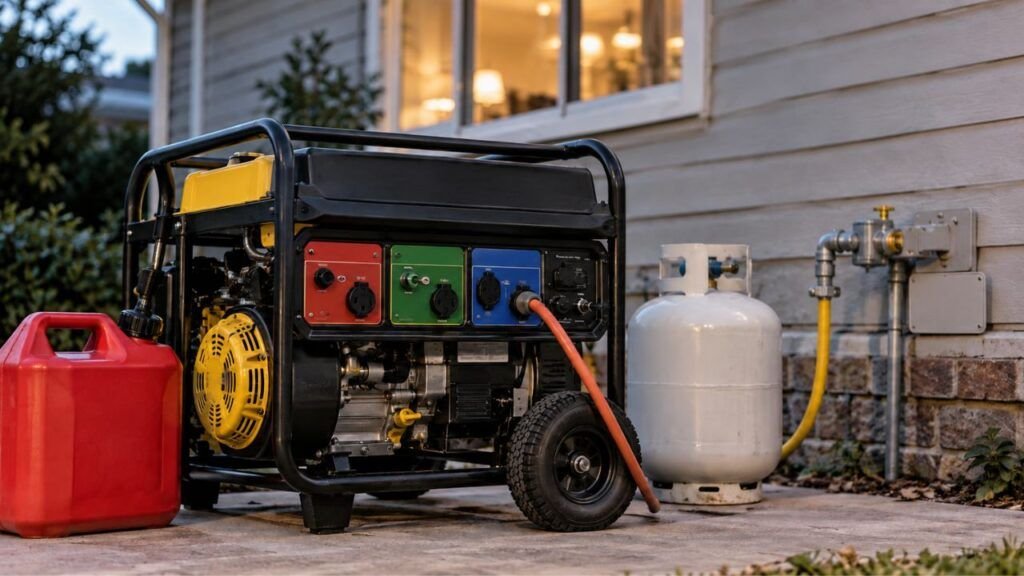
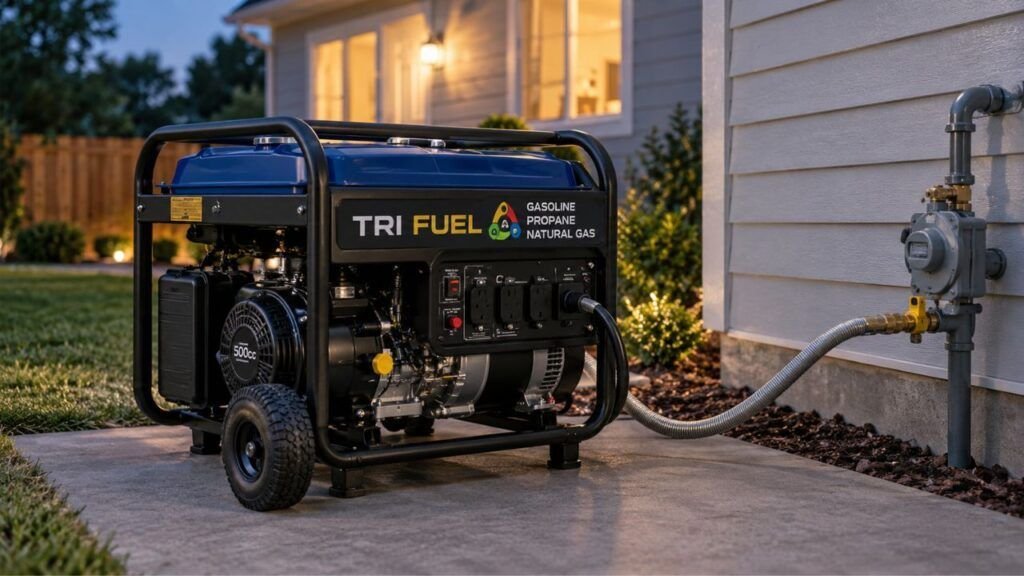
If you are looking for the best whole house propane generators, we recommend choosing one with reliable power, fuel flexibility, and enough capacity to keep your home running during outages.
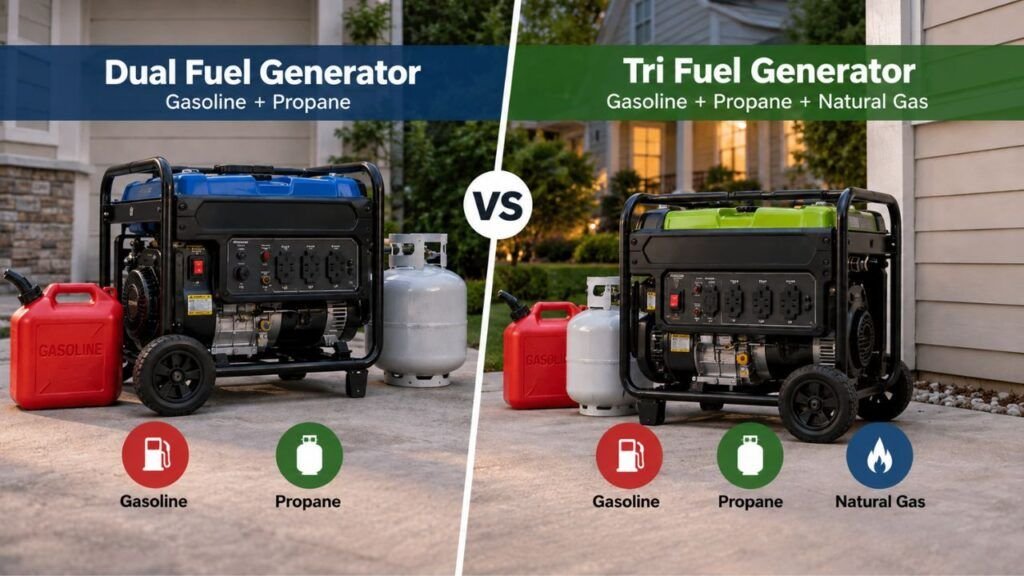
For larger homes, we recommend the Westinghouse Westinghouse 28000 Peak Watt Tri-Fuel, while the Generac 12,500 Starting Watt Tri-Fuel suits automatic backup. We also favor the WEN 14,500-Watt 120V/240V Tri-Fuel for value, Westinghouse 8200 Peak Watt Tri-Fuel for quieter operation, and DuroStar DS13000MXT for budget buyers.
After testing the published specifications against home backup requirements, we’ve compared 12 whole house propane generators to help you choose the right model for your needs.
We’re reader-supported. When you buy through links on our site, we may earn an affiliate commission. As an Amazon Associate, we earn from qualifying purchases at no extra cost to you.
Best Whole House Propane Generators: Our Top Picks
- Best Overall: Westinghouse 28000 Peak Watt Tri-Fuel
- Best Heavy-Duty Option: DuroMax XP13000HXT
- Best Value Option: WEN 14,500-Watt 120V/240V Tri-Fuel
- Best Inverter Option: Westinghouse 8200 Peak Watt Tri-Fuel
- Best for Sensitive Electronics: Champion 11,000-Watt Remote Start Tri Fuel
- Best for Emergency Backup: Generac 12,500 Starting Watt Tri-Fuel
- Best for Automatic Backup: Westinghouse 14500 Peak Watt Tri-Fuel
- Best Budget Option: DuroStar DS13000MXT
- Best Standby Option: Generac Guardian 22kW Home Generator
- Best for Small Homes: AIVOLT 8000W Dual Fuel Inverter Generator
- Best Mid-Size Standby: Generac 14kW Whole Home Generator
- Best for Essential Circuits: GENMAX Portable Generator
1. Best Overall: Westinghouse 28000 Peak Watt Tri-Fuel
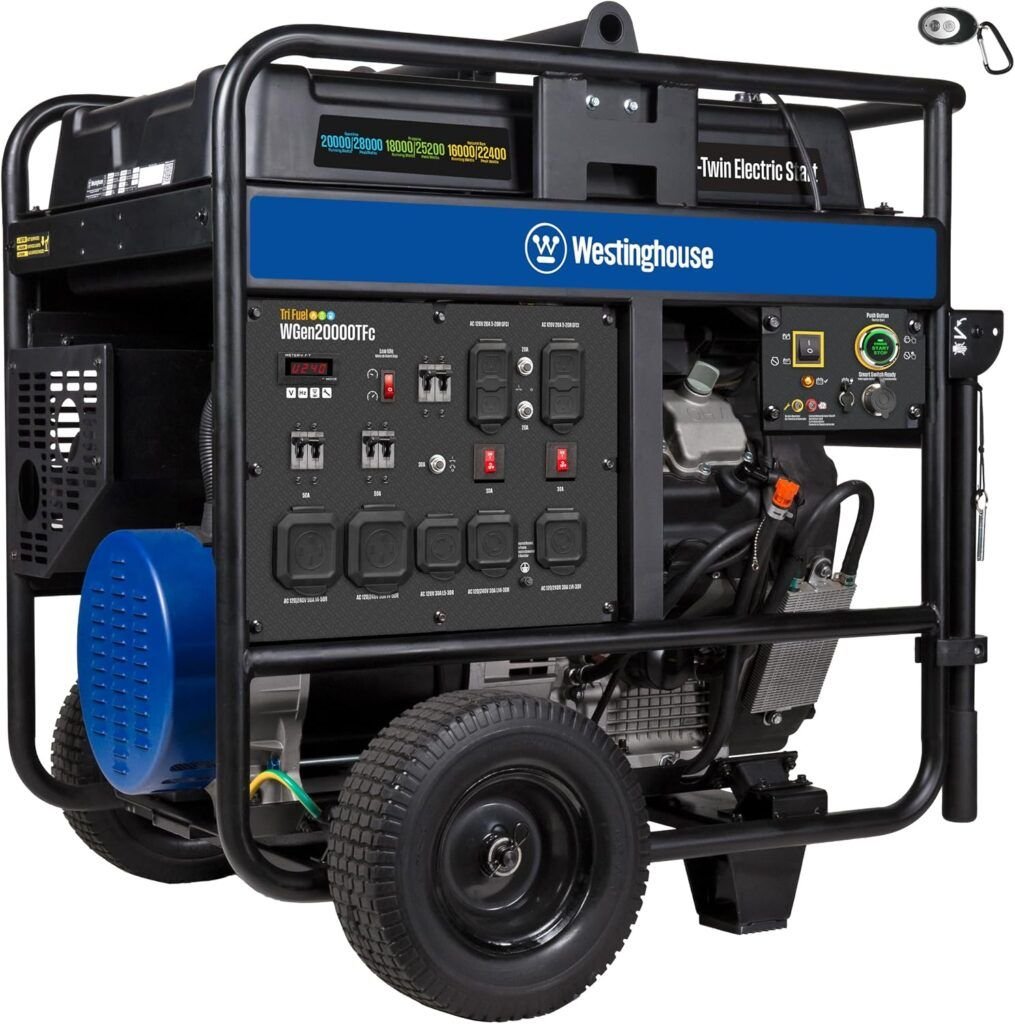
Key Details:
- Power Output: 28,000 peak / 20,000 running watts on gasoline
- Fuel Type: Gasoline, propane, and natural gas
- Engine: 999cc with full-pressure lubrication
- Home Backup: 120/240V, 30A and 50A outlets, optional automatic transfer switch
- Starting & Safety: Remote electric start, CO sensor, low-oil shutdown
The Westinghouse 28,000W Tri-Fuel Generator stands out among whole house propane generators for its impressive power capacity and fuel flexibility. With 20,000 running watts on gasoline, it offers substantial backup power for larger homes, although propane output will be lower.
What makes this generator especially appealing is its compatibility with the WATS200 automatic transfer switch. When properly installed, it can automatically restore backup power during an outage. That’s a welcome feature if you want standby-style convenience from a portable generator.
The heavy-duty 999cc engine features full-pressure lubrication for improved durability. You also get cleaner electricity with less than 5% THD, making it suitable for sensitive electronics. Its 50A and 30A outlets provide flexible home connections, although propane capacity and connected loads still determine actual coverage.
At 557 pounds, portability is its biggest compromise. Fortunately, large wheels and folding handles help with positioning. If you’re looking for a powerful propane generator for whole house backup without installing a permanent standby unit, this model deserves consideration.
Pros:
- Exceptional power capacity for larger homes
- Three fuel options for emergency flexibility
- Supports optional automatic home backup
- Durable engine with advanced lubrication
Cons:
- Extremely heavy at 557 pounds
- Automatic transfer switch sold separately
2. Best Heavy-Duty Option: DuroMax XP13000HXT
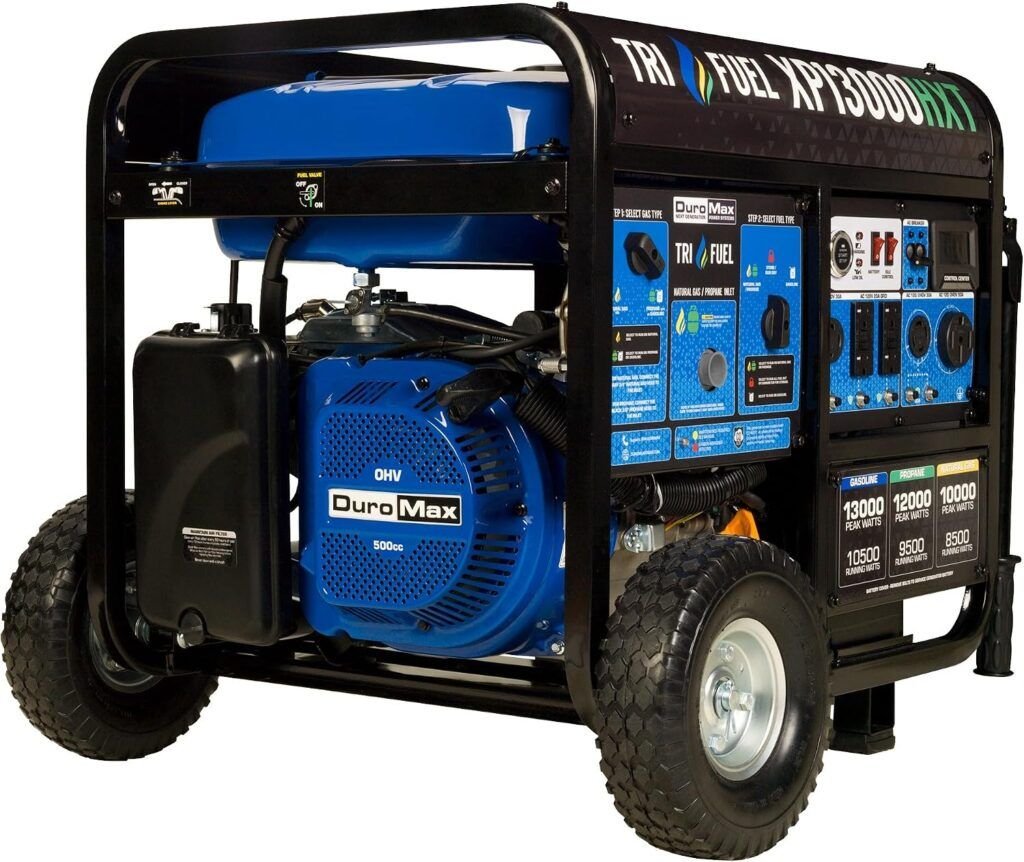
Key Details:
- Power Output: Up to 13,000 peak watts, depending on fuel
- Fuel Type: Gasoline, propane, and natural gas
- Engine: 500cc OHV engine
- Home Backup: 120/240V with transfer switch-ready 50A outlet
- Starting & Safety: Remote electric start, push-button start, CO Alert
The DuroMax XP13000HXT is a strong contender if you need a heavy-duty propane home backup generator. Its 13,000-watt advertised maximum gives it substantial starting capacity, while tri-fuel operation provides flexibility when your preferred fuel becomes unavailable.
One feature we particularly like is the front-mounted fuel selection system. Switching between gasoline, propane, and natural gas is straightforward. During extended outages, this flexibility can make a real difference when fuel availability becomes unpredictable.
For home backup, the DuroMax XP13000HXT includes a 50A transfer switch-ready outlet and a powerful 500cc engine. It can support essential appliances, pumps, lighting, and potentially larger equipment. However, available propane wattage and appliance starting requirements determine what can run simultaneously.
You also get remote starting, push-button ignition, and automatic CO shutdown. These features make operation more convenient, although outdoor placement remains essential. If you prefer a rugged portable propane generator for demanding household backup, this is a practical option.
Pros:
- Strong output for demanding home backup needs
- Convenient gasoline, propane, and natural gas operation
- Transfer switch-ready 50A connection
- Remote start and automatic CO shutdown
Cons:
- Lower power output when operating on propane
- Heavy construction makes transportation difficult
3. Best Value Option: WEN 14,500-Watt 120V/240V Tri-Fuel
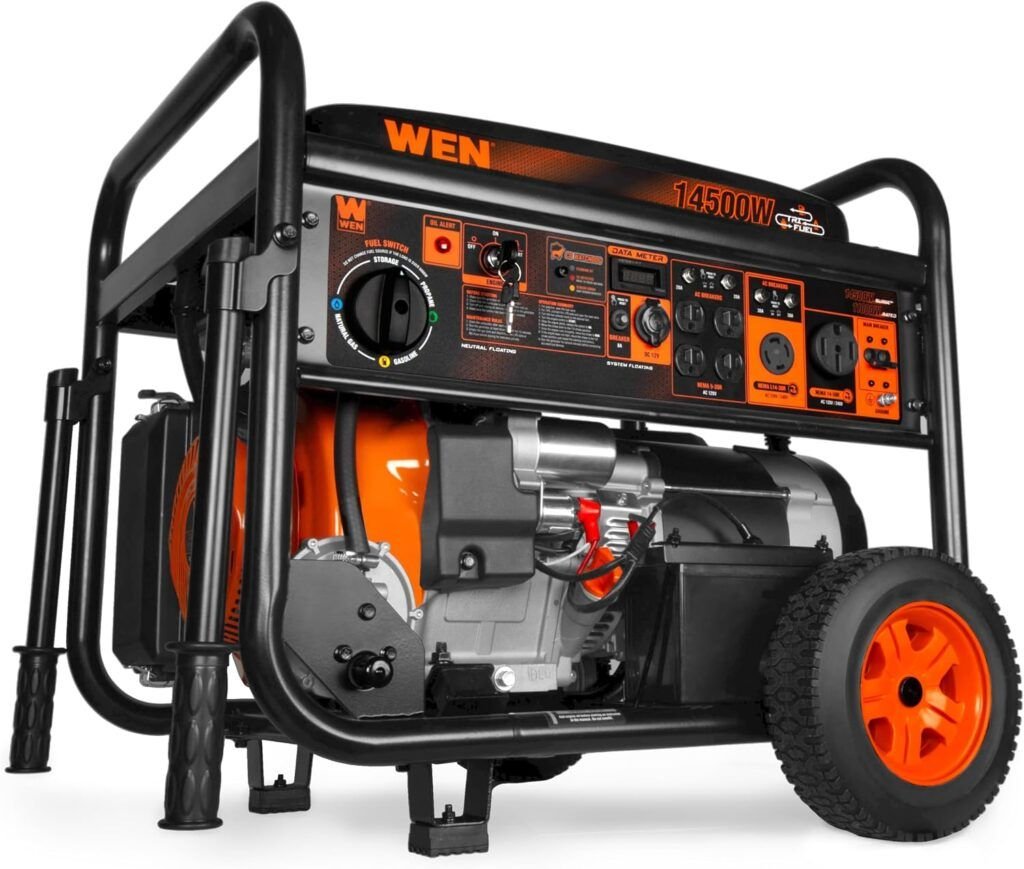
Key Details:
- Power Output: 12,500 peak / 10,300 running watts on propane
- Fuel Type: Gasoline, propane, and natural gas
- Engine: 500cc four-stroke OHV
- Home Backup: 120/240V with 30A and 50A outlets
- Weight & Safety: 224.9 pounds with wheel kit, CO Watchdog shutdown
The WEN TF-1450X is an appealing choice if you want substantial propane backup power without unnecessary complexity. Its 10,300 running watts on propane can support numerous household essentials, making it suitable for demanding home backup applications.
We particularly like its simple tri-fuel selection system. Switching between gasoline, propane, and natural gas takes just a turn of the dial. The included propane hose and natural gas adapter also make connecting your preferred fuel more convenient.
For home backup, the WEN TF-1450X offers 120/240V output with transfer switch-ready 30A and 50A outlets. It can support refrigerators, sump pumps, lighting, and selected larger appliances. However, central AC compatibility depends on starting requirements and total electrical demand.
At approximately 225 pounds with its wheel kit, this portable propane generator is relatively manageable for its power class. Electric starting, CO Watchdog protection, and a three-year limited warranty add practical value. If you want strong propane output with straightforward operation, we’d recommend considering this model.
Pros:
- Strong 10,300 running watts on propane
- Convenient gasoline, propane, and natural gas operation
- Transfer switch-ready 30A and 50A connections
- Electric start with automatic CO shutdown
Cons:
- Open-frame design can be noisy
- Requires manual fuel management during extended outages
4. Best Inverter Option: Westinghouse 8200 Peak Watt Tri-Fuel
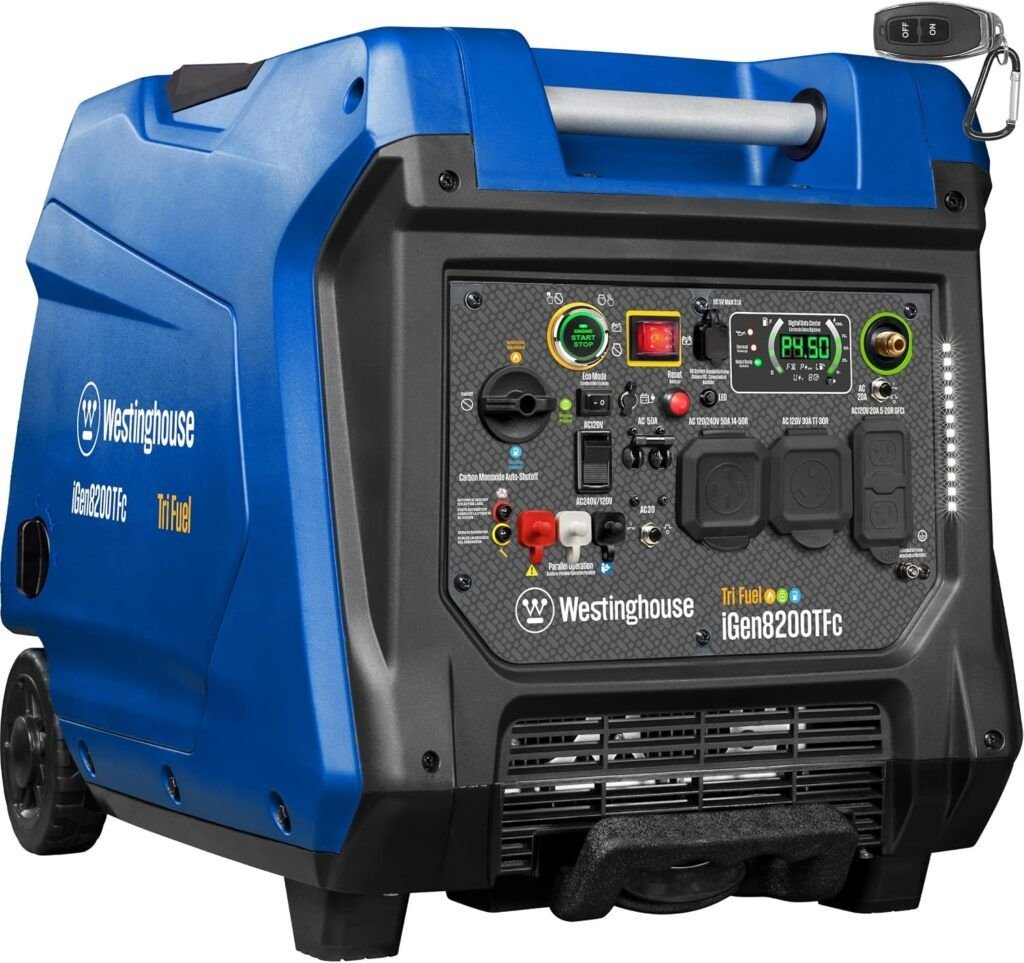
Key Details:
- Power Output: 7,380 peak / 5,940 running watts on propane
- Fuel Type: Gasoline, propane, and natural gas
- Engine: 298cc four-stroke OHV
- Home Backup: 120/240V with 50A outlet
- Noise & Weight: Approximately 60 dBA at 25% load, 134.5 pounds
Not every household needs an oversized generator during an outage. The Westinghouse iGen8200TFc offers a quieter, more manageable alternative. Its 5,940 running watts on propane make it suitable for essential home backup rather than powering every major appliance simultaneously.
We particularly like its inverter technology, which adjusts engine speed according to electrical demand. This helps reduce fuel consumption and noise under lighter loads. With less than 3% THD, it also delivers clean electricity for computers, televisions, and other electronics.
The Westinghouse iGen8200TFc includes a 120/240V 50A outlet for compatible home backup connections. That’s useful when powering selected household circuits through a properly installed transfer switch or interlock. Just remember that the outlet rating doesn’t increase the generator’s available wattage.
At 134.5 pounds, this portable propane generator is considerably easier to move than larger open-frame models. Remote starting, wheels, and CO shutdown add convenience. If you prioritize quieter operation, fuel efficiency, and essential appliance backup, this inverter model makes good sense.
Pros:
- Quieter inverter operation with improved fuel efficiency
- Clean power for sensitive household electronics
- Tri-fuel flexibility with 120/240V output
- More portable than larger home backup generators
Cons:
- Limited capacity for heavy simultaneous loads
- Not designed for unrestricted whole-house backup
5. Best for Sensitive Electronics: Champion 11,000-Watt Remote Start Tri Fuel
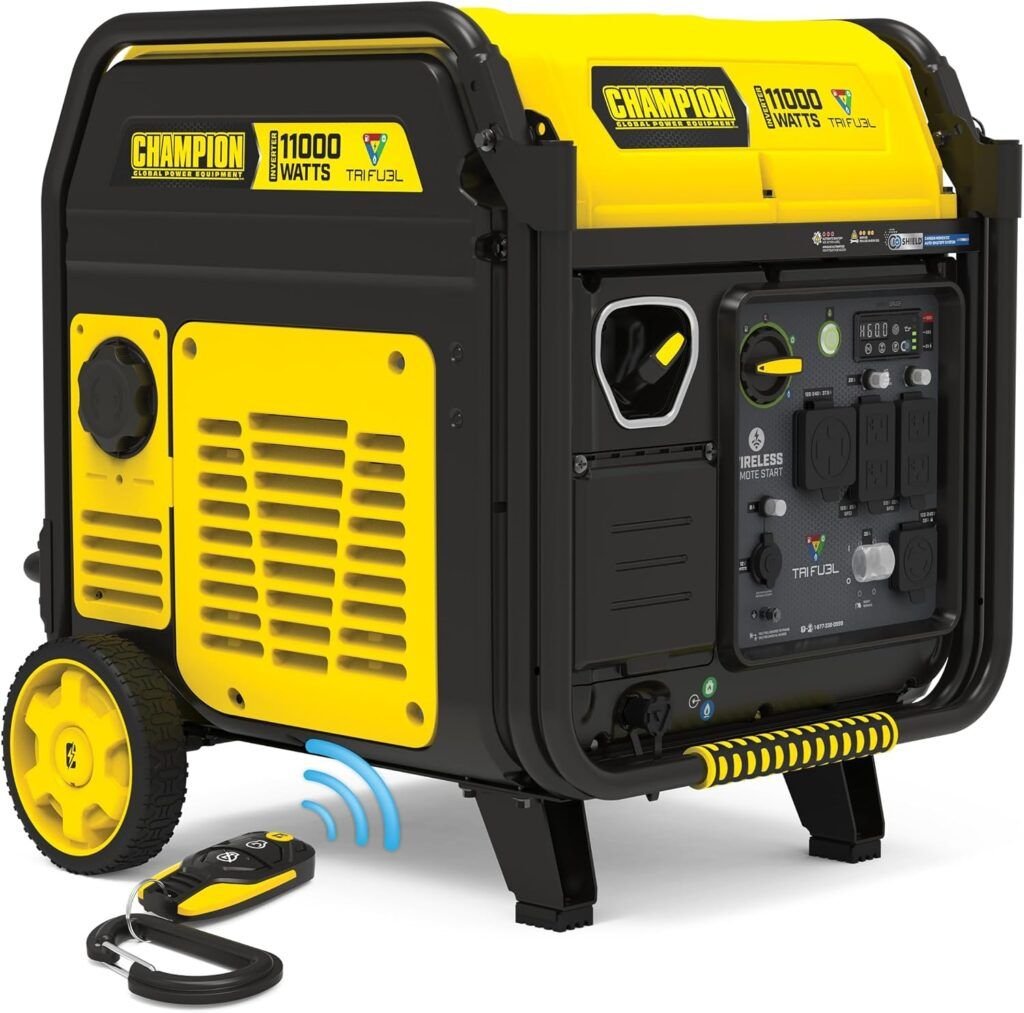
Key Details:
- Power Output: 11,000 starting / 8,100 running watts on propane
- Fuel Type: Gasoline, propane, and natural gas
- Home Backup: 120/240V with 30A and 37.5A outlets
- Starting System: Wireless remote start from up to 80 feet
- Safety & Warranty: CO Shield shutdown, 3-year limited warranty
The Champion 11,000W Tri-Fuel Inverter Generator is an excellent option if you want reliable propane backup power without sacrificing electrical quality. With 8,100 running watts on propane, it can handle essential household appliances, lighting, refrigerators, and other important loads during outages.
What makes this model particularly appealing is its inverter technology. It provides cleaner electricity for sensitive electronics while supporting heavier household demands. We also like the wireless remote start, which lets you operate the generator from up to 80 feet away.
When connecting the Champion 11,000W Tri-Fuel Inverter Generator to your home, the 120/240V outlets provide useful flexibility. The included propane and natural gas hoses simplify setup. However, larger appliances and central air conditioning systems still require careful consideration of starting wattage.
At 212 pounds, this isn’t a lightweight generator, but the included wheel kit helps with movement. CO Shield protection and a three-year limited warranty add reassurance. If you need a propane-powered home backup generator that balances strong output with inverter benefits, this model is worth considering.
Pros:
- Strong 8,100 running watts on propane
- Inverter technology provides cleaner electricity
- Wireless remote start works up to 80 feet
- Includes propane and natural gas hoses
Cons:
- Heavy at approximately 212 pounds
- Limited capacity for multiple high-demand appliances
6. Best for Emergency Backup: Generac 12,500 Starting Watt Tri-Fuel
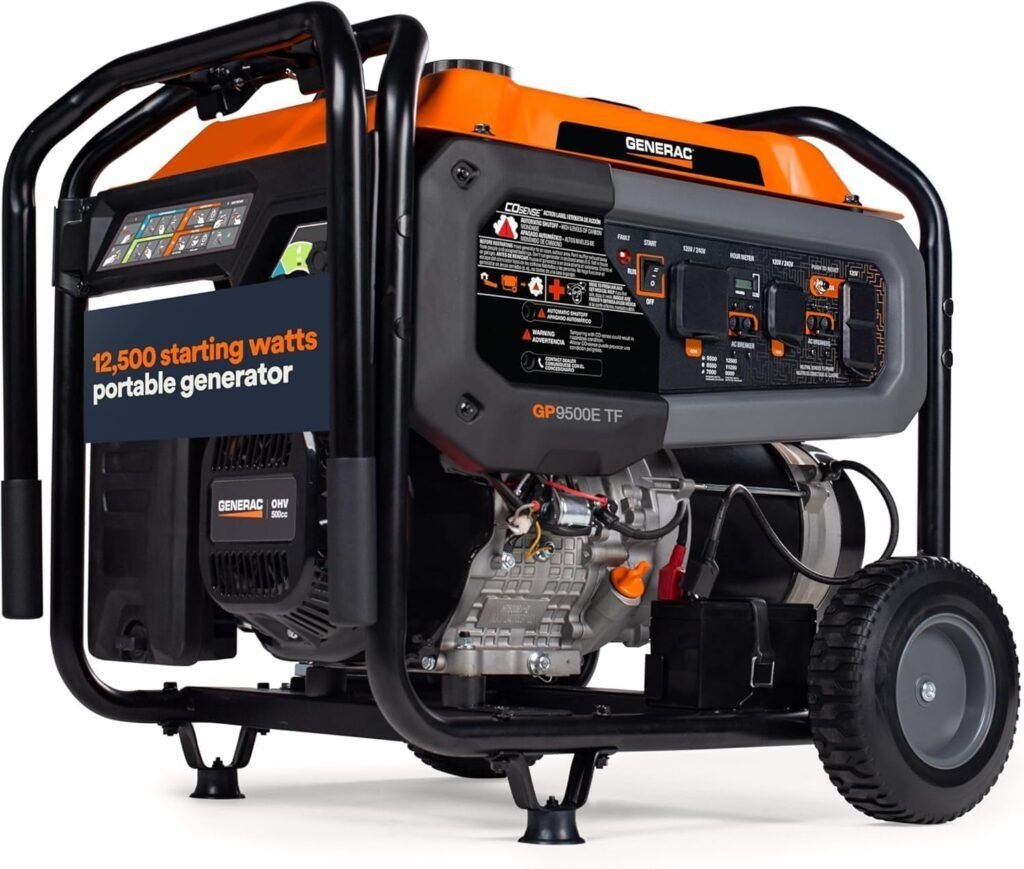
Key Details:
- Power Output: 12,500 starting / 9,500 running watts on gasoline
- Fuel Type: Gasoline, propane, and natural gas
- Engine: 500cc Generac OHV
- Home Backup: 120/240V with 30A and 50A outlets
- Starting & Safety: Electric start, COsense shutdown, automatic voltage regulation
The Generac GP9500 Tri-Fuel Generator is a practical choice for homeowners who want dependable emergency power and flexible fuel options. Its 9,500 running watts on gasoline offer substantial backup capacity, while propane compatibility lets you use stored fuel when outages interrupt gasoline supplies.
One thing we like is its combination of electric starting and automatic voltage regulation. The 500cc engine provides substantial starting power for motor-driven appliances. Meanwhile, voltage regulation helps maintain consistent electrical output as household power demands change.
For home backup, the Generac GP9500 includes 120/240V connections and a transfer switch-ready design. This makes it suitable for refrigerators, sump pumps, heating equipment, lights, and selected larger appliances. Just remember that propane delivers less power than the advertised gasoline rating.
You will also appreciate the COsense shutdown system, onboard fuel gauge, and durable steel frame. At approximately 218 pounds, it’s manageable with the included wheels but still requires dedicated storage space. If you want a straightforward tri-fuel generator for residential emergencies, this is a sensible option.
Pros:
- Strong starting capacity for household appliances
- Flexible gasoline, propane, and natural gas operation
- Electric start with automatic voltage regulation
- Transfer switch-ready home backup connections
Cons:
- Reduced running wattage when using propane
- Open-frame design can produce considerable noise
7. Best for Automatic Backup: Westinghouse 14500 Peak Watt Tri-Fuel
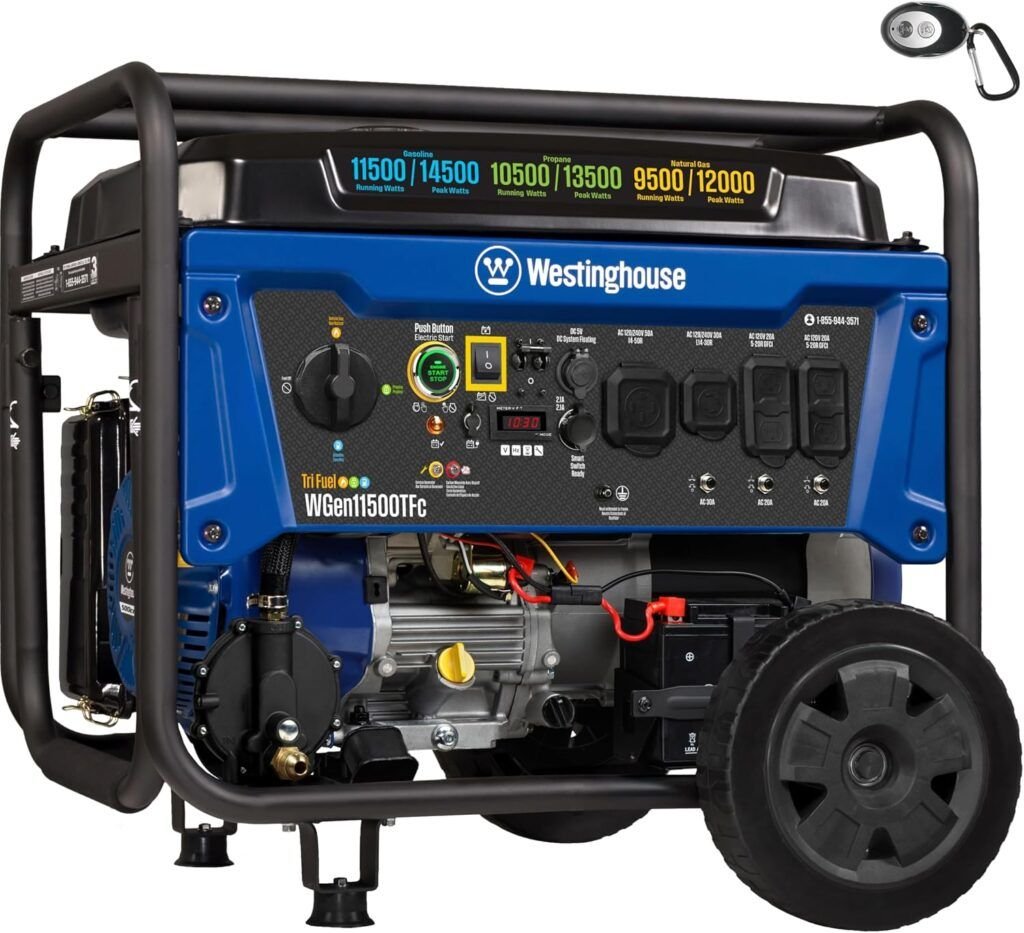
Key Details:
- Power Output: 14,500 peak / 11,500 running watts on gasoline
- Fuel Type: Gasoline, propane, and natural gas
- Engine: 550cc with pressure lubrication
- Home Backup: 120/240V, 30A and 50A outlets, optional automatic transfer switch
- Starting & Safety: Remote electric start, CO sensor, low-oil shutdown
The Westinghouse 14,500W Tri-Fuel Generator offers an appealing balance of high-output performance and home backup convenience. With 11,500 running watts on gasoline, it can support substantial residential loads. Its propane compatibility also makes it attractive for homeowners planning emergency fuel storage.
What stands out is its compatibility with the Westinghouse WATS200 automatic transfer switch. When professionally installed with the appropriate setup, it can automatically provide backup electricity during outages. We like this feature because conventional portable generators usually require more manual involvement.
The Westinghouse 14,500W Tri-Fuel Generator also features a 550cc engine with pressure lubrication for improved durability. Its under-5% THD output supports sensitive electronics, while the 30A and 50A outlets allow flexible home connections. Available propane wattage will determine which appliances can operate together.
At 230 pounds, this generator remains relatively manageable compared with much larger whole-house models. Remote starting, CO shutdown, and a three-year limited residential warranty add practical appeal. If you want a portable propane generator with optional automatic backup functionality, this model deserves attention.
Pros:
- Strong output for substantial household backup
- Supports optional automatic transfer switching
- Durable engine with pressure lubrication
- Remote start and three fuel choices
Cons:
- Automatic transfer switch requires an additional purchase
- Propane delivers less power than gasoline
8. Best Budget Option: DuroStar DS13000MXT
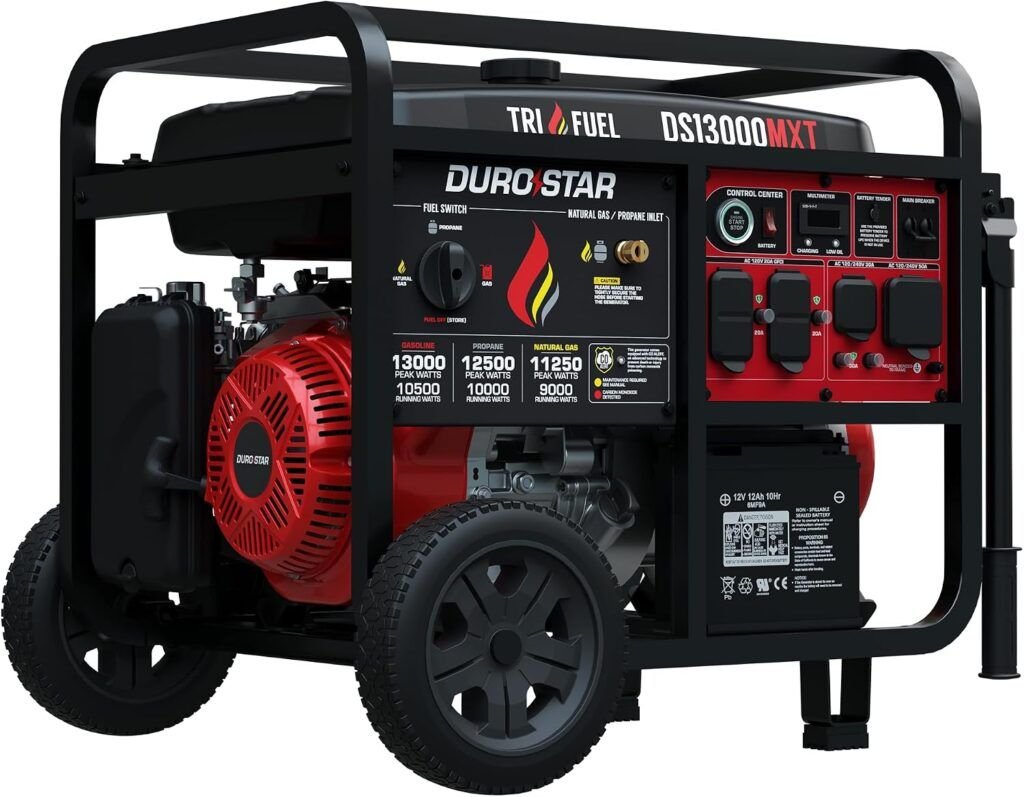
Key Details:
- Power Output: 12,500 peak / 10,000 running watts on propane
- Fuel Type: Gasoline, propane, and natural gas
- Engine: 500cc four-stroke OHV
- Home Backup: 120/240V with transfer switch-ready 50A outlet
- Weight & Safety: 211 pounds dry, CO Alert shutdown
The DuroStar DS13000MXT is worth considering if you want a powerful propane generator for home backup without unnecessary extras. Its 10,000 running watts on propane provide substantial capacity for essential circuits and selected larger household appliances.
What we like is its straightforward tri-fuel system. You get a fuel selection dial, push-button start, and remote starting. The included propane regulator and natural gas hose also help simplify setup when switching between available fuel sources.
The DuroStar DS13000MXT features a transfer switch-ready 50A outlet with 120/240V output. This makes it suitable for refrigerators, sump pumps, lighting, and other important household loads. However, powering central air conditioning depends on compressor starting requirements and available generator capacity.
At 211 pounds dry, this generator is lighter than previously stated, although it still requires careful movement. The included wheel kit improves portability, while CO Alert adds automatic shutdown protection. If you’re looking for substantial propane home backup power with practical features, it’s a compelling option.
Pros:
- Strong 10,000 running watts on propane
- Three fuel options for emergency flexibility
- Remote electric start and 50A home connection
- CO protection and included wheel kit
Cons:
- Open-frame construction can be noisy
- Requires manual setup for conventional home backup
9. Best Standby Option: Generac Guardian 22kW Home Generator
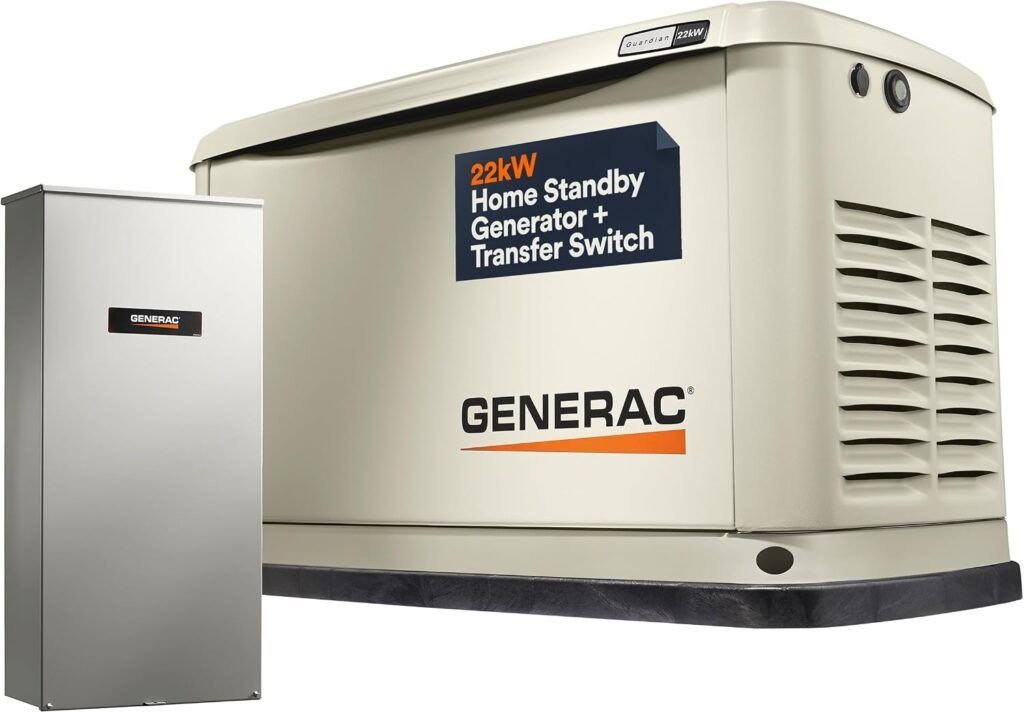
Key Details:
- Power Output: Up to 22,000 watts, depending on fuel
- Fuel Type: Liquid propane and natural gas
- Home Backup: 120/240V with 200A automatic transfer switch
- Monitoring: Mobile Link Wi-Fi remote monitoring
- Weight & Safety: 466 pounds, automatic voltage regulation, overload protection
The Generac Guardian 22kW is an excellent choice if you want a permanently installed whole house propane generator. With up to 22,000 watts of backup power, it can support substantial household demands, including air conditioning, refrigeration, heating equipment, and lighting.
What makes this standby generator particularly appealing is its automatic operation. When utility power fails, the transfer switch allows the system to restore backup electricity without manual startup. We like this convenience, especially for homeowners who travel frequently or experience unexpected outages.
The Generac Guardian 22kW also features True Power Technology with less than 5% harmonic distortion. That helps protect sensitive household electronics. Its Mobile Link Wi-Fi monitoring lets you check generator status and maintenance alerts remotely, adding another layer of convenience.
Unlike portable propane generators, this model requires professional installation and a properly sized fuel supply. However, you get permanent backup protection without moving equipment outside during emergencies. If dependable automatic home backup is your priority, this is a strong option.
Pros:
- Powerful 22kW-class whole-house backup capacity
- Automatic operation with included 200A transfer switch
- Remote Wi-Fi monitoring and maintenance alerts
- Clean electrical output for sensitive electronics
Cons:
- Requires professional installation and dedicated space
- Higher ongoing fuel and maintenance requirements
10. Best for Small Homes: AIVOLT 8000W Dual Fuel Inverter Generator
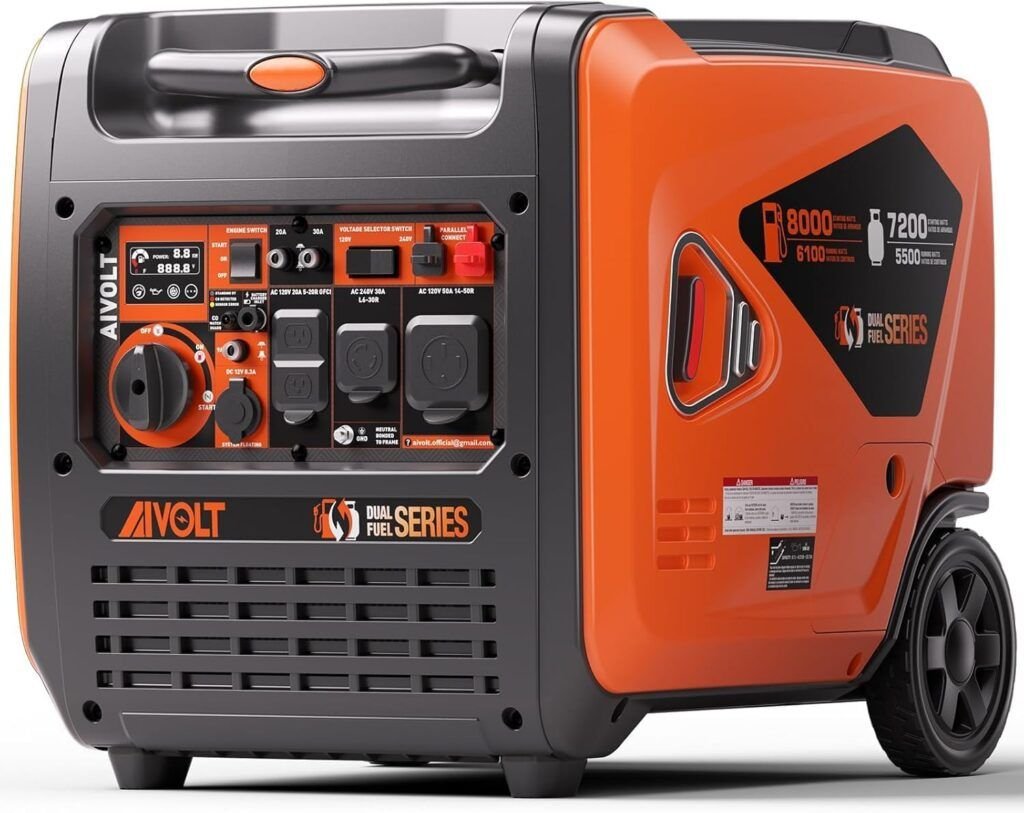
Key Details:
- Power Output: 7,200 peak / 5,500 running watts on propane
- Fuel Type: Gasoline and propane
- Engine: 322cc four-stroke OHV
- Home Backup: Selectable 120/240V output with 30A and 50A receptacles
- Noise & Weight: 62 dBA at 23 feet, approximately 130.7 pounds
The AIVOLT 8000W Dual Fuel Inverter Generator is an appealing option if you need manageable propane backup power for a smaller home. Its 5,500 running watts on propane can support refrigerators, lighting, fans, and other essential appliances during outages.
One feature we particularly like is its automatic fuel-switching technology. It offers convenient operation between gasoline and propane, while inverter technology helps reduce noise and fuel consumption. The clean electrical output also suits sensitive household electronics.
The AIVOLT 8000W supports selectable 120V and 240V operation, making it more versatile than a 120V-only generator. Its 240V connection can support compatible household loads, although available propane wattage limits what can run simultaneously. We recommend checking your appliance requirements before connecting larger equipment.
At approximately 131 pounds, you will find it easier to move than heavier open-frame generators. Its telescoping handle, digital display, and CO shutdown system add convenience. If you want a quieter propane generator for essential home backup with 240V capability, this model is worth considering.
Pros:
- Automatic gasoline and propane fuel switching
- Inverter technology provides cleaner, quieter power
- Selectable 120/240V output for flexible applications
- Portable design with digital monitoring and CO protection
Cons:
- Limited capacity for simultaneous heavy household loads
- Requires careful load management when using 240V appliances
11. Best Mid-Size Standby: Generac 14kW Whole Home Generator
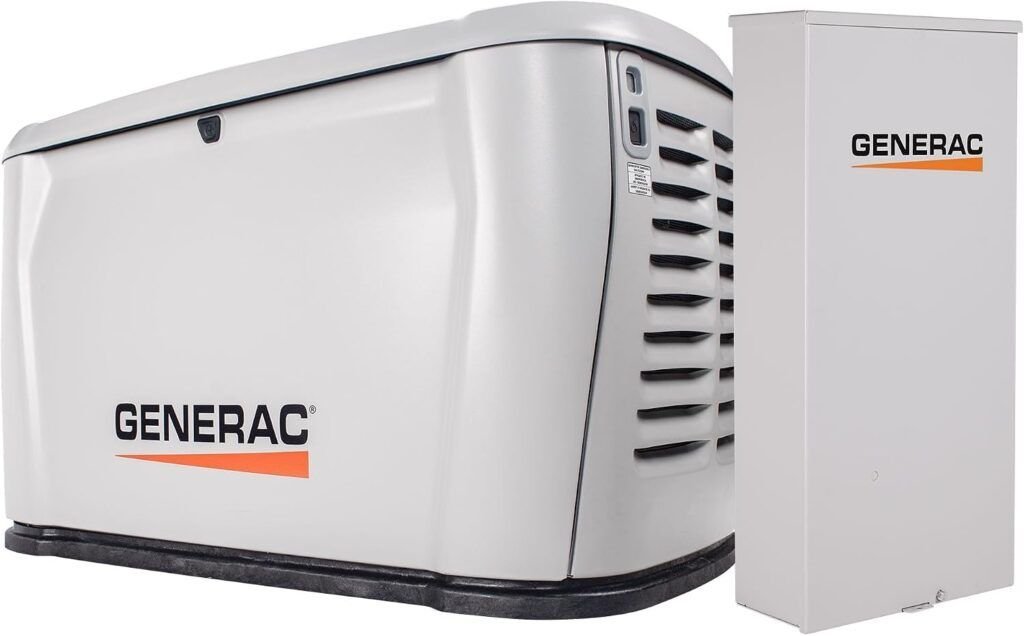
Key Details:
- Power Output: 14,000 watts advertised capacity
- Fuel Type: Dual-fuel standby system
- Home Backup: 120/240V with automatic standby operation
- Monitoring: Built-in cellular connectivity with Mobile Link
- Weight & Features: 391 pounds, oil level sensors, cold-start support
The Generac 14kW Whole House Generator is a practical choice for homeowners who want automatic propane backup without moving to a larger 22kW system. Its 14kW-class capacity can support many essential household loads, with actual coverage depending on fuel-specific output and electrical demand.
What stands out is its automatic standby operation. Once professionally installed with compatible transfer equipment, it can detect utility outages and provide backup power. We like this hands-free approach because you won’t need to manually start a portable generator when electricity disappears.
The Generac 14kW also includes cellular monitoring through the Mobile Link app. You can receive operating updates and maintenance alerts remotely, although premium features require a subscription. Its electronic fuel and ignition controls are designed to improve fuel efficiency and operating reliability.
Another advantage is its cold-weather readiness, with oil level monitoring and design features that help protect against snow and ice. If you’re looking for a propane whole house generator for a moderately sized home, this model offers a convenient balance of automation and practical backup capacity.
Pros:
- Automatic standby backup for household outages
- Cellular monitoring with maintenance notifications
- Fuel-management controls for efficient operation
- Cold-weather features and oil level monitoring
Cons:
- Requires professional installation and proper load sizing
- Premium remote monitoring requires a subscription
12. Best for Essential Circuits: GENMAX Portable Generator
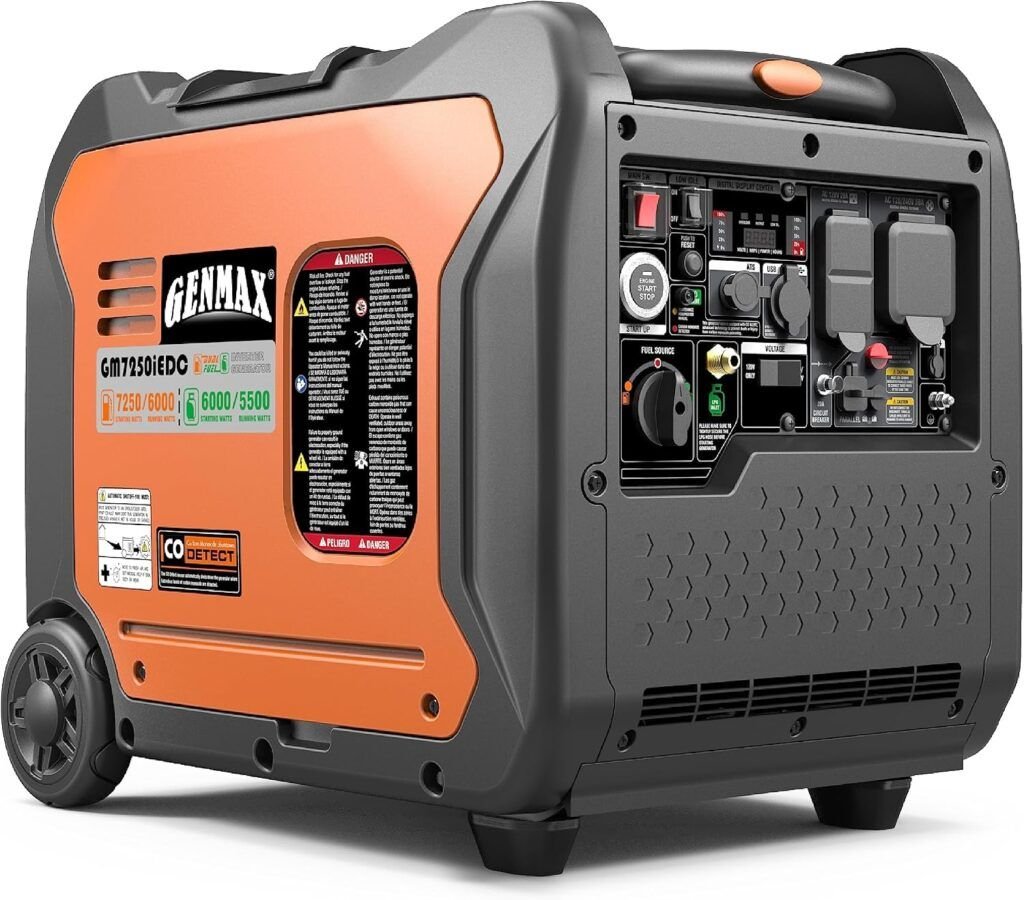
Key Details:
- Power Output: 6,000 peak / 5,500 running watts on propane
- Fuel Type: Gasoline and propane
- Home Backup: Selectable 120/240V output with 50A receptacle
- Starting System: Remote and electric start, parallel capability
- Weight & Warranty: Approximately 118 pounds, 3-year warranty
The GENMAX GM7250iEDC is a practical choice if you need portable propane backup for essential household circuits. With 5,500 running watts on propane, it can support refrigerators, lights, fans, electronics, and other important devices during unexpected power outages.
What we like is its combination of inverter technology and dual-fuel flexibility. You can operate it on gasoline or propane while benefiting from cleaner electrical output. Its parallel capability also allows compatible generators to work together for additional available power.
The GENMAX GM7250iEDC supports both 120V and 240V output through its voltage selector. Its 120/240V receptacle provides useful flexibility for home backup connections, while the ATS control port supports compatible automatic transfer equipment. However, its 5,500W propane running capacity limits larger appliances and simultaneous household loads.
At approximately 118 pounds, this propane inverter generator is considerably easier to move than larger backup models. Remote starting, digital monitoring, and CO detection add everyday convenience. If your priority is essential-circuit backup rather than unrestricted whole-house power, we’d recommend giving it a closer look.
Pros:
- Efficient inverter design with dual-fuel flexibility
- Selectable 120/240V output for home backup
- Remote start and parallel power capability
- Lightweight design with CO detection
Cons:
- Limited power for multiple high-demand appliances
- Compatible automatic transfer equipment costs extra
What Size Propane Generator Do You Need for a Whole House?
Most homes need a 14kW to 26kW propane generator for substantial whole-house backup, depending on appliance demand. Smaller 10kW models can handle essential circuits, while larger generators support central air conditioning and more simultaneous loads.
| Generator Size | What It Can Power | Best For |
| 10kW | Refrigerator, lights, fans, furnace blower, essential outlets | Essential home backup |
| 14kW | Essentials, kitchen appliances, selected AC systems | Small to medium homes |
| 18kW | Multiple appliances, well pump, central AC with suitable starting support | Moderate household loads |
| 22kW | Central AC, refrigeration, lighting, kitchen circuits, multiple appliances | Substantial whole-house backup |
| 26kW | Larger HVAC systems, kitchen appliances, pumps, and additional circuits | Homes with higher electrical demand |
| 30kW | Multiple HVAC systems and numerous high-demand appliances | Large homes with heavy loads |
Remember, running watts determine how many appliances your generator can power continuously. Starting watts handle the temporary surge when motors start.
For example, some 3-ton central AC systems require 3,500 to 5,000 running watts but much higher starting power. A soft starter or load management system may reduce the generator capacity needed.
We recommend calculating your actual household electrical demand rather than relying on square footage. Two similarly sized homes can have completely different backup requirements.
How to Choose the Best Whole House Propane Generator
Choosing a whole house propane generator comes down to more than wattage. We recommend focusing on your household loads, backup preferences, propane supply, and long-term ownership costs.
Standby vs Portable Propane Generators
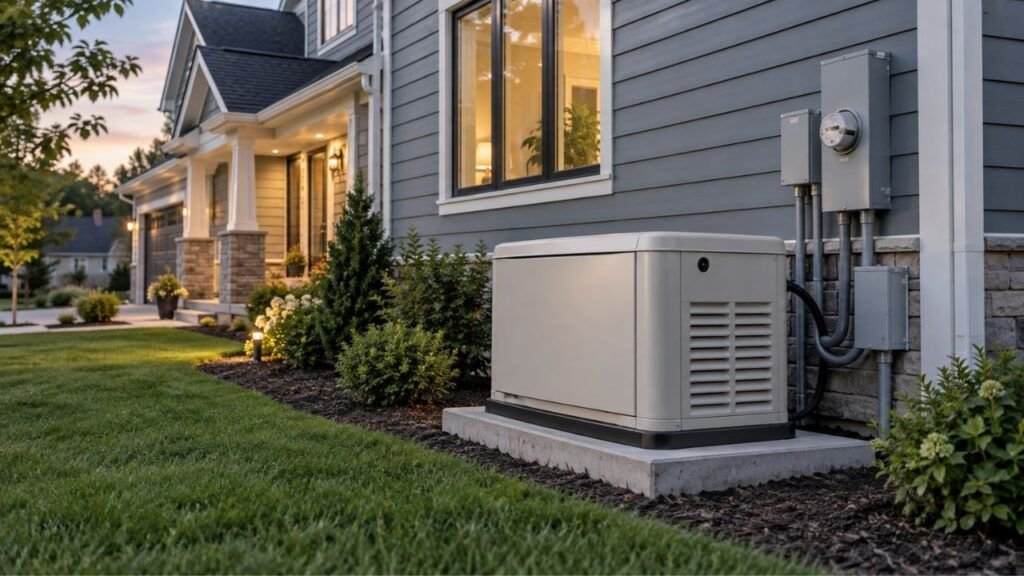
A standby propane generator stays permanently installed and starts automatically during outages. It’s ideal if you want reliable backup without manual operation.
Portable propane generators offer greater flexibility and usually lower upfront costs. However, most require manual setup, and their home backup capacity depends on the available output and electrical connection.
If outages happen frequently, we’d lean toward standby. For occasional emergencies, a powerful portable model can make more financial sense.
Running Watts and Starting Watts
Running watts represent the electricity a generator can supply continuously. Starting watts cover the brief surge needed by motor-driven appliances.
When choosing a propane generator for your house, always check its propane-specific ratings. Many dual-fuel and tri-fuel models deliver less power on propane than gasoline.
We recommend adding your expected running loads and accounting for the largest motor-starting surge, including overlapping starts where applicable.
Propane Fuel Efficiency and Runtime
Propane consumption depends on generator size, engine efficiency, and electrical load. A lightly loaded generator generally consumes less fuel than one operating near maximum capacity.
Look for manufacturer fuel consumption figures at 50% and 100% load. These help you estimate operating costs and propane tank runtime.
For extended outages, we recommend planning several days of fuel storage rather than relying on short runtime claims.
Automatic Transfer Switch and Home Connection
An automatic transfer switch detects utility outages and transfers household power to a compatible standby generator.
Portable generators typically connect through a professionally installed manual transfer switch or approved interlock system. Some models support compatible automatic transfer equipment.
Before buying, verify 120/240V compatibility, outlet capacity, transfer equipment requirements, and your home’s electrical panel.
Noise Levels and Installation Location
Noise matters, especially when your generator operates overnight. Enclosed inverter generators are often quieter than open-frame portable models.
Standby units also need proper placement, ventilation, and clearance according to their installation instructions.
For portable generators, keep them outdoors at least 20 feet from the home, with exhaust directed away from doors, windows, and vents. Never operate one inside a garage, even with the door open.
Engine Reliability, Maintenance, and Warranty
A reliable propane generator should have durable engine components, low-oil protection, accessible maintenance points, and dependable starting.
Check the manufacturer’s oil change intervals, service requirements, and warranty terms. Extended outages may require periodic shutdowns for inspection and maintenance.
We also recommend choosing a brand with accessible replacement parts and local service support.
Generator Price and Installation Costs
Portable propane generators generally cost less upfront, but you’ll need compatible electrical connection equipment and possibly a larger propane supply.
Standby generators require professional electrical and fuel installation, permits, and often site preparation. Generac estimates a typical installed standby system costs approximately $8,000 to $16,000, including the generator.
We recommend comparing the complete installed cost rather than the generator’s purchase price alone.
How Much Propane Does a Whole House Generator Use?
A whole house propane generator may consume roughly 1 to 4 gallons of propane per hour, depending on its size, engine design, and electrical load. Larger loads generally increase fuel consumption, although more efficient engines can sometimes use less fuel than smaller models.
Here are published Generac Guardian Series estimates at 50% electrical load.
| Generator Size | Propane Consumption Per Hour | Estimated Daily Consumption |
| 10kW | 0.97 gallons | 23.3 gallons |
| 14kW | 1.81 gallons | 43.4 gallons |
| 18kW | 1.70 gallons | 40.8 gallons |
| 22kW | 2.53 gallons | 60.7 gallons |
| 26kW | 2.06 gallons | 49.4 gallons |
These figures use published Guardian Series ratings at 50% load and assume 24 operating hours. They are model-specific estimates, not universal consumption rates. Newer generations may differ.
Notice that the 26kW model uses less propane at half load than the 22kW model. That’s because engine design and efficiency also affect consumption.
If you want to reduce fuel costs, prioritize essential circuits, avoid unnecessary electrical loads, and choose a properly sized generator.
What Size Propane Tank Do You Need for a Whole House Generator?
A 500-gallon propane tank is a practical starting point for many whole-house backup systems. It provides substantially more fuel than smaller tanks, making it useful during multi-day outages.
However, propane tanks are normally filled to approximately 80% of their rated capacity to allow for fuel expansion.
The following estimates assume a Generac Guardian 22kW generator consuming 2.53 gallons per hour at 50% load.
| Propane Tank Size | Approximate Usable Fuel | Estimated Runtime | Best Use |
| 120 gallons | 96 gallons | 38 hours | Short reserve, subject to fuel delivery capacity |
| 250 gallons | 200 gallons | 79 hours | Short outages |
| 500 gallons | 400 gallons | 158 hours | Multi-day home backup |
| 1,000 gallons | 800 gallons | 316 hours | Extended outage protection |
Runtime assumes a fully filled tank at the 80% limit and constant 50% generator load. Estimates exclude reserve fuel, other propane appliances, refilling restrictions, and maintenance interruptions. Tank vaporization capacity and fuel pressure must also meet generator requirements, particularly in cold weather.
For example, a 500-gallon tank could theoretically support this 22kW generator for about 6.6 days at half load.
We recommend discussing tank sizing with your propane supplier. A tank must supply enough fuel per hour, not simply hold enough gallons.
Propane vs Natural Gas vs Gasoline Generators: Which Is Better for Whole House Backup?
Propane is an attractive option for whole-house backup because it stores well and doesn’t depend on a natural gas utility connection. However, natural gas and gasoline generators have advantages depending on your location and backup requirements.
| Fuel Type | Main Advantages | Limitations | Best For |
| Propane | Long storage life, on-site fuel supply, clean-burning fuel | Tank refills, storage requirements, variable fuel costs | Rural homes and long-term backup |
| Natural Gas | Continuous utility supply when available, convenient operation | Depends on gas infrastructure and supply continuity | Homes with natural gas service |
| Gasoline | Widely available, often high generator output, portable fuel storage | Shorter storage life, refueling, fuel shortages | Occasional portable backup |
If you already have reliable natural gas service, a natural gas standby generator may offer greater convenience.
However, we’d recommend considering propane if you live in a rural area, lack natural gas access, or want fuel stored on your property.
Gasoline remains practical for occasional outages, but propane usually offers easier long-term fuel storage.
Are Whole House Propane Generators Worth It?
Yes, whole house propane generators are worth considering if your area experiences frequent or prolonged power outages. They can keep refrigeration, heating, water pumps, lighting, and other important household equipment operating when utility electricity fails.
We particularly recommend them for rural properties, homes without natural gas service, and households needing dependable backup power. An automatic standby generator is especially convenient if you travel frequently or prefer not to manage a portable unit during storms.
The biggest drawbacks are installation expenses, propane consumption, and routine maintenance. However, if uninterrupted household power matters to you, a properly sized propane backup system can be a worthwhile long-term investment.
Final Verdict
If you need serious backup power for a larger home, we’d recommend the Westinghouse 28000 Peak Watt Tri-Fuel. Its high output, tri-fuel flexibility, and optional automatic transfer system make it appealing for demanding household loads. Just remember to check its propane-specific capacity before deciding.
For homeowners who prefer automatic backup, the Generac 12,500 Starting Watt Tri-Fuel is our preferred standby option. It delivers substantial whole-house power, includes a 200A transfer switch, and supports remote monitoring. You won’t need to manually start the generator when the electricity goes out.
If you’re working with a smaller budget, we’d suggest the WEN 14,500-Watt 120V/240V Tri-Fuel. Its 10,300 running watts on propane, tri-fuel operation, and 120/240V connections offer excellent flexibility for home backup. We particularly like it for powering essential circuits and selected larger appliances.
Related FAQs
How Many Watts Does a Propane Generator Need to Power a Whole House?
Most homes need around 14,000 to 26,000 watts for substantial whole-house backup. Actual requirements depend on appliances, starting loads, and simultaneous electricity use.
Can a 12,000-Watt Propane Generator Run a Whole House?
Yes, a 12,000W propane generator can power many household essentials. However, central AC, electric heating, and multiple heavy loads may require load management.
Will a 22kW Propane Generator Run an Entire House?
Yes, a 22kW propane generator can power many homes, including central AC and major appliances. Larger homes may still require load management.
How Long Will a Whole House Generator Run on a 500-Gallon Propane Tank?
A 22kW generator using 2.53 gallons per hour can run approximately 6.6 days at 50% load, assuming 400 gallons of usable propane.
Is It Cheaper to Run a Generator on Propane or Gasoline?
It depends on local fuel prices and generator efficiency. Compare fuel consumption per hour to determine which option costs less.
Can a Propane Generator Run Continuously for 24 Hours?
Yes, many propane standby generators can run for 24 hours with sufficient fuel. Follow manufacturer maintenance and operating requirements.
Do Whole House Propane Generators Start Automatically?
Standby propane generators generally start automatically with compatible transfer equipment. Most portable models require manual operation.
How Long Do Whole House Propane Generators Last?
A well-maintained propane generator can last 10 to 20 years or longer. Actual lifespan depends on operating hours, maintenance, and engine quality.

Brian Walker writes straightforward generator guides and reviews for homeowners and everyday users. His content focuses on solar, portable, and fuel-powered generators, with practical advice on choosing, using, and maintaining reliable backup power.