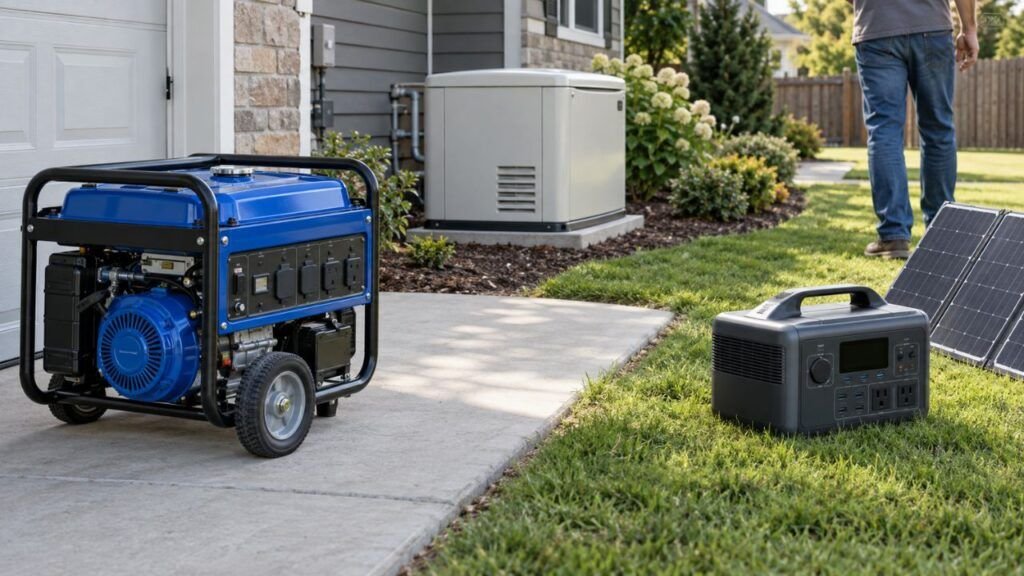
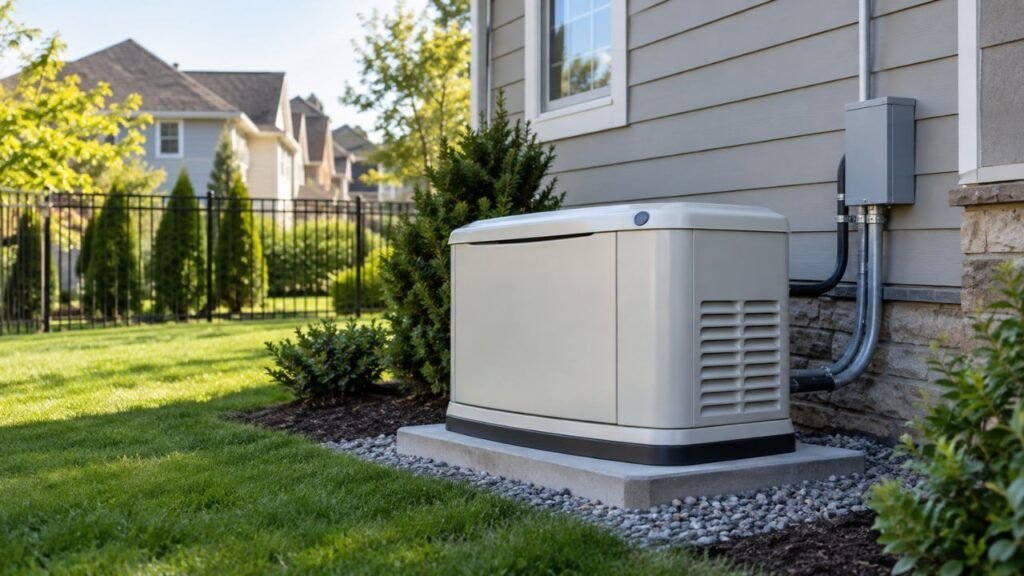
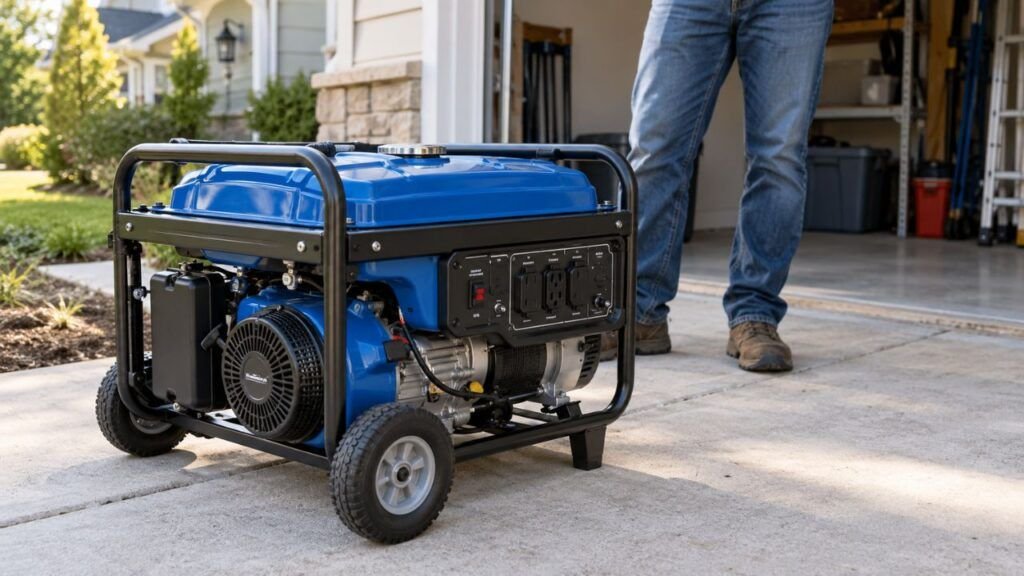
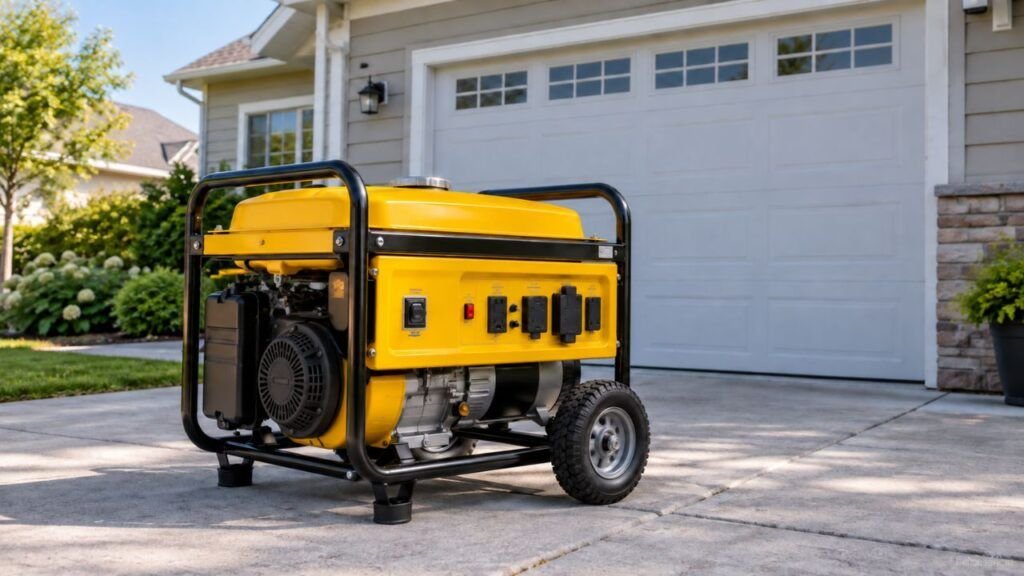
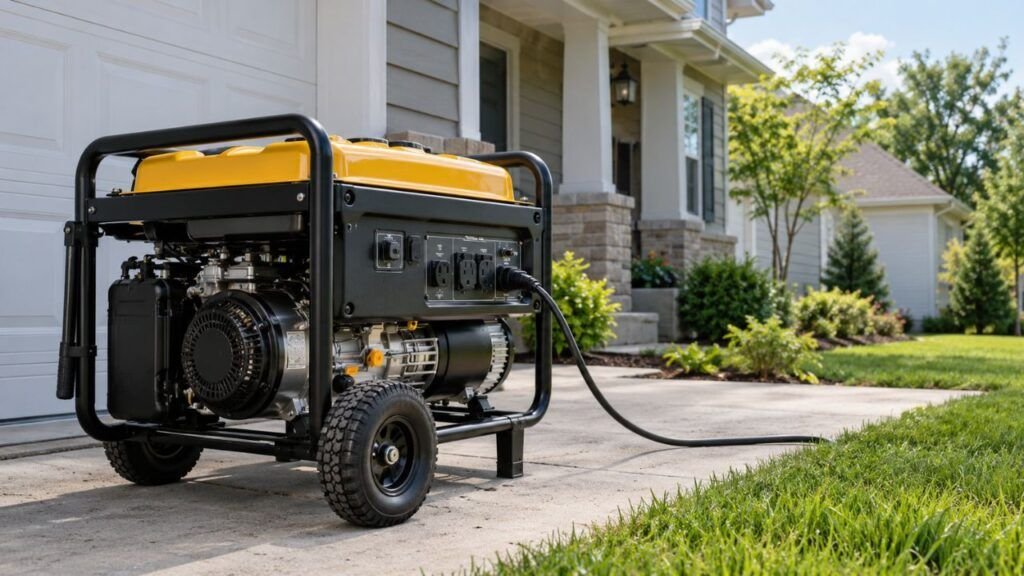
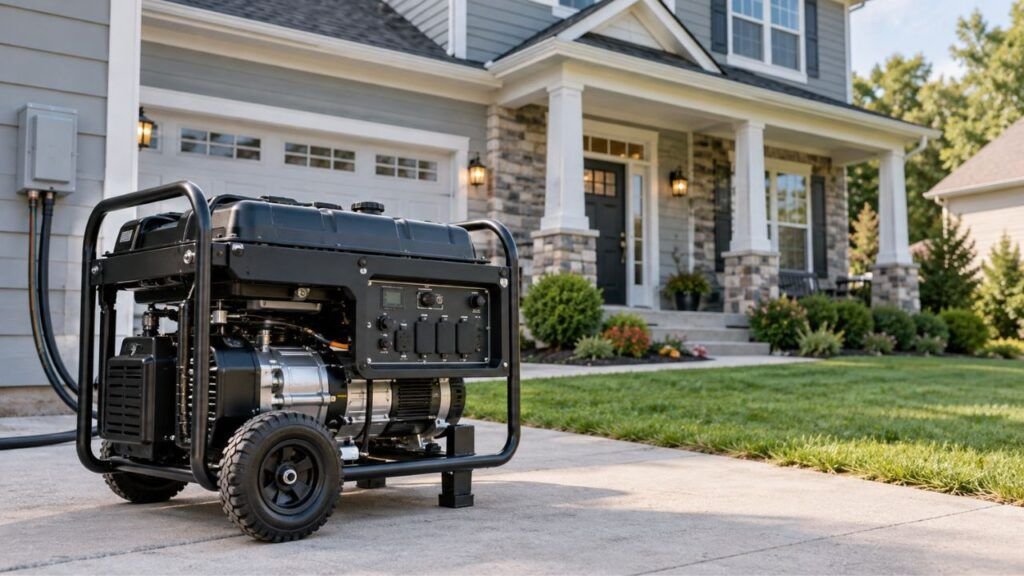
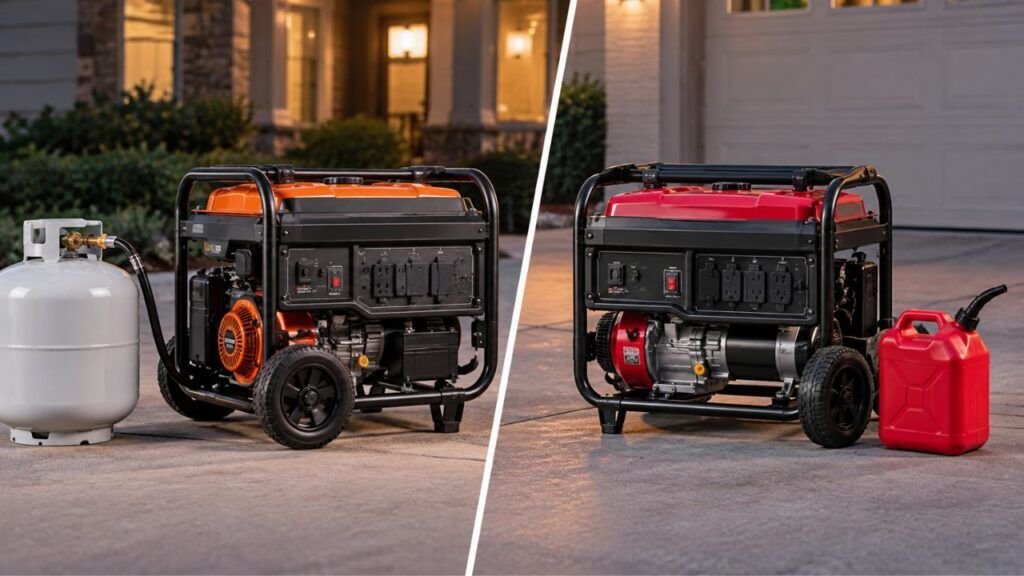
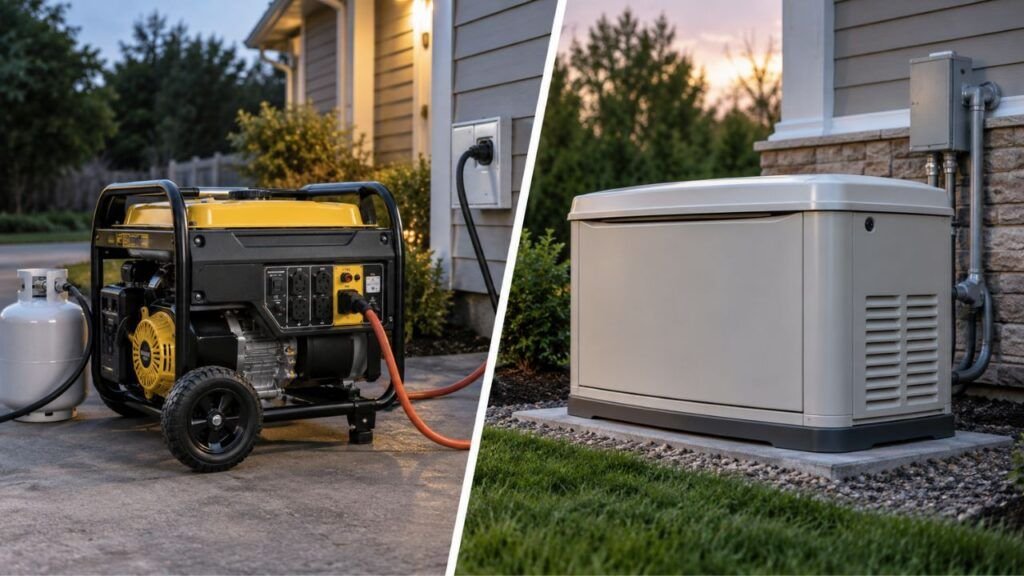
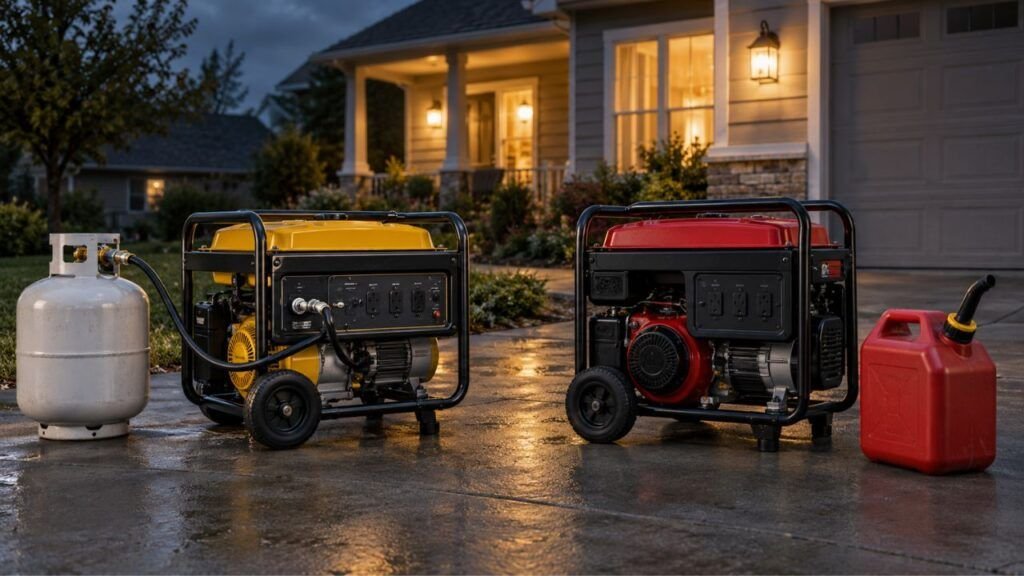
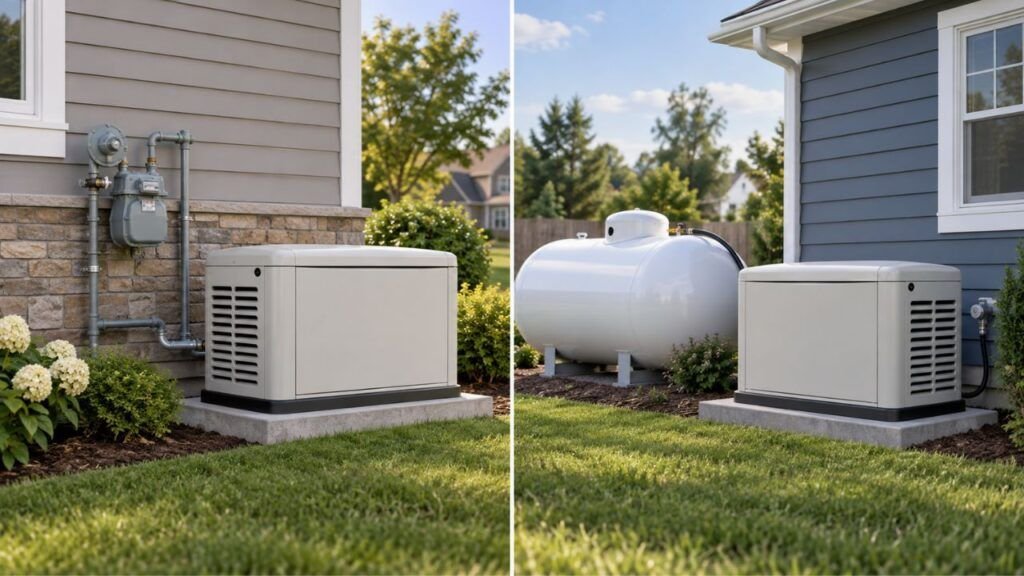
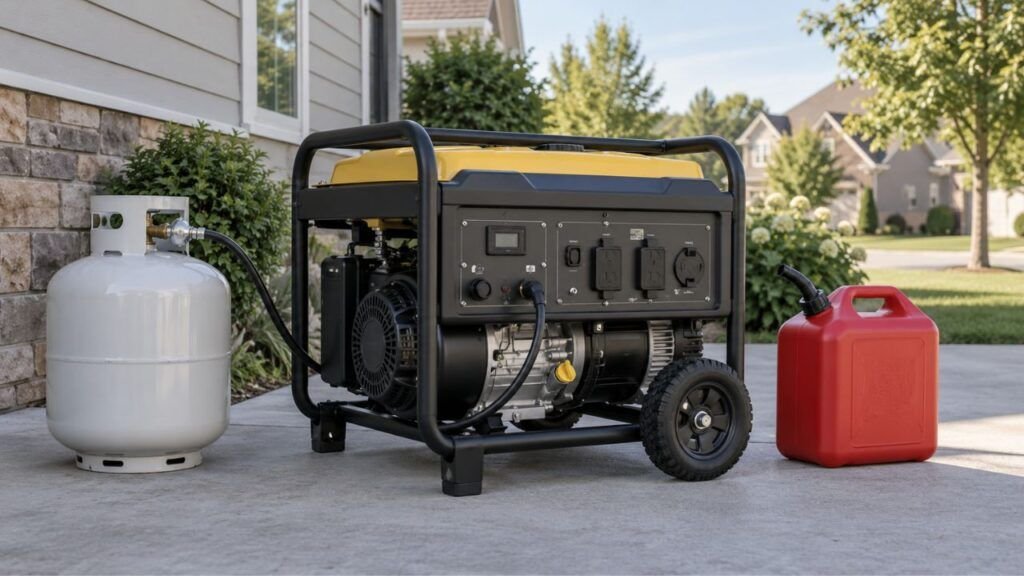
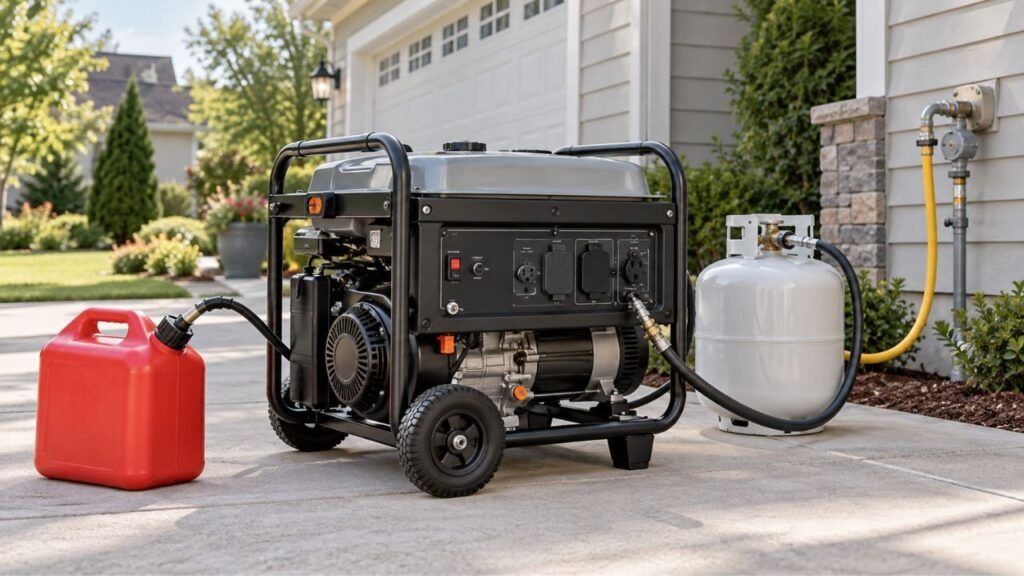
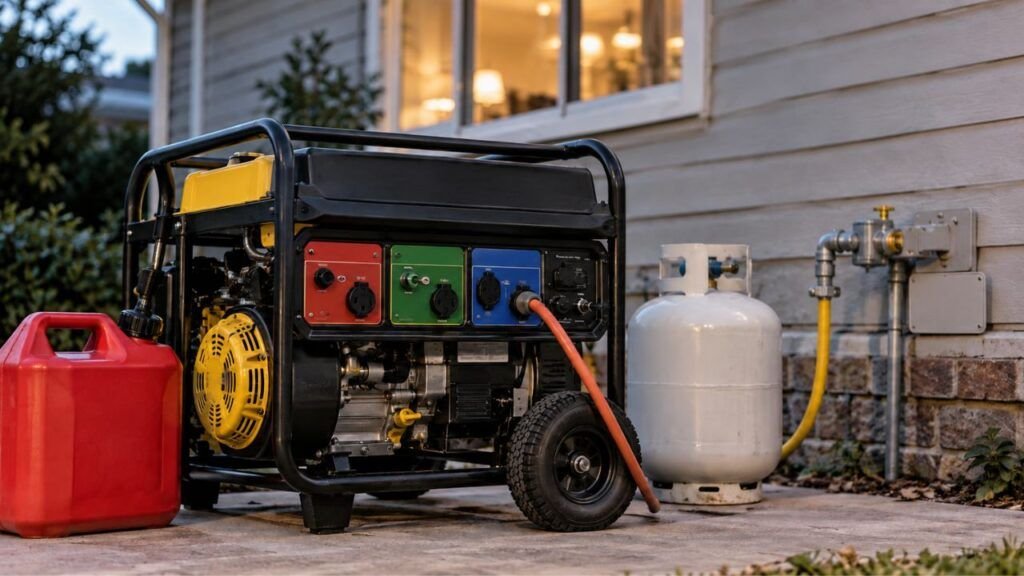
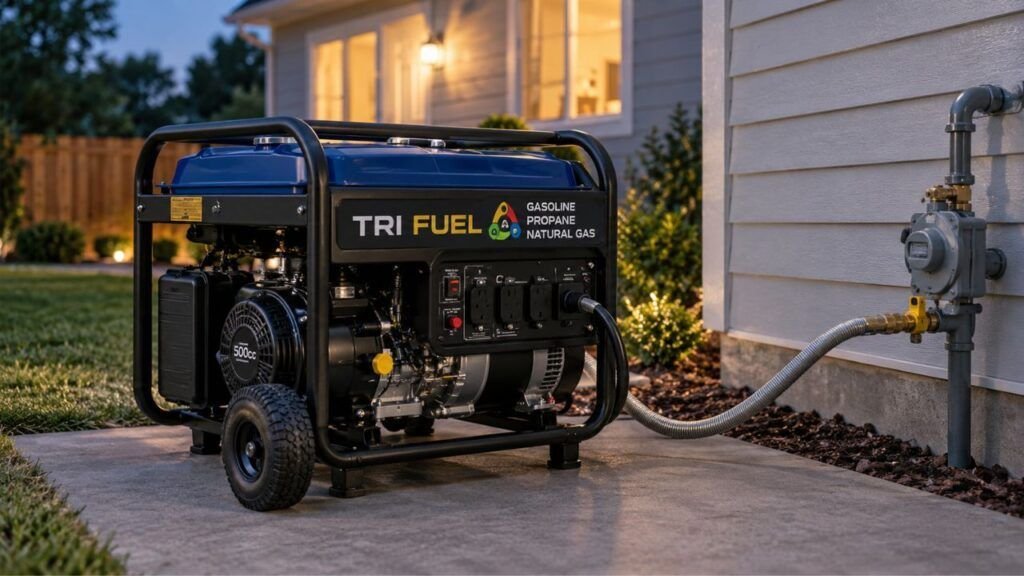
If you are looking for the best generators for power outages, you need reliable backup power to keep essential appliances running during unexpected blackouts.
The Westinghouse 8200 Peak Watt Tri-Fuel offers flexible tri-fuel backup, while the Champion 11,000-Watt Remote Start Tri Fuel handles heavier loads. The Westinghouse 14500 Peak Watt Tri-Fuel suits larger homes, the Honda EU2200i covers smaller essentials, and the Jackery HomePower 3000 provides quiet indoor backup.
After testing the top generators for power outages, we’ve compared their power output, runtime, fuel options, and safety features to help you choose the right generator for your home and budget.
We’re reader-supported. When you buy through links on our site, we may earn an affiliate commission. As an Amazon Associate, we earn from qualifying purchases at no extra cost to you.
Best Generators for Power Outages: Our Top Picks
- Best Overall: Westinghouse 8200 Peak Watt Tri-Fuel
- Best Solar Backup: Jackery HomePower 3000
- Best High-Power Inverter: Champion 11,000-Watt Remote Start Tri Fuel
- Best Lightweight Option: Honda EU2200i 2200 Watt Inverter Generator
- Best for Automatic Home Backup: Westinghouse 14500 Peak Watt Tri-Fuel
- Best for Emergency Preparedness: Generac 12,500 Starting Watt Tri-Fuel
- Best Budget Inverter: WEN Quiet and Lightweight 3600-Watt
- Best for High-Demand Homes: Westinghouse 18000 Peak Watt Tri-Fuel
- Best for Storm Backup: DuroMax XP13000HXT
- Best for Indoor Emergency Backup: BLUETTI Solar Generator Elite 400
- Best Budget Tri-Fuel: DuroStar DS13000MXT
- Best Dual-Fuel Option: Westinghouse 12000 Peak Watt Dual Fuel
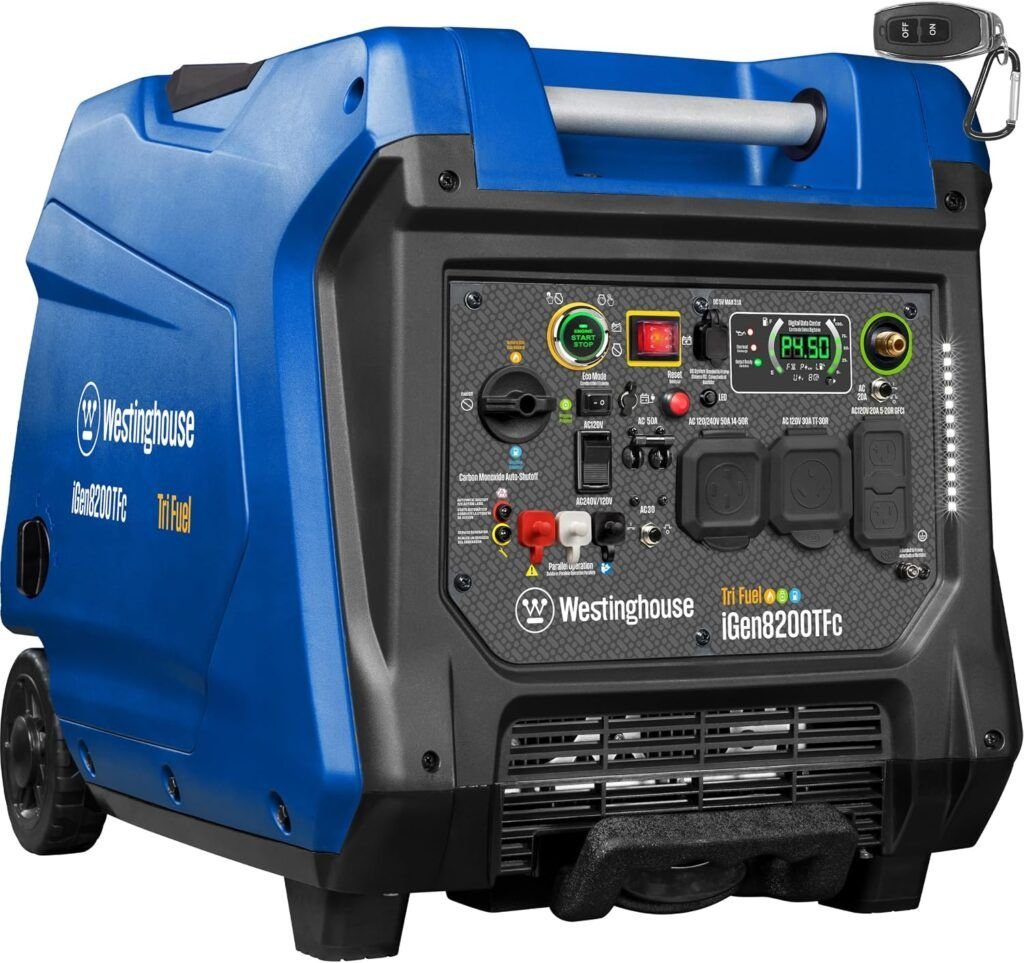
1. Best Overall: Westinghouse 8200 Peak Watt Tri-Fuel
Key Details:
- Power Output: 8,200 starting watts and 6,600 running watts on gasoline.
- Fuel Type: Gasoline, propane, and natural gas.
- Runtime: Up to 17 hours at 25% load on a 3.9-gallon tank.
- Noise Level: Around 60 dBA at 25% load.
- Home Backup Features: 50A outlet, remote start, CO sensor, and less than 3% THD.
If you’re looking for reliable generators for power outages, the Westinghouse iGen8200TFc offers an excellent balance of power and fuel flexibility. Its tri-fuel design lets you switch between gasoline, propane, and natural gas during emergencies.
With 6,600 running watts, you can power refrigerators, sump pumps, lights, and selected air conditioning loads, depending on their combined wattage. We particularly like its inverter technology, which delivers clean electricity for sensitive electronics while reducing fuel consumption.
The Westinghouse iGen8200TFc also features remote electric start and a 50A outlet for home backup connections. You get up to 17 hours of runtime at 25% load, while its enclosed design keeps operating noise relatively low.
If you want a portable generator for home power outages without depending on a single fuel source, this is a practical choice. Just remember that output decreases on propane and natural gas, and its 134.5-pound weight limits portability.
Pros:
- Three fuel options for reliable emergency backup.
- Clean inverter power for sensitive electronics.
- Long runtime with relatively quiet operation.
- Remote start and 50A home backup outlet.
Cons:
- Lower power output on alternative fuels.
- Heavy for frequent transportation.
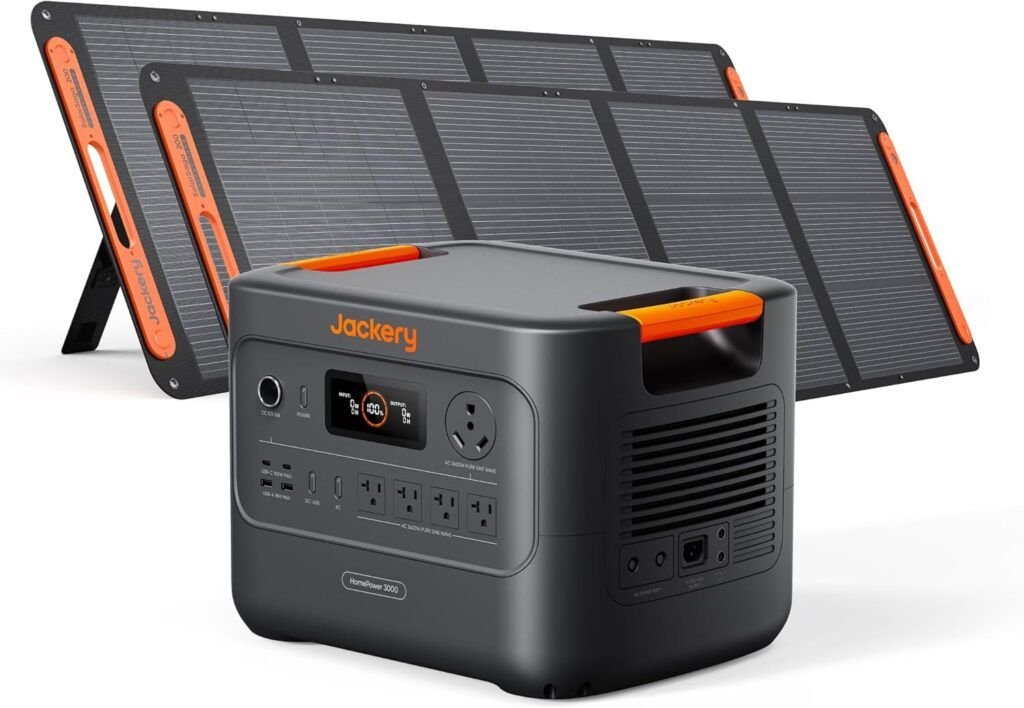
2. Best Solar Backup: Jackery HomePower 3000
Key Details:
- Battery Capacity: 3,072Wh LiFePO4 with 4,000 cycles to 70% capacity.
- Power Output: 3,600W continuous and 7,200W surge.
- Solar Panels: Includes two 200W SolarSaga panels.
- Charging Time: 2.2 hours via AC or 1.7 hours using hybrid charging.
- Backup Features: 20ms UPS switching, AC/USB outlets, and TT-30 RV port.
When electricity goes out, you might prefer backup power without gasoline, fumes, or engine noise. The Jackery HomePower 3000 is a solar generator for power outages that keeps essential household appliances running without requiring outdoor operation.
Its 3,600W output handles refrigerators, fans, Wi-Fi routers, lights, and other everyday electronics within its power limits. The 3,072Wh battery provides useful emergency backup, while the 20ms UPS function helps compatible devices stay powered during interruptions.
What makes the Jackery HomePower 3000 appealing is its flexible charging. You can recharge through AC power in 2.2 hours or use the included 400W solar setup when sunlight is available. Its LiFePO4 battery also supports thousands of charging cycles.
If you need a battery-powered generator for home backup, especially for indoor use, this is worth considering. However, heavy appliances drain the battery faster, and cloudy weather can significantly extend solar charging times.
Pros:
- Safe indoor operation without combustion fumes.
- Strong 3,600W output for essential appliances.
- Includes two 200W solar panels.
- Fast charging and convenient UPS backup.
Cons:
- Limited battery runtime under heavy loads.
- Solar charging depends on sunlight.
3. Best High-Power Inverter: Champion 11,000-Watt Remote Start Tri Fuel

Key Details:
- Power Output: 11,000 starting watts and 9,000 running watts on gasoline.
- Fuel Type: Gasoline, propane, and natural gas.
- Alternative Fuel Output: 8,100W on propane and 7,290W on natural gas.
- Starting System: Wireless remote start up to 80 feet.
- Safety Features: CO Shield automatic shutdown and low-oil protection.
If you’re preparing for extended power outages, the Champion 11,000-Watt Tri-Fuel Inverter Generator gives you enough capacity for demanding home backup needs. Its 9,000 running watts on gasoline can support multiple household circuits and appliances.
You can run refrigerators, sump pumps, lighting, and certain air conditioning systems, depending on their electrical requirements. We like its inverter technology, which provides cleaner power for computers, televisions, and other sensitive electronics during blackouts.
The Champion 11,000-Watt generator also runs on propane or natural gas, giving you more flexibility when gasoline becomes scarce. Its 80-foot wireless remote start adds convenience, while CO Shield automatically shuts down the engine when elevated carbon monoxide is detected.
For homeowners needing a powerful portable generator for emergency home backup, this model makes sense. However, its 212-pound weight requires planning, and available wattage decreases when operating on propane or natural gas.
Pros:
- Strong 9,000W continuous gasoline output.
- Three fuel options for extended outages.
- Remote start for convenient operation.
- Clean inverter power with CO protection.
Cons:
- Heavy and difficult to move frequently.
- Reduced output on propane and natural gas.
4. Best Lightweight Option: Honda EU2200i 2200 Watt Inverter Generator

Key Details:
- Power Output: 2,200 starting watts and 1,800 running watts.
- Fuel Type: Gasoline with a 0.95-gallon tank.
- Runtime: Approximately 3.2–8.1 hours per tank.
- Noise Level: 48–57 dBA, depending on load.
- Safety Features: CO-MINDER, Bluetooth monitoring, and Eco Throttle.
You don’t always need a massive generator when the power goes out. The Honda EU2200i is a compact inverter generator for power outages, especially when your priority is keeping essential electronics and smaller appliances running.
With 1,800 running watts, it can support a refrigerator, Wi-Fi router, lights, or other modest loads when managed carefully. Its inverter technology delivers stable electricity, while Eco Throttle adjusts engine speed to conserve gasoline.
One thing you’ll appreciate about the Honda EU2200i is its quiet operation. At 48–57 dBA, it’s noticeably quieter than many conventional generators. Bluetooth monitoring also makes checking operating information and maintenance reminders more convenient.
If you’re looking for a quiet portable generator for emergency backup, this Honda is easy to recommend for smaller electrical needs. However, its limited wattage isn’t suitable for whole-house backup, and the small fuel tank requires regular refilling.
Pros:
- Compact and relatively easy to carry.
- Quiet, fuel-efficient inverter operation.
- Stable electricity for sensitive electronics.
- CO-MINDER protection and Bluetooth monitoring.
Cons:
- Limited capacity for larger household appliances.
- Small fuel tank needs frequent refilling.
5. Best for Automatic Home Backup: Westinghouse 14500 Peak Watt Tri-Fuel

Key Details:
- Power Output: 14,500 starting watts and 11,500 running watts on gasoline.
- Fuel Type: Gasoline, propane, and natural gas.
- Runtime: Up to 19 hours at 25% load on a 9.5-gallon tank.
- Engine: 550cc four-stroke engine with pressure lubrication.
- Backup Features: 50A outlet, remote start, CO sensor, and optional automatic transfer switch compatibility.
If you want a powerful generator for home power outages, the Westinghouse 14500 Tri-Fuel is worth considering. Its 11,500 running watts provide substantial backup capacity for larger households during storms and unexpected blackouts.
You can power refrigerators, sump pumps, lighting, and certain air conditioning systems, depending on your electrical load. We particularly like its 550cc engine with pressure lubrication, which helps reduce engine wear during extended operation.
The Westinghouse 14500 also offers up to 19 hours of runtime at 25% load. More importantly, it supports the optional WATS200 automatic transfer switch, allowing compatible home backup setups to operate automatically when utility power fails.
If you’re preparing for frequent or prolonged outages, its tri-fuel flexibility is a major advantage. However, the automatic transfer switch requires a separate purchase and professional installation, while its 230-pound weight makes transportation challenging.
Pros:
- Strong 11,500W continuous gasoline output.
- Three fuel choices for emergency flexibility.
- Long runtime with remote electric start.
- Compatible with an optional automatic transfer switch.
Cons:
- Automatic transfer switch sold separately.
- Heavy at approximately 230 pounds.
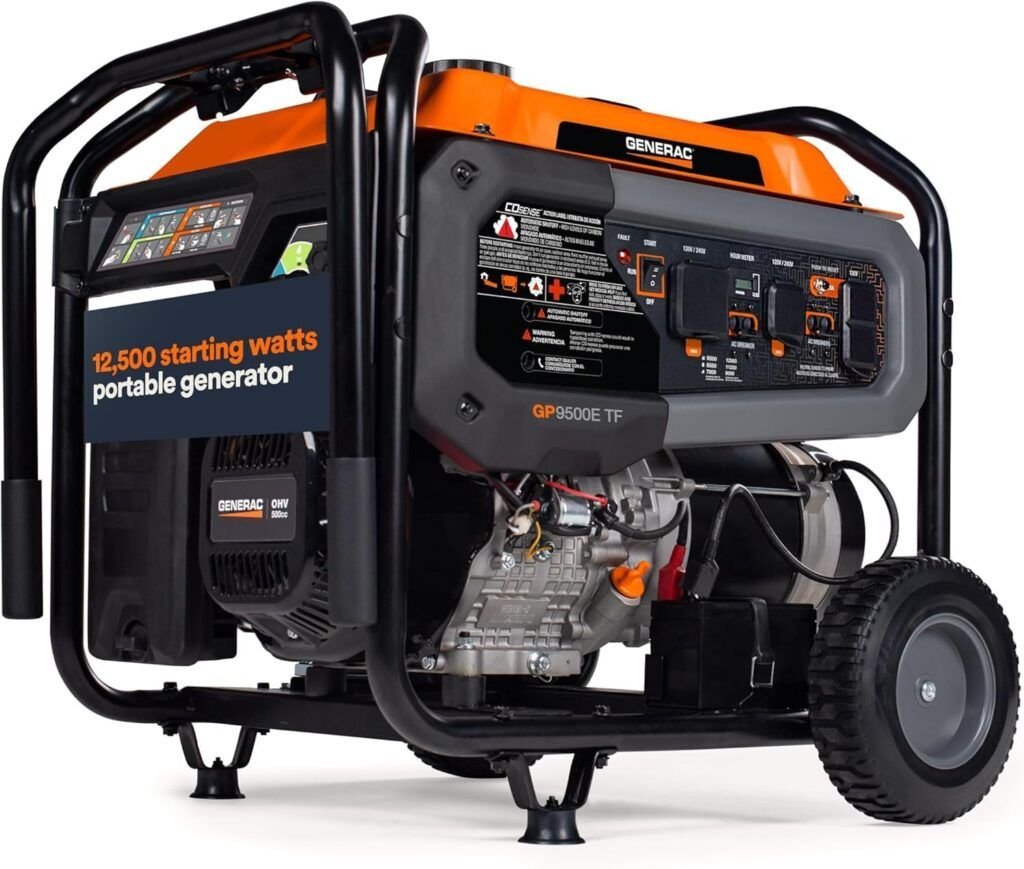
6. Best for Emergency Preparedness: Generac 12,500 Starting Watt Tri-Fuel
Key Details:
- Power Output: 12,500 starting watts and 9,500 running watts on gasoline.
- Fuel Type: Gasoline, propane, and natural gas.
- Runtime: Up to 9.5 hours at 50% load on a 7.5-gallon tank.
- Engine: 500cc Generac OHV engine with electric start.
- Home Backup Features: 120/240V 50A outlet, COsense protection, and transfer switch compatibility.
When severe weather leaves your neighborhood without electricity, the Generac GP9500 Tri-Fuel gives you dependable backup capacity. With 9,500 running watts on gasoline, it can support several essential household appliances during extended power outages.
The 500cc engine provides 12,500 starting watts, helping handle demanding equipment such as sump pumps, refrigerators, and compatible air conditioners. We like its automatic voltage regulation, which helps maintain stable output as electrical loads change.
The Generac GP9500 also makes emergency preparation easier with three fuel options. You get up to 9.5 hours of runtime at 50% load, while the 50A outlet supports properly installed home backup connections. Electric start and COsense protection add convenience and safety.
If you need a tri-fuel portable generator for power outages, this model offers strong household backup capability. Just consider its 218-pound weight and remember that running watts decrease when using propane or natural gas.
Pros:
- Powerful output for multiple household appliances.
- Gasoline, propane, and natural gas compatibility.
- Electric start with COsense protection.
- 50A outlet for home backup connections.
Cons:
- Heavy and difficult to transport alone.
- Requires regular engine maintenance.
7. Best Budget Inverter: WEN Quiet and Lightweight 3600-Watt

Key Details:
- Power Output: 3,600 starting watts and 2,900 running watts on gasoline.
- Fuel Type: Gasoline and propane.
- Propane Output: 3,500 starting watts and 2,600 running watts.
- Weight: Approximately 49 pounds.
- Safety Features: CO Watchdog, fuel shutoff, TT-30R outlet, and USB ports.
If you only need to keep essential appliances running during a blackout, the WEN DF360iX is a practical option. This compact dual-fuel inverter generator provides emergency backup power without the bulk of larger home generators.
With 2,900 running watts on gasoline, it can support a refrigerator, lights, Wi-Fi router, and selected smaller appliances within its load limits. We like its inverter technology, which provides clean electricity for sensitive electronics while keeping operating noise relatively low.
The WEN DF360iX also gives you the flexibility to switch between gasoline and propane. Its CO Watchdog automatically shuts down the engine when dangerous carbon monoxide levels are detected, while fuel shutoff helps reduce carburetor maintenance during storage.
If you’re looking for an affordable portable generator for power outages, this lightweight model makes sense for essential backup needs. However, its 120V output and limited running wattage make it unsuitable for large 240V appliances or whole-house backup.
Pros:
- Lightweight and easy to transport.
- Dual-fuel operation for added flexibility.
- Clean inverter power with quiet operation.
- CO Watchdog and convenient fuel shutoff.
Cons:
- Limited capacity for heavy household loads.
- No 240V output for larger home appliances.
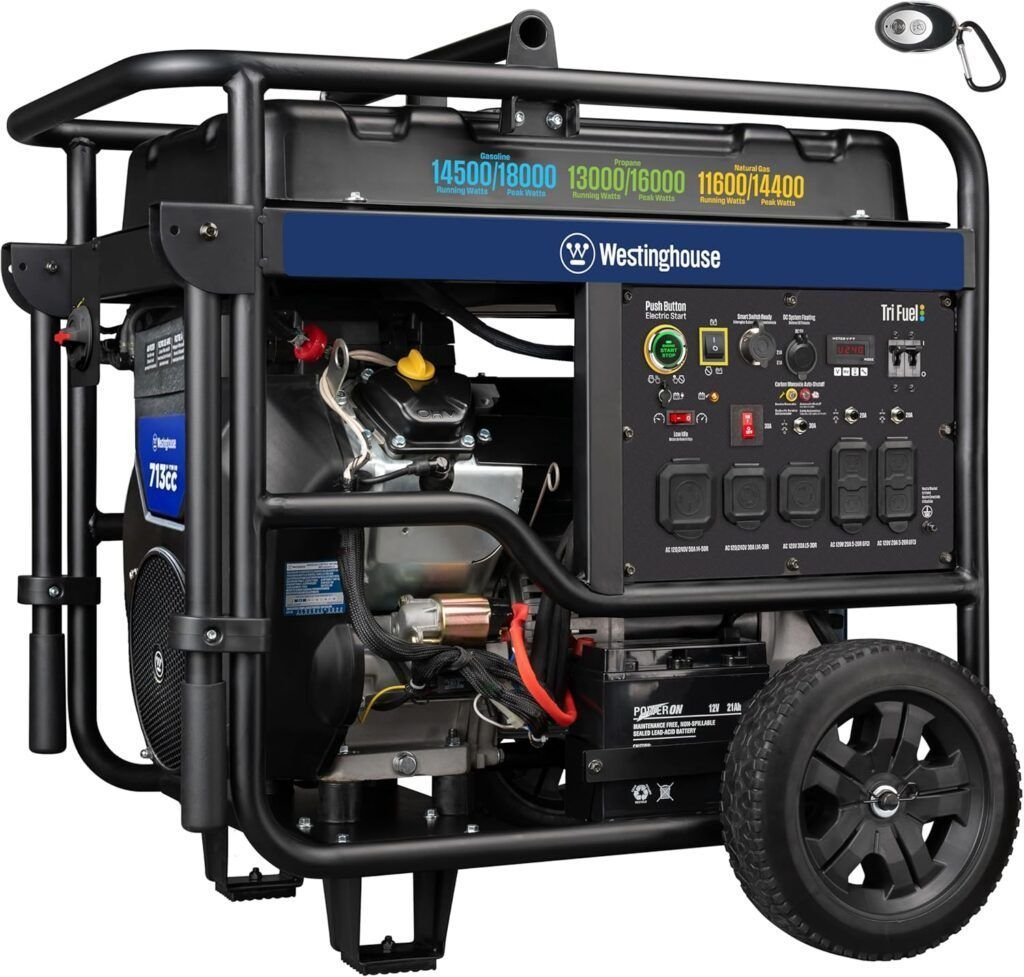
8. Best for High-Demand Homes: Westinghouse 18000 Peak Watt Tri-Fuel
Key Details:
- Power Output: 18,000 starting watts and 14,500 running watts on gasoline.
- Fuel Type: Gasoline, propane, and natural gas.
- Runtime: Up to 16 hours at 25% load on a 10.5-gallon tank.
- Engine: 713cc four-stroke engine with full-pressure lubrication.
- Home Backup Features: 50A outlet, remote start, CO sensor, and optional automatic transfer switch compatibility.
For homeowners who need serious backup power during extended blackouts, the Westinghouse 18000 Tri-Fuel offers impressive capacity. Its 14,500 running watts on gasoline make it suitable for larger homes with multiple electrical demands.
You can support refrigerators, sump pumps, lighting, and selected high-wattage appliances, including compatible air conditioning systems. What stands out is its 713cc engine with full-pressure lubrication and an automotive-style oil filter, designed to support demanding operation.
The Westinghouse 18000 also provides up to 16 hours of runtime at 25% load. Its 50A outlet supports home backup connections, while the optional WATS200 automatic transfer switch adds automatic operation when professionally installed.
If you’re searching for a high-capacity generator for whole-house power outages, this model deserves attention. However, its 348-pound weight makes portability difficult, and powering an entire home still depends on your electrical load and transfer equipment.
Pros:
- Powerful 14,500W continuous gasoline output.
- Three fuel options for extended emergencies.
- Heavy-duty engine with full-pressure lubrication.
- Remote start and automatic backup compatibility.
Cons:
- Very heavy at approximately 348 pounds.
- Automatic transfer switch requires separate purchase.
9. Best for Storm Backup: DuroMax XP13000HXT
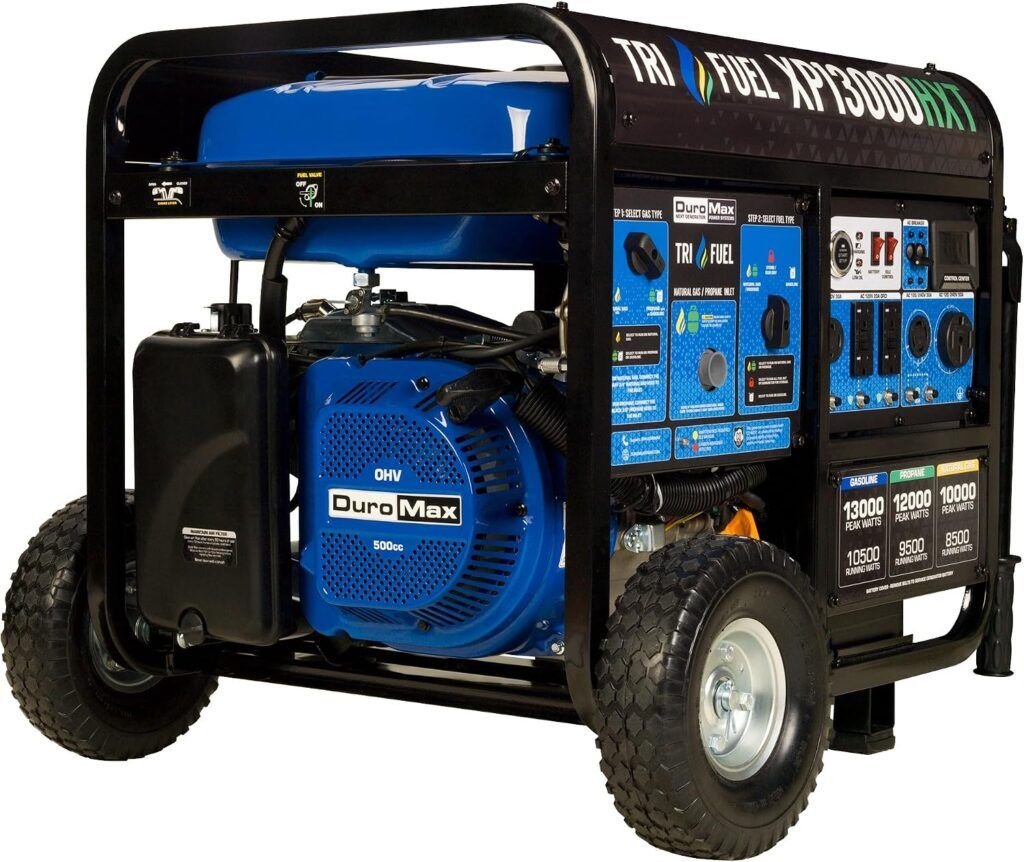
Key Details:
- Power Output: 13,000 watts maximum rated starting output.
- Fuel Type: Gasoline, propane, and natural gas.
- Engine: 500cc OHV engine.
- Starting System: Push-button electric start and wireless remote start.
- Home Backup Features: 120/240V output, 50A outlet, and CO Alert protection.
If you’re preparing for hurricanes, severe storms, or extended blackouts, the DuroMax XP13000HXT offers powerful emergency home backup. Its 13,000-watt peak output provides substantial starting capacity for household appliances when utility power becomes unavailable.
You can support refrigerators, sump pumps, lighting, and selected air conditioning systems, depending on their combined power requirements. We particularly like its 500cc engine and tri-fuel capability, which gives you more flexibility when gasoline supplies become limited.
The DuroMax XP13000HXT also makes emergency operation convenient with push-button and remote electric start. Its 50A outlet supports properly installed home backup connections, while CO Alert automatically shuts down the engine when dangerous carbon monoxide levels are detected.
If you need a high-powered portable generator for power outages, this model is worth considering. However, its 240-pound weight limits portability, and available running wattage varies depending on your selected fuel source.
Pros:
- Strong starting capacity for demanding appliances.
- Three fuel options for emergency flexibility.
- Remote electric start for convenient operation.
- 50A outlet with CO Alert protection.
Cons:
- Heavy and challenging to move frequently.
- Lower power output on alternative fuels.
10. Best for Indoor Emergency Backup: BLUETTI Solar Generator Elite 400
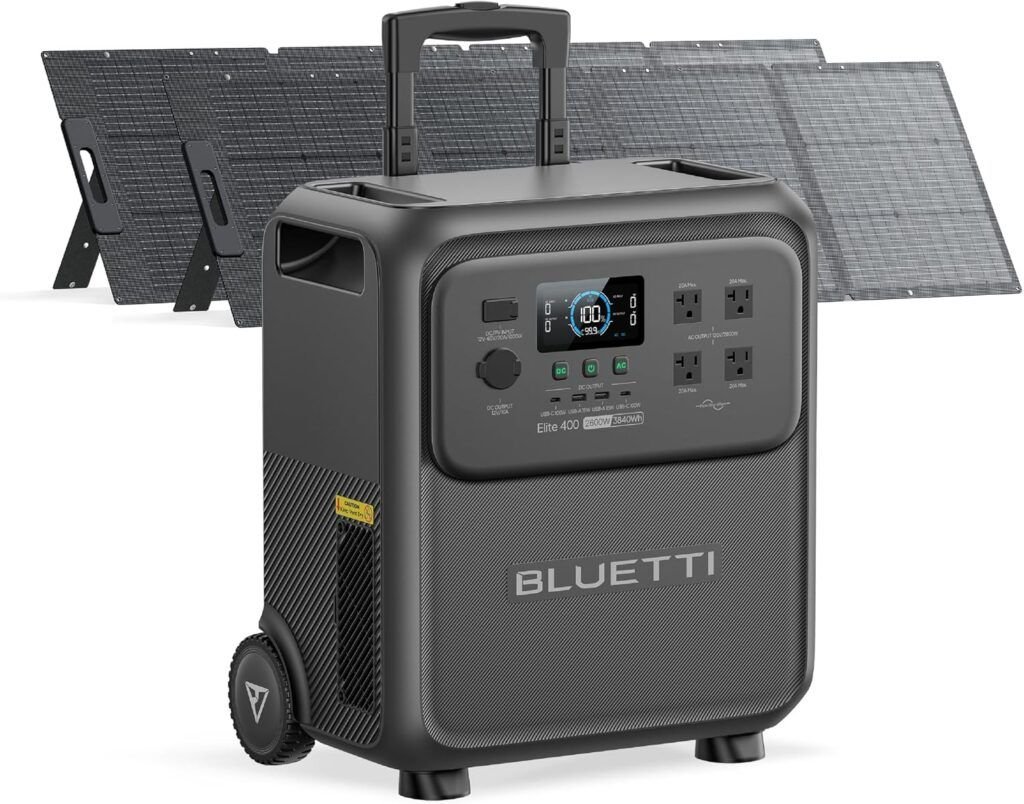
Key Details:
- Battery Capacity: 3,840Wh LiFePO4 battery with 3,000+ cycles.
- Power Output: 2,600W continuous with up to 3,900W Power Lifting mode.
- Solar Panels: Includes two 200W solar panels.
- Charging Speed: Up to 80% in approximately 70 minutes under supported charging conditions.
- Backup Features: 15ms UPS switching, nine output ports, and wheeled trolley system.
When a power outage strikes, having backup electricity indoors can make everyday life much easier. The BLUETTI Elite 400 is a battery-powered solar generator for home emergencies, offering quiet operation without gasoline or combustion fumes.
Its 3,840Wh battery can keep refrigerators, Wi-Fi routers, lights, and other essential devices running, depending on their energy consumption. With 2,600W continuous output, you can operate several appliances simultaneously, while Power Lifting mode supports certain higher-wattage resistive appliances.
What makes the BLUETTI Elite 400 particularly useful is its flexible charging and convenient mobility. The included 400W solar setup provides renewable charging during extended outages, while the 15ms UPS function helps maintain power to compatible electronics when electricity fails.
If you’re looking for a solar generator for power outages without fuel storage or engine maintenance, this is a practical choice. Just remember that heavy appliances drain its battery faster, and the 9.5–19-hour advertised solar recharge time depends on favorable sunlight.
Pros:
- Large 3,840Wh battery for essential home backup.
- Quiet indoor operation without exhaust fumes.
- Includes two 200W solar panels.
- Fast charging with UPS functionality.
Cons:
- Limited runtime with high-power appliances.
- Solar recharging depends on weather conditions.
11. Best Budget Tri-Fuel: DuroStar DS13000MXT
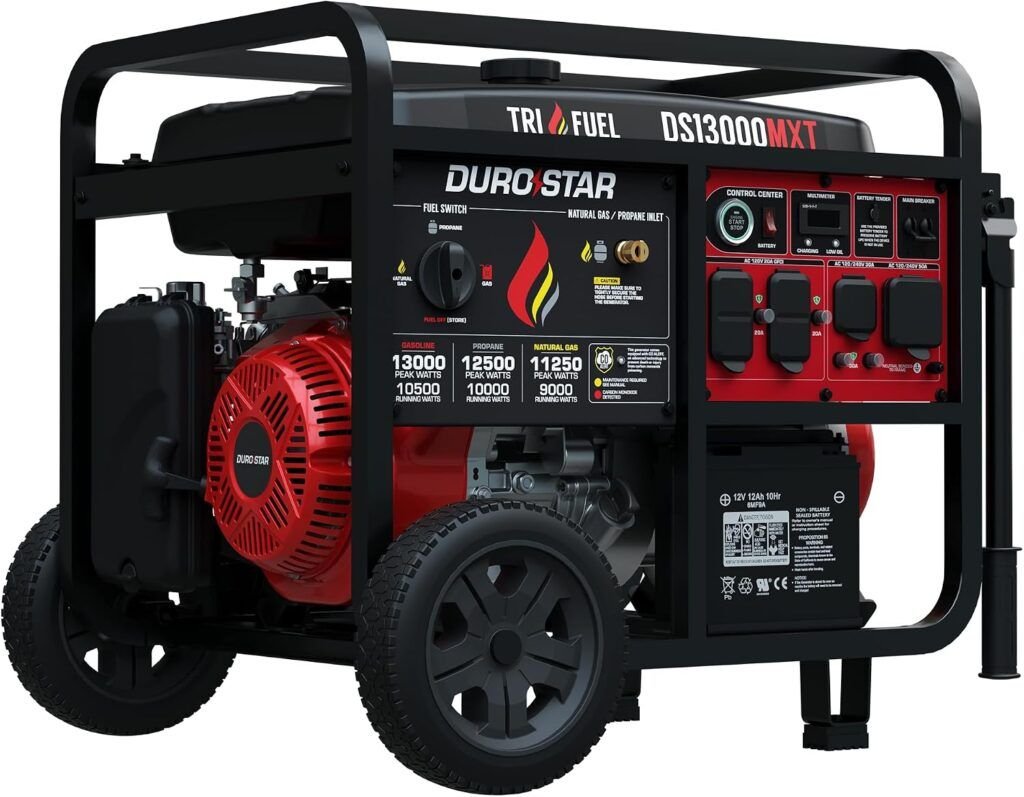
Key Details:
- Power Output: Up to 13,000 watts of peak power.
- Fuel Type: Gasoline, propane, and natural gas.
- Engine: 500cc engine.
- Starting System: Push-button electric start and remote control.
- Home Backup Features: 120/240V output, 50A outlet, and CO Alert shutdown.
If you’re looking for a powerful generator for home power outages without sacrificing fuel flexibility, the DuroStar DS13000MXT is worth considering. Its 13,000-watt peak capacity makes it suitable for demanding emergency backup applications.
You can power essential appliances, refrigerators, sump pumps, and selected larger household loads within its running wattage limits. We like its tri-fuel design, which allows you to switch between gasoline, propane, and natural gas when preparing for extended blackouts.
The DuroStar DS13000MXT also features remote electric start and a convenient fuel selection knob. Its transfer switch-ready 50A outlet supports home backup connections, while CO Alert provides automatic shutdown protection when elevated carbon monoxide levels are detected.
If you need a tri-fuel portable generator for emergency home backup, this model offers a practical combination of power and convenience. However, its 245-pound weight requires careful positioning, and you’ll need to account for lower wattage when using alternative fuels.
Pros:
- High starting wattage for emergency backup.
- Three fuel choices for greater flexibility.
- Remote electric start and simple fuel selection.
- 50A home backup outlet with CO protection.
Cons:
- Heavy at approximately 245 pounds.
- Reduced output on propane and natural gas.
12. Best Dual-Fuel Option: Westinghouse 12000 Peak Watt Dual Fuel
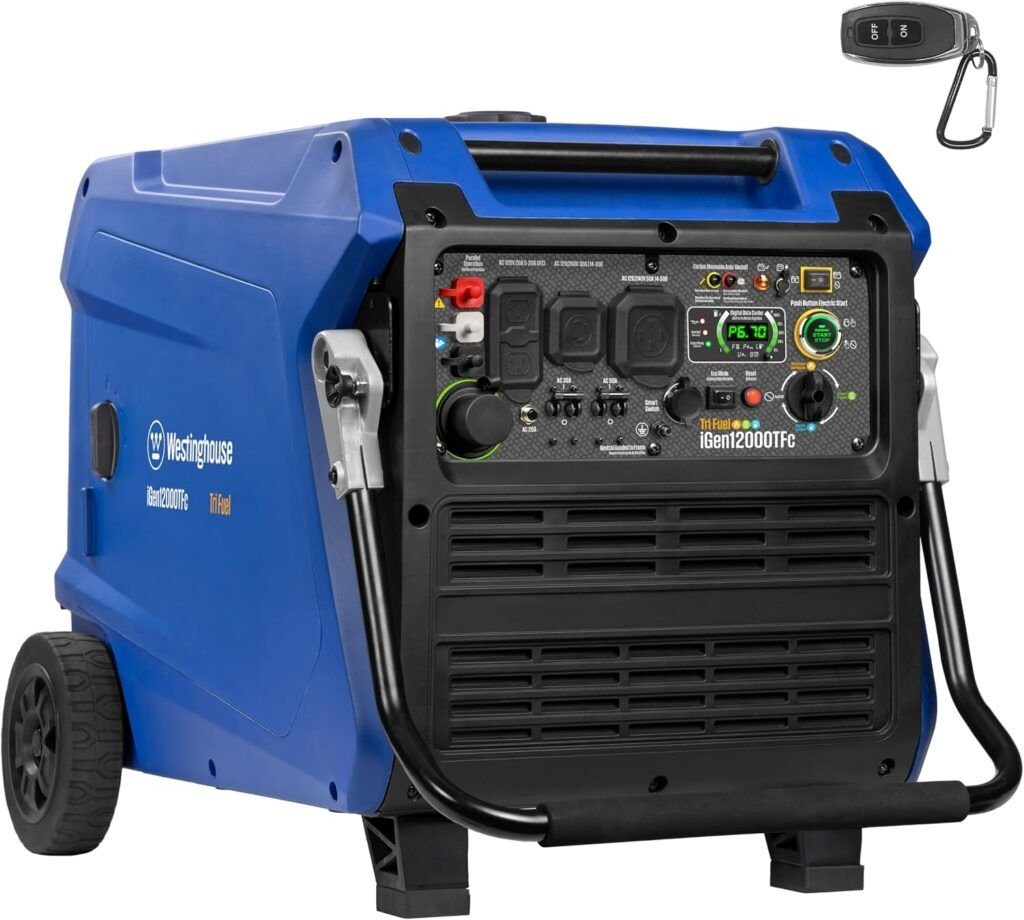
Key Details:
- Power Output: 12,500 starting watts and 9,500 running watts on gasoline.
- Fuel Type: Gasoline and propane.
- Propane Output: 11,200 starting watts and 8,500 running watts.
- Runtime: Up to 12 hours on a 6.6-gallon gasoline tank.
- Home Backup Features: 120/240V 50A outlet, 30A outlet, and remote electric start.
When unexpected blackouts interrupt your daily routine, the Westinghouse 12500 Dual-Fuel provides dependable emergency backup power. Its 9,500 running watts on gasoline can support multiple household appliances during storms and power failures.
You can run refrigerators, sump pumps, lights, and certain air conditioning loads, depending on their starting and running wattage. We particularly like its dual-fuel capability, allowing you to switch to propane when gasoline becomes difficult to obtain.
The Westinghouse 12500 also makes home backup convenient with remote electric start and transfer switch-ready outlets. Its 6.6-gallon gasoline tank provides up to 12 hours of runtime, while the digital VFT display helps monitor voltage, frequency, and operating hours.
If you’re searching for a dual-fuel generator for power outages, this model offers strong output without unnecessary complexity. However, its 184.6-pound weight makes frequent transportation difficult, and propane operation reduces available wattage.
Pros:
- Powerful 9,500W continuous gasoline output.
- Gasoline and propane fueling flexibility.
- Remote start with long runtime.
- 50A outlet for home backup connections.
Cons:
- Heavy for regular transportation.
- Lower running wattage when using propane.
What Type of Generator Is Rught for Power Outages?
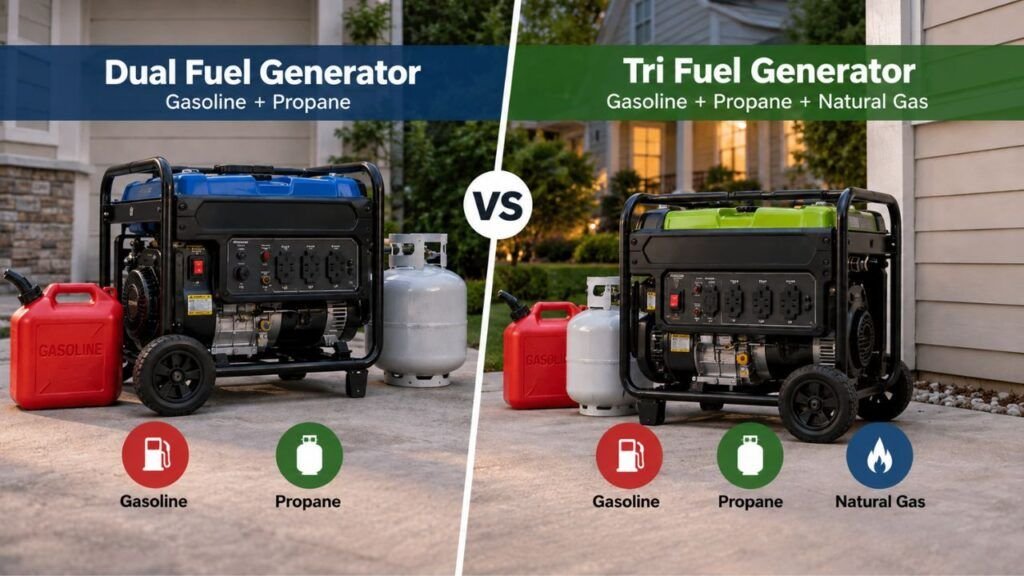
The right generator for power outages depends on your household’s electricity needs, fuel availability, and backup duration. Portable gas generators offer affordable power, while dual-fuel and tri-fuel models provide more flexibility during emergencies.
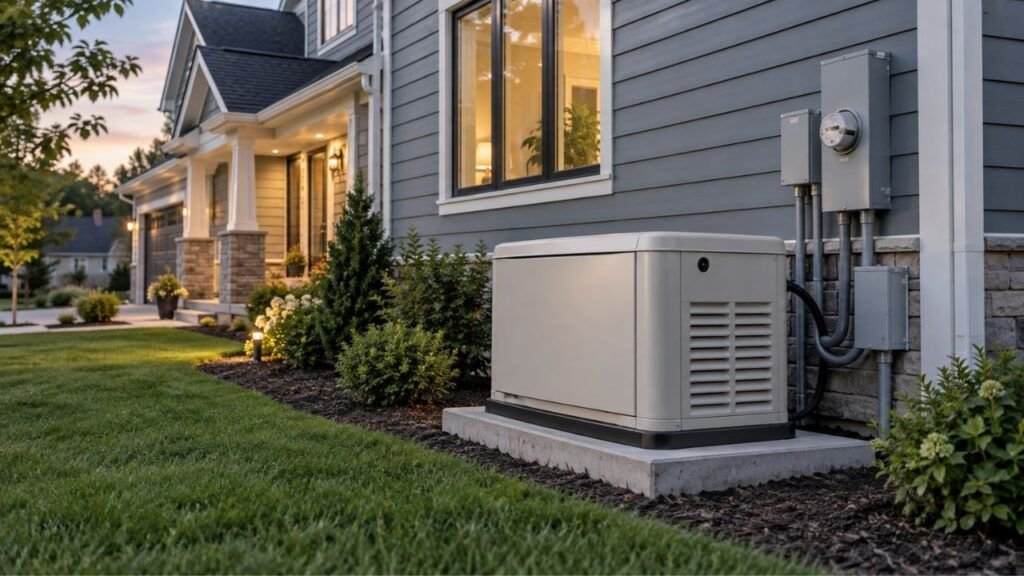
If you prefer quiet indoor backup, battery and solar generators are practical alternatives. Standby generators, meanwhile, provide automatic home backup when professionally installed.
| Generator Type | Main Advantage | Limitations | Best Use |
| Portable Gas | Strong output and widely available models | Requires gasoline and regular maintenance | Emergency home backup |
| Dual-Fuel | Runs on gasoline or propane | Lower output on propane | Extended power outages |
| Tri-Fuel | Supports gasoline, propane, and natural gas | Heavier and often larger | Flexible whole-home backup |
| Inverter | Quieter operation and clean electricity | Higher cost per watt | Sensitive electronics and essential appliances |
| Standby | Automatic backup with an installed transfer switch | Expensive installation | Permanent whole-house backup |
| Battery/Solar | Quiet, emission-free operation at the point of use | Limited storage and weather-dependent solar charging | Indoor backup and essential devices |
For most homeowners, a portable dual-fuel or tri-fuel generator offers a practical balance of power and flexibility. However, if you experience frequent blackouts, a standby generator or battery backup system may better suit your needs.
What Size Generator Do You Need for a Power Outage?
Most homes need approximately 3,000 to 10,000 running watts for essential backup, while larger whole-house setups may require 15,000 to 25,000 watts or more. The right size depends on which appliances you want to run simultaneously.
Running watts keep appliances operating, while starting watts provide the extra power needed to start motors in refrigerators, pumps, and air conditioners.
| Backup Needs | Typical Wattage Range | Appliances Supported |
| Essential Appliances | 2,000-3,500W | Refrigerator, lights, Wi-Fi router, fans |
| Small Home Backup | 3,500-6,000W | Refrigerator, lights, sump pump, selected outlets |
| Medium Home Backup | 6,000-10,000W | Essential circuits, pumps, furnace blower, selected AC loads |
| Larger Whole-House Backup | 10,000-20,000W+ | Multiple circuits, central AC, and larger appliances, subject to load limits |
These ranges are approximate, not guaranteed appliance combinations. A home with electric heating or multiple air conditioners may require considerably more power.
Before choosing a generator, add the running watts of everything you’ll use together. Then account for additional motor starting demand and leave some spare capacity. For an accurate whole-house calculation, consult a licensed electrician.
How to Choose the Best Generator for Power Outages
Choosing a generator for emergency home backup isn’t just about buying the highest wattage. You need something that fits your appliances, handles extended outages, and remains practical to operate. Here’s what matters most.
Running Watts and Starting Watts
Check both wattage ratings before buying. Running watts determine how many appliances you can power continuously, while starting watts handle brief motor surges. If you’re running refrigerators, sump pumps, or air conditioners, account for their startup requirements.
Fuel Type and Availability During Emergencies
Gasoline generators are widely available, but fuel supplies can become limited during storms. Dual-fuel models use gasoline and propane, while tri-fuel generators also support natural gas. If you experience frequent outages, having multiple fuel options provides greater flexibility.
Runtime and Fuel Efficiency
Look for a generator that provides enough runtime between refueling stops. A model offering 10-15 hours at a specified load can be convenient during prolonged blackouts. Remember that higher electrical demand increases fuel consumption and reduces runtime.
120V/240V Output and Outlet Compatibility
Most household electronics use 120V electricity, while certain large appliances require 240V. If you plan to power a central AC, well pump, or home electrical panel, check the generator’s voltage, outlet ratings, and transfer switch compatibility.
Noise Levels and Portability
If you live near neighbors, consider a quieter inverter generator. Enclosed inverter models generally produce less noise than conventional open-frame generators. Also, check the weight, wheels, and handles if you’ll need to move the unit during emergencies.
Electric Start, CO Shutoff, and Safety Features
Electric or remote start makes operating a generator more convenient during outages. Look for automatic low-oil shutdown, overload protection, and carbon monoxide detection. Remember that CO shutoff is an additional safeguard, not a replacement for safe outdoor placement.
Transfer Switch Compatibility and Installation
Planning to connect your generator to your home’s electrical panel? Choose a compatible transfer switch-ready model with suitable output connections. Have a licensed electrician install an approved transfer switch or interlock system to prevent dangerous electrical backfeeding.
Price, Warranty, and Maintenance Costs
Consider more than the initial purchase price. Fuel consumption, oil changes, replacement parts, and installation expenses affect ownership costs. A dependable generator with accessible service support and a solid warranty can be a smarter investment for emergency backup.
How Long Can a Generator Run During a Power Outage?
A generator can run for several hours or longer during a power outage, depending on fuel capacity, electrical load, and generator type. Most portable gasoline generators provide several hours of operation per tank, with longer runtimes possible at lighter loads.
Propane generators can operate as long as their fuel supply lasts, while natural gas generators can provide extended operation with an uninterrupted gas connection. However, engine maintenance requirements and manufacturer operating limits still apply.
Battery generators work differently. For example, a 3,000Wh power station might power a 300W average load for roughly 8-9 hours after accounting for conversion losses. Solar panels can extend runtime when sufficient sunlight is available.
If you’re preparing for extended blackouts, prioritize fuel efficiency, accessible refueling, and manageable appliance loads.
Solar vs. Gas Generators for Power Outages
Solar and gas generators both provide emergency electricity, but they serve different backup needs. Moreover, solar generators are convenient for indoor use, while gas generators generally provide more continuous power when fuel is available.
| Feature | Solar Generator | Gas Generator |
| Power Source | Rechargeable battery and optional solar panels | Gasoline or other compatible engine fuel |
| Initial Cost | Often higher per watt of available output | Often lower per watt of output |
| Installation | Usually plug-and-play for individual appliances | Outdoor setup; professional installation for panel connections |
| Automatic Operation | Some offer UPS functionality | Portable models usually require manual operation; select systems support automatic transfer |
| Fuel Supply | Stored battery energy and sunlight | Requires a continuous or replenished fuel supply |
| Maintenance | Minimal routine maintenance | Regular oil changes and engine servicing |
| Backup Capability | Limited by battery capacity and inverter output | Runs longer with sufficient fuel |
| Indoor Operation | Suitable for indoor use when used as directed | Never safe indoors |
If you need to run refrigerators, sump pumps, or demanding household appliances for several days, a gas generator may be more practical. However, if you prioritize quiet indoor backup for essential electronics, a solar generator offers greater convenience.
Safety Tips for Using Generators During Power Outages
A generator can keep your household running during a blackout, but improper operation creates serious risks. Follow these safety precautions whenever you use emergency backup power.
- Keep Generators Outdoors: Place fuel-burning generators at least 20 feet from your home, with exhaust directed away from doors, windows, and vents.
- Never Operate Indoors: Avoid garages, basements, sheds, enclosed porches, and other enclosed spaces, even with open doors.
- Install CO Detectors: Use working carbon monoxide alarms on every level of your home and outside sleeping areas.
- Use Proper Electrical Connections: Have a licensed electrician install a suitable transfer switch or approved interlock system for panel connections.
- Never Backfeed Electricity: Don’t connect a generator to a household wall outlet. This can endanger utility workers and damage equipment.
- Refuel Safely: Turn off fuel-powered generators and allow engines to cool before adding gasoline.
- Protect Against Weather: Keep generators dry using manufacturer-approved outdoor protection without restricting ventilation.
- Follow Maintenance Instructions: Check engine oil, inspect cables, and follow recommended service intervals.
If you’re unsure about generator installation or electrical compatibility, consult a qualified electrician before connecting your backup system.
Final Words
Choosing the right generator for power outages comes down to reliable performance, sufficient wattage, and convenient operation. Whether you need basic emergency electricity or whole-house backup, matching the generator to your actual electrical load matters most.
The Westinghouse 8200 Peak Watt Tri-Fuel offers balanced tri-fuel backup for everyday household needs, while the Champion 11,000-Watt Remote Start Tri Fuel provides greater capacity for demanding appliances. If you prefer quiet indoor backup without gasoline, the Jackery HomePower 3000 is a practical alternative for essential devices.
Before buying, consider your home’s running watts, appliance starting requirements, fuel availability, and expected outage duration. A properly sized generator will make unexpected blackouts much easier to manage.
Related FAQs
What Size Generator Is Needed to Run a House During an Outage?
A 5,000-10,000W generator can support essential circuits in many homes. Whole-house backup may require 15,000-25,000W or more, depending on appliances and starting loads.
Is a 5,000-Watt Generator Enough for a Power Outage?
Yes, a 5,000W generator can power essential appliances such as refrigerators, lights, and some pumps. However, running large air conditioners or multiple high-wattage appliances may exceed its capacity.
Can a 10,000-Watt Generator Power an Entire House?
A 10,000W generator can power many household circuits, including selected heating or cooling equipment. However, it may not support every appliance simultaneously, particularly electric heating and large central AC systems.
What Is the Best Fuel for a Generator During Power Outages?
Natural gas is convenient when you have a reliable supply, while propane stores well for emergencies. Gasoline offers accessibility and strong output, but fuel availability and storage require planning.
Are Inverter Generators Good for Home Power Outages?
Yes, inverter generators provide stable electricity for refrigerators, computers, televisions, and other electronics. They’re generally quieter and more fuel-efficient at lighter loads than conventional generators.
Can You Run a Generator Overnight During a Power Outage?
Yes, if the manufacturer permits extended operation and the generator is safely positioned outdoors. Keep it at least 20 feet from your home, maintain working CO alarms, and never refuel a running engine.
How Long Can a Generator Run Continuously During an Outage?
Runtime varies by generator type, fuel supply, and electrical load. Some portable generators run 8-16 hours per tank, while natural gas models can operate longer with proper maintenance and uninterrupted fuel.
Are Solar Generators Worth It for Power Outages?
Yes, solar generators are useful for quiet indoor backup, especially for refrigerators, lights, and electronics. However, battery capacity limits runtime, and solar recharging depends on available sunlight.
Do You Need a Transfer Switch for a Home Backup Generator?
You need an appropriate transfer switch or approved interlock when connecting a generator to your home’s electrical panel. Direct appliance connections using properly rated cords generally don’t require one.

Brian Walker writes straightforward generator guides and reviews for homeowners and everyday users. His content focuses on solar, portable, and fuel-powered generators, with practical advice on choosing, using, and maintaining reliable backup power.