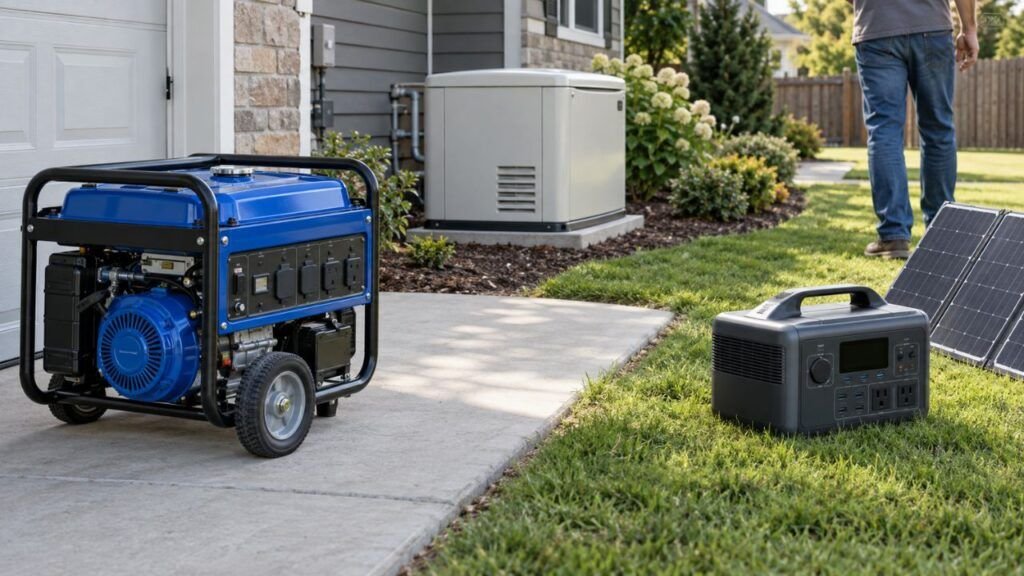
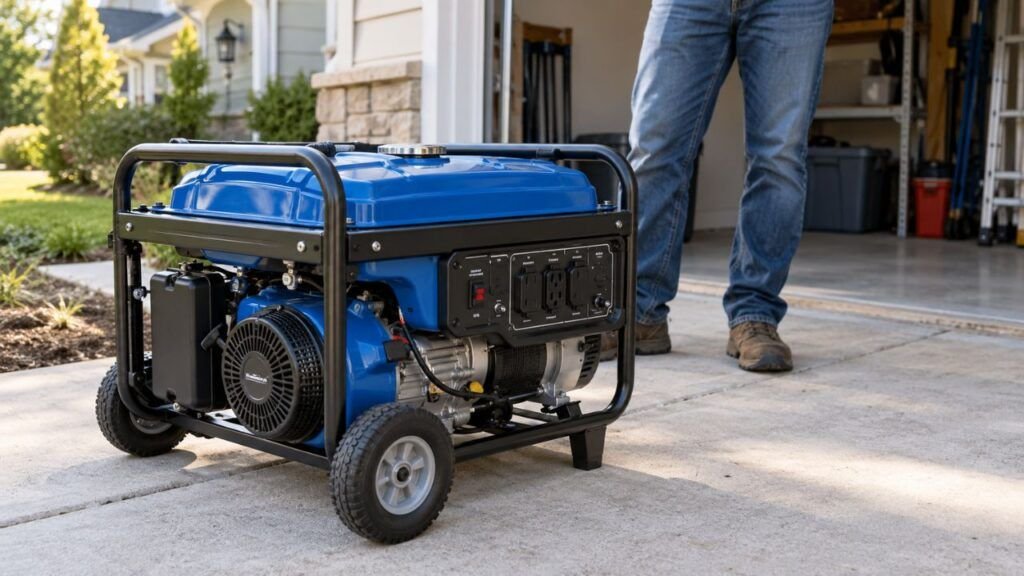
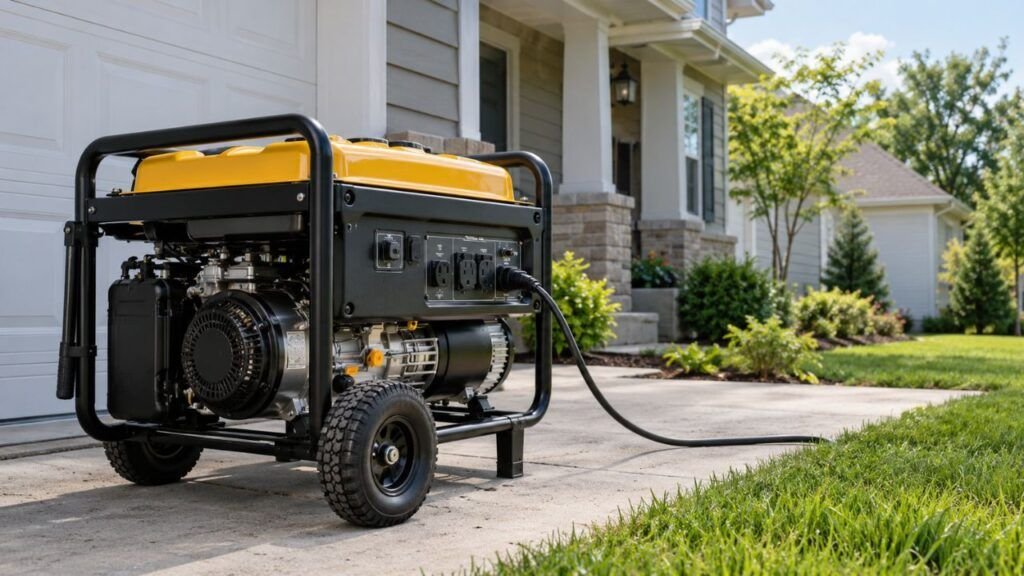
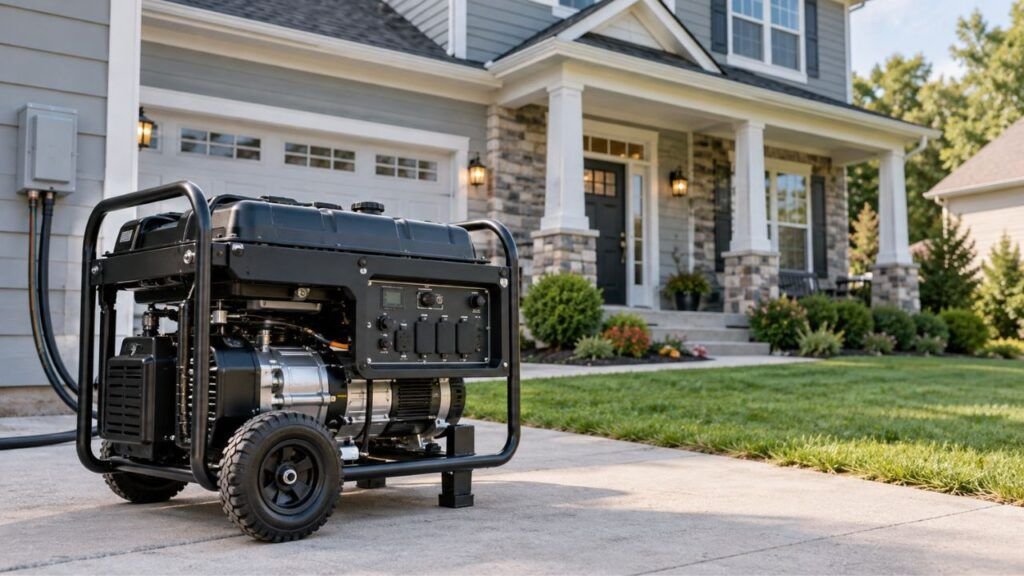
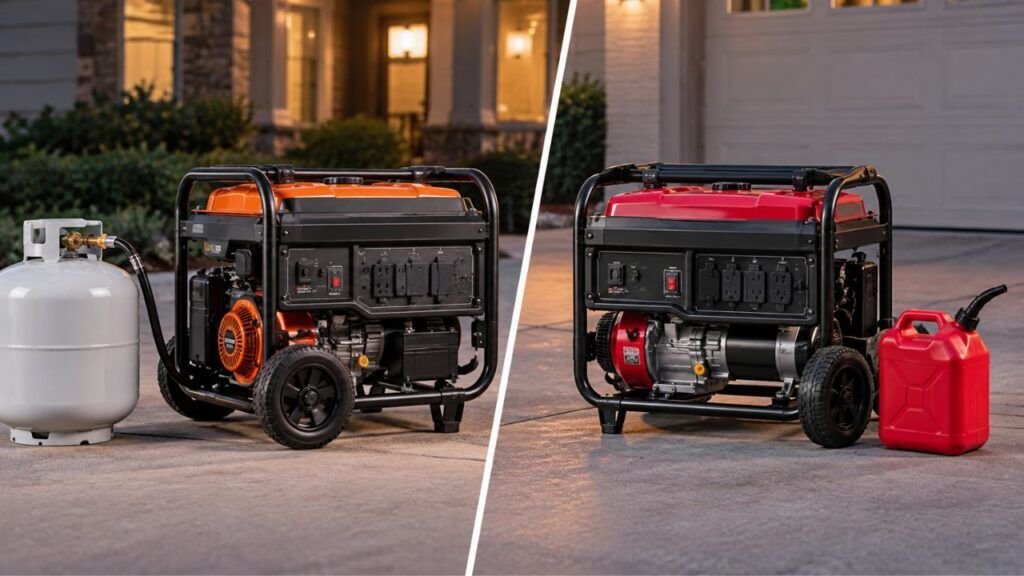
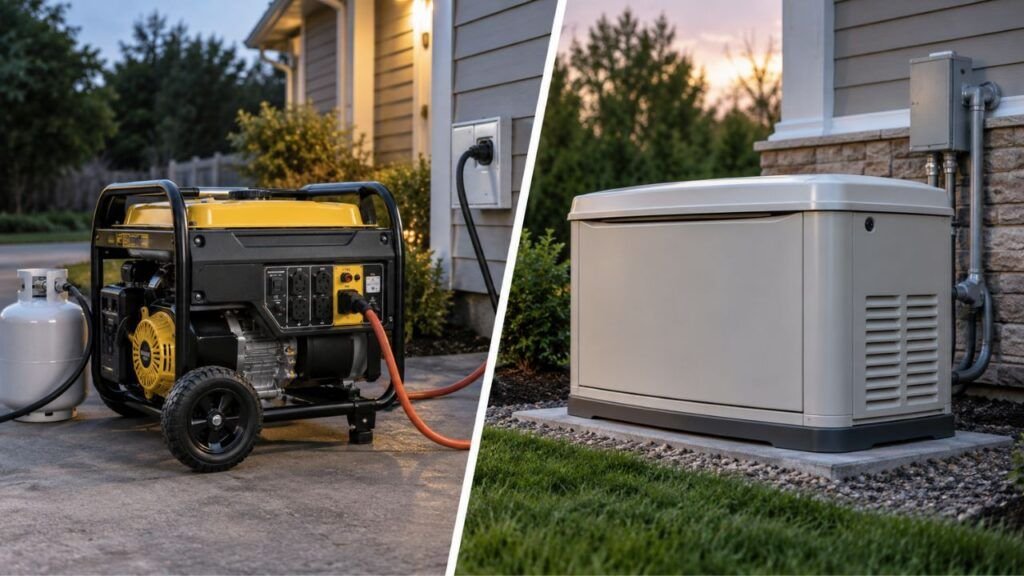
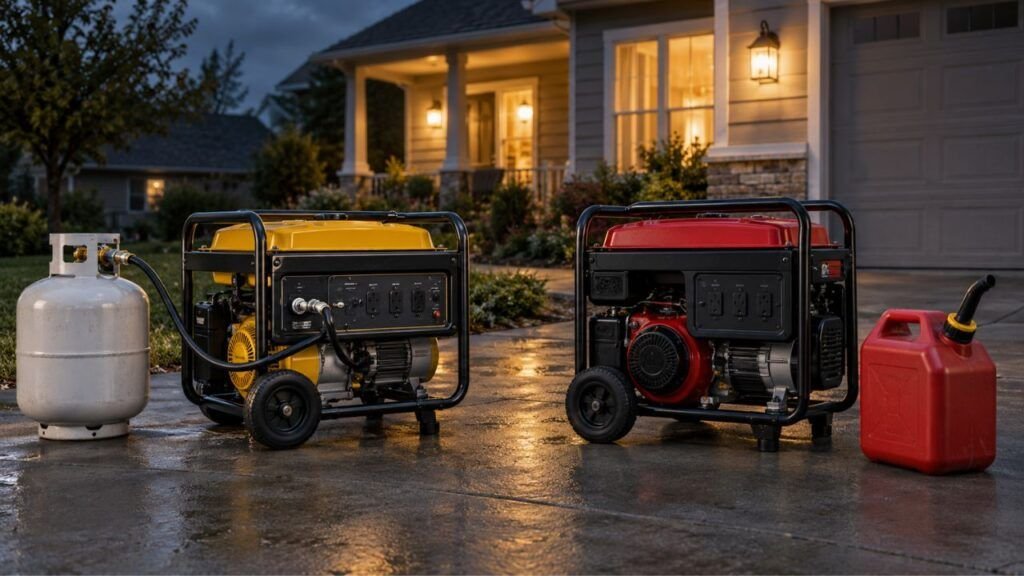
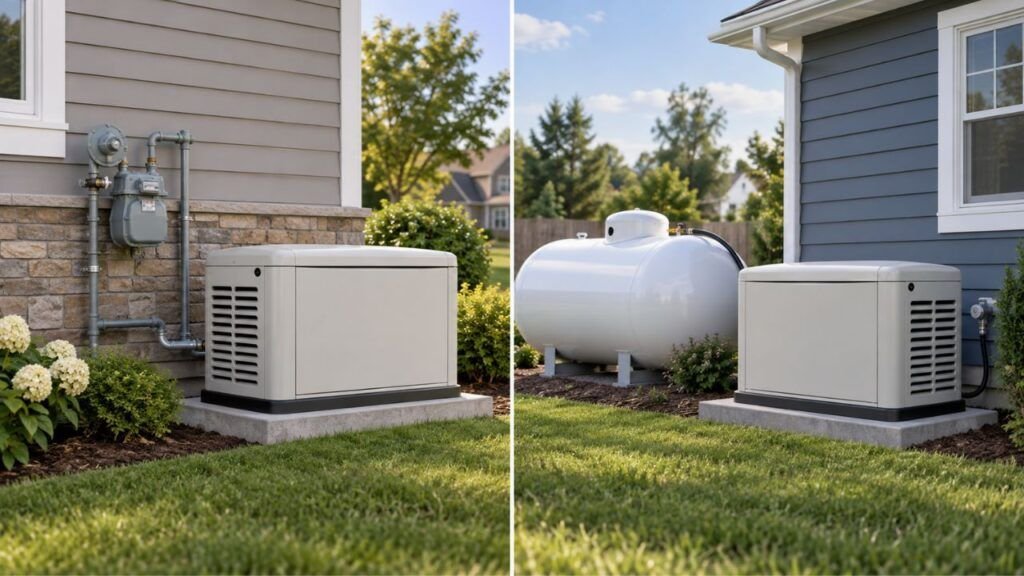
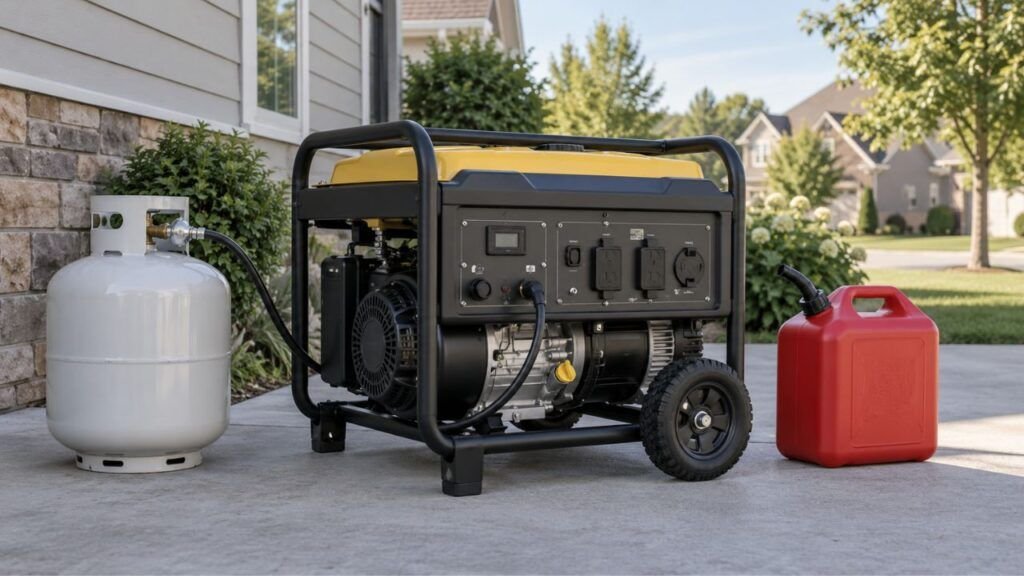
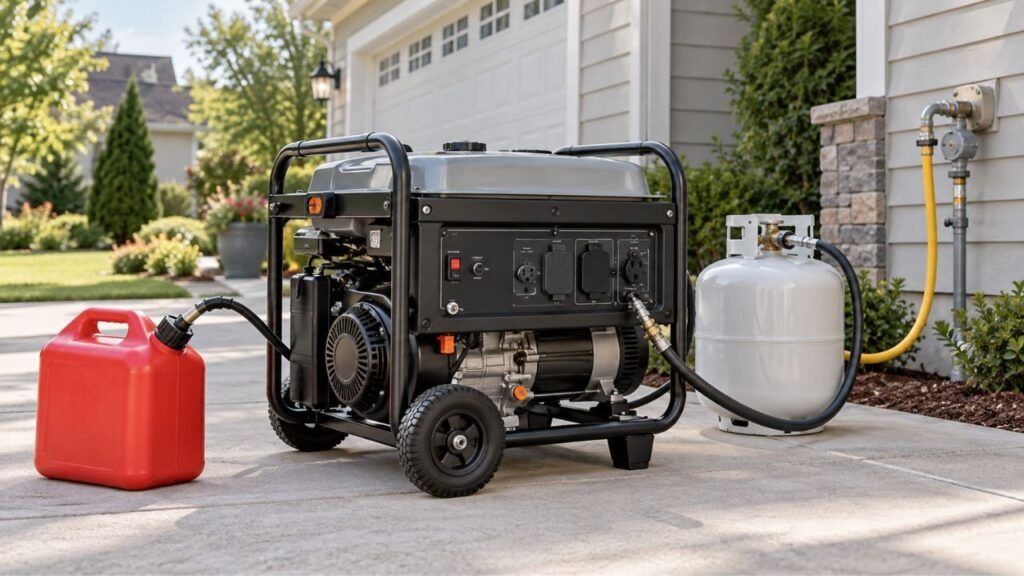
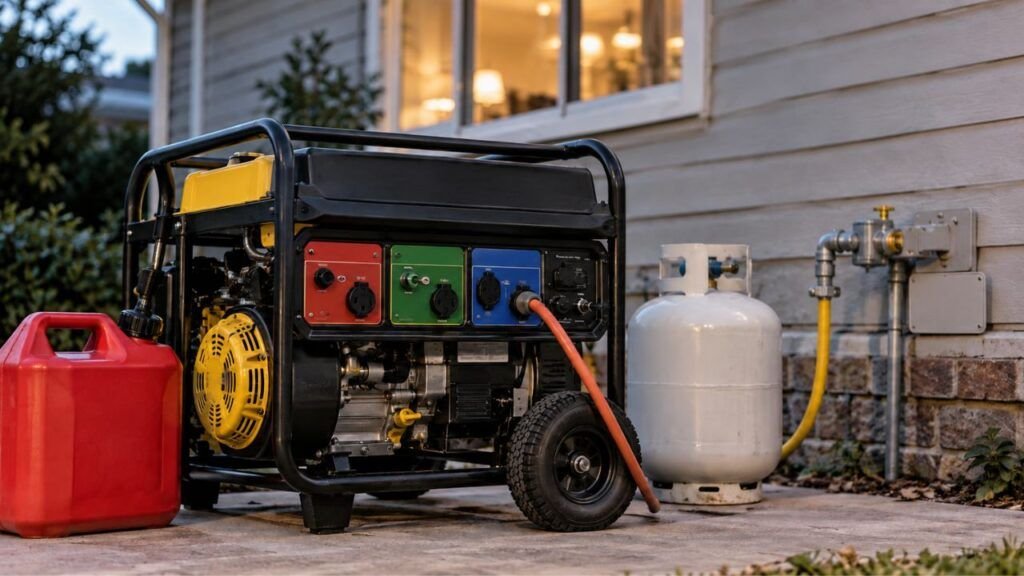
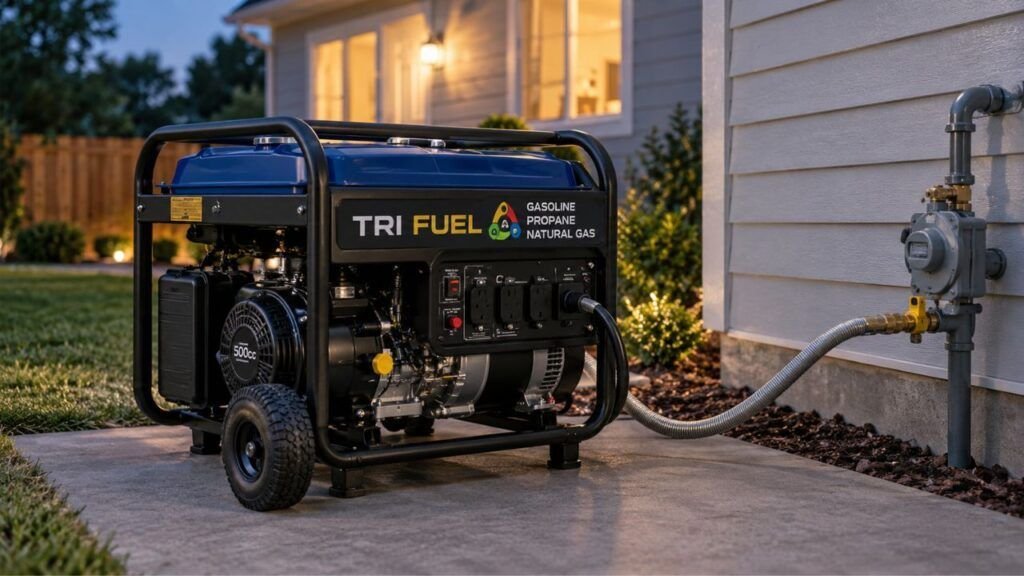
If you are looking for the best portable generators for home backup, you need reliable power when an outage strikes. Whether you’re keeping your refrigerator running or powering essential appliances, choosing the right generator makes a real difference.
The Westinghouse 12000 Peak Watt Tri-Fuel offers balanced backup power, while the Generac 12,500 Starting Watt Tri-Fuel handles demanding starting loads. For larger homes, the Westinghouse 28000 Peak Watt Tri-Fuel delivers serious power. The Jackery HomePower 3600 Plus provides quiet, battery-powered backup, and the Honda EU7000iS 7000 Watt suits homeowners who prioritize low noise.
After evaluating the top portable generators for home backup, we’ve compared their power output, fuel options, runtime, safety features, and home connection capabilities. This guide will help you find a reliable generator that matches your household needs.
We’re reader-supported. When you buy through links on our site, we may earn an affiliate commission. As an Amazon Associate, we earn from qualifying purchases at no extra cost to you.
Best Portable Generator For Home Backup: Our Top Picks
- Best Overall: Westinghouse 12000 Peak Watt Tri-Fuel
- Best for Reliable Backup: Generac 12,500 Starting Watt Tri-Fuel
- Best High-Wattage Option: Westinghouse 28000 Peak Watt Tri-Fuel
- Best Battery-Powered Option: Jackery HomePower 3600 Plus
- Best for Fuel Flexibility: DuroMax XP13000HXT
- Best Heavy-Duty Option: Champion 16,875-Watt Electric Start Tri Fuel
- Best Value Option: WEN 14,500-Watt 120V/240V Tri-Fuel Generator
- Best for Extended Outages: Westinghouse 14500 Peak Watt Tri-Fuel
- Best Compact Inverter Option: Generac 5,200 Watt Dual Fuel Portable Inverter
- Best Budget Dual-Fuel Option: DuroStar DS13000MX
- Best Remote-Start Inverter Option: Champion 11,000-Watt Remote Start Tri Fuel
- Best Quiet Premium Option: Honda EU7000iS 7000 Watt
1. Best Overall: Westinghouse 12000 Peak Watt Tri-Fuel

Key Details:
- Power Output: 12,000 peak watts and 9,000 running watts on gasoline.
- Fuel Type: Gasoline, propane, and natural gas.
- Runtime: Up to 19 hours at 25% load on a 7.9-gallon tank.
- Noise Level: As low as 64 dBA with Eco Mode.
- Home Backup Features: 30A/50A outlets, remote start, CO sensor, and ≤3% THD.
If you’re looking for a powerful portable generator for home backup, the Westinghouse iGen12000TFc is an excellent all-around choice. Its 9,000 running watts can support refrigerators, sump pumps, lighting, and selected heating or cooling appliances during power outages.
We particularly like its tri-fuel flexibility. You can run it on gasoline, propane, or natural gas depending on what’s available. The inverter technology also produces clean electricity for sensitive electronics, making it suitable for computers, TVs, and other household devices.
Another advantage is its fuel efficiency. The Westinghouse iGen12000TFc runs up to 19 hours at 25% load, while Eco Mode reduces fuel consumption during lighter loads. Its enclosed design helps limit noise, and remote electric start makes emergency operation more convenient.
For home backup, the 30A and 50A outlets support properly installed transfer switches or interlock systems. Although its 191-pound weight requires some effort to move, the wheels help. If you want reliable emergency power with flexible fueling and quieter operation, this generator deserves serious consideration.
Pros:
- Tri-fuel compatibility offers excellent emergency flexibility.
- Clean inverter power supports sensitive household electronics.
- Long runtime and Eco Mode improve fuel efficiency.
- Remote start and 50A outlet simplify home backup.
Cons:
- Heavy compared with smaller portable generators.
- Power output decreases on propane and natural gas.
2. Best for Reliable Backup: Generac 12,500 Starting Watt Tri-Fuel
Key Details:
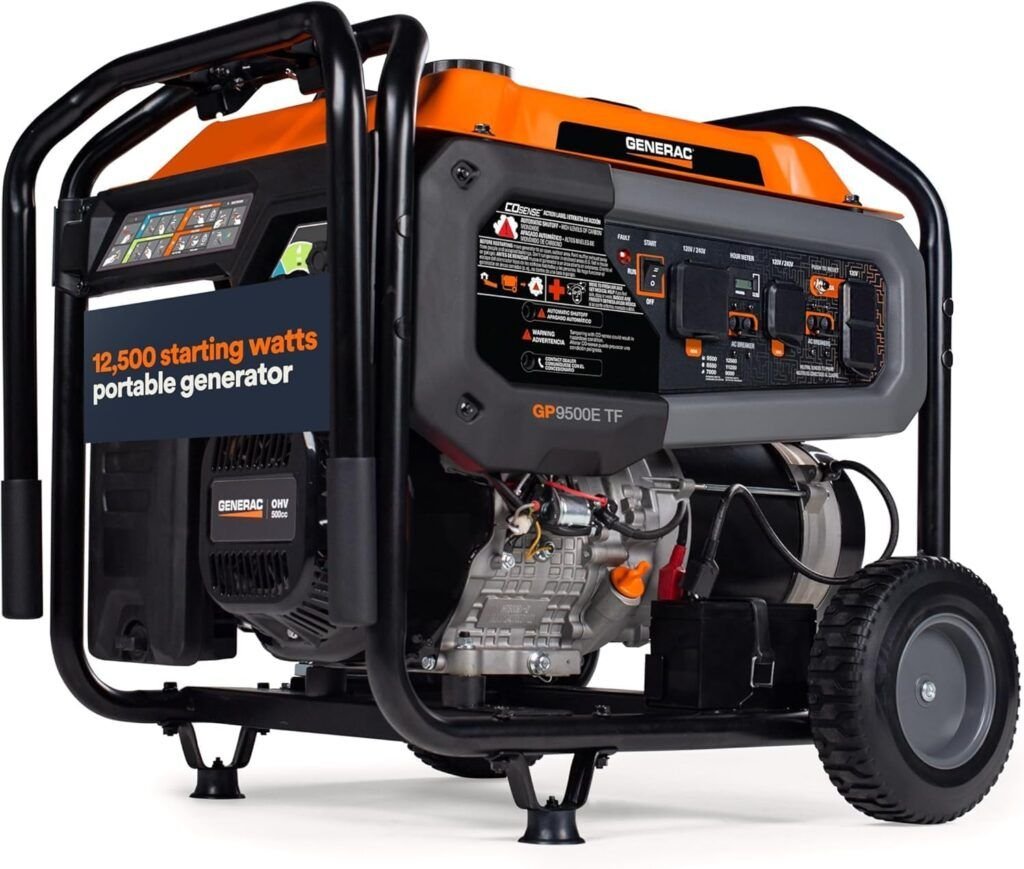
- Power Output: 12,500 starting watts and 9,500 running watts on gasoline.
- Fuel Type: Gasoline, propane, and natural gas.
- Engine: 500cc Generac OHV engine with electric start.
- Runtime: Up to 9.5 hours at 50% load on a 7.5-gallon tank.
- Home Backup Features: 30A/50A outlets, COsense protection, and voltage regulation.
When your electricity goes out, you need a generator capable of handling essential household appliances without constant load adjustments. The Generac GP9500 Tri-Fuel Portable Generator delivers 9,500 running watts on gasoline, making it suitable for refrigerators, well pumps, lighting, and selected air conditioning systems.
Its 12,500 starting watts provide additional power for motor-driven appliances during startup. We also like the tri-fuel design, which allows you to switch between gasoline, propane, and natural gas when planning emergency home backup.
You will find the electric start particularly convenient during unexpected outages. The Generac GP9500 provides up to 9.5 hours of runtime at half load, while automatic voltage regulation helps maintain stable electricity. Its COsense system adds protection by shutting down when elevated carbon monoxide levels are detected.
For connecting household circuits, the 30A and 50A outlets support compatible transfer-switch installations. The steel frame and never-flat wheels improve durability and mobility, although it’s relatively heavy. If dependable starting power and fuel flexibility matter most, this portable home backup generator is worth considering.
Pros:
- Strong starting wattage handles demanding household appliances.
- Three fuel options provide flexible backup power.
- Electric start makes emergency operation convenient.
- 30A and 50A outlets support home electrical connections.
Cons:
- Heavy and bulky for frequent transportation.
- Conventional output lacks specified low-THD inverter performance.
3. Best High-Wattage Option: Westinghouse 28000 Peak Watt Tri-Fuel
Key Details:
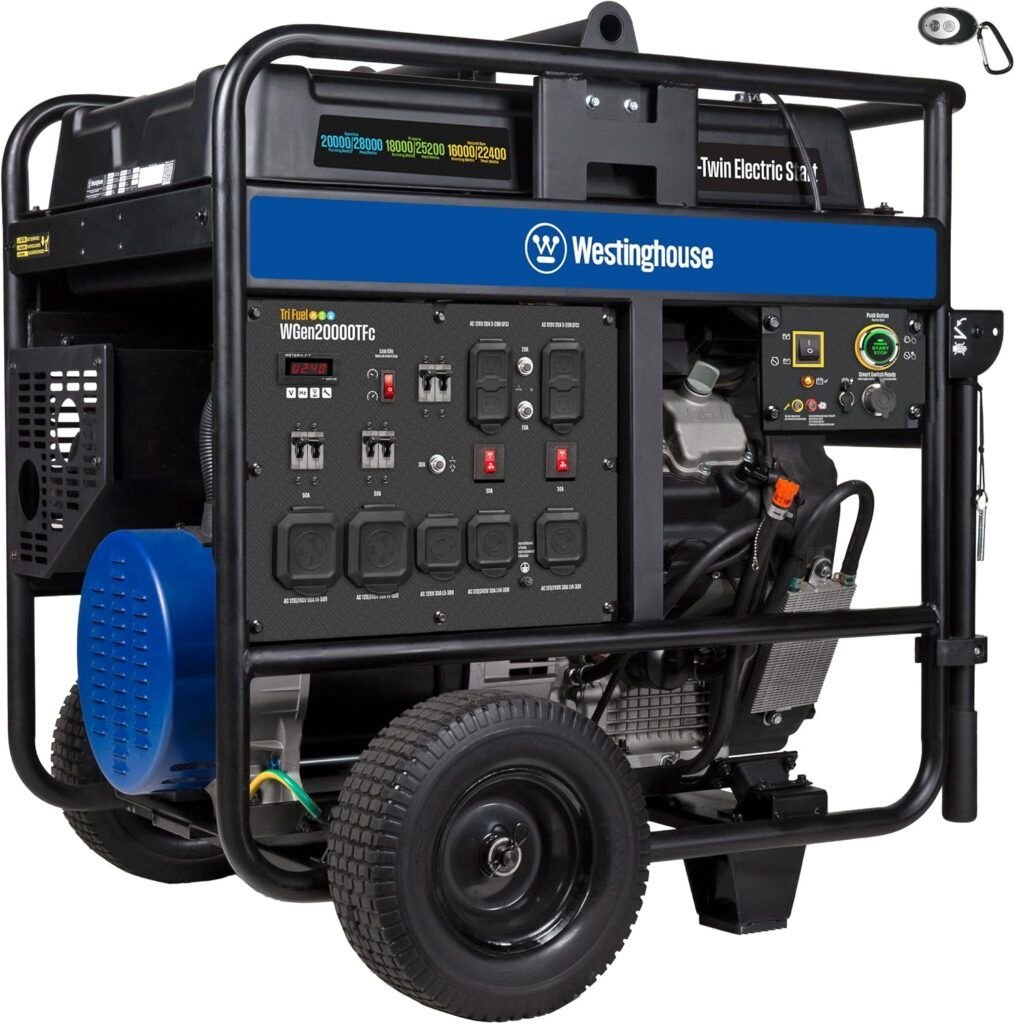
- Power Output: 28,000 peak watts and 20,000 running watts on gasoline.
- Fuel Type: Gasoline, propane, and natural gas.
- Engine: 999cc engine with full-pressure lubrication.
- Fuel Capacity: 17.2-gallon gasoline tank.
- Home Backup Features: Remote start, 30A/50A outlets, CO sensor, and optional automatic transfer switch.
If you have a larger house with demanding electrical needs, the Westinghouse 28000 Tri-Fuel Portable Generator offers impressive backup capacity. Its 20,000 running watts on gasoline can support multiple household circuits, including larger appliances and heating or cooling equipment, depending on their electrical requirements.
What stands out is its powerful 999cc engine with full-pressure lubrication. This system helps protect internal components during extended operation. You also get gasoline, propane, and natural gas compatibility, making it easier to plan fuel supplies for prolonged outages.
Another useful feature is compatibility with the optional WATS200 automatic transfer switch. With professional installation, the Westinghouse 28000 can provide automatic home backup operation. Remote electric start and a large 17.2-gallon fuel tank also add convenience when utility power becomes unavailable.
However, at 557 pounds, this isn’t a generator you’ll want to move frequently. The wheels and folding handles help with positioning, but the 30A and 50A connections must still be sized for your home’s loads. For homeowners needing high-output portable backup power, it’s a capable alternative to smaller generators.
Pros:
- Massive power output supports larger household electrical loads.
- Tri-fuel operation provides flexible emergency fueling.
- Optional automatic transfer switch adds standby-style convenience.
- Heavy-duty engine supports demanding backup applications.
Cons:
- Extremely heavy and requires considerable storage space.
- Automatic transfer switch and installation cost extra.
4. Best Battery-Powered Option: Jackery HomePower 3600 Plus
Key Details:
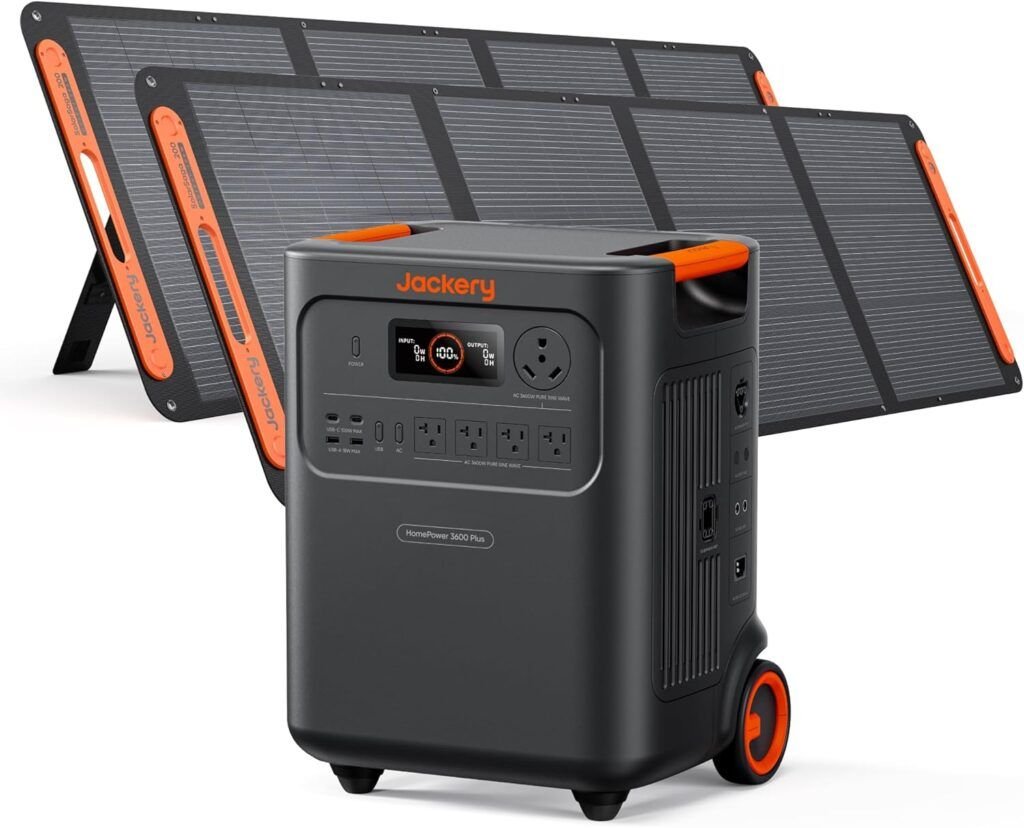
- Battery Capacity: 3,584Wh LiFePO4, expandable to 21kWh per unit.
- Power Output: 3,600W AC output, expandable through parallel configurations.
- Solar Charging: Includes two 200W solar panels.
- Battery Lifespan: Rated for up to 6,000 charging cycles.
- Home Backup Features: 120V standalone output, optional 240V parallel operation, and wheeled design.
Not everyone wants a gasoline generator running outside during a power outage. The Jackery HomePower 3600 Plus offers a quieter, battery-powered solution with 3,600W AC output. It’s particularly useful for keeping refrigerators, lights, internet equipment, and essential household electronics running during emergencies.
What we like most is its exhaust-free operation and simple setup. Unlike fuel-powered generators, you can operate it indoors without combustion fumes. The included 400W of solar panels also provide an additional charging option when grid electricity isn’t available.
When considering extended home backup, battery storage matters just as much as output wattage. The Jackery HomePower 3600 Plus offers 3,584Wh of capacity, expandable up to 21kWh per unit. Its LiFePO4 battery is rated for 6,000 cycles, making it suitable for repeated emergency use.
You will also appreciate its wheeled design, which makes moving it between rooms easier. However, standalone operation is limited to 120V, and powering 240V appliances requires a compatible parallel configuration. If you prefer quiet, low-maintenance home backup without gasoline storage, this solar generator is an appealing choice.
Pros:
- Quiet, exhaust-free operation allows indoor use.
- Expandable battery capacity supports longer outages.
- Solar panels provide an additional charging option.
- Portable design requires minimal routine maintenance.
Cons:
- Base battery capacity limits extended high-power use.
- 240V output requires additional compatible equipment.
5. Best for Fuel Flexibility: DuroMax XP13000HXT
Key Details:
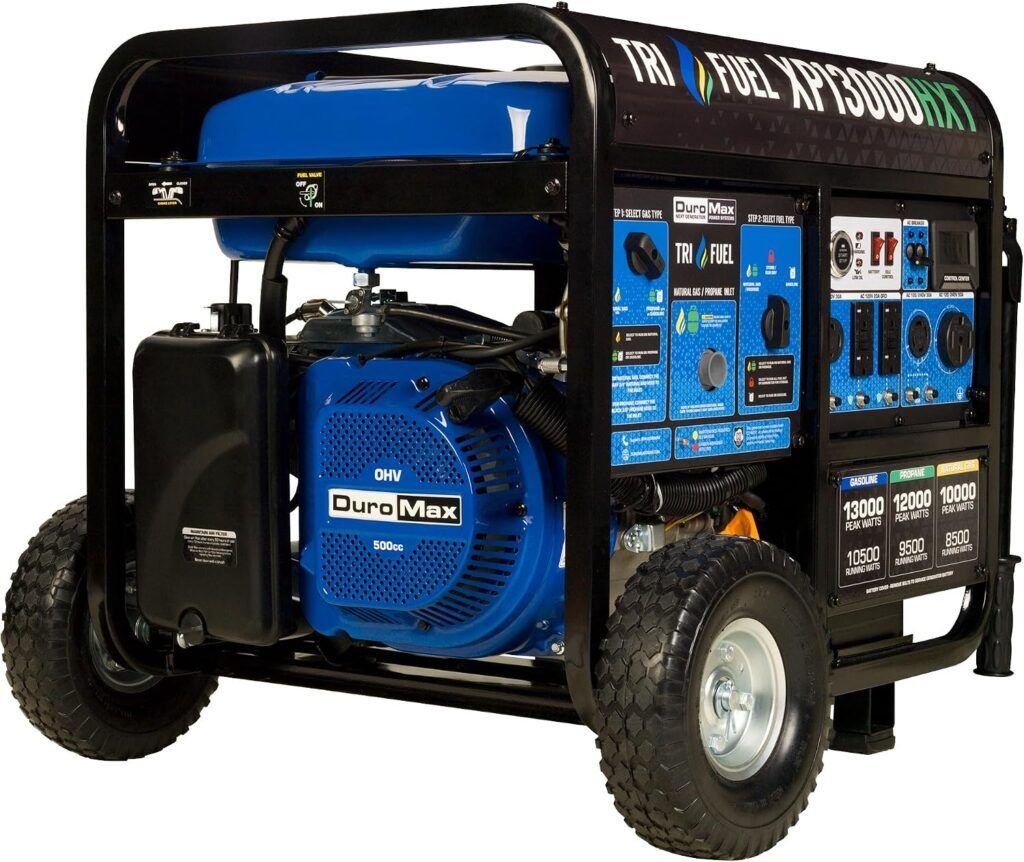
- Power Output: Up to 13,000 advertised watts.
- Fuel Type: Gasoline, propane, and natural gas.
- Engine: Powerful 500cc DuroMax OHV engine.
- Starting System: Push-button electric start and wireless remote start.
- Home Backup Features: 50A outlet, CO Alert, and transfer-switch-ready design.
If you want a powerful portable generator for home backup with flexible fuel options, the DuroMax XP13000HXT is worth considering. Its 13,000-watt advertised rating provides substantial starting capacity for household appliances, including refrigerators, sump pumps, and selected air conditioning systems.
What makes this generator convenient is its tri-fuel operation. You can choose gasoline, propane, or natural gas depending on availability. The front-facing fuel selector makes switching between compatible fuel connections straightforward, which is particularly helpful during extended power outages.
Another feature we like is the remote electric start. The DuroMax XP13000HXT lets you start the engine without repeatedly pulling a recoil cord. Its 500cc OHV engine handles demanding electrical loads, while the CO Alert system shuts down the generator when elevated carbon monoxide levels are detected.
For home emergency power, the transfer-switch-ready 50A outlet is particularly useful. It allows connection to selected household circuits through properly installed equipment. Although this generator needs considerable outdoor space, its strong power capacity and convenient controls make it a practical choice for residential backup.
Pros:
- Three fuel options provide excellent emergency flexibility.
- Powerful engine supports demanding household appliances.
- Remote and push-button starting simplify operation.
- Transfer-switch-ready 50A outlet supports home backup.
Cons:
- Heavy-duty construction makes transportation less convenient.
- Running power decreases when using alternative fuels.
6. Best Heavy-Duty Option: Champion 16,875-Watt Electric Start Tri Fuel

Key Details:
- Power Output: 16,875 starting watts and 13,500 running watts on gasoline.
- Fuel Type: Gasoline, propane, and natural gas.
- Engine: 739cc Milwaukee Series V-Twin engine.
- Runtime: Up to 8 hours on a full gasoline tank.
- Home Backup Features: Electric start, CO Shield, Cold Start Technology, and Intelligauge.
When your household has higher electricity demands, the Champion 16,875-Watt Tri-Fuel Portable Generator offers substantial backup power. Its 13,500 running watts on gasoline can support multiple essential appliances, including refrigerators, well pumps, and larger heating or cooling equipment, depending on their starting requirements.
One thing we like is its 739cc Milwaukee Series V-Twin engine. It’s designed for demanding power applications, while the included propane and natural gas hoses make alternative fuel connections more convenient. This flexibility is especially useful when gasoline supplies become limited during storms.
The Champion 16,875-Watt generator also features electric start and Cold Start Technology for easier operation. Its Intelligauge displays voltage, frequency, and operating hours, helping you monitor performance and maintenance. However, its 79 dBA noise rating at 23 feet makes it noticeably louder than quieter inverter generators.
At 361 pounds, this isn’t the easiest portable generator to move around. Still, the included wheel kit helps with positioning. With strong running power, CO Shield protection, and a three-year limited warranty, it’s a capable option for homeowners who need heavy-duty emergency backup electricity.
Pros:
- High running wattage supports demanding household loads.
- Powerful V-Twin engine handles heavy electrical demands.
- Tri-fuel operation provides flexible emergency fueling.
- Electric start and Intelligauge improve operating convenience.
Cons:
- Noticeably louder than enclosed inverter generators.
- Heavy construction limits everyday portability.
7. Best Value Option: WEN 14,500-Watt 120V/240V Tri-Fuel Generator

Key Details:
- Power Output: 14,500 peak watts and 11,500 running watts on gasoline.
- Fuel Type: Gasoline, propane, and natural gas.
- Engine: 500cc four-stroke OHV engine with electric start.
- Runtime: Up to 12 hours at half load on an 8.2-gallon gasoline tank.
- Home Backup Features: 30A/50A outlets, CO Watchdog, and 120V/240V output.
If you’re looking for a high-wattage home backup generator without spending heavily on premium features, the WEN TF-1450X offers an appealing combination of power and practicality. Its 11,500 running watts on gasoline can support multiple household circuits, including essential appliances, pumps, and selected air conditioning equipment.
We particularly like its straightforward tri-fuel system. The WEN TF-1450X delivers 10,300 running watts on propane and 8,750 watts on natural gas. You can switch fuels using the selection dial, making it easier to adapt when gasoline supplies are limited during prolonged outages.
Runtime is another strong point. Its 8.2-gallon gasoline tank provides up to 12 hours at half load, reducing frequent refueling. The electric start simplifies operation, while the CO Watchdog sensor automatically shuts down the engine when dangerous carbon monoxide levels are detected.
For residential backup power, the 120V/240V output and transfer-switch-ready 30A and 50A outlets are particularly useful. These connections allow you to supply selected household circuits through suitable electrical equipment. Although its 248-pound weight requires planning, this generator offers practical features for homeowners prioritizing power and fuel flexibility.
Pros:
- High running wattage supports multiple household circuits.
- Tri-fuel design provides flexible emergency power options.
- Long half-load runtime reduces frequent refueling.
- 30A and 50A outlets simplify compatible home connections.
Cons:
- Heavy construction makes moving it challenging.
- Natural gas operation delivers noticeably lower wattage.
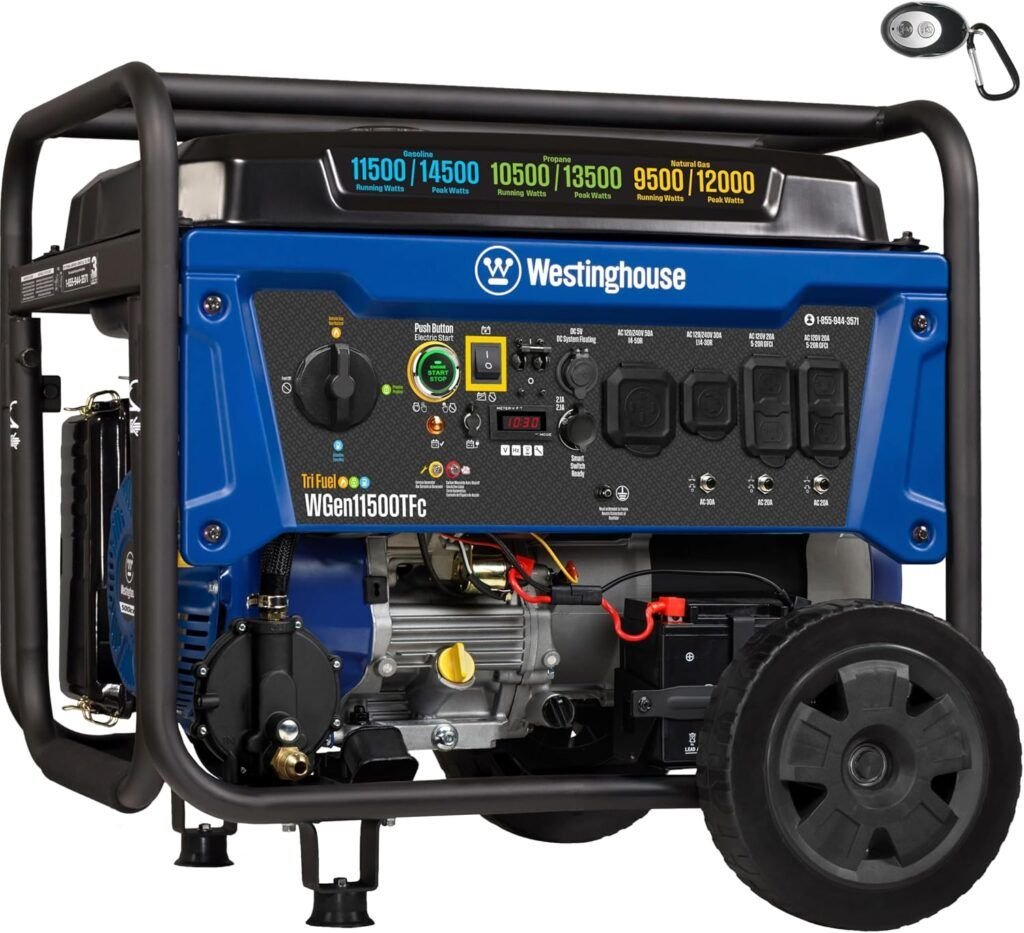
8. Best for Extended Outages: Westinghouse 14500 Peak Watt Tri-Fuel
Key Details:
- Power Output: 14,500 peak watts and 11,500 running watts on gasoline.
- Fuel Type: Gasoline, propane, and natural gas.
- Engine: 550cc engine with pressure lubrication.
- Runtime: Up to 19 hours at 25% load on a 9.5-gallon gasoline tank.
- Home Backup Features: Remote start, 30A/50A outlets, CO sensor, and optional automatic transfer switch.
For homeowners preparing for lengthy power outages, the Westinghouse 14500 Tri-Fuel Portable Generator delivers strong backup capacity with flexible fueling. Its 11,500 running watts on gasoline can support essential household circuits, including refrigerators, sump pumps, lighting, and selected heating or cooling appliances.
What stands out is its extended runtime. The 9.5-gallon gasoline tank provides up to 19 hours at 25% load, helping reduce refueling interruptions. You can also operate it on propane or natural gas, offering additional flexibility during storms when gasoline may become difficult to obtain.
Another advantage is the 550cc engine with pressure lubrication, designed to reduce wear during demanding operation. The Westinghouse 14500 also delivers less than 5% THD, making its electrical output suitable for many household electronics. Remote electric start adds convenience when restoring backup power.
For home connections, the 30A and 50A outlets support compatible transfer switches and interlock systems. You can also pair it with the optional WATS200 automatic transfer switch for properly configured automatic backup operation. If you want reliable portable power for extended outages, its runtime, output, and connection options make it especially appealing.
Pros:
- Extended runtime reduces gasoline refueling interruptions.
- Tri-fuel compatibility provides additional backup options.
- Remote start and optional automatic transfer improve convenience.
- Strong output supports multiple essential household circuits.
Cons:
- Large fuel tank and heavy frame reduce portability.
- Automatic transfer equipment requires an additional investment.
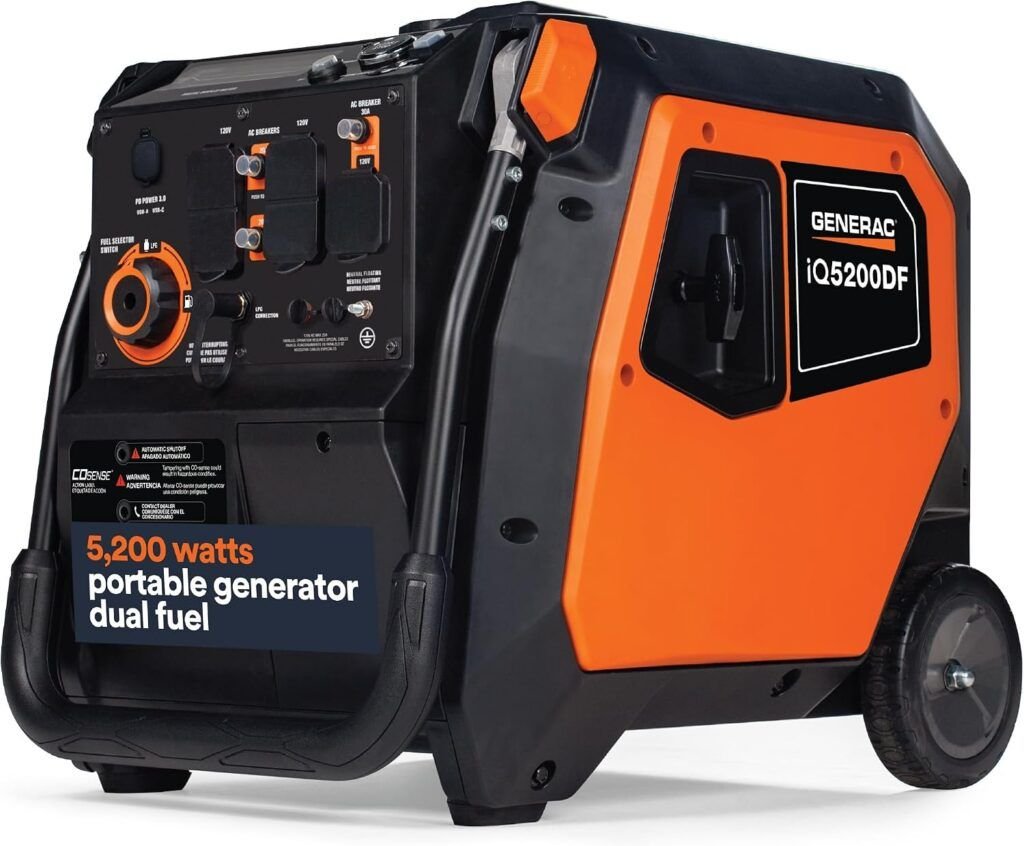
9. Best Compact Inverter Option: Generac 5,200 Watt Dual Fuel Portable Inverter
Key Details:
- Power Output: 5,200 starting watts and 3,900 running watts on gasoline.
- Fuel Type: Gasoline and propane.
- Runtime: Up to 15 hours at 25% load on a 3.2-gallon gasoline tank.
- Noise & Power Quality: Enclosed inverter design with less than 3% THD.
- Home Backup Features: Electric start, 120V 30A outlet, COsense protection, and parallel capability.
If you need a portable generator for home backup without powering your entire house, the Generac iQ5200 DF is a practical choice. Its 3,900 running watts on gasoline can handle essential appliances like refrigerators, lights, fans, and internet equipment during unexpected power outages.
What we like is its dual-fuel inverter technology. You can use gasoline or propane, while the clean electrical output makes it suitable for sensitive electronics. The enclosed design and Economy Mode also help reduce operating noise and fuel consumption when household electricity demands are lower.
The Generac iQ5200 DF offers up to 15 hours of runtime at 25% load, making it useful for overnight emergency backup. Its electric start simplifies operation, while the COsense system automatically shuts down the engine when elevated carbon monoxide levels are detected.
At approximately 110 pounds, it’s easier to transport than larger home generators. The wheels and folding handle add convenience, although its 120V-only output limits compatibility with 240V household appliances. If your priority is powering everyday essentials efficiently, this compact inverter generator makes sense.
Pros:
- Clean inverter power supports sensitive household electronics.
- Dual-fuel operation provides convenient fueling options.
- Economy Mode improves fuel efficiency during lighter loads.
- Compact design and electric start simplify operation.
Cons:
- Limited output for larger household electrical loads.
- Cannot directly power 240V appliances.
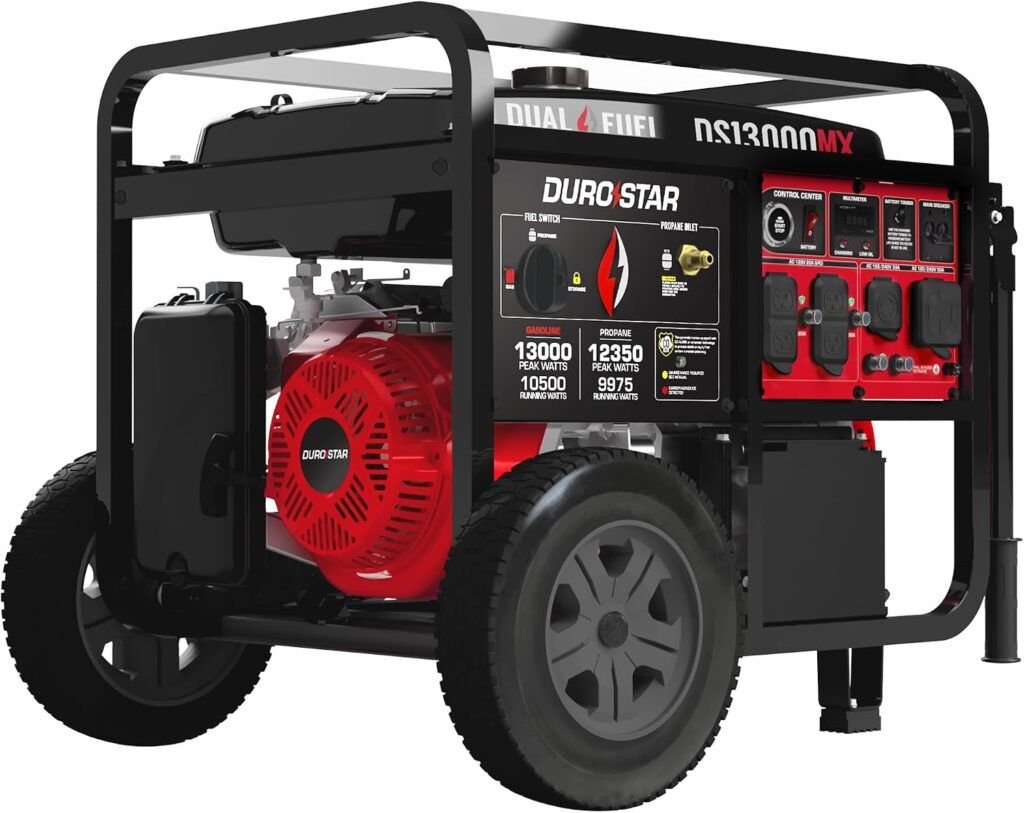
10. Best Budget Dual-Fuel Option: DuroStar DS13000MX
Key Details:
- Power Output: Up to 13,000 advertised watts.
- Fuel Type: Gasoline and propane.
- Engine: 500cc engine designed for demanding electrical loads.
- Starting System: Push-button and remote electric start.
- Home Backup Features: 120V/240V output, 50A outlet, CO Alert, and low-oil shutdown.
You don’t necessarily need an expensive generator to prepare for household power outages. The DuroStar DS13000MX Dual-Fuel Portable Generator offers substantial power capacity for refrigerators, sump pumps, lighting, and selected heating or cooling appliances. Its 13,000-watt advertised rating makes it worth considering for demanding emergency backup applications.
One feature we like is its dual-fuel flexibility. You can run it on gasoline when maximum output matters or switch to propane when that fuel is more readily available. Its 500cc engine and rugged steel frame are designed to handle demanding residential backup applications.
When an outage happens unexpectedly, convenient starting makes a difference. The DuroStar DS13000MX includes push-button and remote electric start, eliminating repeated manual pulls. Its CO Alert system also shuts down the generator when dangerous carbon monoxide concentrations are detected.
For home backup connections, the transfer-switch-ready 50A outlet is particularly useful. It supports selected household circuits through properly installed electrical equipment. Although its 220-pound weight limits easy transportation, the combination of strong power capacity, dual-fuel operation, and straightforward controls makes it a sensible choice for budget-conscious homeowners.
Pros:
- Strong advertised power capacity suits demanding home backup needs.
- Gasoline and propane compatibility offers fuel flexibility.
- Remote electric start makes emergency operation convenient.
- 50A outlet supports compatible home transfer switches.
Cons:
- Lacks natural gas compatibility.
- Heavy construction makes frequent transportation challenging.
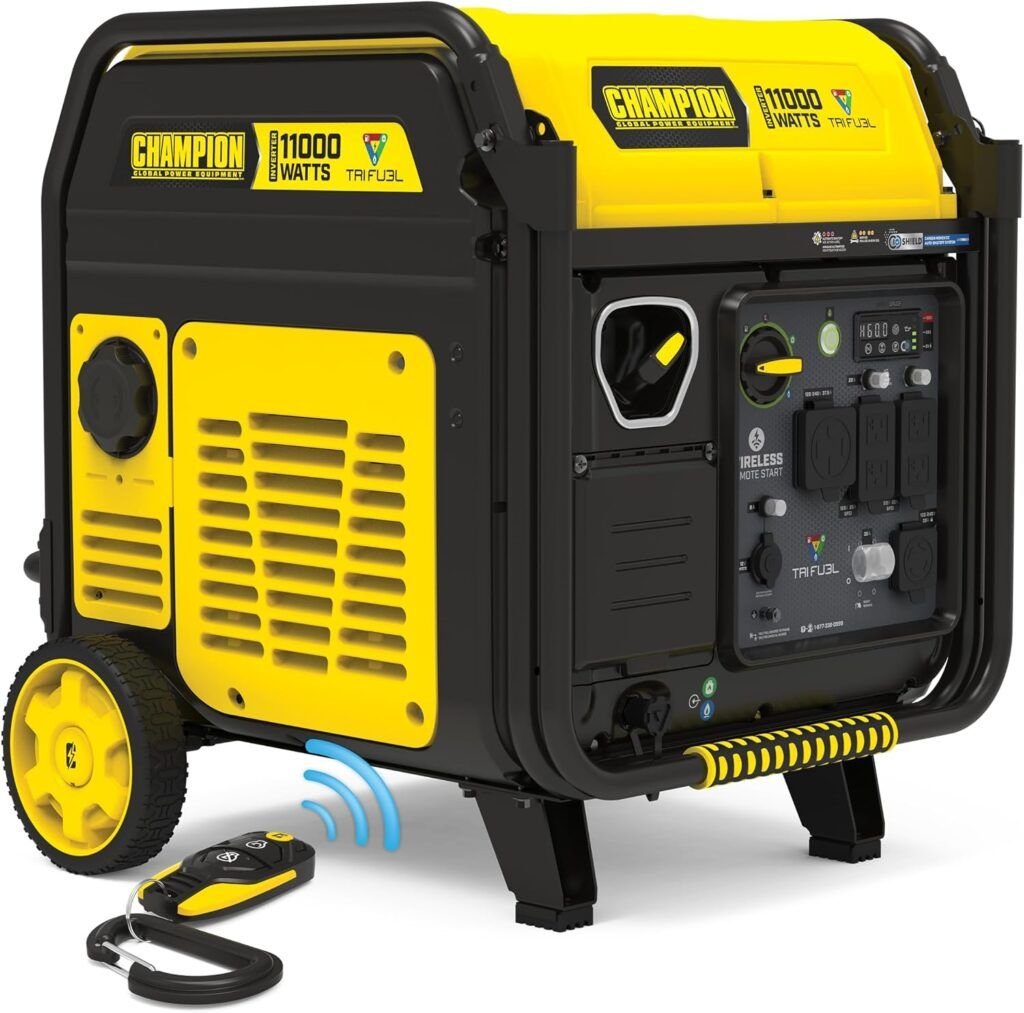
11. Best Remote-Start Inverter Option: Champion 11,000-Watt Remote Start Tri Fuel
Key Details:
- Power Output: 11,000 starting watts and 9,000 running watts on gasoline.
- Fuel Type: Gasoline, propane, and natural gas.
- Alternative Fuel Output: 8,100 running watts on propane and 7,290 on natural gas.
- Starting System: Wireless remote start from up to 80 feet away.
- Home Backup Features: 120V/240V output, 30A outlet, CO Shield, and inverter technology.
For homeowners who want convenient operation without sacrificing backup power, the Champion 11,000-Watt Tri-Fuel Portable Inverter Generator is an appealing option. Its 9,000 running watts on gasoline can support refrigerators, sump pumps, lights, and selected heating or cooling equipment during emergency outages.
What stands out is its wireless remote start. You can start or stop the generator from up to 80 feet away using the included key fob. We also like its tri-fuel design, which allows gasoline, propane, or natural gas operation depending on availability.
The Champion 11,000-Watt generator combines inverter technology with substantial household power output. This makes it a useful choice when you need electricity for sensitive electronics alongside essential appliances. Its CO Shield system also provides automatic shutdown protection when elevated carbon monoxide levels are detected.
For home backup, the 120V/240V output and 30A locking outlet support compatible electrical connections. However, available running power decreases on propane and natural gas, so appliance loads need careful planning. If you want flexible fueling, clean inverter power, and convenient remote operation, this model deserves consideration.
Pros:
- Remote start provides convenient operation from a distance.
- Tri-fuel compatibility improves emergency fuel flexibility.
- Inverter technology supports sensitive household electronics.
- Strong running output handles multiple essential appliances.
Cons:
- Lower running wattage on propane and natural gas.
- Lacks a dedicated 50A home backup outlet.
12. Best Quiet Premium Option: Honda EU7000iS 7000 Watt
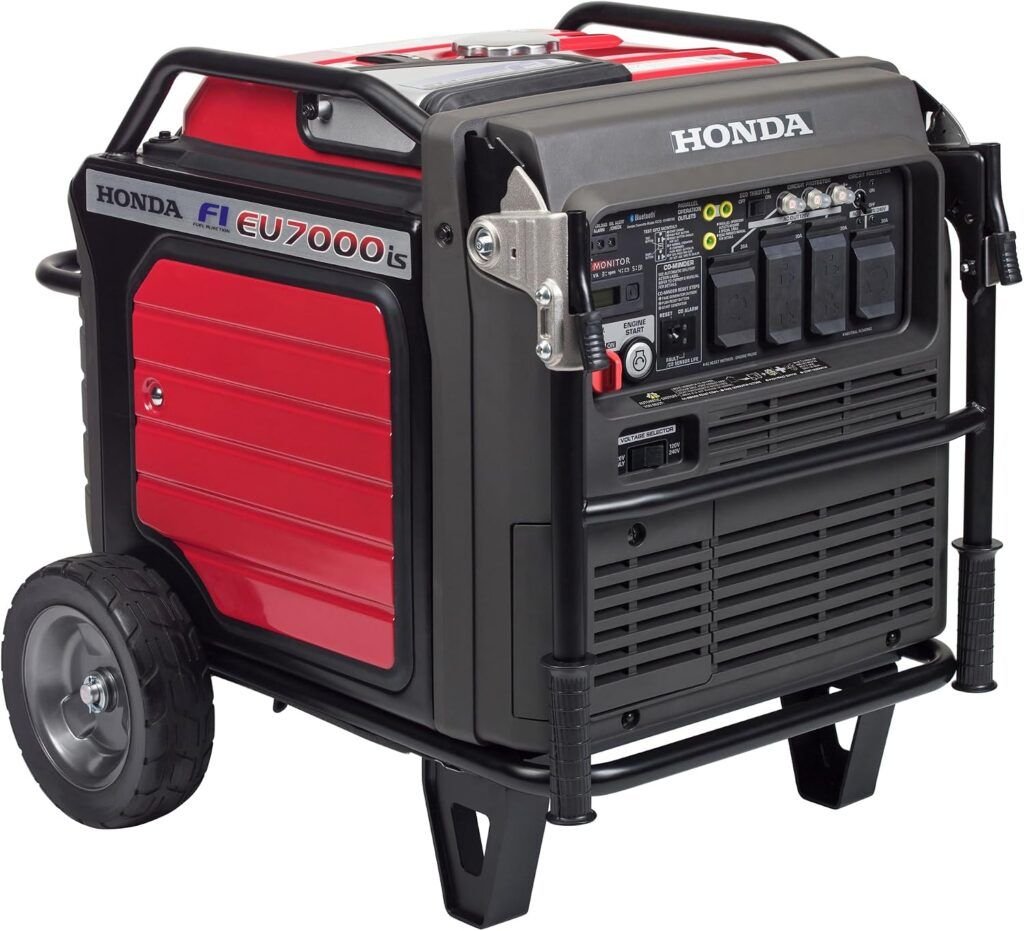
Key Details:
- Power Output: Up to 7,000 watts of generator output.
- Fuel Type: Gasoline with a 5.1-gallon fuel tank.
- Runtime: Approximately 6.4–16 hours per tank, depending on load.
- Noise Level: 52–58 dBA with Eco Throttle technology.
- Home Backup Features: 120V/240V output, electric start, CO-MINDER, and Bluetooth monitoring.
When noise and dependable inverter power matter more than maximum wattage, the Honda EU7000iS is worth a closer look. This premium portable generator for home backup delivers up to 7,000 watts, making it suitable for essential household appliances, refrigerators, lighting, and selected motor-driven equipment within its rated capacity.
One thing we particularly like is its quiet operation. The Honda EU7000iS produces approximately 52–58 dBA, noticeably quieter than many conventional home generators. Its advanced inverter technology also supplies stable electricity for computers, televisions, and other sensitive household electronics.
Fuel efficiency is another advantage. With a 5.1-gallon gasoline tank, this generator offers approximately 6.4–16 hours of runtime depending on electrical demand. Eco Throttle adjusts engine speed to match the load, helping reduce unnecessary fuel consumption during lighter backup use.
You will also appreciate the electric start and Honda My Generator Bluetooth app for monitoring, wireless stopping, and maintenance reminders. CO-MINDER adds automatic carbon monoxide shutdown protection. Although its 263-pound weight and premium positioning may not suit everyone, it’s an excellent consideration for homeowners prioritizing quiet, efficient emergency backup power.
Pros:
- Exceptionally quiet operation suits residential environments.
- Advanced inverter technology supports sensitive electronics.
- Eco Throttle improves fuel efficiency during lighter loads.
- Bluetooth monitoring and electric start add convenience.
Cons:
- Premium pricing compared with similarly sized generators.
- Heavy construction and gasoline-only operation limit flexibility.
What Is a Portable Generator for Home Backup?
A portable generator for home backup provides temporary electricity when utility power goes out. Most models use gasoline, propane, or natural gas to run an engine that generates electricity. Depending on their wattage, these generators can power refrigerators, sump pumps, lighting, heating systems, and other essential household appliances.
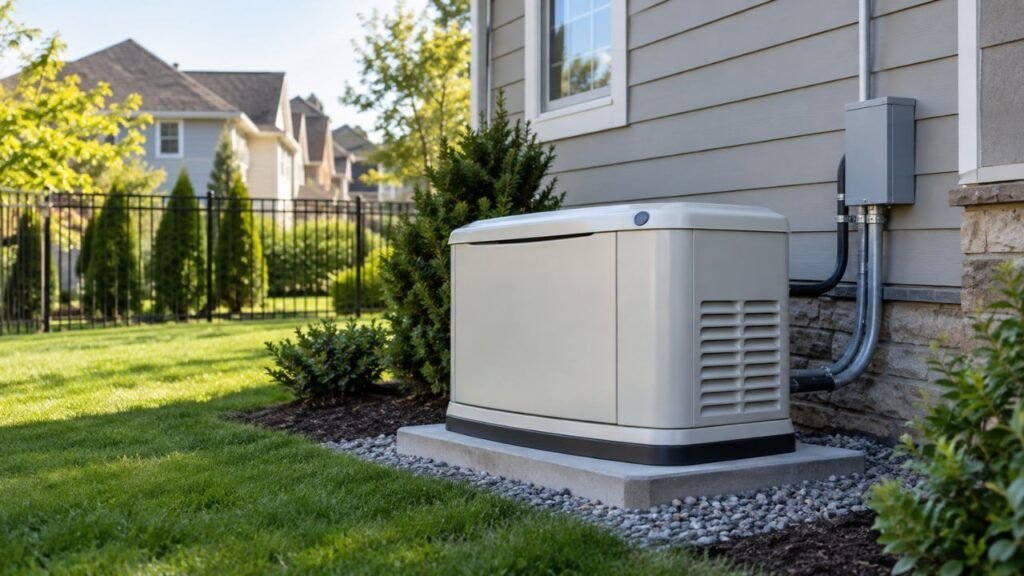
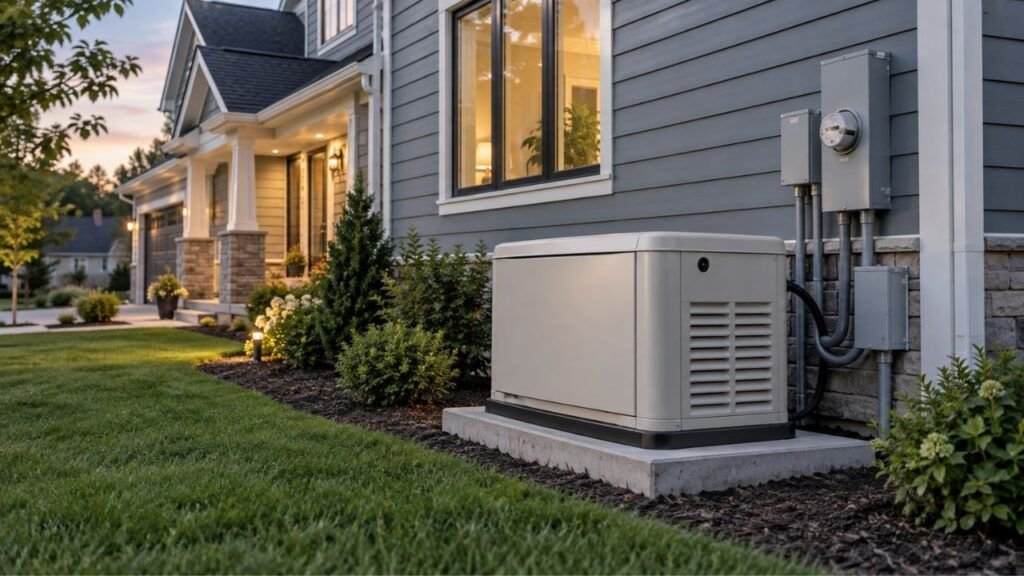
Unlike permanently installed standby generators, portable generators are movable and generally require less initial investment. You can connect selected home circuits through a professionally installed transfer switch or compatible interlock system. They’re particularly useful if you experience occasional power outages and don’t need a permanently installed automatic backup system.
What Size Portable Generator Do You Need for Home Backup?
For most homes, a portable generator with 5,000 to 10,000 running watts can support several essential appliances during an outage. However, your actual requirements depend on which appliances run together and how much additional power they need during startup.
Running watts measure continuous electricity consumption, while starting watts cover temporary power surges from motors and compressors.
| Generator Size | Suitable Home Backup Needs |
| 3,000-5,000W | Refrigerator, lights, internet equipment, and selected essentials |
| 5,000-8,000W | Refrigerator, furnace blower, sump pump, and some additional appliances |
| 8,000-12,000W | Multiple household circuits, pumps, and selected air conditioning systems |
| 12,000-15,000W+ | Larger backup loads, multiple appliances, and some central AC systems |
These are approximate running-watt categories. Actual coverage depends on simultaneous loads, starting surges, and electrical connection limits.
3,000-5,000 Watts for Essential Home Appliances
A 3,000 to 5,000-watt portable generator is suitable when you mainly want to protect essential appliances. It can support a refrigerator, lighting, internet equipment, and selected smaller devices.
However, running a sump pump or air conditioner simultaneously may require careful load management. Check their starting watts before choosing this generator size.
5,000-8,000 Watts for Basic Home Backup
If you want more flexibility during power outages, a 5,000 to 8,000-watt generator is a practical starting point. Depending on appliance requirements, it can support refrigerators, sump pumps, furnace blowers, and selected kitchen appliances.
This range is useful for homeowners who need dependable emergency electricity without powering every household circuit.
8,000-12,000 Watts for Multiple Household Appliances
An 8,000 to 12,000-watt portable generator can handle more demanding home backup requirements. You may be able to operate multiple refrigerators, lighting circuits, well pumps, and selected heating or cooling equipment.
However, central air conditioning and other high-starting-load appliances require individual wattage calculations. A generator’s rated output alone doesn’t guarantee compatibility.
12,000-15,000+ Watts for Larger Home Backup Needs
Larger homes with substantial electrical demands may benefit from generators rated at 12,000 to 15,000 watts or higher. These models provide more flexibility for multiple appliances, larger pumps, and selected central air conditioning systems.
Still, even a high-wattage portable generator may not power everything simultaneously. Check your home’s electrical load, starting surges, 120V/240V compatibility, and transfer equipment capacity before purchasing.
How to Choose the Best Portable Generator for Home Backup
The right portable home backup generator should match your household’s power requirements, fuel availability, and outage frequency. Before buying, consider these important features.
Running Watts and Starting Watts
Running watts determine how many appliances your generator can operate continuously. Starting watts provide the additional power needed when motors or compressors start.
For example, a refrigerator might use 700 running watts but require approximately 2,200 watts during startup. Add the running watts of your planned appliances, then account for the largest additional starting surge.
Choose a generator with enough capacity to handle those loads without frequent overloads.
Gasoline vs. Dual-Fuel vs. Tri-Fuel Generators
Gasoline generators are widely available and often deliver higher power output. However, gasoline requires careful storage and regular fuel-system maintenance.
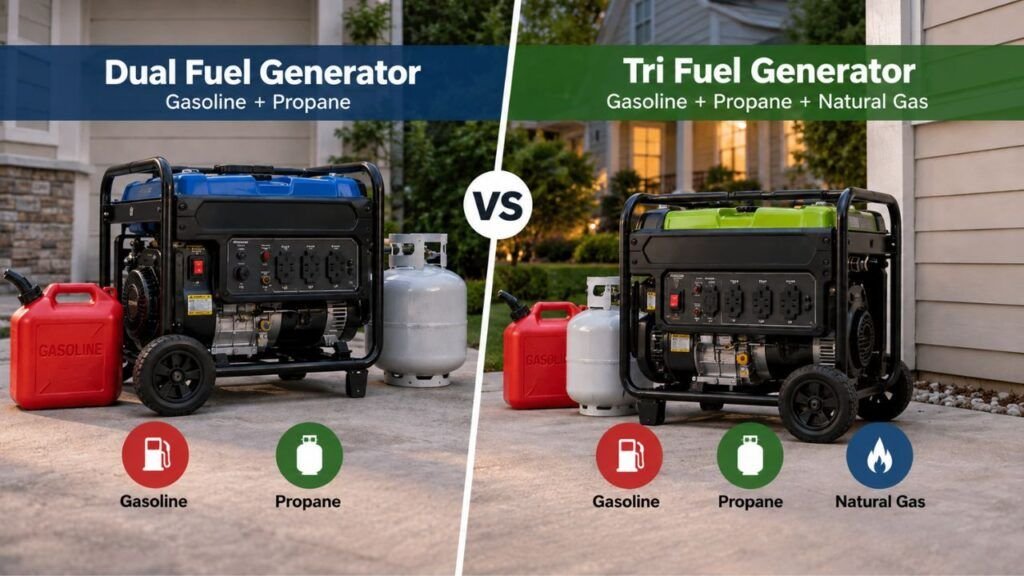
Dual-fuel generators operate on gasoline and propane, giving you another option during emergencies. Tri-fuel generators also support natural gas, which can be convenient when your home has a suitable gas connection.
If you experience extended outages, a dual-fuel or tri-fuel portable generator offers more flexibility. Remember that power output usually decreases on propane or natural gas.
Inverter vs. Conventional Generator Technology
Inverter generators produce stable, low-distortion electricity, making them particularly attractive for computers, televisions, and sensitive electronics. Their variable-speed engines can also reduce noise and fuel consumption.
Conventional generators typically offer strong power output with a simpler design. They’re often more economical when you need substantial wattage for household appliances.
If quiet operation and clean electricity matter most, consider an inverter generator. For demanding backup loads, compare both technologies based on actual power ratings and features.
Fuel Efficiency and Runtime
Generator runtime determines how frequently you’ll need to refuel during an outage. A larger fuel tank can support longer operation, but fuel consumption also depends on engine efficiency and electrical demand.
For example, a generator might operate for 15 hours at 25% load but considerably less at 75% load.
When comparing portable generators for extended power outages, check runtime at realistic household loads instead of relying only on maximum advertised hours.
Noise Levels and Operating Convenience
Noise matters when operating a generator near residential properties. Many enclosed inverter generators operate more quietly than traditional open-frame models.
Look for manufacturer noise ratings expressed in decibels (dBA). Compare measurements taken at similar distances and electrical loads.
If your neighborhood is particularly quiet, an enclosed inverter generator with Eco Mode may offer a more comfortable operating experience.
Electric Start, Remote Start, and Battery Backup
Electric start makes operating a generator easier, especially during unexpected outages. Instead of pulling a recoil cord, you can start the engine with a button or key.
Remote-start generators add convenience by allowing engine operation from a distance, although you must still follow outdoor placement and safety procedures.
If your generator uses a starting battery, maintain its charge regularly. Some models include battery chargers or alternative starting methods for emergencies.
120V/240V Outlets and 30-Amp vs. 50-Amp Connections
For household backup, outlet compatibility matters just as much as generator wattage. Smaller 120V generators may power individual appliances but cannot directly supply 240V household circuits.
Generators with 120V/240V outlets are more suitable for connecting selected home circuits through compatible electrical equipment.
A 30A connection at 240V supports up to 7,200 watts, while a 50A connection supports up to 12,000 watts. However, the generator’s actual output, breaker ratings, and individual circuit limits may reduce available power.
Before choosing a generator, have an electrician confirm compatibility with your home’s electrical system.
CO Sensors and Essential Safety Features
Carbon monoxide protection is particularly important with fuel-powered portable generators. Look for models with automatic CO shutdown systems that stop the engine when dangerous concentrations are detected nearby.
Other useful features include low-oil shutdown, overload protection, circuit breakers, and covered electrical outlets.
Remember that CO sensors do not make a generator safe for indoor operation. Always operate fuel-powered generators outdoors, away from your home.
Portability, Wheel Kits, and Storage
A portable generator should be manageable enough to move from storage to a safe outdoor operating location.
Smaller inverter generators may weigh around 100 pounds, while larger home backup models can exceed 300 pounds.
If you’re choosing a heavy-duty generator, look for sturdy wheels, folding handles, and a suitable storage location. Consider how easily you’ll move it during storms or emergencies.
Warranty Coverage, Price, and Maintenance Costs
Generator ownership costs extend beyond the initial purchase. Fuel consumption, oil changes, filters, spark plugs, starting batteries, and transfer switch installation can affect your total investment.
A three-year limited residential warranty is common among several popular models, although coverage varies by manufacturer.
Before purchasing, compare warranty terms, service center availability, replacement parts, and ongoing maintenance requirements.
What Can a Portable Generator Power During a Home Outage?
A portable generator can power essential household appliances during an outage, but its capabilities depend on continuous wattage, starting capacity, and electrical connections.
Here’s a practical breakdown of common household electricity requirements.
| Household Appliance | Typical Running Watts | Approximate Total Starting Watts |
| Refrigerator | 400-800W | 1,200-2,200W |
| Chest Freezer | 100-500W | 500-1,500W |
| Sump Pump (1/3 HP) | 500-800W | 1,300-2,900W |
| Gas Furnace Blower | 600-900W | 1,400-2,400W |
| Window AC (10,000 BTU) | 900-1,200W | 1,800-3,600W |
| Well Pump (1/2 HP) | 750-1,000W | 1,500-3,000W |
| Central AC (3-Ton) | 2,500-3,500W | 6,000-12,000W |
| LED Lighting (Whole House) | 100-300W | 100-300W |
| Television | 80-200W | 80-200W |
| Wi-Fi Router and Modem | 10-30W | 10-30W |
| Microwave | 1,000-1,500W | 1,000-1,500W |
These wattages are planning estimates, not measured specifications for your appliances. Motor startup requirements vary considerably by model.
For example, if your refrigerator uses 700W, furnace blower uses 800W, and lights and electronics consume 300W, your continuous requirement is approximately 1,800W. You must then account for the largest additional motor starting surge.
When choosing a generator for household emergencies, check each appliance’s nameplate and avoid running multiple demanding appliances simultaneously unless sufficient capacity is available.
Inverter Generator vs. Conventional Generator for Home Backup
Both inverter and conventional portable generators can provide reliable emergency electricity. The main differences involve power quality, engine operation, noise, and fuel efficiency.
| Comparison Factor | Inverter Generator | Conventional Generator |
| Power Output | Small to high-output models available | Commonly available in high-wattage models |
| Power Quality | Typically low THD and stable output | Depends on voltage regulation and design |
| Portability | Often compact, but large models are heavy | Often heavier at comparable small capacities |
| Fuel Source | Gasoline, dual-fuel, or tri-fuel options | Gasoline, dual-fuel, or tri-fuel options |
| Fuel Efficiency | Variable-speed operation often saves fuel | Generally runs at a more constant engine speed |
| Noise Level | Usually quieter, especially enclosed models | Often louder, particularly open-frame models |
| Automatic Operation | Available on selected compatible systems | Available on selected compatible systems |
| Installation Costs | Depend on outlets and connection equipment | Depend on outlets and connection equipment |
| Maintenance | Routine engine and fuel-system servicing | Routine engine and fuel-system servicing |
| Extended Outages | Efficient at lighter loads | Strong option for demanding continuous loads |
If you want quiet home backup power for sensitive electronics, an inverter generator is worth considering. However, conventional generators often provide substantial household wattage at a lower purchase cost.
The better choice depends on your electrical needs, noise preferences, and how frequently you expect to use backup power.
Safety Tips for Using Portable Generators at Home
Portable generators can keep essential appliances running during emergencies, but improper use creates serious carbon monoxide, fire, and electrical hazards. Follow these precautions whenever you operate a fuel-powered generator.
- Keep It Outdoors: Never operate a fuel-powered generator inside your home, garage, basement, shed, or enclosed porch.
- Maintain Safe Distance: Place the generator at least 20 feet from your home, with exhaust directed away from doors, windows, and vents. Follow any stricter manufacturer instructions.
- Install CO Detectors: Use working battery-powered or battery-backup carbon monoxide alarms inside your home.
- Use a Proper Transfer Switch: Never connect a generator directly to a household wall outlet or backfeed your electrical panel.
- Check Grounding Requirements: Follow manufacturer instructions and have an electrician verify grounding and neutral bonding for home connections.
- Protect Against Rain: Keep the generator dry using a manufacturer-approved outdoor cover or shelter that maintains proper ventilation.
- Refuel Safely: Turn off the engine and let it cool before adding gasoline.
- Use Suitable Extension Cords: Choose grounded, outdoor-rated cords with sufficient electrical capacity.
- Avoid Overloading: Keep connected appliances within the generator’s running and starting wattage limits.
- Store Fuel Properly: Keep approved fuel containers away from living spaces, ignition sources, and excessive heat.
Even generators equipped with automatic CO shutdown systems must remain outdoors. Never rely on safety sensors as a replacement for proper placement.
How to Maintain a Portable Generator for Emergency Home Backup
Regular maintenance helps your generator start reliably when a storm or unexpected outage interrupts electricity. You don’t need to be a mechanic, but a few simple habits can prevent common problems.
- Change Engine Oil: Follow the manufacturer’s break-in and routine oil-change schedule.
- Maintain Fuel Quality: Use fresh gasoline and an approved fuel stabilizer when recommended.
- Check the Starting Battery: Keep electric-start batteries charged and inspect terminals for corrosion.
- Run Periodic Tests: Exercise the generator according to its manual, including appropriate electrical loads when required.
- Inspect Air Filters: Clean or replace dirty filters to maintain engine performance.
- Check Spark Plugs: Inspect and replace spark plugs at the recommended intervals.
- Inspect Outlets and Cables: Look for loose connections, damaged cords, and worn electrical components.
- Keep the Generator Clean: Remove dust and debris from cooling vents and exterior surfaces.
- Store It Properly: Keep the generator in a dry, secure location when not operating, following fuel-storage instructions.
- Prepare Before Storm Season: Check oil levels, fuel availability, battery charge, and starting reliability before severe weather arrives.
If your generator has been sitting unused for several months, inspect it before relying on it for emergency home backup.
Why You Should Call a Professional Electrician for Home Generator Installation
If you’re planning to connect a portable generator to your home’s electrical panel, hiring a licensed electrician is the safest approach. Improper wiring can cause electrical fires, equipment damage, and dangerous backfeeding into utility lines.
A qualified electrician can install a compatible transfer switch or approved interlock system, evaluate your home’s electrical loads, and verify grounding, neutral bonding, and circuit protection. They can also check whether your generator’s 30A or 50A outlet matches the intended backup configuration.
You should also consult an electrician before connecting central air conditioning, well pumps, or other demanding 240V appliances. Professional installation helps protect your home, appliances, and utility workers while meeting applicable electrical codes.
Final Words
Choosing the right portable generator for home backup comes down to power output, fuel flexibility, runtime, and safety. If you mainly need refrigerators and essential appliances, a smaller inverter generator may be sufficient. Larger homes with demanding electrical loads often require higher-wattage models and professionally installed connections.
Among our selections, the Westinghouse 12000 Peak Watt Tri-Fuel offers a balanced combination of inverter power, tri-fuel flexibility, and convenient operation. The Generac 12,500 Starting Watt Tri-Fuel is a strong choice for dependable emergency backup, while the Westinghouse 28000 Peak Watt Tri-Fuel suits homeowners needing substantially more power for larger household loads.
Before making your decision, calculate your appliance wattage, check available fuel sources, and consider how frequently power outages occur in your area. The right generator should comfortably support your essential electrical needs without unnecessary complexity.
Related FAQs
What Size Portable Generator Do I Need to Run My House?
A 5,000 to 10,000-watt generator can power many household essentials. Larger homes may need 12,000 watts or more, depending on appliance loads.
Can a 10,000-Watt Portable Generator Run a Whole House?
A 10,000-watt generator can run many essential household circuits, but powering central AC and multiple large appliances simultaneously may exceed its capacity.
How Long Can a Portable Generator Run During a Power Outage?
Many portable generators run 8 to 12 hours at moderate loads. Actual runtime depends on fuel capacity, engine efficiency, and electricity consumption.
Is a Dual-Fuel or Tri-Fuel Generator Better for Home Backup?
Tri-fuel generators offer greater flexibility with gasoline, propane, and natural gas. Dual-fuel models are often simpler and more affordable.
Can a Portable Generator Run Central Air Conditioning?
Yes, a properly sized generator can run central AC if it meets the system’s running watts and compressor starting requirements.
Do I Need a Transfer Switch for a Portable Home Generator?
You need a properly installed transfer switch or approved interlock system for connecting a generator to household wiring and preventing dangerous backfeeding.
How Far Should a Portable Generator Be From the House?
Keep fuel-powered generators outdoors, at least 20 feet from your house, with exhaust directed away from windows, doors, and vents.
Are Inverter Generators Better for Home Backup?
Inverter generators offer quieter operation, cleaner electricity, and better efficiency at lighter loads. Conventional models often provide more wattage for less money.

Brian Walker writes straightforward generator guides and reviews for homeowners and everyday users. His content focuses on solar, portable, and fuel-powered generators, with practical advice on choosing, using, and maintaining reliable backup power.