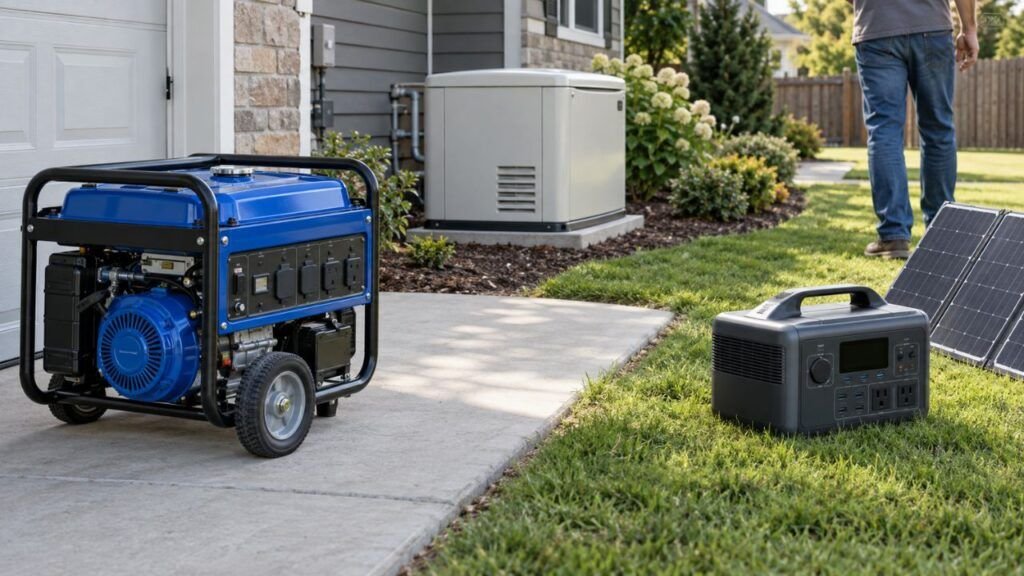
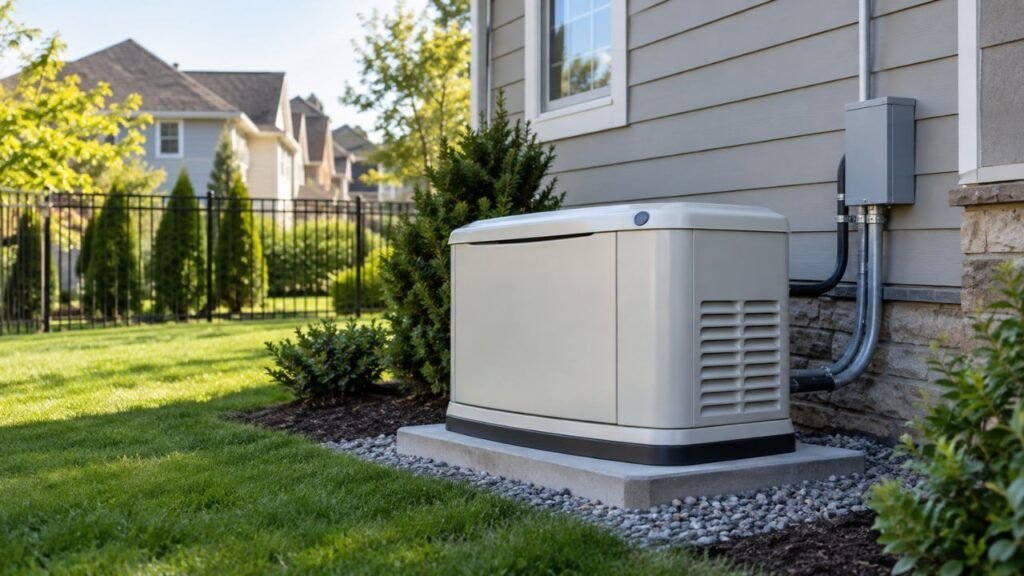
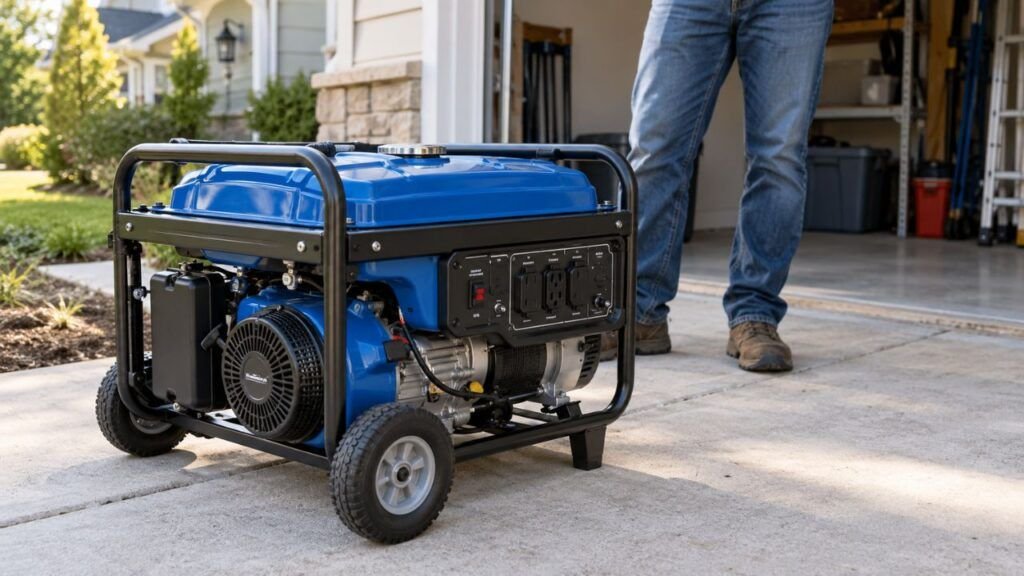
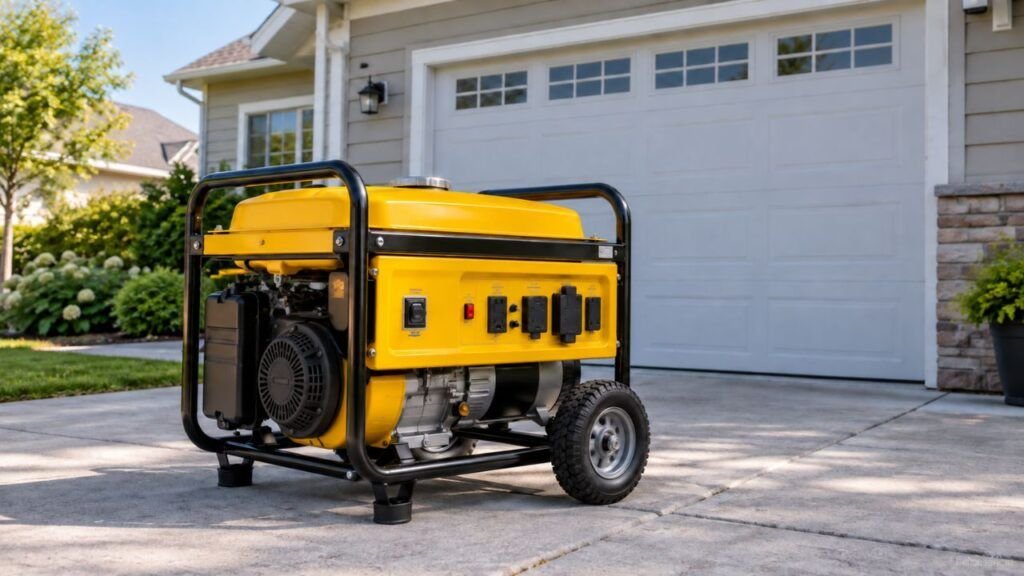
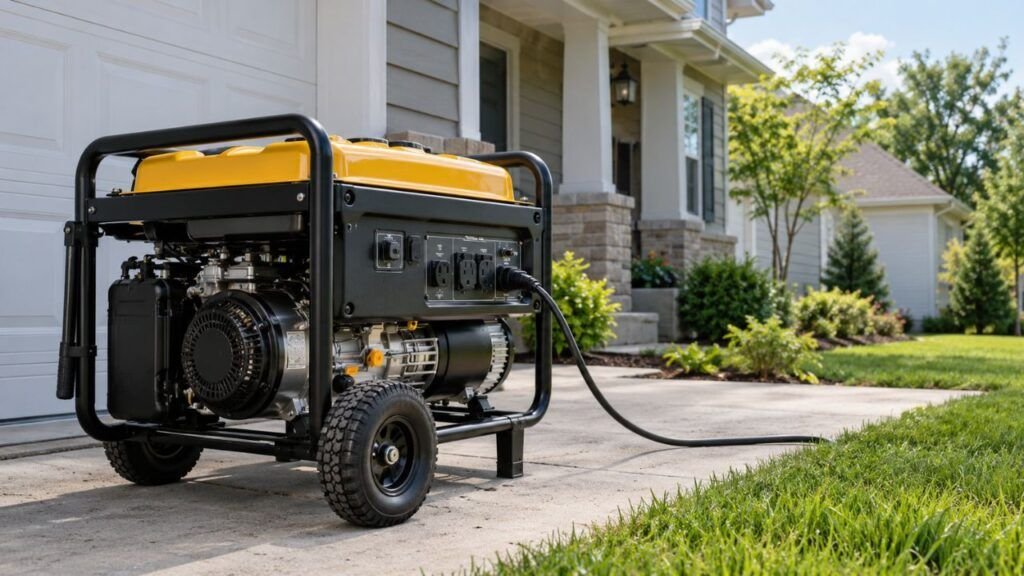
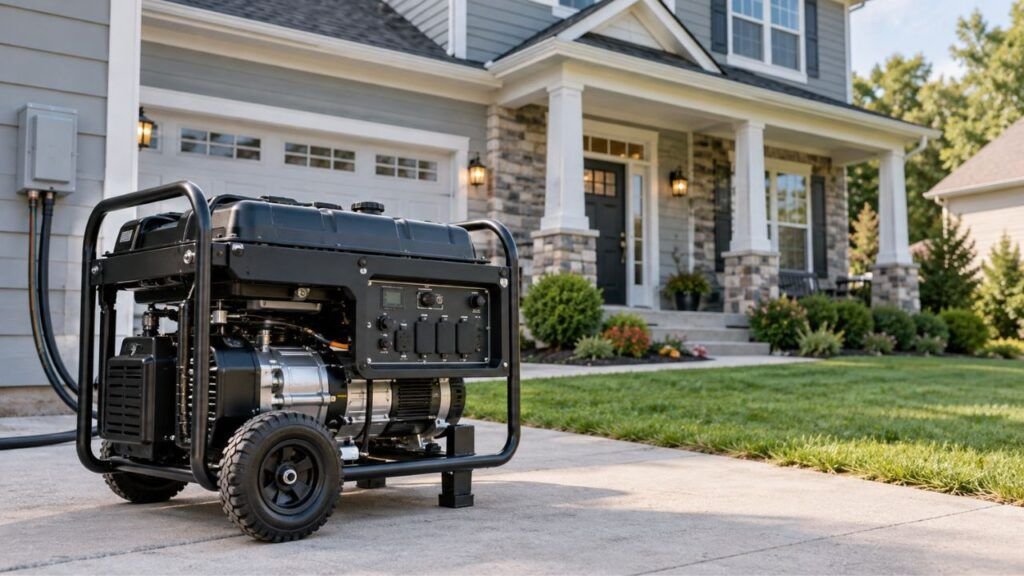
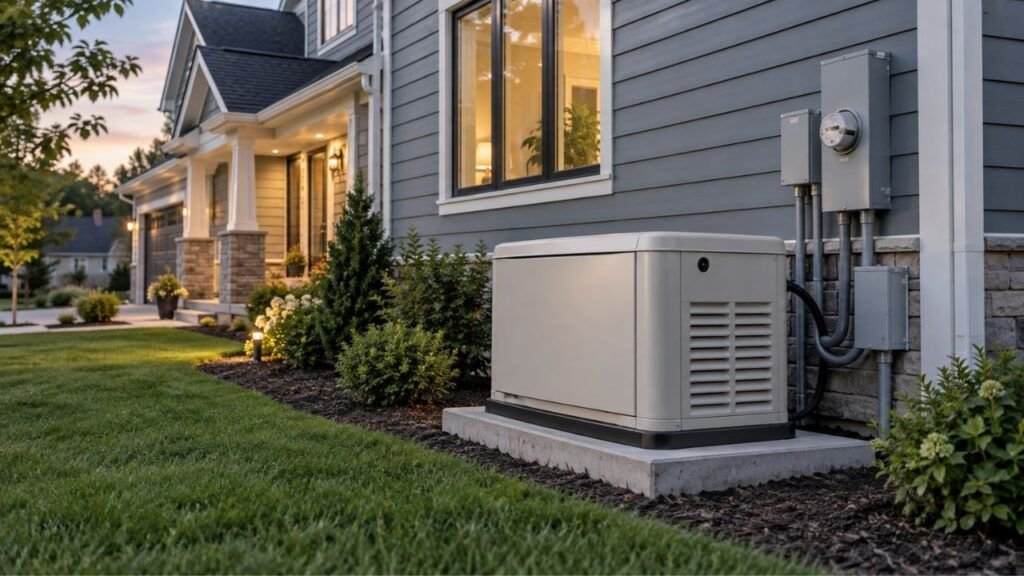
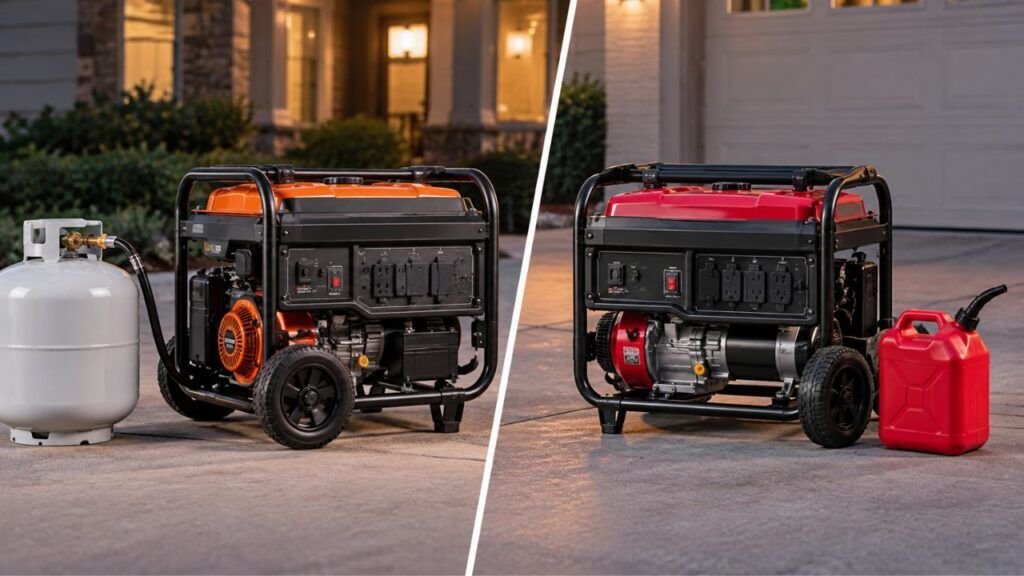
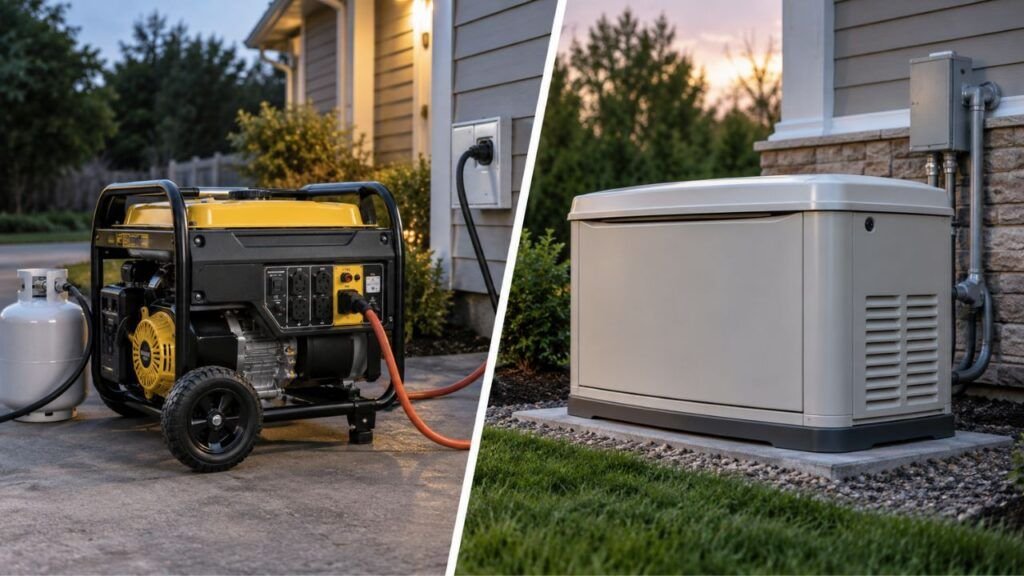
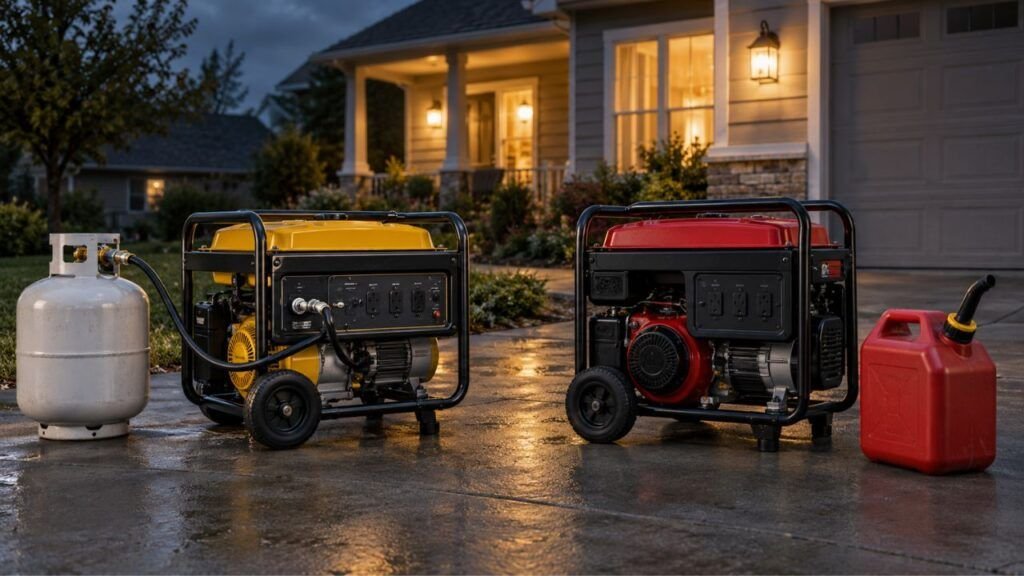
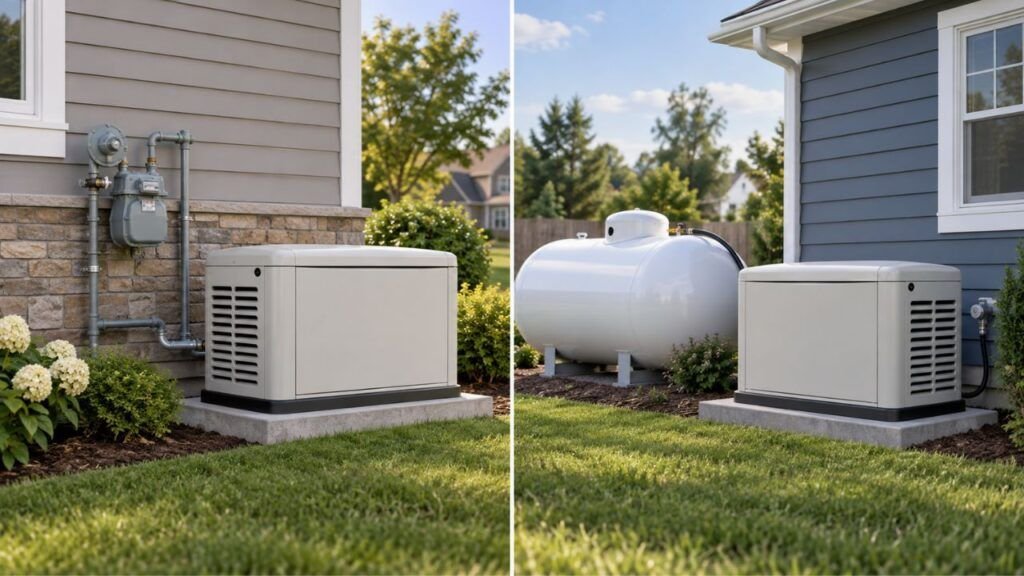
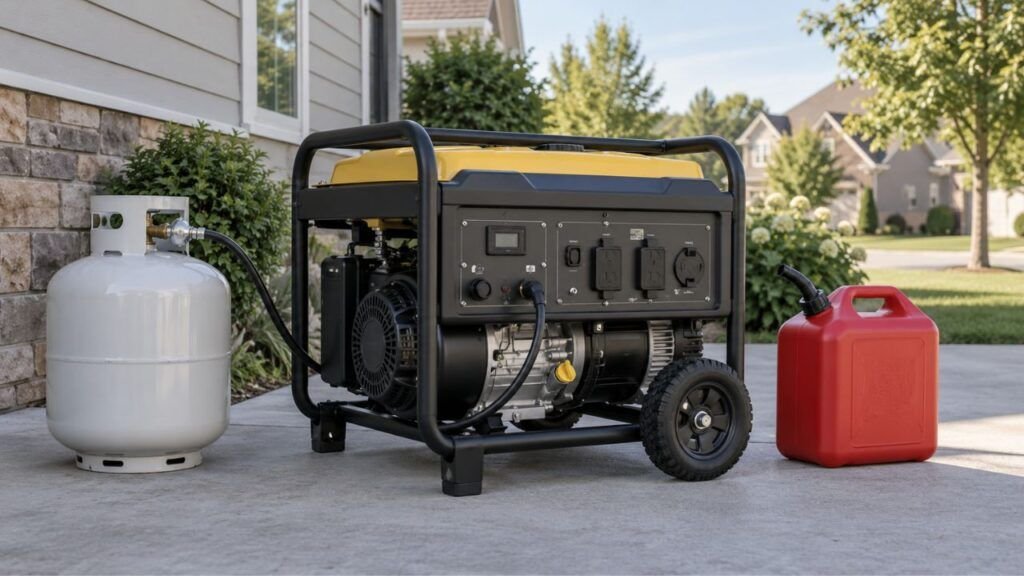
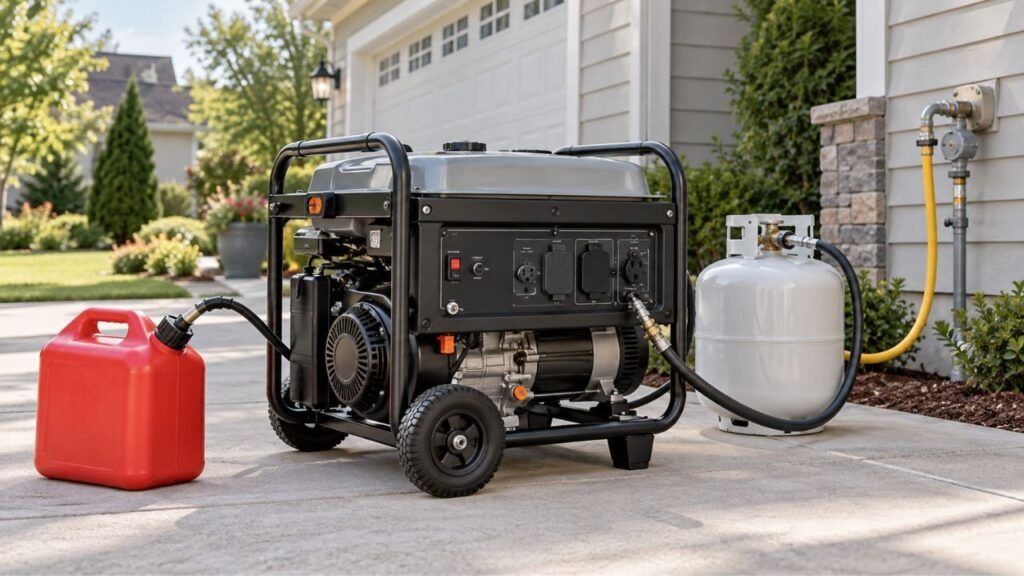
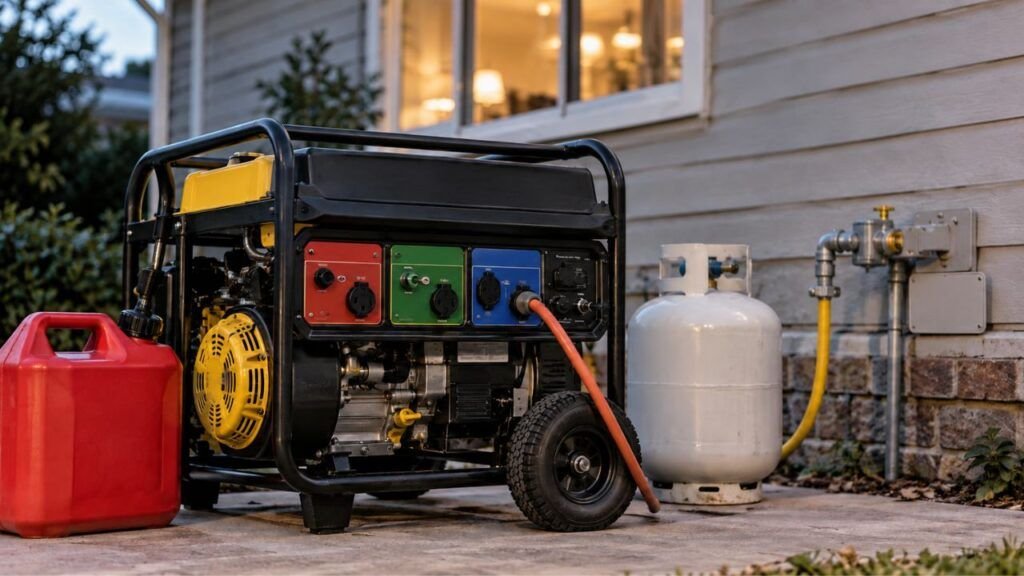
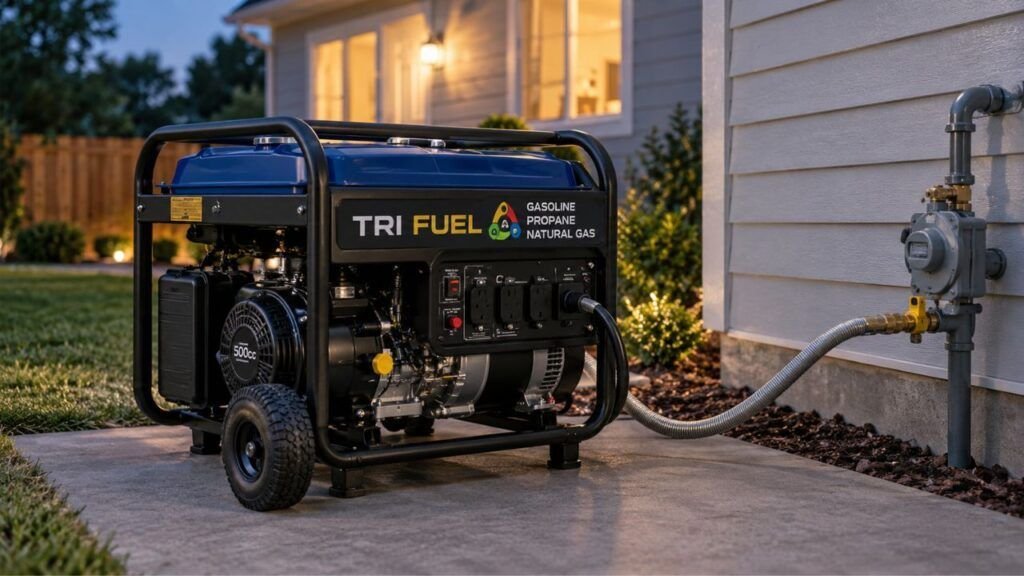
If you are looking for the best whole house generators, you need reliable backup power that can handle your home’s electrical demands. Whether you’re preparing for storms or frequent outages, choosing the right generator makes a real difference.
The Westinghouse 28000 Peak Watt Tri-Fuel offers powerful tri-fuel backup, while the Generac Guardian 22kW Home Generator provides automatic standby operation. For larger homes, the Kohler 26RCAL-200SELS delivers substantial power. The Jackery Solar Generator 5000 Plus suits homeowners preferring battery backup, while the DuroMax XP13000HXT offers a more affordable tri-fuel alternative.
After comparing the top whole house generators, we’ve reviewed their power output, fuel efficiency, runtime, reliability, and home backup features. This guide will help you choose the right generator for your household and budget.
We’re reader-supported. When you buy through links on our site, we may earn an affiliate commission. As an Amazon Associate, we earn from qualifying purchases at no extra cost to you.
Best Whole House Generator: Our Top Picks
- Best Overall: Westinghouse 28000 Peak Watt Tri-Fuel
- Best Solar Backup: Jackery Solar Generator 5000 Plus
- Best Budget Tri-Fuel Option: DuroMax XP13000HXT
- Best Standby Option: Generac Guardian 22kW Home Generator
- Best for Extended Runtime: Westinghouse 14500 Peak Watt Tri-Fuel
- Best Inverter option: Generac 5,200 Watt Dual Fuel Portable Inverter
- Best for Home Connections: WEN 14,500-Watt 120V/240V Tri-Fuel Generator
- Best for Cold Weather: Champion 16,875-Watt Electric Start Tri Fuel
- Best for Large Homes: Kohler 26RCAL-200SELS
- Best Smart Monitoring: Generac 14kW Whole Home Generator
- Best for Essential Circuit Backup: Honeywell 14kW Home Standby Generator
- Best for Load Management: Champion Power Equipment 201222
1. Best Overall: Westinghouse 28000 Peak Watt Tri-Fuel

Key Details:
- Power Output: 28,000 starting watts and 20,000 running watts on gasoline.
- Fuel Type: Gasoline, propane, and natural gas.
- Engine: 999cc engine with full-pressure lubrication.
- Fuel Tank: 17.2-gallon capacity for extended backup operation.
- Home Backup: 120/240V output, remote electric start, and optional automatic transfer switch.
If you need a powerful whole house generator for major appliances and heavy electrical loads, the Westinghouse 28000 Peak Watt Tri-Fuel Home Backup Portable Generator is a strong choice. With 20,000 running watts on gasoline, it can support central air conditioning, refrigerators, lighting, and other household essentials, depending on their combined power requirements.
What makes this generator particularly useful is its tri-fuel flexibility. You can switch between gasoline, propane, and natural gas depending on fuel availability. Its 999cc engine also features full-pressure lubrication, helping reduce internal wear during demanding operation.
We also like its compatibility with the optional WATS200 automatic transfer switch. This allows the Westinghouse 28000 to function as an automatic home backup system when properly installed. Plus, less than 5% THD provides cleaner electricity for sensitive household electronics.
At 557 pounds, it’s certainly heavy, but the wheels and folding handles make repositioning easier. If you want high-capacity portable backup power with standby-style convenience, this generator offers an impressive combination.
Pros:
- Massive power output supports demanding household electrical loads.
- Tri-fuel operation provides flexibility during extended outages.
- Optional automatic transfer switch enables hands-free backup.
- Remote starting and low-distortion power improve convenience.
Cons:
- Heavy construction makes transportation challenging.
- Automatic transfer switch requires a separate purchase.
2. Best Solar Backup Option: Jackery Solar Generator 5000 Plus
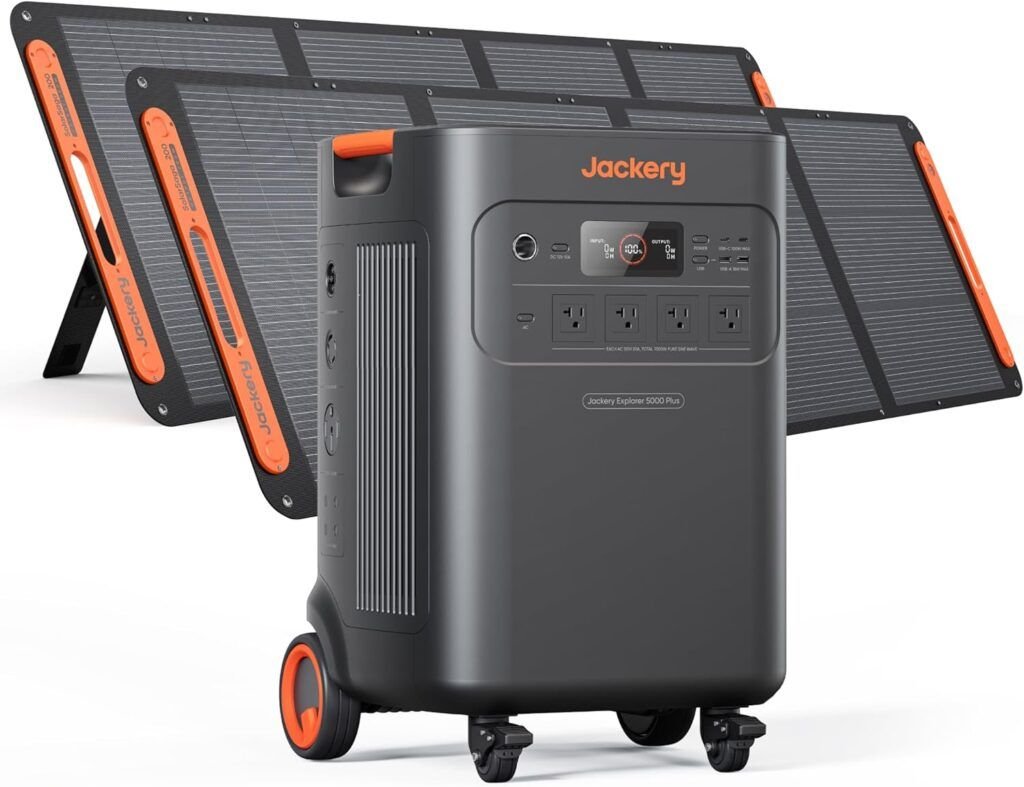
Key Details:
- Battery Capacity: 5,040Wh LiFePO4 battery, expandable to 60kWh.
- Power Output: 7,200W continuous and 14,400W surge.
- Solar Charging: Includes two 200W panels; supports up to 4,000W solar input.
- Voltage: 120V/240V output for major household appliances.
- Home Backup: Compatible with Jackery 60A Smart Transfer Switch.
Looking for a whole house backup generator without gasoline, fumes, or engine noise? The Jackery Solar Generator 5000 Plus offers a battery-powered alternative with 7,200W continuous output. It can run refrigerators, household electronics, and selected high-demand appliances, provided their combined loads remain within its capacity.
Its 5,040Wh LiFePO4 battery is expandable up to 60kWh, making longer backup periods possible with additional battery modules. You can also recharge using solar energy, with the included 400W panels providing a starting point for renewable home backup.
Another feature we appreciate is its 120V/240V compatibility. When paired with the optional Jackery 60A Smart Transfer Switch, the system can supply selected household circuits directly. This makes managing essential appliances during unexpected power outages much easier.
If you prefer a quiet, low-maintenance solar generator for home backup, the Jackery Solar Generator 5000 Plus deserves consideration. Just remember that the base battery capacity limits runtime, especially when powering several large appliances simultaneously.
Pros:
- Powerful AC output supports several major household appliances.
- Expandable battery capacity accommodates longer power outages.
- Solar charging reduces dependence on conventional fuel.
- Quiet operation with 120V/240V home backup compatibility.
Cons:
- Base battery provides limited runtime under heavy loads.
- Additional batteries and smart transfer switch cost extra.
3. Best Budget Tri-Fuel Option: DuroMax XP13000HXT
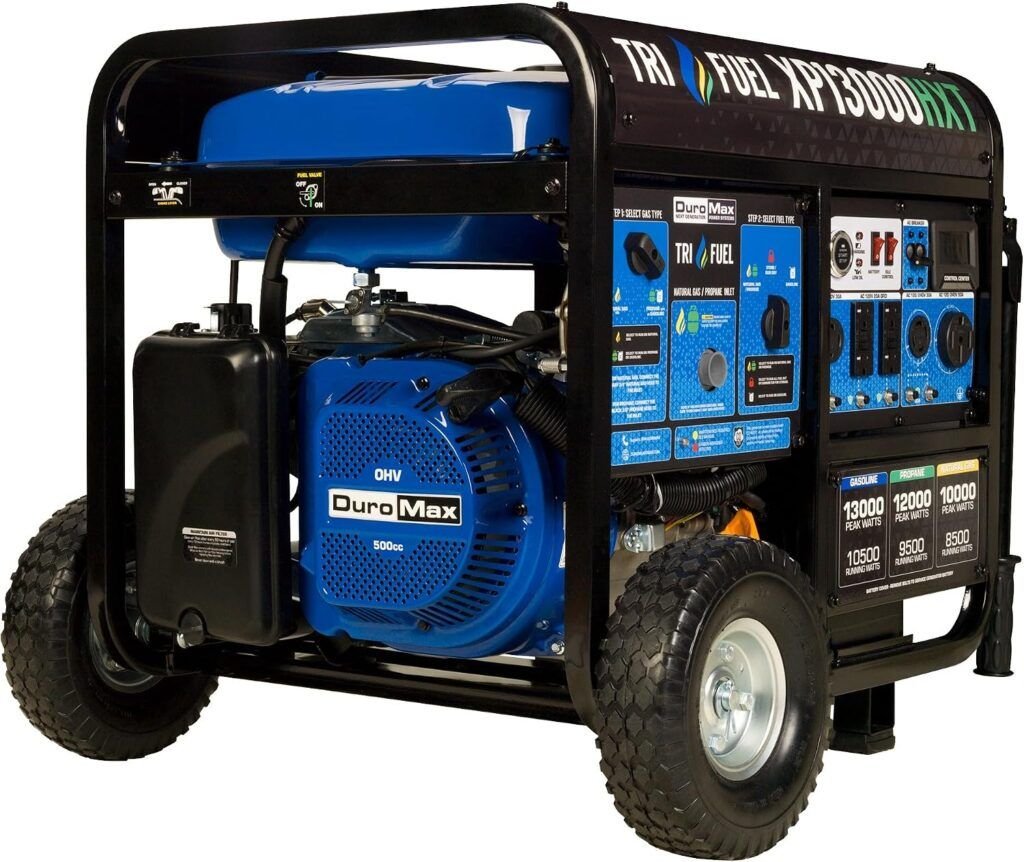
Key Details:
- Power Output: Up to 13,000 starting watts.
- Fuel Type: Gasoline, propane, and natural gas.
- Engine: 500cc OHV engine for residential backup power.
- Starting System: Electric push-button and remote start.
- Home Backup: 120/240V capability, 50A outlet, and CO Alert protection.
If you want a portable generator for whole house backup without choosing an oversized unit, the DuroMax XP13000HXT is worth considering. Its 13,000 starting watts provide substantial surge capacity for household appliances, making it suitable for essential circuits and selected larger loads during outages.
The tri-fuel system is especially convenient when fuel availability becomes unpredictable. You can operate it using gasoline, propane, or natural gas, while the front-mounted fuel selector makes switching straightforward. Its 500cc OHV engine handles the power generation.
For home backup applications, we particularly like the transfer switch-ready 50A outlet. It allows a properly installed connection to your home’s electrical system. The DuroMax XP13000HXT also includes remote starting and CO Alert shutdown protection for added convenience.
This generator makes sense for smaller homes or homeowners prioritizing essential appliances. However, powering central AC alongside multiple high-wattage devices may exceed its available running capacity. Check your household’s electrical requirements before deciding.
Pros:
- Three fuel options improve flexibility during emergencies.
- Strong starting power supports household appliance startup demands.
- Transfer switch-ready 50A outlet simplifies backup connections.
- Remote start and CO Alert improve convenience and safety.
Cons:
- Limited capacity for multiple high-demand appliances simultaneously.
- Requires manual setup and outdoor operation.
4. Best Standby Option: Generac Guardian 22kW Home Generator
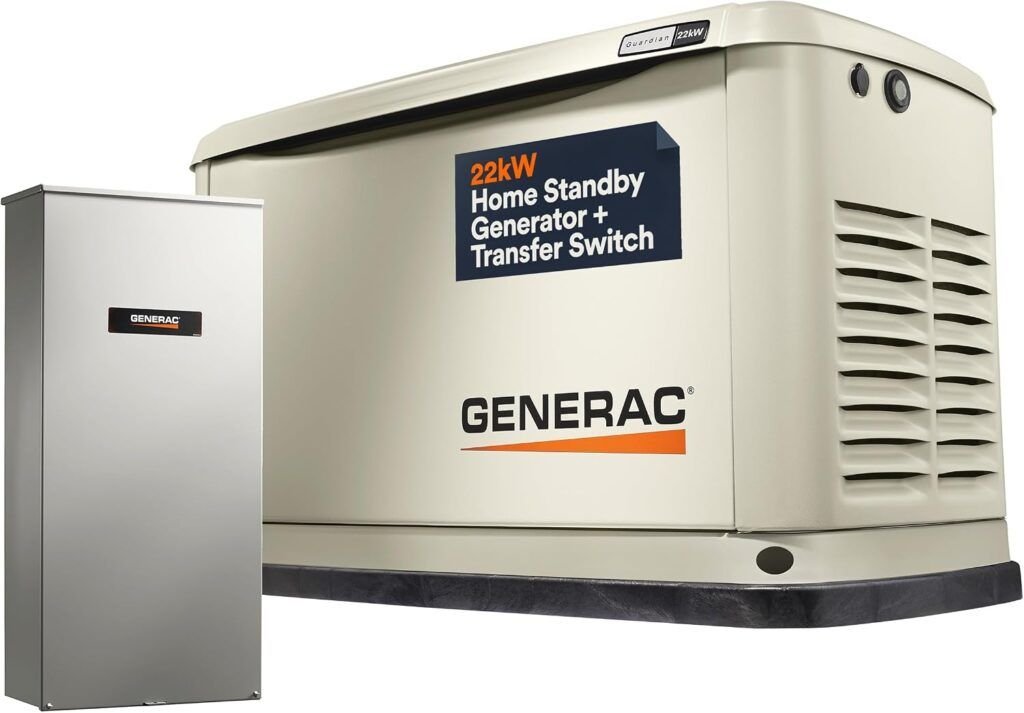
Key Details:
- Power Output: 22kW-class residential backup power.
- Fuel Type: Natural gas or liquid propane.
- Transfer Switch: Includes 200A NEMA 3R automatic transfer switch.
- Monitoring: Mobile Link Wi-Fi connectivity and maintenance alerts.
- Warranty: 5-year limited warranty.
When you want automatic whole house backup power without manually starting a generator, the Generac Guardian 22kW Home Generator is an excellent option to consider. This permanently installed standby generator detects utility outages and automatically supplies electricity through its transfer switch, keeping important household systems operational.
With its 22kW-class capacity, this home standby generator can support central air conditioning, refrigerators, lighting, and other demanding appliances when properly sized. Its G-Force engine is designed specifically for generator applications, making it suitable for regular standby operation.
One feature you’ll appreciate is Mobile Link Wi-Fi monitoring. You can check operating status and receive maintenance alerts remotely, even when you’re away from home. The Generac Guardian 22kW also delivers less than 5% harmonic distortion for cleaner household electricity.
If uninterrupted home backup is your priority, this system offers convenience that manually operated portable generators cannot match. However, professional installation, appropriate fuel connections, and routine servicing are necessary. Available output also depends on your fuel configuration.
Pros:
- Automatic operation provides backup power during utility outages.
- High-capacity output supports substantial household electrical loads.
- Included 200A automatic transfer switch simplifies home integration.
- Wi-Fi monitoring provides convenient remote status updates.
Cons:
- Requires professional installation and dedicated outdoor space.
- Depends on reliable fuel availability and periodic maintenance.
5. Best for Extended Runtime: Westinghouse 14500 Peak Watt Tri-Fuel
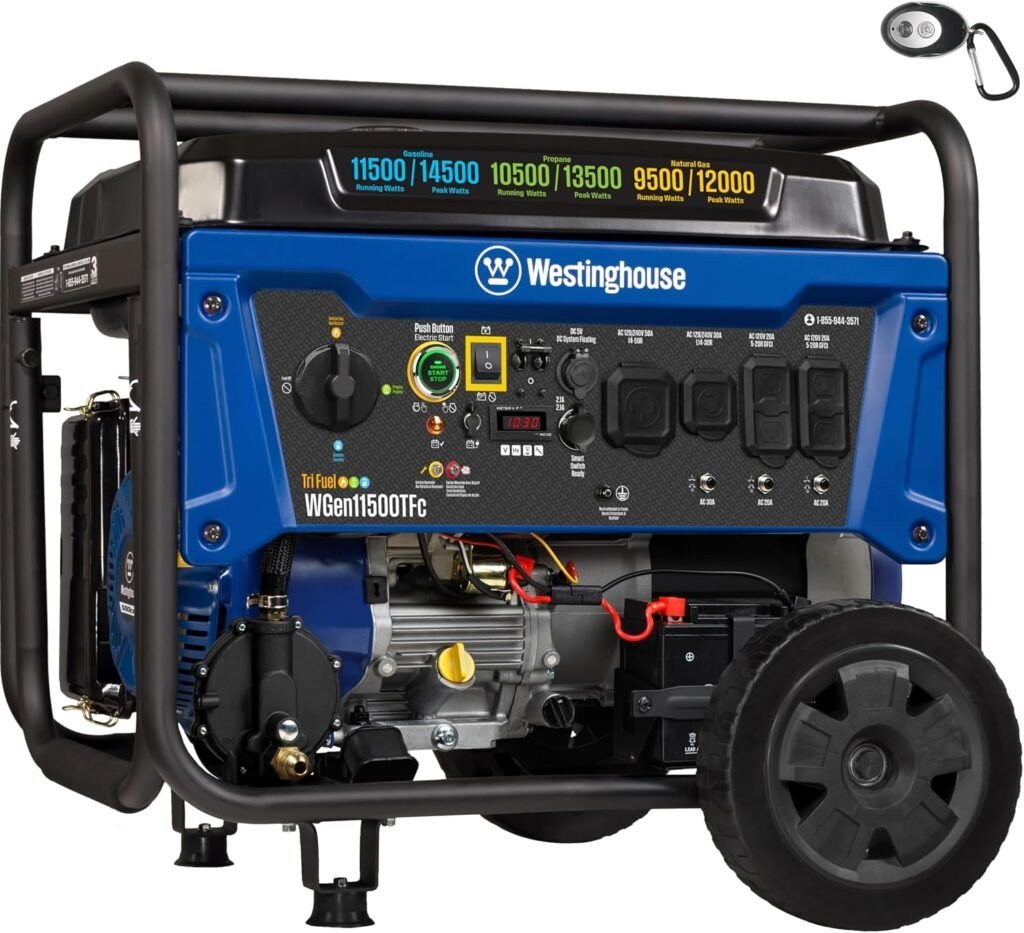
Key Details:
- Power Output: 14,500 starting watts and 11,500 running watts on gasoline.
- Fuel Type: Gasoline, propane, and natural gas.
- Engine: 550cc 4-stroke engine with pressure lubrication.
- Runtime: Up to 19 hours at 25% load on a 9.5-gallon gasoline tank.
- Home Backup: 120/240V output, 50A outlet, remote start, and optional automatic transfer switch.
If you need a reliable whole house generator for extended power outages, the Westinghouse 14500 Peak Watt Tri-Fuel Home Backup Portable Generator is worth considering. Its 11,500 running watts on gasoline can support refrigerators, lights, heating equipment, and selected larger appliances, depending on your household’s electrical demands.
What stands out is its fuel efficiency at lighter loads. The 9.5-gallon tank delivers up to 19 hours of runtime at 25% capacity. You can also switch between gasoline, propane, and natural gas when one fuel source becomes difficult to access.
We particularly like the transfer switch-ready 50A outlet and remote electric start. The Westinghouse WGen11500TFc also supports the optional WATS200 automatic transfer switch, making home backup more convenient. Less than 5% THD is another welcome feature for powering sensitive household electronics.
For homeowners wanting a high-output portable generator with flexible fuel options, this model offers a practical balance. Just remember that running multiple central air conditioners or other demanding appliances simultaneously may exceed its available capacity.
Pros:
- Up to 19 hours of gasoline runtime at 25% load.
- Tri-fuel compatibility offers convenient backup fuel choices.
- Supports optional automatic transfer switching for home backup.
- Remote start and low-distortion output improve usability.
Cons:
- Running capacity decreases when using alternative fuels.
- Automatic transfer switch is sold separately.
6. Best Inverter Option: Generac 5,200 Watt Dual Fuel Portable Inverter
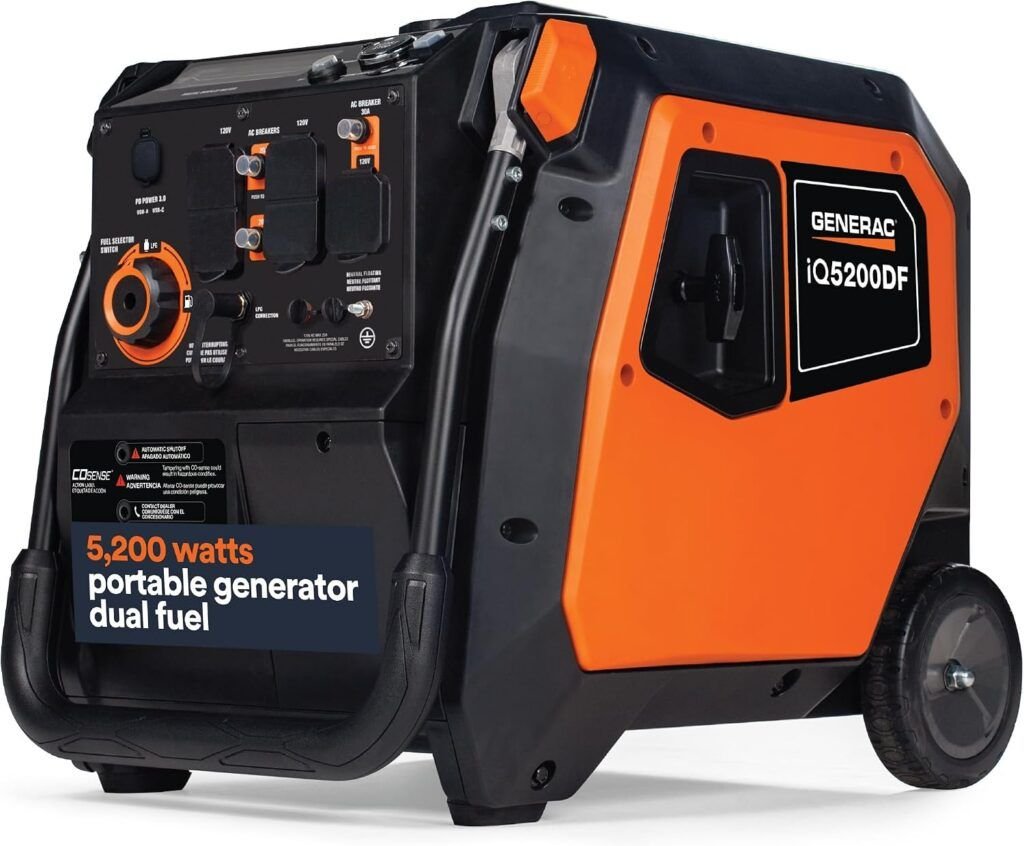
Key Details:
- Power Output: 5,200 starting watts and 3,900 running watts on gasoline.
- Fuel Type: Gasoline and propane.
- Engine Technology: Variable-speed inverter with less than 3% THD.
- Runtime: Up to 15 hours at 25% load on a 3.2-gallon gasoline tank.
- Safety Features: COsense shutdown, electric start, and 120V outlets.
Not every homeowner needs to power every appliance during an outage. If you’re mainly concerned about keeping essential devices running, the Generac iQ5200 DF Dual Fuel Portable Inverter Generator is a practical alternative to larger whole house generators. Its 3,900 running watts can support selected refrigerators, lighting, and household electronics.
Unlike conventional generators, its variable-speed inverter adjusts engine speed based on electrical demand. This helps reduce fuel consumption and operating noise. The less than 3% total harmonic distortion also makes it suitable for sensitive electronics, including computers and televisions.
Another feature we appreciate is the dual-fuel flexibility. You can operate the Generac iQ5200 DF using gasoline or propane, while Economy Mode provides up to 15 hours of runtime at 25% load. Electric starting, COsense protection, and a digital display make operation more convenient.
However, this is an essential-circuit backup generator rather than a true whole-home solution. Its 120V-only output cannot directly operate 240V appliances such as most central air conditioners. If your priority is basic household backup with cleaner inverter power, it makes sense.
Pros:
- Clean inverter output is suitable for sensitive household electronics.
- Dual-fuel capability provides convenient operating flexibility.
- Economy Mode helps reduce fuel consumption and noise.
- Compact design with electric start and COsense protection.
Cons:
- Insufficient capacity for complete whole-house electrical demands.
- Cannot directly power 240V household appliances.
7. Best for Home Connections: WEN 14,500-Watt 120V/240V Tri-Fuel Generator
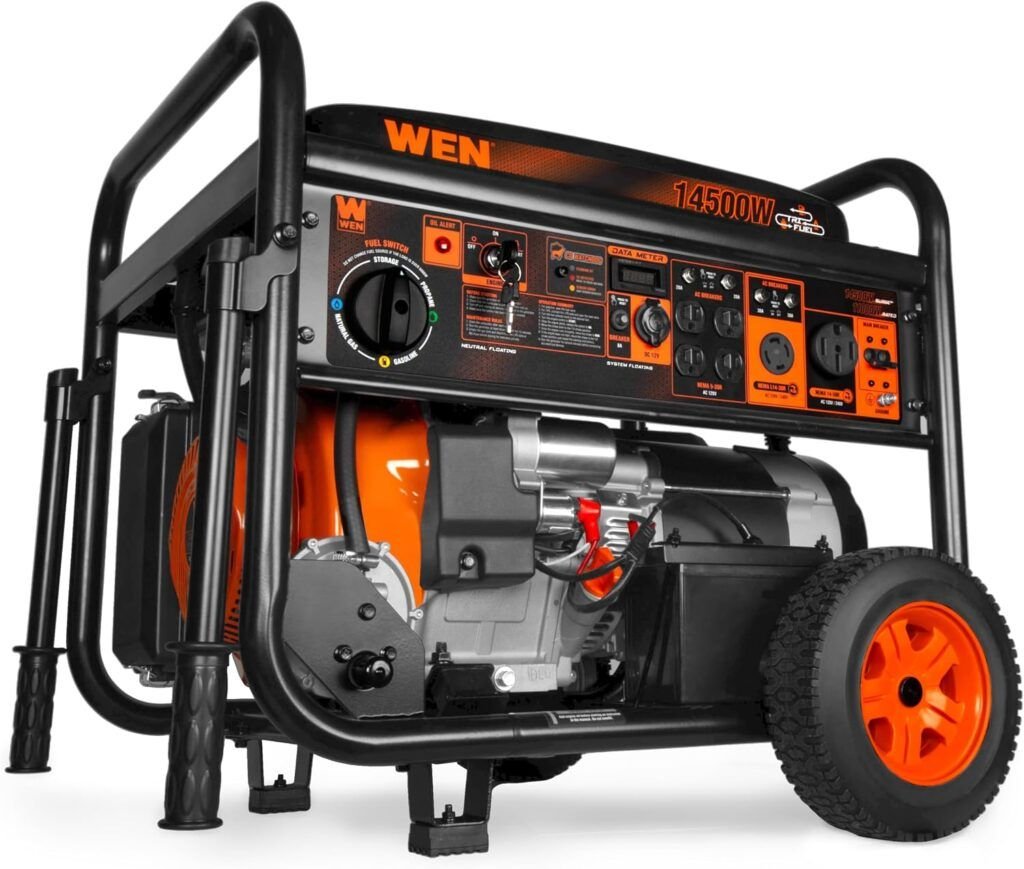
Key Details:
- Power Output: 14,500 starting watts and 11,500 running watts on gasoline.
- Fuel Type: Gasoline, propane, and natural gas.
- Engine: 500cc 4-stroke OHV engine with electric start.
- Runtime: Up to 12 hours at half load on an 8.2-gallon gasoline tank.
- Home Backup: 120/240V output, L14-30R and 14-50R outlets, and CO Watchdog.
Connecting a portable generator to your home’s electrical system requires the right equipment. The WEN TF-1450X Tri-Fuel Generator makes that process more convenient with its 30A and 50A transfer switch-ready outlets. Its 11,500 running watts on gasoline can support essential circuits and selected high-demand appliances during outages.
One advantage you’ll notice is its clearly defined power output across different fuels. It delivers 11,500 running watts on gasoline, 10,300 on propane, and 8,750 on natural gas. That flexibility helps when planning your whole-house backup power requirements.
We also like the simple fuel selector and electric starting system. The WEN TF-1450X provides up to 12 hours of gasoline runtime at half load, while its CO Watchdog sensor shuts down the engine when dangerous carbon monoxide levels are detected.
If you’re looking for a transfer switch-ready generator for residential backup, this model deserves attention. Its multiple outlets simplify connection options, although you’ll still need compatible, professionally installed electrical equipment. Also, consider the lower running capacity when choosing natural gas.
Pros:
- Multiple transfer switch-ready outlets support home backup connections.
- Tri-fuel operation offers flexible fuel availability.
- Strong gasoline running output handles substantial household loads.
- CO Watchdog and electric start improve convenience and safety.
Cons:
- Natural gas operation provides lower running wattage.
- Requires separate home connection equipment and professional setup.
8. Best for Cold Weather: Champion 16,875-Watt Electric Start Tri Fuel

Key Details:
- Power Output: 16,875 starting watts and 13,500 running watts on gasoline.
- Fuel Type: Gasoline, propane, and natural gas.
- Engine: 739cc Milwaukee Series V-Twin with electric start.
- Runtime: Up to 8 hours on a full gasoline tank.
- Safety Features: Cold Start Technology, CO Shield, and Intelligauge monitoring.
Winter power outages can be particularly frustrating when your heating system depends on electricity. The Champion 16,875-Watt Tri-Fuel Home Backup Portable Generator offers substantial residential backup capacity, with 13,500 running watts on gasoline. Its Cold Start Technology is also designed to make engine starting easier in lower temperatures.
What makes this generator appealing is its combination of high power output and three fuel choices. You can use gasoline, propane, or natural gas depending on availability. The included fuel hoses also make connecting the appropriate propane or natural gas supply more convenient.
For demanding home backup applications, we like the 739cc Milwaukee Series V-Twin engine and electric starting system. The Champion 16,875-Watt generator also includes an Intelligauge display to monitor voltage, frequency, and runtime, while CO Shield provides automatic carbon monoxide-related shutdown protection.
If your home experiences winter storms or frequent utility interruptions, this generator is worth considering. However, its rated 79 dBA noise level at 23 feet is noticeable, and its eight-hour gasoline runtime means you’ll need to plan refueling during extended outages.
Pros:
- High running wattage supports demanding household backup loads.
- Cold Start Technology helps with starting in lower temperatures.
- Tri-fuel operation offers flexibility during prolonged outages.
- Includes fuel hoses, electric start, and CO Shield protection.
Cons:
- Operating noise is relatively high at 79 dBA.
- Gasoline runtime requires refueling during longer outages.
9. Best for Large Homes: Kohler 26RCAL-200SELS
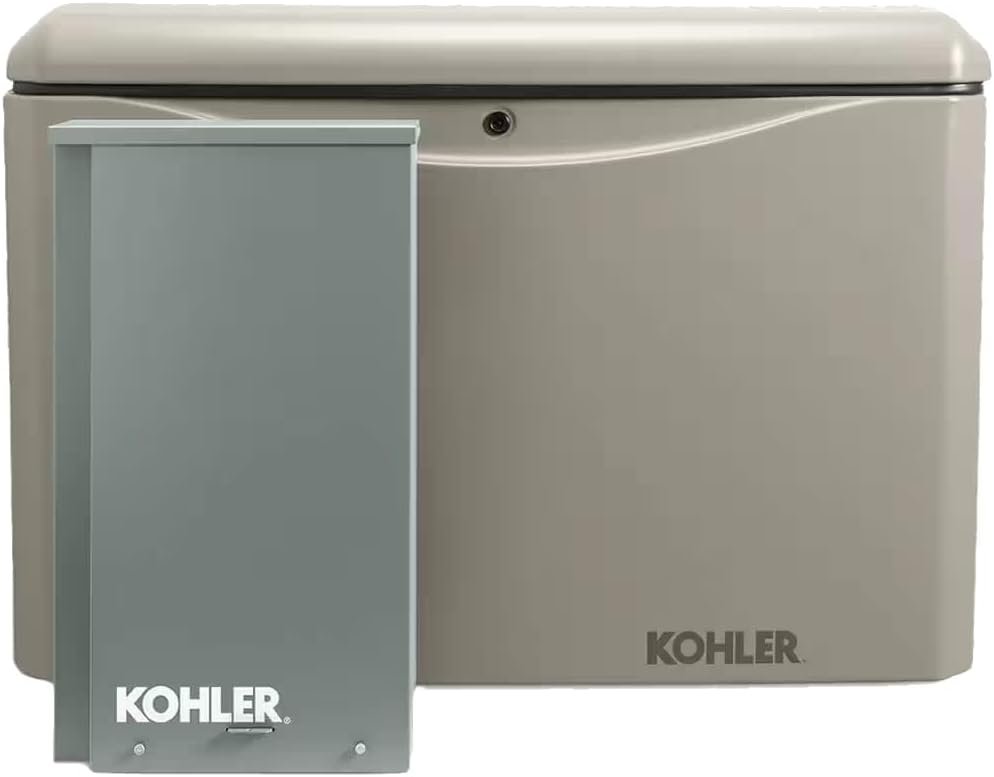
Key Details:
- Power Output: Up to 26,000W of standby backup power.
- Fuel Type: Natural gas or liquid propane.
- Engine: 999cc commercial-grade 4-stroke engine.
- Transfer Switch: Includes a 200A automatic transfer switch.
- Backup Features: Automatic operation, 120/240V power, and approximately 10-second power restoration.
If you have a large home with demanding electrical needs, the Kohler 26RCAL-200SELS Standby Generator deserves serious consideration. With up to 26kW of backup power, it can support central air conditioning, refrigerators, heating equipment, and multiple household appliances, depending on your electrical load.
One feature you’ll appreciate is its automatic backup operation. When utility power fails, the system can restore electricity in approximately 10 seconds. Its commercial-grade 999cc engine is designed for demanding residential applications, while natural gas and propane compatibility provides flexibility.
We also like that the Kohler 26RCAL-200SELS includes a 200A automatic transfer switch. This makes it easier to integrate into a professionally installed whole-house backup system. The generator is also designed to handle substantial starting demands, including those of a compatible 5-ton air conditioner.
For larger households wanting automatic standby power, this Kohler generator is a compelling option. However, its 625-pound construction requires permanent outdoor installation, and available output depends on fuel selection. Professional load calculations are important before choosing this capacity.
Pros:
- High-capacity output supports demanding whole-house electrical loads.
- Automatic operation restores backup power without manual starting.
- Includes a 200A automatic transfer switch for home integration.
- Commercial-grade engine supports demanding residential backup applications.
Cons:
- Heavy construction requires professional installation and dedicated space.
- Fuel supply and household load requirements need careful planning.
10. Best Smart Monitoring: Generac 14kW Whole Home Generator
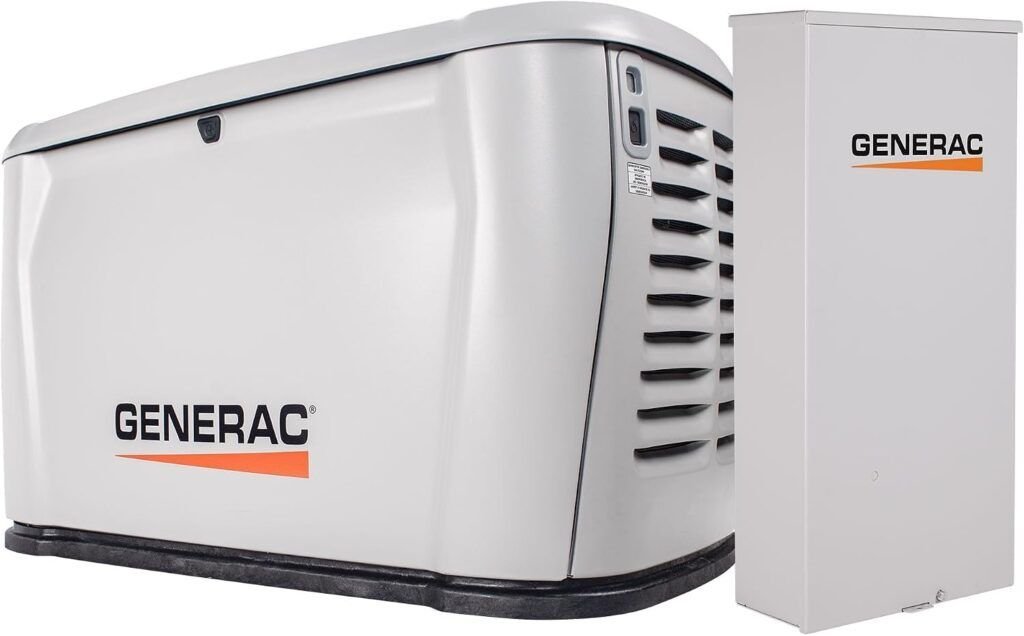
Key Details:
- Power Output: 14,000W rated residential backup capacity.
- Fuel Type: Natural gas or liquid propane.
- Starting System: Automatic standby operation with improved cold-start capability.
- Connectivity: Built-in cellular monitoring through Mobile Link.
- Special Features: Electronic fuel control, oil-level monitoring, and smart home compatibility.
Want a whole house generator you can monitor even when you’re away? The Generac 14kW Whole Home Generator offers automatic backup power with built-in cellular connectivity. Its 14kW-class output can support essential household circuits, including refrigeration, lighting, heating equipment, and selected cooling loads.
What makes this Generac model interesting is its electronic fuel and ignition control. The system optimizes fuel delivery during operation, while improved cold-start performance helps prepare it for demanding weather conditions. Oil-level sensors also monitor an important part of generator readiness.
Another feature we appreciate is Mobile Link connectivity. You can check generator status and receive maintenance alerts through your smartphone. The Generac 14kW Whole Home Generator also supports compatible Generac smart home products, although some connected features require a premium subscription.
If you prefer automatic home backup with convenient remote monitoring, this model makes sense. However, 14kW may not support every appliance in a larger household simultaneously. Confirm the included transfer switch configuration and have an installer assess your electrical loads before purchasing.
Pros:
- Built-in cellular connectivity supports convenient remote monitoring.
- Automatic standby operation keeps essential home circuits powered.
- Electronic fuel control helps optimize operating efficiency.
- Oil-level monitoring and improved cold-start capability support reliability.
Cons:
- Limited capacity for larger homes with multiple high-demand appliances.
- Premium monitoring features may require a paid subscription.
11. Best for Essential Circuit Backup: Honeywell 14kW Home Standby Generator

Key Details:
- Power Output: 14,000W rated standby power.
- Fuel Type: Natural gas or liquid propane.
- Transfer Switch: Includes a 16-circuit transfer switch.
- Construction: Weather-resistant aluminum enclosure with composite mounting pad.
- Warranty: 3-year limited warranty.
If you’re looking for an automatic home backup generator without powering every circuit, the Honeywell 14kW Home Standby Generator is worth considering. Its 14,000W capacity can keep refrigerators, lighting, heating equipment, and other essential household appliances operating during outages, provided the connected loads remain within its capacity.
What stands out is the included 16-circuit transfer switch. It lets you prioritize important household circuits instead of automatically supplying every electrical load. The generator also operates on natural gas or propane, giving homeowners flexibility based on their existing fuel supply.
We particularly like its weather-resistant aluminum enclosure and included composite mounting pad. These features help simplify installation planning, while the LCD control panel provides useful operating information. The Honeywell 14kW also includes automatic operation, reducing the need for manual intervention during outages.
For medium-sized homes or households prioritizing essential circuits, this standby generator offers a practical solution. However, larger central AC systems and multiple electric appliances may require more capacity. A licensed installer should verify the selected circuits, mounting requirements, and available fuel supply.
Pros:
- Automatic backup operation supports important household appliances.
- Included 16-circuit transfer switch helps prioritize essential loads.
- Natural gas and propane compatibility provides fuel flexibility.
- Weather-resistant enclosure and mounting pad simplify installation planning.
Cons:
- May not support all high-demand appliances simultaneously.
- Limited to the circuits configured through the included transfer switch.
12. Best for Load Management: Champion Power Equipment 201222
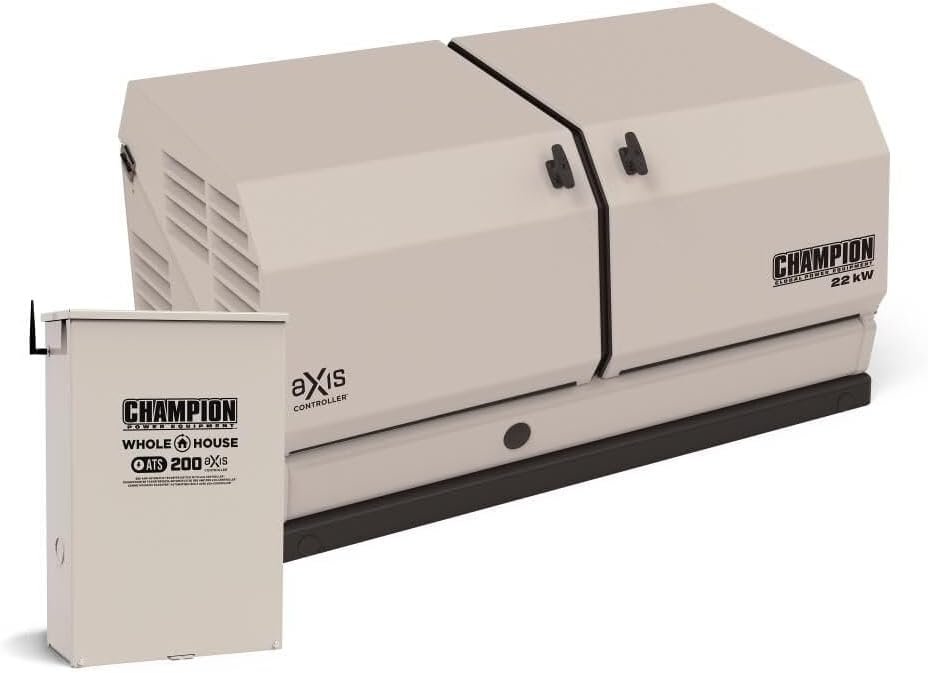
Key Details:
- Power Output: 22,000W on propane and 19,800W on natural gas.
- Fuel Type: Liquid propane and natural gas.
- Transfer Switch: Includes a 200A automatic transfer switch with aXis technology.
- Noise Level: Rated at 67 dBA with advanced sound dampening.
- Warranty: 10-year limited warranty with lifetime technical support.
When several large appliances need power during an outage, managing electrical demand becomes important. The Champion 201222 22kW aXis Home Standby Generator addresses this with intelligent load management. It delivers 22,000 running watts on propane or 19,800 watts on natural gas, making it suitable for substantial residential backup needs.
The standout feature is Champion’s aXis technology, which manages high-demand household appliances to help prevent electrical overloads. Combined with its 200A automatic transfer switch, this system offers convenient whole-house backup operation without manual starting or refueling when connected to an adequate fuel supply.
We also like its relatively quiet 67 dBA operating noise rating and advanced sound-dampening design. The Champion 201222 features a 24V starting system designed for temperatures between -22°F and 104°F, along with automatic self-diagnostic testing to monitor generator readiness.
If you want a whole-home standby generator that balances power capacity, load management, and operating convenience, this Champion model is worth considering. Its 10-year limited warranty adds reassurance, although professional installation and proper fuel sizing remain necessary for dependable performance.
Pros:
- High continuous output supports substantial household electrical demands.
- aXis load management helps coordinate high-demand appliances.
- Includes a 200A automatic transfer switch for whole-home integration.
- Quiet operation and 10-year limited warranty add practical benefits.
Cons:
- Requires professional installation and a suitable permanent location.
- Natural gas operation delivers less power than propane.
What Is a Whole House Generator?
A whole house generator is a backup power system designed to supply electricity to your home’s electrical circuits during an outage. Depending on its capacity, it can operate refrigerators, lights, heating systems, central air conditioning, and other appliances. These generators typically run on natural gas, propane, or gasoline, although battery-powered alternatives are also available.
Home standby generators are permanently installed and automatically restore backup power through a transfer switch. Portable generators usually require manual startup and a properly installed electrical connection, although certain models support automatic operation with compatible equipment. Standby systems are generally more convenient, while portable options offer greater flexibility.
How to Choose the Best Whole House Generator
The right home backup generator depends on your electrical needs, preferred fuel, and how much convenience you want during an outage. Here’s what you should consider before buying.
Power Output and Wattage Requirements
Start by calculating how much electricity your household uses when essential appliances run together. Check both running watts and starting watts, especially for central AC units, refrigerators, and well pumps.
For example, a 10,000W generator may handle essential circuits and selected larger appliances. However, a home with multiple air conditioners and electric heating could need 20,000W or more.
Choose a generator based on actual electrical loads rather than square footage alone.
Generator Type: Standby vs. Portable
Standby generators are permanently installed and automatically start when utility power fails. They’re particularly convenient if you experience frequent outages or want backup electricity while away.
Portable whole house generators offer flexibility and typically require less upfront investment. However, most need manual setup, outdoor positioning, and fuel management.
If automatic operation matters most, choose a standby model. If you prefer flexibility and occasional backup, consider a high-output portable generator.
Fuel Type and Fuel Availability
Fuel availability directly affects how long your generator can operate during emergencies.
Natural gas generators can run continuously while the gas supply remains available. Propane generators use stored fuel, making tank capacity important. Gasoline generators are convenient but require regular refueling and proper fuel storage.
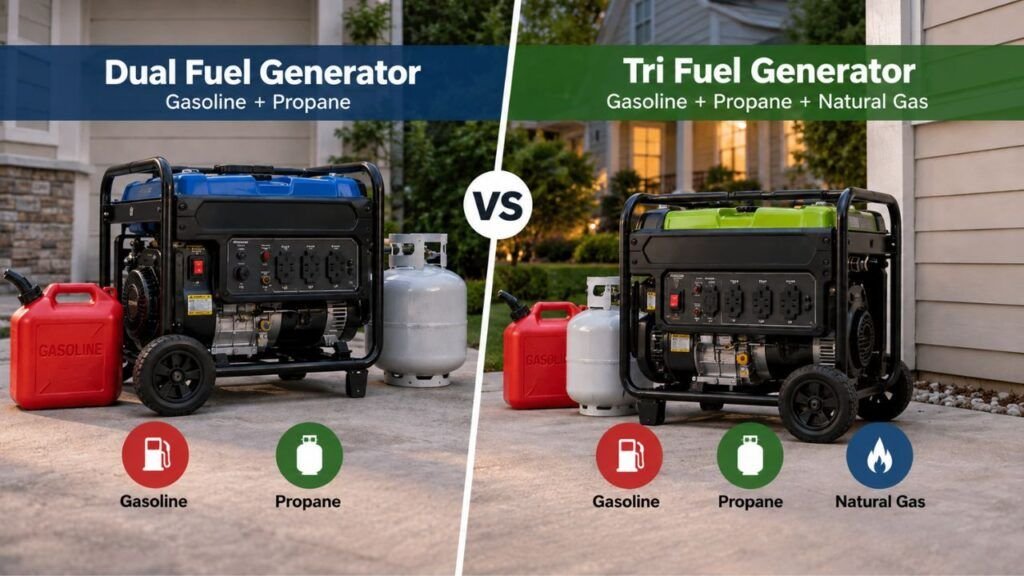
Tri-fuel generators give you three fuel choices, which can be particularly useful during extended outages. Remember that power output often decreases when switching from gasoline to propane or natural gas.
Automatic Transfer Switch Compatibility
A transfer switch safely connects your generator to selected household circuits or an appropriately configured electrical panel. It prevents generator electricity from flowing backward into utility lines.
Automatic transfer switches detect outages and transfer electrical loads without manual switching. Manual transfer switches require you to operate them yourself.
If you want uninterrupted convenience with minimal involvement, look for a standby generator with an included automatic transfer switch. Check switch capacity and compatibility before purchasing.
Fuel Efficiency and Runtime
Generator runtime determines how frequently you’ll need to refuel during a power outage. Larger fuel tanks provide more stored fuel, but actual operating time depends on engine efficiency and electrical demand.
For example, a generator advertised to run 15 hours at 25% load will generally operate for less time when powering larger household loads.
Compare runtime at similar load percentages rather than relying on maximum advertised figures. Natural gas and large propane systems can reduce frequent manual refueling.
Noise Levels and Installation Location
Generator noise matters, especially when you live close to neighbors. Large conventional portable generators often operate louder than enclosed inverter models or sound-dampened standby units.
Compare published decibel ratings at the same distance and operating load. A lower dBA rating generally means quieter operation.
Also, consider safe outdoor placement, ventilation, property boundaries, and local installation rules. Portable fuel-powered generators must operate at least 20 feet from buildings, while permanent standby installations must follow applicable codes and manufacturer clearance requirements.
Warranty, Maintenance, and Service Support
A reliable whole house generator should have accessible maintenance support and replacement parts. Look for manufacturers offering clear warranty coverage, authorized service centers, and responsive technical assistance.
Regular maintenance includes oil changes, filter inspections, battery checks, and periodic testing. Service intervals vary by model and operating hours.
Before buying, check whether qualified technicians are available nearby. A strong warranty is more useful when you can actually obtain service.
Generator Price and Installation Costs
A generator’s purchase price is only part of your investment. Portable models generally cost less to install, while standby systems require additional electrical and fuel connections.
Transfer switches, permits, mounting pads, gas lines, and electrical panel upgrades can increase installation expenses.
Compare the complete installed cost rather than generator prices alone. A professionally installed standby system may be worth the additional expense if automatic backup power is a priority.
What Size Generator Do You Need to Power a Whole House?
The generator size you need depends on your home’s electrical loads, not just its square footage. Smaller households may manage with 7,500 to 12,000 watts, while larger homes with central air conditioning and electric appliances may need 20,000 watts or more.
| Home Size | Estimated Generator Capacity |
| Small Home | 7,500 to 12,000W |
| Medium Home | 12,000 to 18,000W |
| Large Home | 18,000 to 24,000W |
| Large Home With Multiple HVAC Systems | 24,000W+ |
These are broad starting estimates, not guaranteed requirements. Actual sizing depends on simultaneous electrical loads, appliance starting wattage, HVAC equipment, and which circuits you want to power. Have a qualified electrician perform a load calculation before purchasing.
Standby vs. Portable Generators for Whole House Backup
Both standby and portable generators can provide residential backup power, but they differ in convenience, capacity, and installation requirements. Here’s how they compare.
| Features | Standby Generator | Portable Generator |
| Power Capacity | Typically 10kW to 26kW+ | Commonly 3kW to 20kW running |
| Starting System | Automatic | Usually manual or electric start |
| Fuel Options | Natural gas or propane | Gasoline, propane, or natural gas |
| Installation | Permanent professional installation | Portable setup; professional wiring for home connection |
| Transfer Switch | Usually automatic | Usually manual; some support automatic |
| Noise Level | Often sound-dampened | Varies; open-frame models can be louder |
| Maintenance | Scheduled servicing and inspections | Engine maintenance and fuel management |
| Initial Cost | Generally higher | Generally lower |
| Best For | Frequent outages and automatic whole-house backup | Occasional outages and flexible backup power |
If you want automatic electricity restoration, a standby generator is generally the better choice. However, a properly sized portable generator can provide substantial home backup power at a lower initial cost.
How Much Does a Whole House Generator Cost?
A whole house generator can cost anywhere from around $1,000 for certain high-output portable models to $10,000 or more for larger standby units. Portable generators capable of supporting substantial residential loads commonly fall between approximately $1,000 and $4,000 or higher, depending on output and features.
For professionally installed standby generators, many complete projects cost approximately $10,000 to $25,000, although simpler installations may cost less. Installation expenses can include automatic transfer switches, mounting pads, fuel connections, electrical upgrades, permits, and labor. Larger homes or complicated installations may cost considerably more.
You should also budget for fuel consumption, routine oil changes, filters, battery replacement, and professional servicing. Before deciding, request an itemized installation quote so you understand the full ownership cost.
Safety Tips for Using a Whole House Generator
A home backup generator can supply substantial electrical power, but improper installation or operation creates serious safety risks. Follow these precautions whenever using a fuel-powered generator.
- Outdoor Placement: Operate portable generators outdoors, at least 20 feet from your home, with exhaust directed away from doors, windows, and vents.
- Carbon Monoxide Protection: Install working carbon monoxide alarms indoors. Never operate fuel-powered portable generators inside garages, basements, or enclosed areas.
- Prevent Backfeeding: Never connect a generator directly to a household wall outlet. This can energize utility lines and seriously injure electrical workers.
- Use Proper Transfer Equipment: Have a licensed electrician install an approved transfer switch or suitable interlock system where permitted.
- Safe Fuel Handling: Turn off portable generators and let them cool before refueling. Store gasoline and propane safely away from ignition sources.
- Professional Installation: Have standby generators installed according to manufacturer instructions, local electrical codes, fuel requirements, and required clearances.
- Weather Protection: Keep generators protected from rain and flooding without restricting ventilation or exhaust airflow.
- Avoid Overloading: Never exceed the generator’s continuous running capacity. Account for appliance starting surges when connecting large motors.
- Regular Maintenance: Inspect oil levels, air filters, batteries, and fuel connections according to the manufacturer’s maintenance schedule.
Final Words
Choosing the right whole house generator depends on how much electricity your home needs, which fuels are available, and whether you prefer automatic or manual backup. A properly sized generator can keep essential appliances running and reduce disruptions during extended power outages.
For high-output portable backup, the Westinghouse 28000 Peak Watt Tri-Fuel is a strong option. The Generac Guardian 22kW Home Generator suits homeowners wanting automatic standby protection, while the Kohler 26RCAL-200SELS is worth considering for larger homes with demanding electrical loads.
Before purchasing, calculate your household’s running and starting wattage requirements, check installation compatibility, and compare ongoing fuel and maintenance costs. That way, you’ll choose a generator that actually meets your home’s backup power needs.
Related FAQs
Is a 22kW Generator Enough to Run a Whole House?
Yes, a 22kW generator can power many medium and large homes, including central air conditioning and major appliances. However, homes with multiple HVAC systems or heavy electric loads may require additional capacity or load management.
Will a 15,000-Watt Generator Run a Whole House?
A 15,000-watt generator can support many household appliances and potentially an entire smaller home with carefully managed loads. Check whether 15,000 watts represents starting or continuous output, since actual running capacity may be lower.
Can a Portable Generator Power an Entire House?
Yes, a high-output portable generator can power an entire house if its running and starting capacity meets the home’s electrical demands. It must connect through properly installed transfer equipment, and high-demand appliances may need to be managed.
What Size Generator Do I Need for a 2,000 Sq. Ft. House?
A 2,000-square-foot house may need approximately 14kW to 22kW or more, depending on appliances, heating, cooling, and electrical usage. For whole-house coverage, a professional load calculation is more reliable than square footage alone.
What Is the Most Reliable Whole House Generator?
Generac, Kohler, and Champion offer established home standby generator systems with different warranty and service options. Reliability depends on proper installation, routine maintenance, fuel availability, and access to qualified local technicians.
Is a Whole House Generator Worth the Money?
A whole house generator can be worth buying if you experience frequent outages, depend on essential electrical equipment, or want automatic backup power. The investment makes more sense when the cost of prolonged power loss outweighs generator ownership and maintenance expenses.
How Long Can a Whole House Generator Run Continuously?
A natural gas standby generator can operate through extended outages while fuel remains available and required maintenance is performed. Gasoline and propane generators are limited by stored fuel, consumption rates, and manufacturer service intervals.
How Much Does It Cost to Install a Whole House Generator?
A complete professional standby generator installation often costs approximately $10,000 to $25,000, depending on generator size and installation complexity. Transfer switches, gas connections, permits, electrical upgrades, and labor influence the final cost.
Which Is Better for Whole House Backup, Natural Gas or Propane?
Natural gas is convenient when your home already has a dependable utility gas connection, since it eliminates regular tank refilling. Propane is useful where natural gas is unavailable, although runtime depends on tank capacity and fuel consumption.

Brian Walker writes straightforward generator guides and reviews for homeowners and everyday users. His content focuses on solar, portable, and fuel-powered generators, with practical advice on choosing, using, and maintaining reliable backup power.