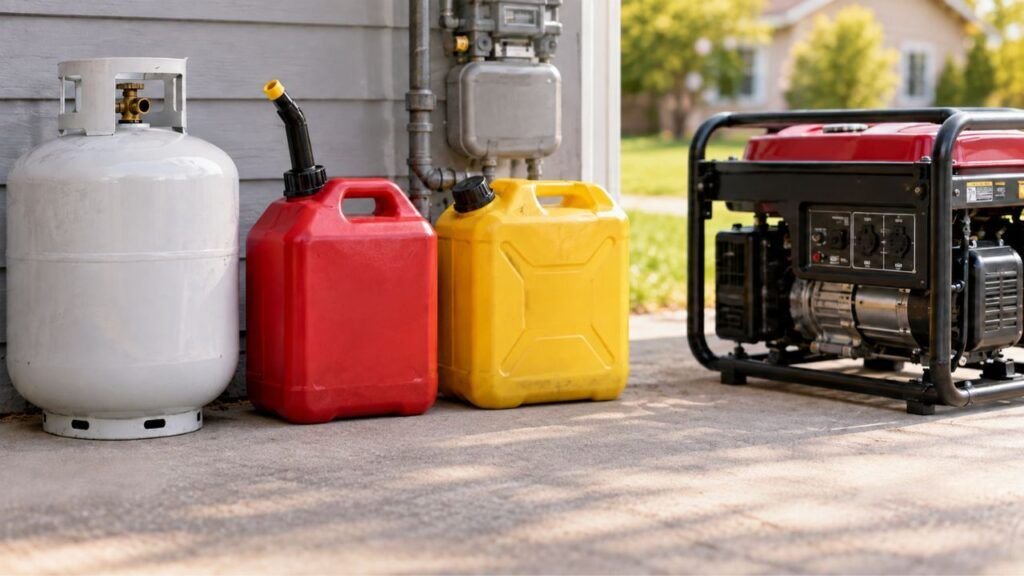
A tri fuel generator uses one engine that runs on gasoline, propane, or natural gas. A fuel selector directs the chosen fuel through the proper delivery system. The engine then burns that fuel, spins an alternator, and produces electricity for your appliances, tools, or home backup circuits.
The three fuels reach the engine differently, but the basic power-generation process stays the same. Below, I’ll explain each stage, how fuel switching works, why wattage changes, and what you should know before connecting one to your home.
Key Takeaways
- A tri fuel generator runs on gasoline, propane, or natural gas.
- The generator normally uses only one fuel at a time.
- Gasoline comes from the generator’s built-in fuel tank.
- Propane uses an external tank, hose, and regulator.
- Natural gas connects to a suitable household gas supply.
- The engine converts fuel energy into mechanical rotation.
- The alternator converts that rotation into usable electricity.
- Gasoline usually provides the generator’s highest power output.
- Propane and natural gas normally produce slightly less wattage.
- Tri fuel does not automatically mean inverter generator.
What Is a Tri Fuel Generator?
A tri fuel generator is an engine-driven generator designed for three fuels. Those fuels are normally gasoline, propane, and natural gas.
The important part is that the generator still has one engine. You are not getting three separate engines inside one machine.
Instead, the generator includes a fuel-delivery system that can handle each fuel. A selector controls which fuel reaches the engine.
Gasoline is stored inside the generator’s onboard fuel tank. Propane normally comes from a portable cylinder or larger storage tank. Natural gas usually comes from your home’s utility gas line.
That flexibility gives you more options during an extended outage. If gasoline becomes difficult to find, you may use stored propane. If your natural gas service remains available, you can operate without repeatedly refilling portable fuel containers.
How Does a Tri Fuel Generator Work?
The easiest way to understand a tri fuel generator is to follow the energy from the fuel source to your electrical outlets. Although each fuel enters differently, every fuel eventually powers the same engine and alternator.
Step 1: You Select the Fuel Source
The process begins with the generator’s fuel selector.
Depending on the model, this may be a dial, knob, switch, or lever. You choose gasoline, propane, or natural gas before starting the generator.
The selector opens the appropriate fuel pathway. At the same time, it prevents the other fuel sources from feeding the engine.
That means a tri fuel generator normally does not mix three fuels together. You select one fuel and operate the generator using that source.
Step 2: The Selected Fuel Reaches the Engine
The next step depends on the fuel you selected.
Gasoline flows from the onboard tank through the generator’s liquid-fuel system. It eventually reaches the carburetor, where it mixes with incoming air.
Propane enters through an external hose. A regulator reduces and controls the pressure before the fuel reaches the engine.
Natural gas also enters through an external connection. It passes through the generator’s gas-control system before reaching the fuel mixer.
These different pathways are necessary because gasoline behaves differently from gaseous fuels.
Step 3: The Generator Creates the Correct Air-Fuel Mixture
An engine cannot simply burn any amount of fuel entering it. The amount of fuel must match the incoming air closely enough for proper combustion.
Gasoline is metered through the carburetor as a liquid fuel.
Propane and natural gas enter as gaseous fuels. Their pressure and flow therefore need different regulation.
The generator’s carburetor, mixer, valves, and regulators work together here. They allow the engine to receive the proper fuel mixture for the selected source.
You do not usually need to adjust this manually. The system is designed around the approved fuels listed by the manufacturer.
Step 4: The Engine Burns the Fuel
Once the correct fuel-air mixture reaches the cylinder, combustion begins.
The spark plug ignites the compressed mixture inside the engine. The expanding gases push the piston downward.
That piston movement turns the crankshaft.
This process repeats hundreds or thousands of times each minute. The result is continuous rotational energy from the engine.
At this point, the generator has converted stored fuel energy into mechanical energy.
Step 5: The Engine Spins the Alternator
The rotating crankshaft drives the generator’s alternator.
Inside the alternator, magnetic fields move relative to electrical windings. This movement creates electrical current.
You can think of the alternator as the component that changes engine rotation into electricity.
The fuel itself never directly powers your refrigerator or furnace. The fuel powers the engine first. The engine then spins the equipment that produces electricity.
Step 6: The Generator Conditions and Delivers Electricity
The raw electricity created by the alternator still needs proper regulation.
A conventional generator normally uses a voltage-regulation system to maintain acceptable electrical output.
An inverter generator uses additional electronic components. These electronics convert and condition the electricity before sending it to the outlets.
Either way, the final electricity becomes available through the generator’s receptacles. Larger models may also provide 120/240-volt outlets for home-backup connections.
So, the entire process looks like this:
Fuel → fuel system → combustion → engine rotation → alternator → regulated electricity → electrical load
What Parts Make Tri Fuel Operation Possible?
A tri fuel generator has several components working together. Each one plays a different role in handling fuel or producing electricity.
- Fuel selector: Chooses gasoline, propane, or natural gas operation.
- Gasoline tank: Stores liquid gasoline directly on the generator.
- Fuel line: Carries gasoline from the tank toward the engine.
- Propane inlet: Provides the connection point for an LPG hose.
- Propane regulator: Controls pressure from the propane supply.
- Natural gas inlet: Connects the generator to an approved gas source.
- Gas regulator: Helps control gaseous fuel pressure and flow.
- Carburetor or mixer: Combines the selected fuel with incoming air.
- Engine: Converts combustion energy into mechanical rotation.
- Crankshaft: Transfers engine rotation toward the alternator.
- Alternator: Converts mechanical rotation into electrical energy.
- Voltage regulator: Helps stabilize generator electrical output.
- Inverter electronics: Conditions power on inverter-style models.
- Circuit breakers: Protect generator circuits from excessive loads.
- Low-oil shutdown: Protects the engine from low lubrication.
- CO shutoff: Stops certain models when dangerous carbon monoxide accumulates.
Not every generator uses exactly the same design. However, these components explain the basic system found in many current tri fuel generators.
How Does Each Fuel Work in a Tri Fuel Generator?
All three fuels eventually perform the same job. They burn inside the engine and create mechanical power. The main difference is how each fuel reaches the engine.
How Gasoline Mode Works
Gasoline is the most familiar operating mode.
You fill the onboard fuel tank, select gasoline, and start the generator. Fuel flows from the tank toward the carburetor.
Inside the carburetor, gasoline mixes with incoming air. The engine then burns that mixture inside its cylinders.
Gasoline usually produces the highest rated output on tri fuel generators. For this reason, many manufacturers advertise their largest starting and running wattage numbers using gasoline.
The downside is storage.
Gasoline can deteriorate over time. It can also create deposits inside the carburetor if the generator sits unused with old fuel.
How Propane Mode Works
Propane does not use the generator’s gasoline tank.
Instead, you connect a propane cylinder or approved tank using the correct hose and regulator.
The regulator lowers the fuel pressure to the level required by the generator.
Propane then moves toward the generator’s fuel mixer. It combines with incoming air before entering the engine.
Propane stores much better than gasoline. This makes it attractive for emergency backup planning.
However, the generator will normally produce less maximum wattage on propane than gasoline.
That difference matters when starting large appliances or pumps.
How Natural Gas Mode Works
Natural gas operation is especially useful for home backup.
Instead of carrying fuel to the generator, you connect the generator to an approved natural gas supply.
The gas moves through the proper hose, fittings, regulators, and fuel controls. It then mixes with air before combustion.
As long as utility natural gas service remains available, you avoid repeated gasoline refilling or propane-cylinder changes.
Natural gas usually provides the lowest maximum wattage of the three fuels. That does not make it a bad choice.
For many homeowners, the convenience of continuous fuel supply matters more than maximum wattage.
Gasoline vs Propane vs Natural Gas Operation
The same generator can behave differently depending on its fuel. This comparison shows the practical differences you will notice most.
| Factor | Gasoline | Propane | Natural Gas |
| Fuel source | Onboard tank | External cylinder or tank | Home utility gas supply |
| Fuel form | Liquid | Pressurized LPG | Gaseous fuel |
| Typical output | Highest | Usually lower | Usually lowest |
| Refueling | Manual | Tank refill or replacement | No manual refilling while service continues |
| Storage | Needs careful fuel management | Excellent long-term storage | No onsite storage needed |
| Portability | Excellent | Good | Limited while connected |
| Setup | Fill tank and select fuel | Connect hose and regulator | Requires suitable gas connection |
| Best use | Maximum output | Stored emergency fuel | Extended home backup |
| Fuel availability | Depends on stations | Depends on stored supply | Depends on utility service |
Do not rely on general percentages when sizing your generator.
Check the exact gasoline, propane, and natural gas ratings for your model. Different engines and fuel systems lose different amounts of output.
Why Does a Tri Fuel Generator Make Less Power on Propane or Natural Gas?
You may notice that the same generator has three different wattage ratings.
That is completely normal.
Different fuels deliver energy to the engine differently. Their air-fuel mixtures, energy content, fuel pressure, and delivery systems are not identical.
As a result, the engine may produce less usable mechanical power on propane or natural gas.
That lower engine output means the alternator cannot provide the same maximum electrical wattage.
Gasoline therefore commonly receives the generator’s highest advertised rating.
Propane normally comes next.
Natural gas often has the lowest rated output.
For example, imagine a generator rated around 9,500 running watts on gasoline. The propane rating might be lower, while the natural gas rating could drop further.
The exact difference varies by model.
This matters when powering high-demand equipment. Central air conditioners, well pumps, sump pumps, and power tools may require high starting wattage.
Always size your loads using the rating for the fuel you actually plan to use.
Does a Tri Fuel Generator Use All Three Fuels at the Same Time?
No. A normal tri fuel generator does not burn all three fuels simultaneously.
The term “tri fuel” means the generator can operate on three approved fuels. It does not mean those fuels are mixed together during normal operation.
You select one fuel source using the generator’s controls.
If gasoline is selected, the generator operates on gasoline. If propane is selected, it runs on propane. The same principle applies to natural gas.
Keeping the fuel pathways controlled also helps the engine maintain the correct air-fuel mixture.
Can You Switch Fuels While a Tri Fuel Generator Is Running?
Some tri fuel generators support certain fuel changes while running. Other models require you to shut the engine down first.
This is one area where you should never guess.
Follow your generator manufacturer’s switching procedure because fuel-system designs vary.
A safe general approach includes:
- Read the fuel-change instructions before the first outage.
- Reduce electrical load before changing fuels when required.
- Make sure the replacement fuel supply is properly connected.
- Never add gasoline to a dangerously hot generator.
- Never disconnect gas fittings against manufacturer instructions.
- Remember that available wattage may change after switching fuels.
- Recheck the connected electrical load after changing fuels.
Suppose you switch from gasoline to natural gas.
The generator may continue operating correctly, but its available running and starting wattage may decrease.
A load that was acceptable on gasoline could become too large afterward.
This is why fuel switching involves more than simply turning a selector knob.
Does Tri Fuel Mean the Generator Is an Inverter Generator?
No. Tri fuel and inverter describe two different generator features.
Tri fuel describes the fuel system.
It tells you that the engine can operate on gasoline, propane, and natural gas.
Inverter describes the electrical system.
It tells you how the generator processes electricity before sending power to your appliances.
A conventional tri fuel generator can still use all three fuels. It simply uses a conventional alternator and voltage-regulation system.
A tri fuel inverter generator adds inverter electronics.
These electronics help produce cleaner and more controlled electrical output. Inverter models can also adjust engine operation more efficiently under lighter loads.
Therefore, never assume a generator has inverter technology simply because it says “tri fuel.”
Check the specifications separately.
How Does a Tri Fuel Generator Power a House?
A tri fuel generator can power individual appliances or selected home circuits. How you connect it depends on your generator size and electrical setup.
Using Extension Cords
The simplest method is connecting appliances directly to generator outlets.
For example, you might run:
- Refrigerator
- Freezer
- Lamps
- Wi-Fi equipment
- Television
- Phone chargers
- Small appliances
Use extension cords rated for the electrical load and outdoor environment.
This method works well when you only need several essential devices.
However, extension cords become inconvenient when powering many household circuits.
Using a Transfer Switch or Interlock System
Larger generators can supply selected circuits through a properly designed home-backup connection.
A transfer switch lets you move certain electrical loads from utility power to generator power safely.
Some installations use an approved interlock setup instead.
The important part is preventing generator electricity from feeding backward into utility lines.
Never connect a portable generator to your home by improvising a backfeed connection through a normal wall outlet.
A properly installed home connection also makes backup operation easier.
Instead of running cords through the house, you can choose important circuits from your electrical panel.
Your generator still operates the same way:
Fuel powers engine → engine spins alternator → generator produces electricity → home inlet transfers power to selected circuits.
Is Natural Gas Connection Different From Propane?
Yes. Propane and natural gas are both gaseous fuels, but their supply systems differ.
Propane is stored under pressure inside a cylinder or larger tank. The generator uses a regulator designed to control that pressure before the fuel reaches the engine.
Natural gas normally comes from a utility distribution system.
Your home’s gas line must provide enough pressure and fuel volume for the generator.
That requirement becomes especially important with larger engines.
A gas line that works perfectly for your furnace or stove may not automatically support a large generator at full load.
Pipe diameter, pipe length, regulator capacity, existing gas appliances, and generator demand can all affect performance.
An undersized gas supply can cause poor running, reduced output, or engine shutdown.
For that reason, have the natural gas connection evaluated and installed according to local codes and generator requirements.
Do not improvise gas fittings or modify residential gas lines yourself unless you are properly qualified.
How Safely Should You Operate a Tri Fuel Generator?
Fuel flexibility does not change the basic safety rules of portable-generator operation. Carbon monoxide and electrical hazards remain serious on every fuel.
Follow these basic precautions:
- Run portable generators outdoors only.
- Keep the generator well away from occupied buildings.
- Position exhaust away from doors, windows, and vents.
- Never operate it inside a garage, basement, or enclosed porch.
- Keep working carbon monoxide alarms inside your home.
- Protect the generator from rain without enclosing its exhaust.
- Never backfeed electricity through a normal household outlet.
- Use correctly rated cords, plugs, and transfer equipment.
- Inspect propane hoses before every emergency season.
- Check natural gas fittings for approved installation.
- Never repair fuel leaks while the generator is running.
- Keep gasoline away from hot engine and exhaust components.
- Shut the generator down before refueling when required.
- Follow the exact maintenance schedule in your owner’s manual.
Carbon monoxide deserves special attention.
You cannot see or smell carbon monoxide. A generator can create dangerous concentrations even when nearby doors appear closed.
More fuel choices do not make indoor operation safe.
Gasoline, propane, and natural gas engines can all produce carbon monoxide.
What Are the Advantages of a Tri Fuel Generator?
A tri fuel generator mainly gives you flexibility during changing conditions.
Its biggest advantages include:
- Three different fuel choices
- Less dependence on gasoline availability
- Long-term propane storage
- Natural gas connection for extended operation
- Ability to choose fuel based on availability
- Higher maximum output when gasoline is needed
- Easier emergency fuel planning
- One generator for several backup situations
- Useful flexibility during long power outages
This can become valuable after storms.
Gas stations may lose power or run out of gasoline. Meanwhile, you may still have propane stored at home.
If natural gas infrastructure continues operating, you gain another option.
What Are the Limitations of a Tri Fuel Generator?
Tri fuel generators are useful, but they are not automatically best for everyone.
Common limitations include:
- Higher purchase price
- More fuel-system components
- Heavier designs on larger models
- Lower wattage on gaseous fuels
- Natural gas connections reduce portability
- Natural gas supply may require professional work
- Fuel switching procedures vary between models
- More hoses and fittings need inspection
- Maintenance is still required during long outages
You should also think about whether you will actually use the third fuel.
If your property has no natural gas service, paying extra for a tri fuel generator may provide little benefit.
A dual fuel generator might make more sense instead.
Tri Fuel vs Dual Fuel Generator: What Changes Mechanically?
A dual fuel generator normally operates on gasoline and propane.
A tri fuel generator adds natural gas capability.
That third fuel requires the generator to properly control another fuel source with different pressure and flow characteristics.
Manufacturers may use additional regulators, valves, fittings, selector controls, or fuel-mixer components.
The electricity-generation process does not fundamentally change.
Both generator types still use fuel to run an engine. The engine still turns the alternator. The alternator still produces electricity.
The important mechanical difference is fuel management.
A tri fuel generator simply has a more flexible fuel-delivery system.
Is a Tri Fuel Generator Worth It for Home Backup?
A tri fuel generator can be an excellent home-backup option when you already have natural gas service.
Natural gas lets you avoid storing large quantities of gasoline. It also removes repeated refueling during many extended outages.
Propane gives you another stored backup fuel.
Gasoline remains useful when you need the generator’s highest available output or need to move it elsewhere.
That combination provides strong emergency flexibility.
However, you should still compare the cost against your actual needs.
If you only experience short outages, a simpler dual fuel generator may be enough.
If your property does not have natural gas, the third fuel capability provides much less value.
For most homeowners, the decision comes down to three questions:
- Do you already have natural gas?
- Do you expect long power outages?
- Would having multiple fuel choices make backup power easier?
If you answered yes to those questions, tri fuel capability can be very useful.
Final Words
A tri fuel generator works by allowing one engine to burn gasoline, propane, or natural gas through a specially designed fuel-delivery system. You select the fuel, the system meters it into the engine, combustion turns the crankshaft, and the alternator converts that rotation into electricity.
The biggest thing to remember is that the generator’s performance changes with fuel. Gasoline usually provides maximum wattage, while propane and natural gas usually provide less. Check your model’s fuel-specific ratings, follow its switching procedure, and use a proper home connection when powering household circuits.
Related FAQs
Which Fuel Is Best for a Tri Fuel Generator?
There is no single best fuel for every situation. Gasoline usually provides maximum wattage, propane stores well for emergencies, and natural gas provides convenient extended operation when utility service remains available.
Does a Tri Fuel Generator Automatically Switch Fuels?
Most portable tri fuel generators do not automatically switch fuels. You normally choose gasoline, propane, or natural gas using a selector, although certain specialized systems may offer additional automation.
Which Fuel Produces the Most Power in a Tri Fuel Generator?
Gasoline usually produces the highest running and starting wattage. Propane normally provides somewhat less, while natural gas often has the lowest maximum output of the three fuels.
Can a Tri Fuel Generator Run Continuously on Natural Gas?
A tri fuel generator can run for extended periods on natural gas while the fuel supply remains available. However, you still need to stop it as required for oil checks, maintenance, inspections, and other manufacturer-specified service.
Does Natural Gas Damage a Generator Engine?
Natural gas should not damage an engine that was specifically designed and approved for natural gas operation. Problems are more likely when fuel pressure, mixture, maintenance, or conversion equipment does not meet the engine manufacturer’s requirements.
Does a Tri Fuel Generator Have Three Carburetors?
Most tri fuel generators do not use three completely separate carburetors. They generally use an integrated fuel system with a carburetor or mixer, regulators, valves, and dedicated fuel pathways for the supported fuels.
Can You Convert a Regular Generator to Tri Fuel?
Some generators can use aftermarket conversion kits, but not every engine is suitable. A conversion may affect emissions compliance, warranty coverage, fuel calibration, reliability, and safety, so verify compatibility before modifying the generator.
Can a Tri Fuel Generator Run a Whole House?
A tri fuel generator can run many or all household loads if its starting and running wattage are sufficient. Always size the generator using the rating for the fuel you plan to use, especially natural gas.
Can You Leave a Tri Fuel Generator Connected to Natural Gas?
A properly designed setup may remain physically prepared for natural gas operation, but connection and shutoff requirements vary. Follow the generator manufacturer, local gas codes, and your qualified installer’s recommendations.
Can You Run Propane and Gasoline Together?
Normally, no. A tri fuel generator is designed to operate on one selected fuel at a time. Mixing gasoline and propane simultaneously is not part of normal operation unless the manufacturer specifically designed the system for it.
Why Does My Tri Fuel Generator Run Rough on Natural Gas?
Low fuel pressure, insufficient gas-line capacity, incorrect hose sizing, restricted flow, improper mixture, or maintenance problems can cause rough operation. Check your manual and have the gas supply inspected if the problem continues.
Do Tri Fuel Generators Need More Maintenance?
The engine maintenance is generally similar to other portable generators, including oil changes, air-filter checks, spark-plug service, and inspections. You should also regularly inspect propane and natural gas hoses, regulators, valves, and connections.

Brian Walker writes straightforward generator guides and reviews for homeowners and everyday users. His content focuses on solar, portable, and fuel-powered generators, with practical advice on choosing, using, and maintaining reliable backup power.